
September 20 2026
Chef Rahul Akerkar: Bringing the world to his kitchen
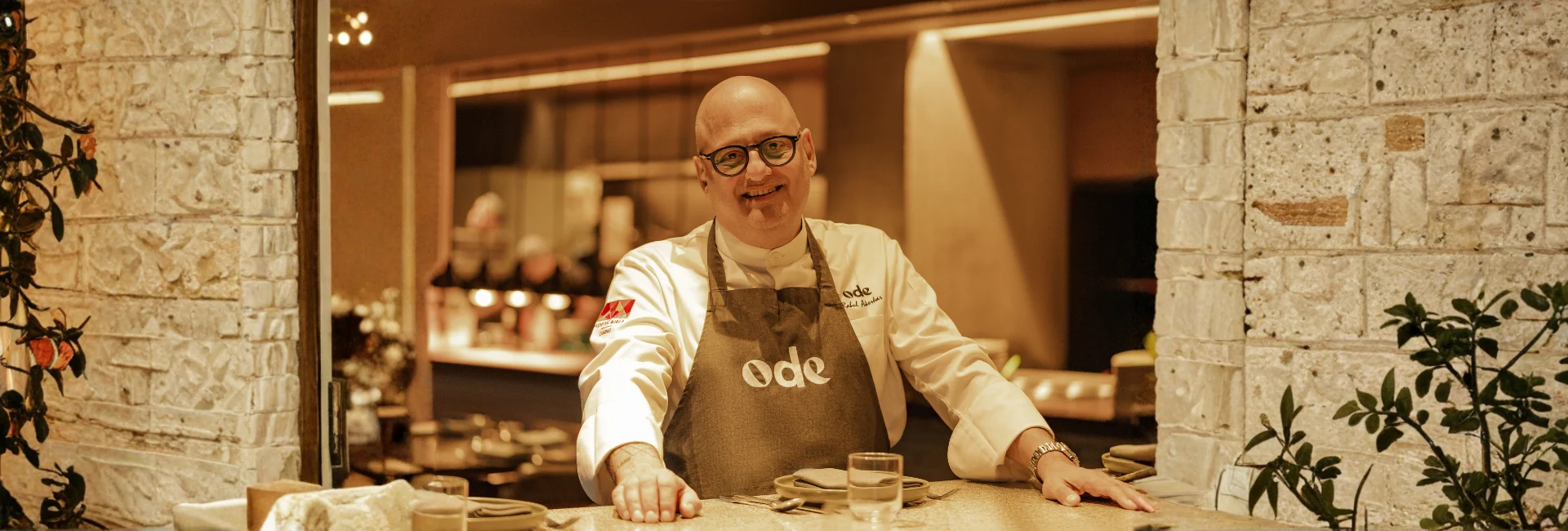
(Sep 20, 2026) Chef and restaurateur Rahul Akerkar is the Creative & Culinary Director at Aditya Birla New Age Hospitality and author of ‘Biting Off More Than I Can Chew’. He is regarded as a chef who helped bring European-style fine dining to Mumbai with Indigo, the restaurant that he launched in 1999. It went on to become the first Indian restaurant to enter the World’s Top 100 in 2007 and Asia’s Top 50 in 2013. He is among the early chefs and restaurateurs to build India’s independent dining culture outside the five-star hotel industry.
Born in Bombay to an Indian father and a German-American mother who had escaped Nazi Germany as a child, Rahul Akerkar grew up between Bombay and New York, spending summers in Nashik, where his grandmother, Aji, had a garden and a kitchen that became his first real food laboratory.
“She was an instinctive cook; there were no measurements, just a little of this, a pinch of that, and I think a lot of my understanding of food began there. I went to The Doon School and was always more comfortable with science and mathematics than with the humanities,” he recollects in a chat with The Global Indian.
Later, at Franklin & Marshall College in Pennsylvania in the US, he studied biology and philosophy. “Then I went on to Columbia and eventually pursued a master’s in biochemical engineering, with a PhD in sight. On paper, it was all very sensible. However, somewhere along the way, cooking got in the way,” he says.
From science and medicine to the kitchen
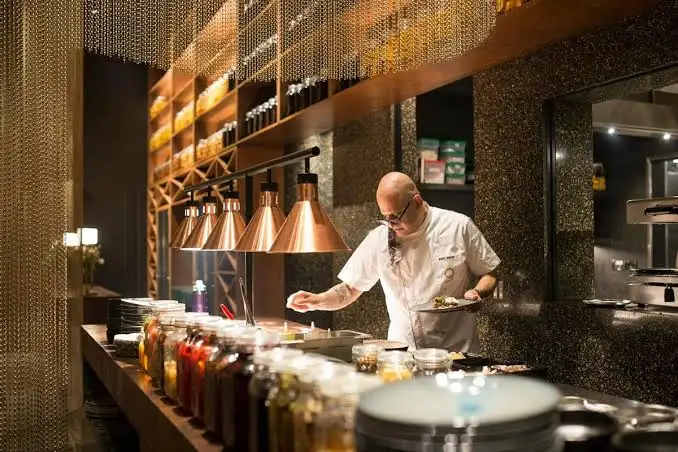
Rahul Akerkar’s professional life began in the US. His first restaurant job was at Jethro’s while he was at college. The more time he spent in kitchens, the more he realised that this was where he wanted to be, although at the time he didn’t think of restaurants as a career. He worked in kitchens while studying and eventually spent time at The Saloon, where his work rotated through every department.
Working in different departments of a restaurant taught me that a restaurant isn’t just about the kitchen. It’s food, service, people, numbers and an enormous amount of invisible work.
Rahul Akerkar
Returning to Bombay and building a restaurant career
“In 1989, I finally came back to Bombay. I had three degrees and no real idea how to run a restaurant. It was, in retrospect, a very good place to start. My career makes considerably more sense in retrospect than it did while I was living it,” he smiles.
He started by catering from his mother’s kitchen. That led to working at restaurants like Moveable Feast, Under the Over and Kuteeram Retreat in Bangalore, before Indigo and deGustibus came along. “Indigo became the defining chapter of my early career and eventually grew into a larger hospitality business with the Indigo Delis, Tote and Neel,” he mentions.
After leaving deGustibus, he took a break before returning to the restaurant business with Qualia. “That restaurant was hugely important to me creatively, but barely ten months after opening, COVID arrived. We fought to keep it alive but eventually had to close,” he says.
He then moved to Goa, thinking he would possibly open a small restaurant there. However, an unexpected conversation with Aditya Birla New Age Hospitality led to change in plans, and he got associated with its different projects. “So the journey has been less of a straight line and more a series of rather interesting detours,” he reminisces.
How science continues to shape his cooking
The best part for Akerkar is that he never really made a conscious decision to ‘shift careers’. He simply kept following whatever interested him most at the time.
The science never really left me. I still approach cooking with a certain analytical instinct – understanding why something works, breaking things down, and questioning assumptions. But cooking gave me something science didn’t: a way of combining that curiosity with instinct, memory, emotion and pleasure.
Rahul Akerkar
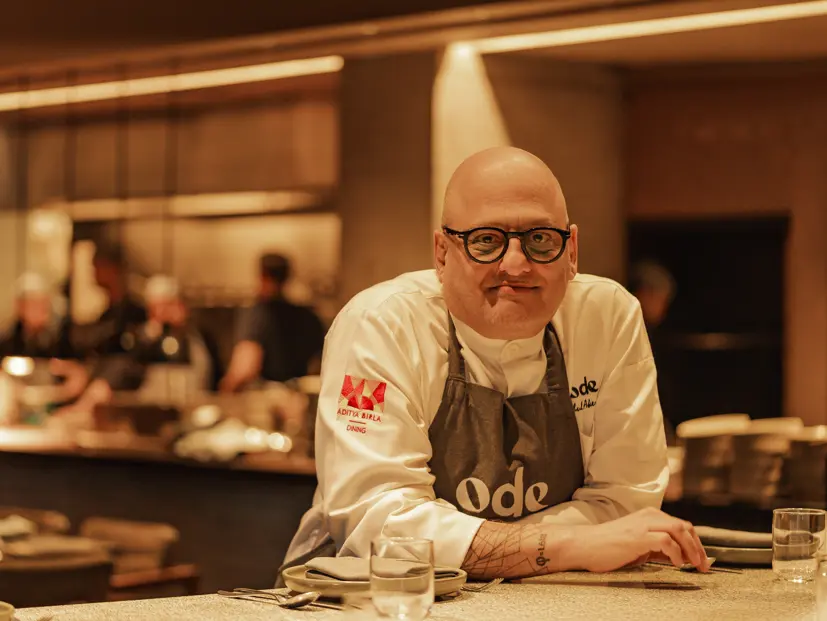
Growing up between India and the West also meant he never felt that food had to fit neatly into one category. “My grandmother’s cooking was deeply Indian, while my years in America exposed me to an enormous range of cuisines and ideas,” he says. By the time he came back to India, he was comfortable expressing influences from all over.
Indigo and the evolution of Indian dining
The milestone that Akerkar values the most is being part of the transition in Indian dining from restaurants being primarily places to eat into expressions of food, design, hospitality, culture and personality. He considers the launch of his restaurant Indigo in 1999 a defining moment as it was opened at a time when Bombay’s dining scene was still fairly conservative.
“We were trying to create something that didn’t really exist here. The recognition that followed, including making the World’s 50 Best Restaurants list in 2007, was wonderful, but the more important achievement was that we helped change people’s expectations of what a restaurant in India could be,” he says.
Qualia was another important chapter for Akerkar, coming after several years away from the kitchen. He returned with a different perspective and wanted to build something that felt completely like him. Its closure during the pandemic was painful, but it also forced him to rethink what came next.
The restaurant experiences behind his memoir
Akerkar admits that he has always had a slightly perverse relationship with failure.
I tend to take on things that are probably bigger than I should, push myself to the edge and then figure out how to make them work. That’s essentially where the title of my book Biting Off More Than I Can Chew** comes from—I have a habit of biting off more than I can chew.**
Rahul Akerkar
View this post on Instagram
There were difficult periods with his restaurants but what those experiences taught him is that resilience isn’t about pretending everything is fine.
“Sometimes you must look very hard at the numbers, admit something isn’t working and change direction. The pandemic taught me patience and flexibility – something I’m still learning. You need a Plan B, C, D and sometimes all the way to Z,” he admits. And while New York taught him energy and hustle, India taught him resilience and improvisation, and travel taught him curiosity. Over time he has become much more comfortable simply taking what interests him from different places and making it his own.
A chef shaped by a life between cultures
Living between cultures has made Rahul Akerkar suspicious of absolute answers. He has worked in America, travelled extensively, spent time in Europe and other parts of Asia, and spent much of his life moving between India and the rest of the world. “Every place has different ideas about food, hospitality, hierarchy, ambition and what constitutes success,” he remarks.
I’ve never really understood the need to choose between being Indian and being worldly. I grew up with one foot in India and another in the West and spent much of my life travelling, eating, observing and stealing ideas, techniques and influences from everywhere. Somewhere along the way I became more interested in what I could do with those influences. Perhaps that is what being a global Indian means to me – having roots without being rooted to the spot.
Rahul Akerkar
Akerkar believes that one should be able to absorb the world without constantly worrying about losing oneself in the process. “I can eat a perfect plate of pasta in Italy, come home and crave bhel puri on the street, and neither experience needs to cancel the other out,” he says.
A career shaped by unexpected turns
For someone who has never been particularly good at five-year plans, his life has been more of a series of interesting accidents. “Some of which I was lucky enough to recognise as opportunities. Every time I’ve thought I knew what was coming next, life has had other ideas. So, for the moment, the stove’s back on, the knives are sharp, the team is humming – and there’s still plenty left to cook,” he signs off.
ALSO READ: Vishesh Jawarani: From Michelin kitchens abroad to a slower table in Goa
Share with



Written By: Bindu Gopal Rao
Chef Rahul Punjabi: From Google to culinary adventures abroad and launching Bang Bang! Noodle in Mumbai

Written By: Bindu Gopal Rao
From the Ambanis to luxury weddings and events, Chef Harsh Shodhan is elevating experiential dining

Written By: Bindu Gopal Rao