
May 09 2026
Arbinder Singh Dugal: From UK’s Michelin kitchens to creating luxury culinary experiences

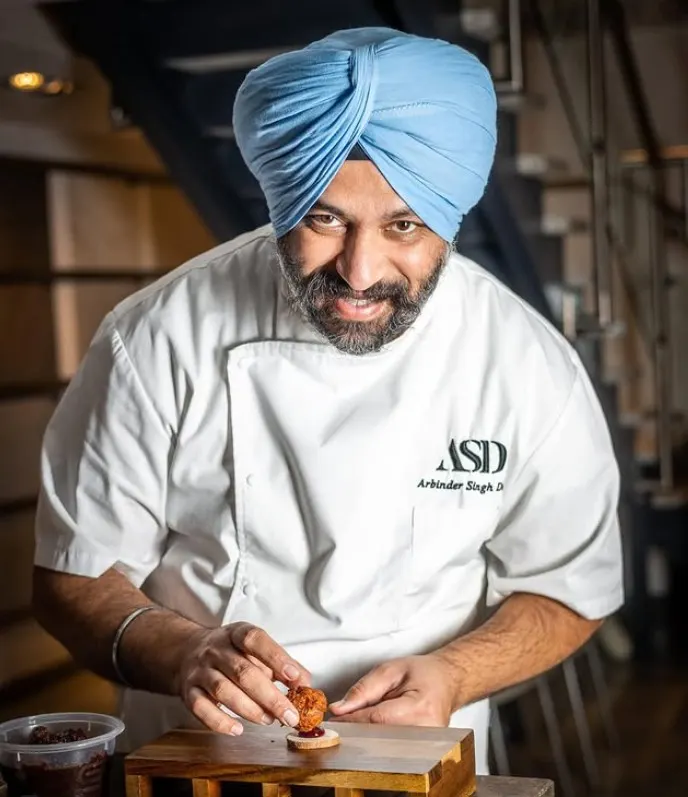
(May 9, 2026) From working with Indian culinary legend Jiggs Kalra to being a semi-finalist in MasterChef UK in 2019, chef Arbinder Singh Dugal has also headed the kitchen for one of the royal events at Buckingham Palace in 2019 for a charity function.
With 14 years of experience in the culinary world, he has built a career that moves seamlessly across continents, cuisines, and luxury dining spaces. From training in Mumbai and working in Michelin-starred kitchens in the United Kingdom to curating bespoke culinary experiences for elite clients across Europe, his journey reflects the growing global footprint of Indian gastronomy. Today, through his luxury culinary and consultancy venture ASD, he creates high-end dining concepts and destination experiences that blend Indian flavours with French and European techniques for an international audience.
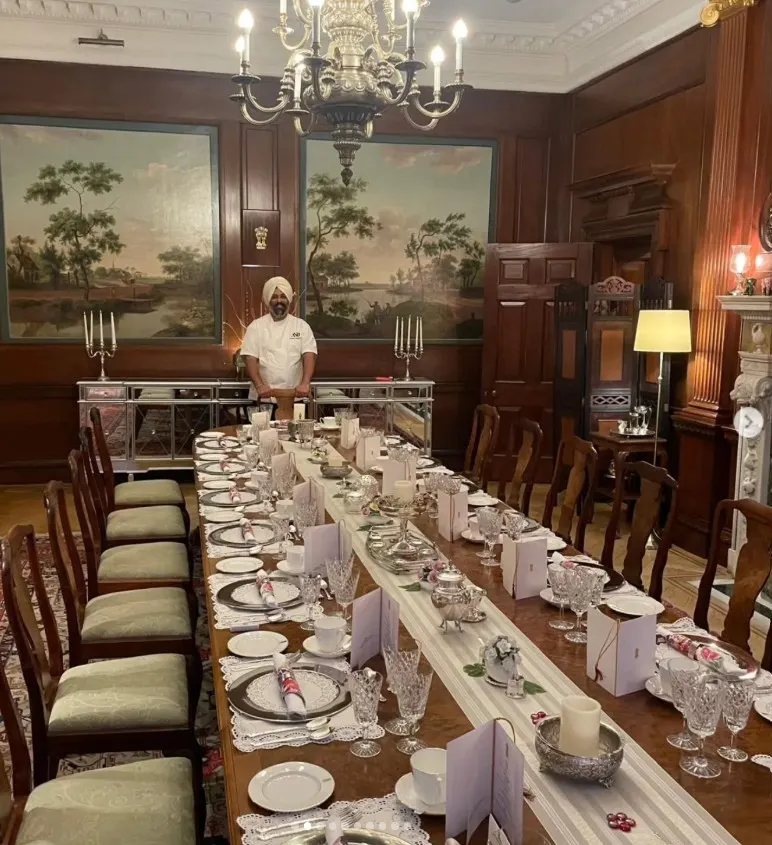
His work as a private chef spans the UK and other parts of Europe, including Monaco, the French Riviera, Saint-Tropez, St. Moritz, and other luxury destinations. These experiences have strongly influenced how he cooks Indian food for affluent global clients.
Early influences
Arbinder Singh’s interest in food began in childhood, as he was always drawn to the aromas and energy of the kitchen, watching his mother cook and trying to understand how flavours came together. Even though he studied commerce, that early curiosity never left him. He graduated with a BBA and a degree in hospitality from Institute of Hotel Management Aurangabad, Class of 2004, which gave him a strong foundation in both culinary technique and business.
“After graduating, I worked in Mumbai for four years, building my early professional experience and sharpening my skills in fast-paced kitchens. In 2007, I moved to the UK, which opened the door to working in a French dining restaurant in a 3 AA rosette and Michelin-starred kitchen. Over time, that journey evolved into the creation of ASD, where I now focus on premium weddings, Ultra High Net Worth (UHNW) clients, and high-impact culinary experiences across global destinations,” he tells The Global Indian.
Reimagining Indian cuisine
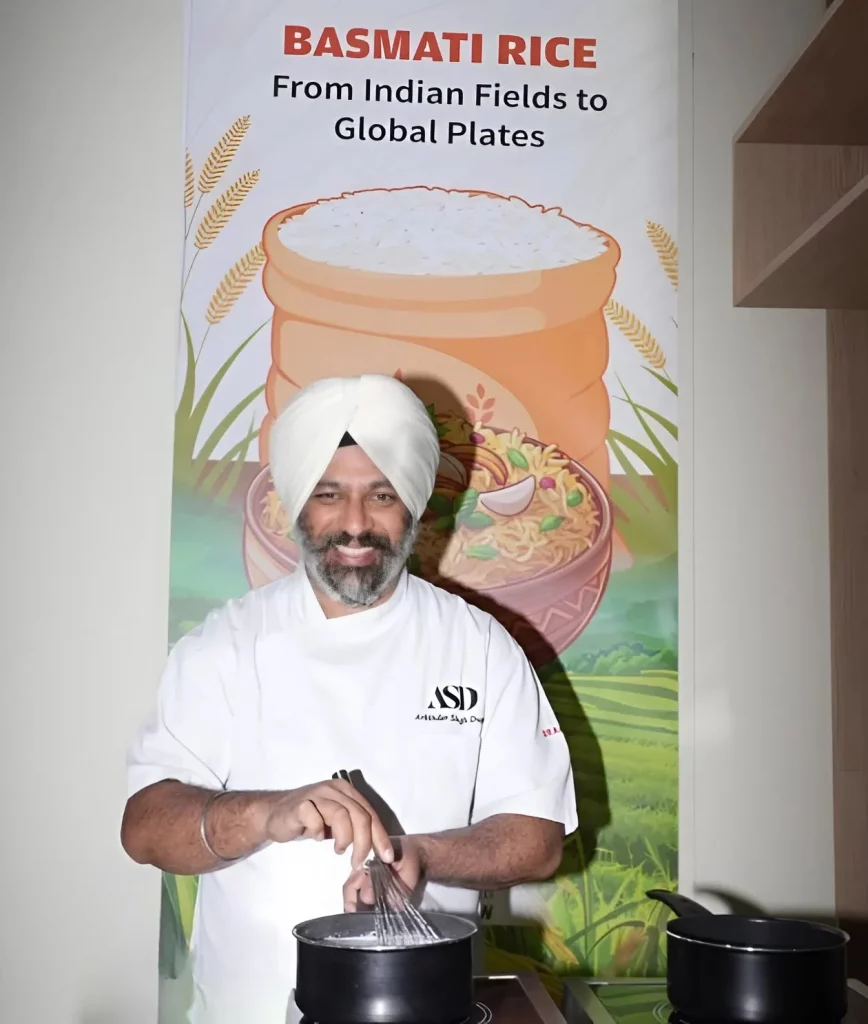
Having worked across diverse culinary landscapes, from India to international kitchens, these experiences have shaped his interpretation of Indian cuisine today. “Working in Mumbai and then international kitchens has completely reshaped how I interpret Indian food today. My early years in Mumbai grounded me in authenticity, technique, and regional depth, while my move to the UK exposed me to global produce, modern plating, and a more refined, minimalist approach. Those two worlds now meet in my cooking, Indian at its soul, but elevated with global technique, cleaner flavour architecture, and a luxury, contemporary sensibility that speaks to international audiences,” he explains.
Michelin-starred lessons
Working in Michelin-starred kitchens in the UK was a turning point in his career. The exposure fundamentally reshaped his discipline, sharpened his palate, and elevated his entire approach to Indian cuisine.
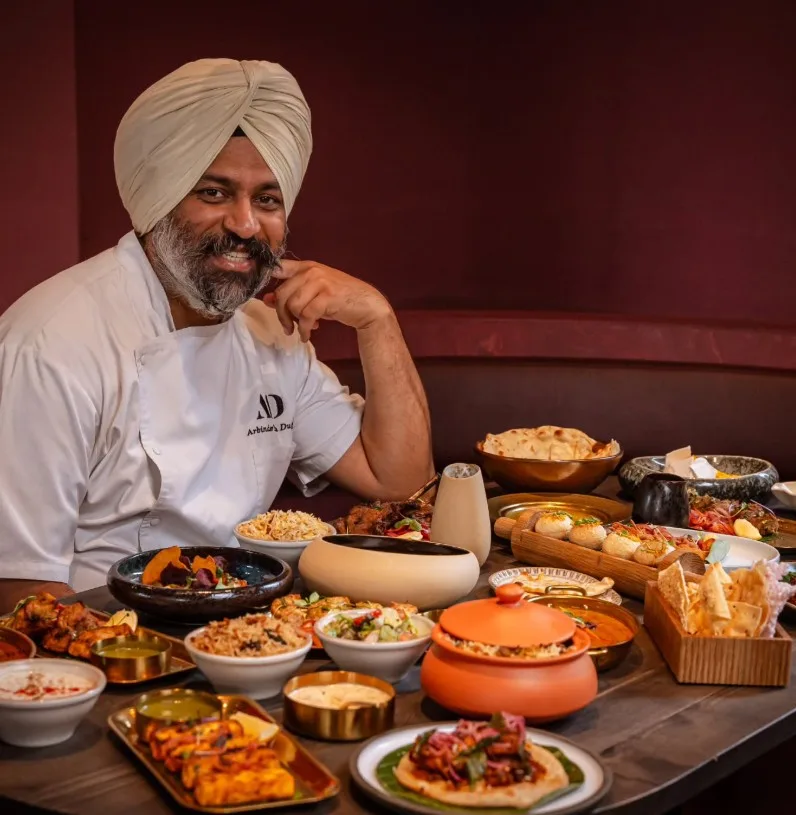
“That environment demanded precision, consistency, and respect for produce at a level I hadn’t experienced before. It taught me how to refine flavours, strip back excess, and build cleaner, more focused plates. Most importantly, it showed me how Indian cuisine can sit confidently on a global fine-dining stage when technique, balance, and storytelling come together with intent. It was long hours of work, starting at 7.30 a.m. till midnight nonstop and reaching home at 1.30 a.m. This experience made me ready for the future,” he reminisces.
The MasterChef experience
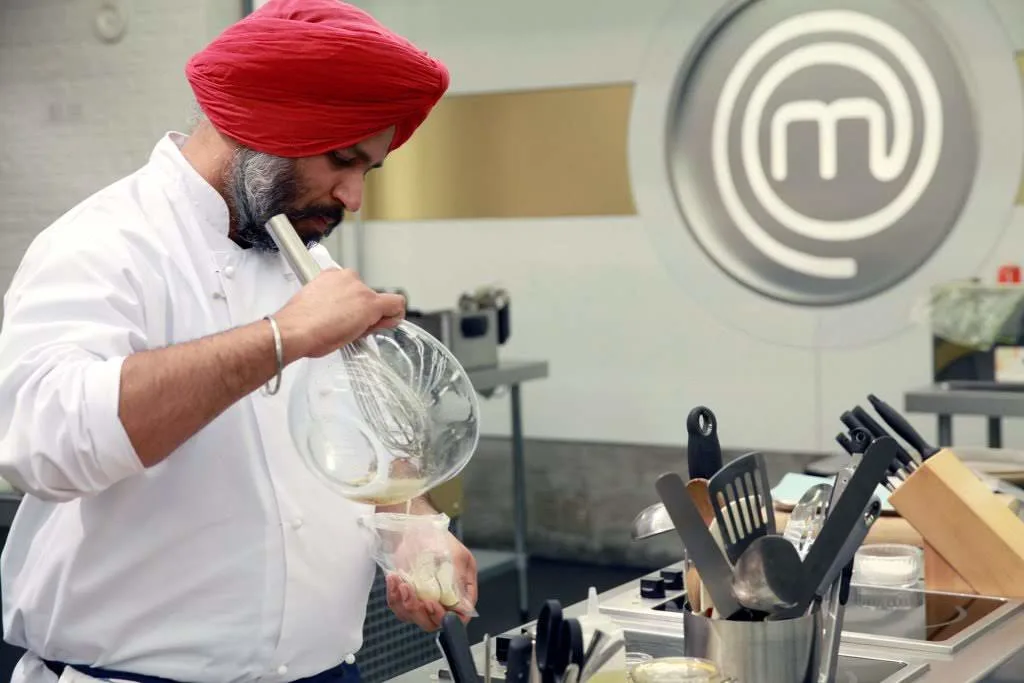
As a semi-finalist on MasterChef UK, he cooked under intense scrutiny. Competing on the show in 2019 and finishing in the Top 4 semi-finals was a defining moment for him.
“Cooking under that level of scrutiny forces you to be brutally honest about who you are as a chef. The exposure was immense. It pushed me to think deeper about identity, narrative, and emotion on the plate. MasterChef made me realise that technique alone isn’t enough. Every dish needs a story, a sense of place, and a personal connection. It sharpened my ability to translate memories, culture, and modernity into clean, expressive plates, something that continues to shape my interpretation of Indian cuisine today,” he says.
The Roux Scholarship years
A major part of his professional growth came through the Roux Scholarship, where he competed in 2010, 2012, and 2013, becoming a two-time semi-finalist and a finalist in 2012. The competition, run by the legendary Roux family and rooted in three-Michelin-star classical French standards, pushed his discipline and technique to another level.
“As part of the scholarship, I trained at some of the UK’s most most celebrated Michelin-starred kitchens. At The Waterside Inn, I completed my stage and absorbed the precision and elegance of classic French cooking. Le Gavroche shaped generations of chefs before closing earlier this year. At Restaurant Sat Bains, I experienced a completely different, modern, technical expression of flavour,” he avers.
These experiences sharpened his palate, deepened his respect for technique, and gave him a classical backbone that now underpins his modern interpretation of Indian cuisine.
Luxury dining across borders
“Using exceptional European ingredients, from Mediterranean citrus to Alpine dairy and Riviera seafood, allows me to create Indian dishes that are cleaner, more refined, and deeply expressive of place. It’s a balance of authenticity and restraint, Indian at its core, but elevated through European seasonality, precision, and luxury sensibility. This cross-cultural dialogue has become a defining part of my cooking for a global, high-end audience,” he explains.
Sustainability and sourcing
Sustainability is a core principle in every consultancy project or menu he designs. “Whether I’m building a restaurant concept or crafting a menu for a luxury brand, I focus on seasonality, responsible sourcing, and intelligent waste management. My approach is to work closely with local farmers, small producers, and regional suppliers to ensure the menu reflects both quality and environmental responsibility,” he adds.
In menu development, he designs dishes that use the whole ingredient, create cross-utilisation between sections, and minimise waste without compromising luxury.
“For UHNW and HNI clients and premium restaurant brands, sustainability isn’t just an operational choice. It’s part of the narrative. It shapes the identity of the menu, the sourcing philosophy, and the guest experience, ensuring the food is not only refined but also ethically grounded,” he says.
Food as storytelling
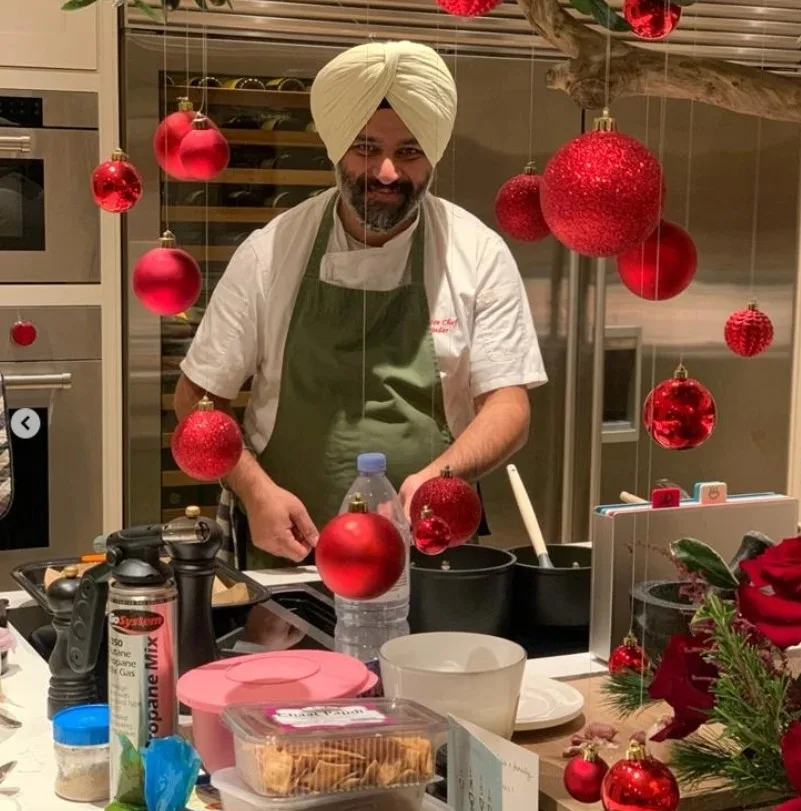
For Dugal, every dish begins with a story, a memory, a moment, or an emotion he wants to translate onto the plate. “Storytelling gives the food depth, intention, and a connection that guests can feel, not just taste,” he says.
While authenticity remains important, he does not see it as a limitation. “For me, authenticity comes from intention, memory, and respect for where a dish begins, not from rigid rules. It allows me to honour Indian roots while evolving the cuisine for a global luxury audience,” he opines.
Looking ahead
What excites him most about the future of Indian gastronomy is the rise of regionality and India’s hyperlocal cuisines.
“From coastal traditions to tribal cooking to forgotten heirloom techniques, they are finally getting the global attention they deserve. This shift is pushing Indian food beyond stereotypes and allowing it to stand proudly on the world stage with depth, nuance, and identity. For me personally, the future is about championing this regional diversity through luxury experiences, consultancy projects, and global collaborations, ” tells the chef who wants to continue building menus and concepts that showcase India’s true culinary landscape, refined, expressive, and rooted in authenticity, while expanding his culinary venture ASD’s footprint across Europe, the Middle East, and key international destinations.
ALSO READ: Bonding Over Biryani: How King Charles III celebrated Asma Khan’s culinary and charitable legacy
Share with



Written By: Amrita Priya
Meet the Maestro: How chef Himanshu Saini led Tresind Studio to its third Michelin star
Written By: Minal Nirmala Khona
Kebabs to Jackfruit Dabeli Bao: Chef Manav Tuli’s journey to a Michelin Star at Chaat, Hong Kong

Written By: Vikram Sharma