
November 12 2026
Tanmay Shah: Taking art into UNESCO’s Asia-Pacific climate conversation
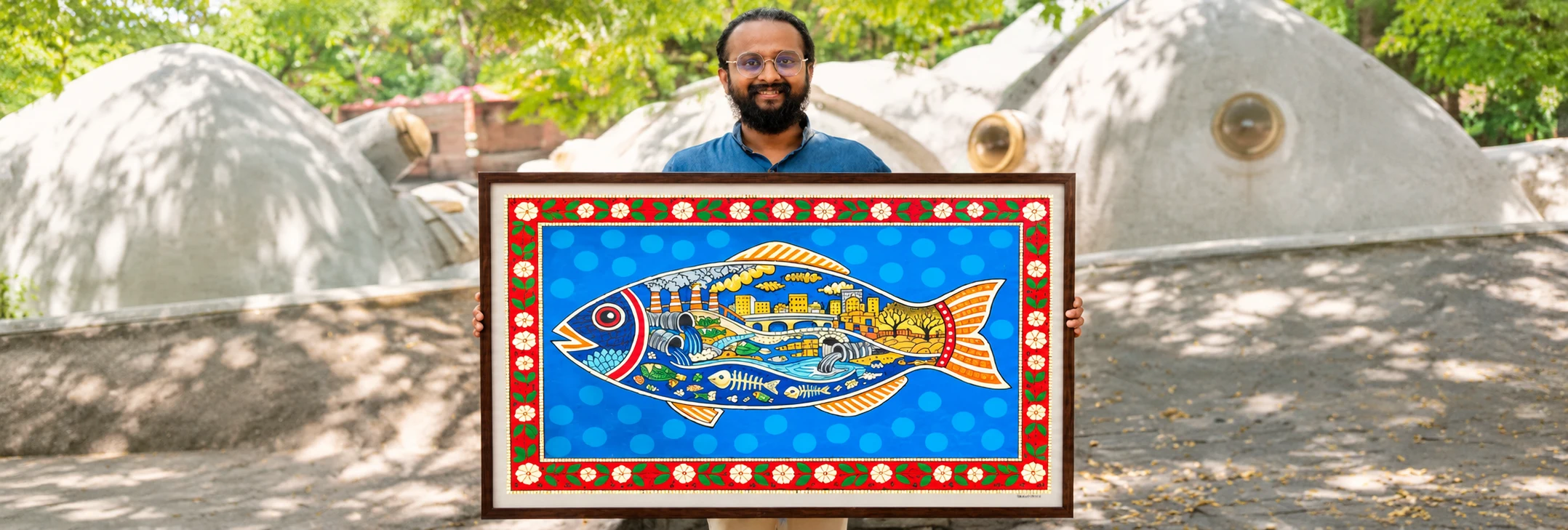
(Nov 12, 2026) From an award-winning documentary screened across 13 countries to a 26-painting series selected for UNESCO’s Art for Earth: Climate Creativity Lab 2026, an Asia-Pacific initiative bringing artists together to explore climate change through creative expression, filmmaker and visual artist Tamnay Shah is taking stories rooted in Indian landscapes into wider global conversations.
When filmmaker and visual artist Tanmay Shah’s documentary Pinch of Salt began travelling to international film festivals, it carried a story from the salt pans of the Little Rann of Kutch to audiences unfamiliar with the lives of India’s salt workers. “The film went on to receive 19 awards across 13 countries, drawing attention to a community whose labour often goes unnoticed,” Tanmay says. More recently, his 26-painting series Borrowed Earth was selected for UNESCO’s Art for Earth: Climate Creativity Lab 2026, bringing his work into an Asia-Pacific exchange on climate change and artistic expression.
Tanmay’s journey has taken him through engineering, academic research and filmmaking, with each experience influencing how he approaches stories. He founded FridayFictionFilms in 2014 and has since worked on documentaries, corporate films and projects with social and development organisations. Although his subjects are often rooted in Indian communities and landscapes, the concerns they raise about work, dignity and the environment resonate well beyond the country.
“I wanted to spend more of my life observing the world and finding a form for what I saw,” he remarks in a chat with The Global Indian. That impulse informs his work, whether he is documenting salt workers in Gujarat, photographing the Northern Lights in Alaska or using paint to explore humanity’s relationship with nature.
View this post on Instagram
From engineering research to filmmaking
Growing up in Ahmedabad, the 37-year-old multidisciplinary artist was surrounded by art. His father is an artist, and drawing and painting were familiar parts of his childhood. While he did not initially imagine a career in the creative fields, this early exposure shaped his interest in visual expression and the power of images to communicate what words sometimes cannot.
He went on to study engineering and worked as a research associate at IIT Bombay. The move from science and technology to filmmaking was gradual rather than the result of a dramatic turning point. He realised that storytelling was where he wanted to invest his time and energy.
Research, however, was far from a detour. It taught him to investigate, question assumptions and look beyond the obvious. These habits have stayed with him as a filmmaker. “A documentary also requires research, careful observation and a willingness to change your understanding when reality challenges it,” he says.
In 2014, he founded FridayFictionFilms, giving his creative ambitions a working structure. The company allowed him to develop ideas and take on projects across different sectors, including work with social and development organisations. Building it also taught him that creative freedom needed discipline, collaboration and the ability to manage projects from start to finish.
An important experiment came in 2015 with the 52FilmsProject. The challenge was to make 52 short films in 52 weeks, taking each from an idea to a completed work within a fixed period. The project brought recognition from several record organisations, but its greater value lay in the discipline it demanded.
“There was very little room to wait for ideal circumstances,” he recalls. Weekly deadlines forced him to make decisions, work within limitations and move on rather than spend too much time worrying about imperfections. Completing one film meant accepting its shortcomings and carrying those lessons into the next. The project also gave potential collaborators a substantial body of work through which to understand his approach.
From Gujarat’s salt pans to international film festivals
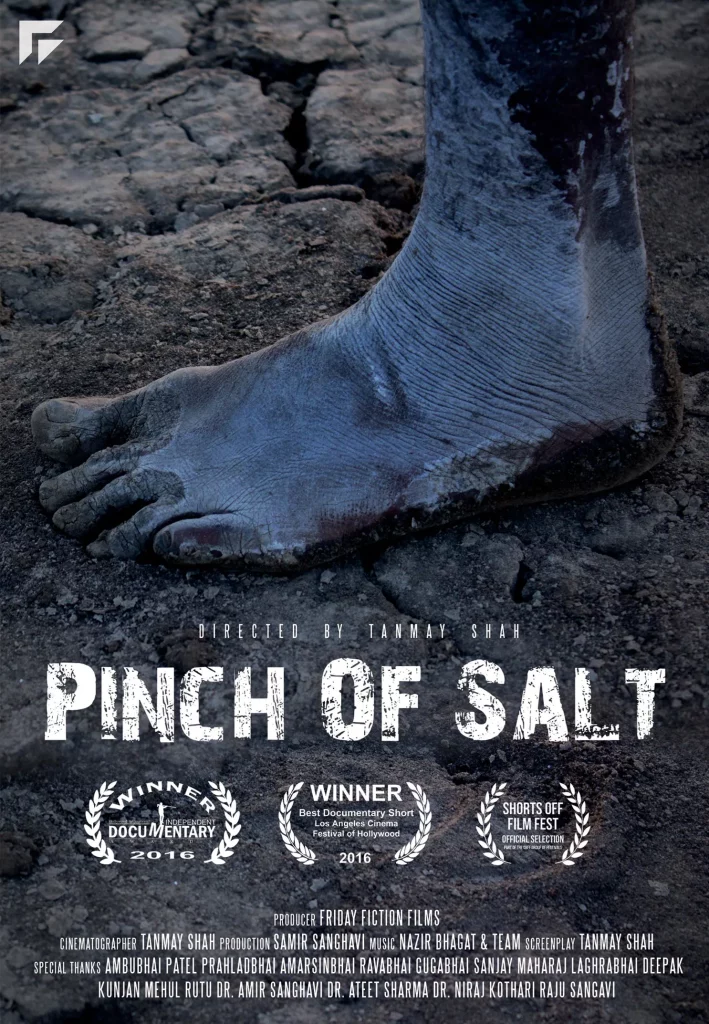
One of Tanmay’s most significant filmmaking projects has been Pinch of Salt, a documentary about salt workers in the Little Rann of Kutch. Its setting is distinctly Indian, but its central concerns are familiar across countries: labour, dignity and the conditions in which people earn a living.
The film draws attention to an everyday commodity that most people rarely think about beyond its place on the dining table. Salt reaches homes with little visible trace of the people who produce it. By bringing the workers and their circumstances into focus, the documentary encourages viewers to think about the human effort behind something they take for granted.
International screenings have also made Tanmay Shah more conscious of the responsibility involved in representing people to audiences who may know little about their lives. A documentary could be someone’s first encounter with a place or community. What the filmmaker chooses to show, and what remains outside the frame, can shape that understanding.
“I try to remember that the people in a documentary have lives beyond the story I am telling,” he says. “Their complexity should survive the process of making the film accessible to an audience.”
He does not believe a film needs to lose its local character to appeal to international viewers. Instead, he focuses on providing enough human context for audiences to understand a world they may not have encountered before. Personal experiences, he believes, can also influence how people respond to a film, sometimes more than nationality. Someone who has lived with water scarcity, for instance, may connect differently with images of a changing landscape than someone who knows the issue mainly through news reports.
View this post on Instagram
UNESCO selection brings climate art into focus
Over time, Tanmay has expanded his practice beyond filmmaking into painting and photography. These mediums allow him to explore subjects without the need for a film’s narrative or running time. A photograph can capture a moment, while a painting can use colour and imagery to express an idea.
Cinema continues to influence his visual art, particularly his attention to framing, light and what an image reveals or leaves unseen.
This approach comes together in Borrowed Earth, a series presented through UNESCO’s Art for Earth: Climate Creativity Lab 2026. The initiative brings artists and creative practitioners from across the Asia-Pacific region into a conversation about climate change and the role of art in raising awareness. Shah’s project comprises 26 acrylic paintings and 32 photographs, organised into four sections: Distance, Reflection, Intervention and Fragility.
The series examines how people relate to the natural world, including the gap between knowing that the environment is under pressure and recognising how everyday human actions contribute to it.
The title poses a question central to the project: how should people treat a world they occupy temporarily, when the consequences of their decisions will extend into the lives of future generations?
The UNESCO selection has brought an independently developed project into an international exchange with practitioners from across the Asia-Pacific. The process of listening and representing people responsibly is important. The value of an artwork lies not only in the image but also in how thoughtfully it engages with the people and places behind it.
Tanmay Shah
His interest in landscapes has also been shaped by experiences in different parts of the world. Photographing the Northern Lights in Alaska brought him face to face with the scale and beauty of nature. Working in the salt landscape of Kutch, meanwhile, made him more aware of the human labour behind an apparently stark and expansive terrain. Rather than treating photographs as proof of environmental change, he sees these experiences as ways of noticing how a place is inhabited, what sustains it and what may remain hidden behind a beautiful view.
Taking Indian stories into wider conversations
For Shah, filmmaking, painting and photography are connected ways of exploring people and the places they inhabit. His work may begin with an Indian community or landscape, but the questions it raises about livelihoods, environmental change and human relationships are relevant across geographical boundaries.
His father remains an important influence. The two also came together professionally in Walls That Matter, a film that allowed Shah to observe someone he had known all his life through the lens of his creative practice. It brought family and filmmaking into the same space, offering a different understanding of a familiar relationship.
Looking ahead, he hopes Borrowed Earth will reach more audiences in India and overseas, particularly through exhibitions that encourage conversations with students, artists and people working on environmental issues. In filmmaking, he wants to continue exploring lives shaped by labour, land and climate.
These are subjects he believes deserve more than a passing look. “They need time,” he says. “Their complexity becomes clearer through returning, listening and allowing a story to develop beyond the first impression.”


Written By: Mallik Thatipalli
Bala Ayyappa: From Thanjavur to London, exploring heritage through art

Written By: Vikram Sharma