October 17 2026
Bala Ayyappa: From Thanjavur to London, exploring heritage through art
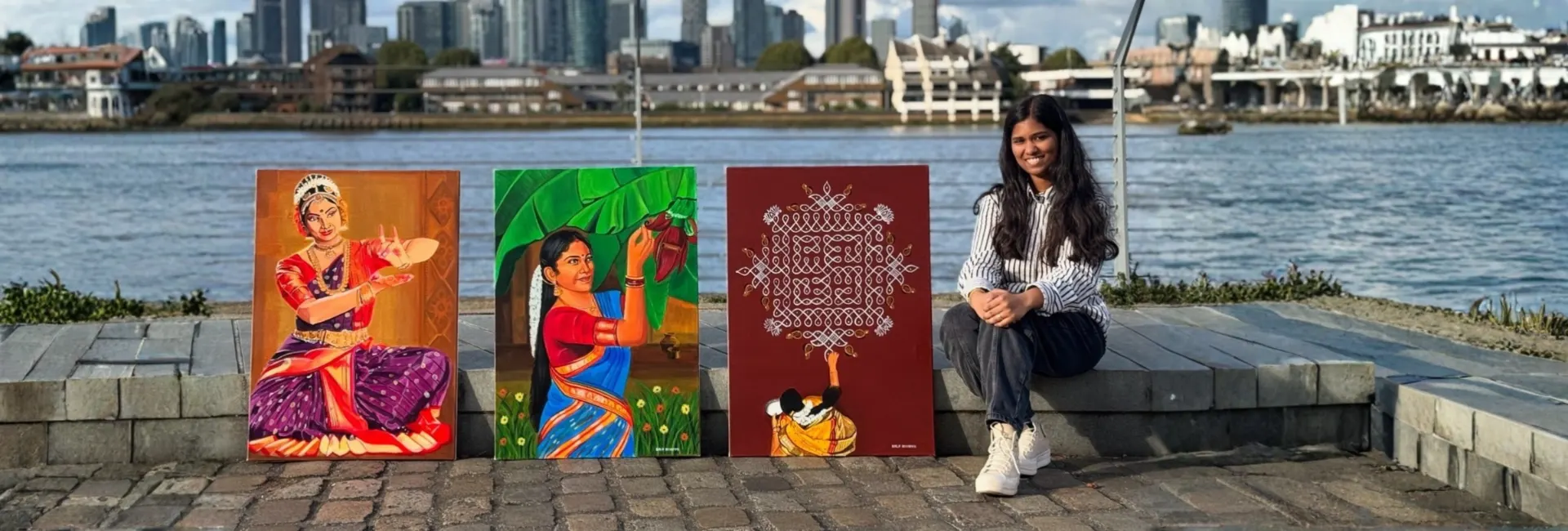
(Oct 17, 2026) From Thanjavur’s rich artistic traditions to London’s contemporary art scene, multidisciplinary artist Bala Ayyappa draws on her South Indian heritage to explore gender, identity and belonging. Alongside her professional work in cultural production in the UK, she continues to develop her own creative practice through exhibitions, design projects, photography and collaborative arts initiatives.
For artist Bala Ayyappa, growing up in Thanjavur meant living amid art without always knowing who made it. On her way home from school, she passed temple architecture, antique shops filled with Thanjavur paintings and dolls, and artisans working in open huts to make the Saraswathi Veena. Classical dancers crossed the streets, while Carnatic music drifted from homes. These encounters formed the visual and cultural vocabulary of her childhood, although the people behind much of this creative heritage rarely received the recognition they deserved.
Today, based in East London, Bala draws on those early memories to examine the relationship between cultural inheritance, gender and everyday life. Her multidisciplinary practice moves between painting, photography and textile-inspired approaches, often beginning with a familiar ritual or an overlooked detail. Rather than treating tradition as something to be preserved unchanged, she asks what happens when inherited practices are examined more closely, particularly when they carry expectations about how women should live.
Her painting When Was the Last Time You Saw a Firefly?, exhibited at Tower Gallery in Plaistow as part of Women by Women exhibition, offers a telling example. Inspired by memories of her mother drawing kolam patterns outside their home, the work brings together childhood, nature and the often-unquestioned responsibilities assigned to women. It is a personal memory that opens into a wider conversation about who sustains tradition and who gets to question it.
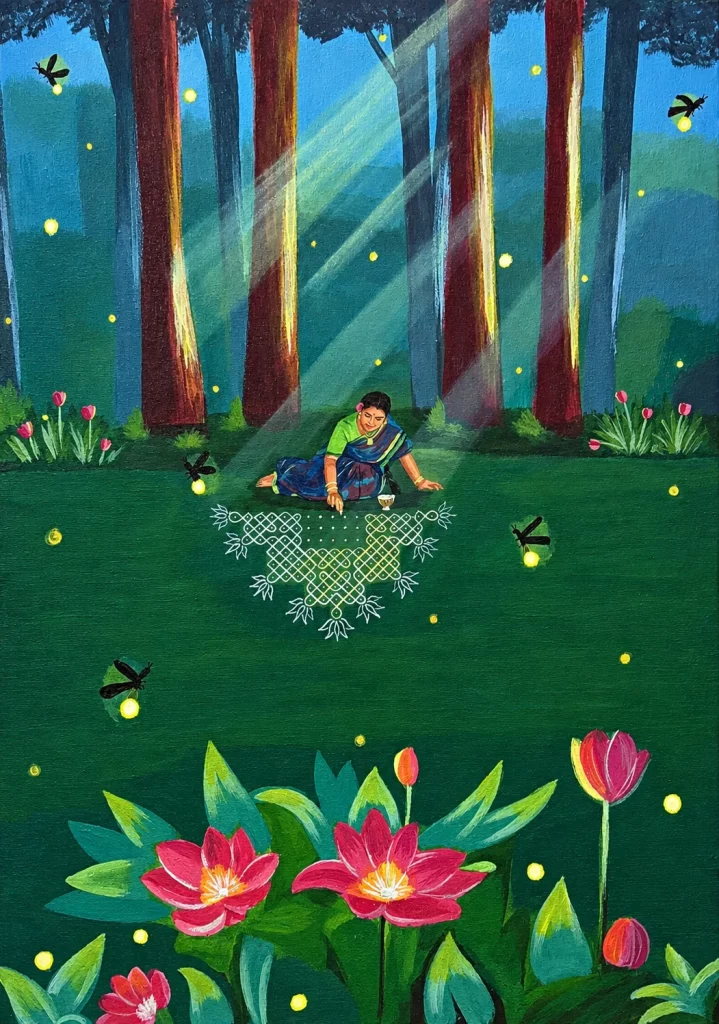
Bala Ayappa’s painting ‘When was the last time you saw a firefly’
From Thanjavur to London: Learning to see home differently
Bala’s relationship with art began long before she thought of it as a career. Drawing and painting were part of her childhood, and school competitions gave her opportunities to share her work. She also enjoyed decorating classroom boards with doodles and calligraphy. Yet the craft traditions surrounding her offered another kind of education, one rooted in observation rather than formal instruction.
When she moved to London to pursue an MA in Design at the University of Greenwich, she got access to galleries, museums and a wider contemporary art community. This prompted her to look differently at the culture she had left behind.
Moving to London has changed the way I look at South India, and I feel that distance has given me a kind of eagle’s eye view of the culture I grew up in.
Bala Ayappa
Before pursuing Master’s in Design, Bala trained in textile design for three years and worked as a Colour and Design Technologist in textile manufacturing. Her work involved designing patterns for children’s garments for brands including Primark, Sainsbury’s TU, GAP and Carter’s. She developed motifs, worked on patterns and sizing using AutoCAD, and handled colour matching and selection. She also passed the Farnsworth-Munsell 100 Hue Test, which measures colour discrimination, with zero errors.
The experience sharpened her eye for colour, texture, proportion and detail. It also gave her an understanding of how an idea travels from an initial drawing to a finished product. Although her practice has since moved beyond commercial design, this attention to material remains central to the way she works.
“I usually begin with a thought, a memory or something I have observed in everyday life rather than with a particular medium,” she explains in a chat with The Global Indian. The idea determines whether she turns to painting, photography or another form, although the material can influence the outcome in unexpected ways. A change in texture, the behaviour of paint or the way a pattern develops may take the work somewhere she had not initially imagined.
London also expanded her understanding of what art could do. She began to see that the techniques she had acquired were only tools, and that the stories behind images mattered just as much as their appearance. Observing people, their relationships and their everyday routines became an increasingly important part of her practice.
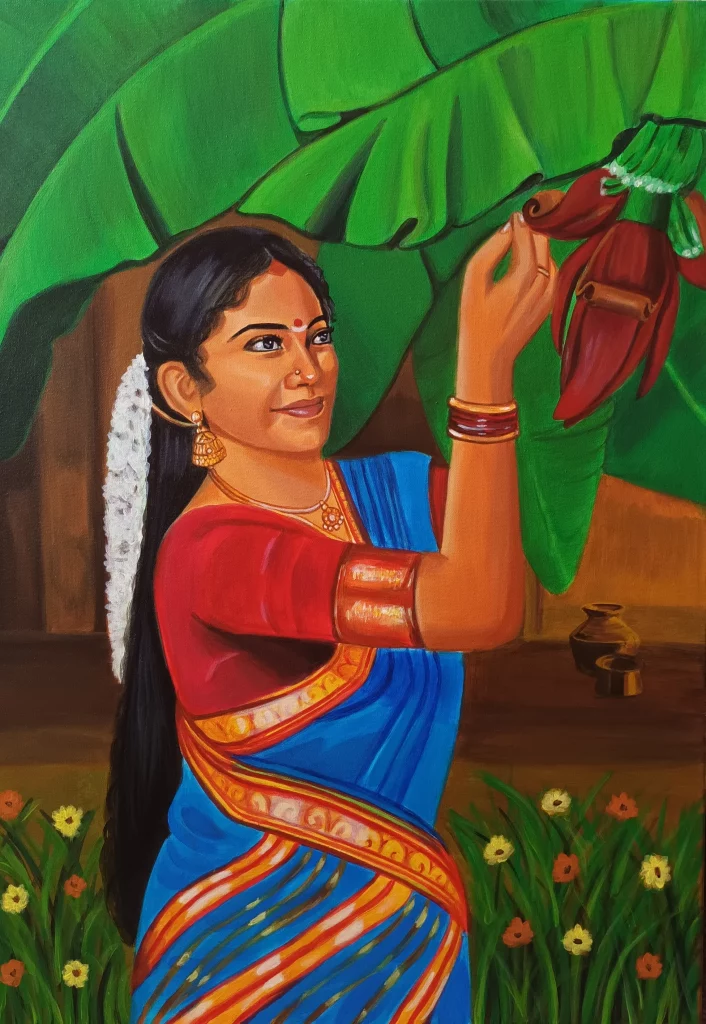
Bala Ayappa’s painting ‘She who was the sun’
Revisiting heritage through a gender lens
One of the most significant memories to find its way into Bala’s work is her mother’s daily kolam. As a child, she watched her mother sweep the threshold with a broom made from dried coconut leaves before drawing intricate geometric patterns with rice flour. It was a familiar ritual, performed so regularly that its significance was easy to overlook.
As she grew older, Bala began to question the gendered expectations surrounding the practice. Kolam is valued for its beauty and its association with welcoming positivity into the home. Traditionally made with rice flour, it can also provide food for insects and birds, connecting domestic ritual with the surrounding ecology. Yet Bala wondered why the responsibility for maintaining it fell predominantly on women.
“I began to see Kolam as an ecofeminist art form, holding both beauty and contradiction,” she says. The practice carries artistic knowledge across generations, but it can also reveal how certain forms of labour become women’s responsibility simply because they have always been performed that way.
In When Was the Last Time You Saw a Firefly?, a woman in a blue-green saree draws a kolam amid deep greens, suggestions of sunlight and the presence of fireflies. The natural elements evoke the intimacy of childhood memory, while the ritual at the centre of the painting raises questions about care, work and the expectations attached to womanhood.
The title returns to the world Bala remembers from childhood, when fireflies were part of the landscape. It also suggests a wider concern with what disappears as environments and ways of life change. The painting does not separate ecological loss from cultural memory or women’s labour. Instead, these concerns sit alongside one another, connected by the ordinary act of drawing a pattern at the doorstep.
Other works explore related ideas through different memories and forms. Where Movement Speaks considers Bharatanatyam and South Indian classical dance, while Where the Dots Lead uses kolam as a metaphor for inherited paths. She Who Was the Sun pays tribute to her mother and the everyday acts of care that often go unremarked. In Since Forever, a fine-art photograph made in India in early 2023, Bala considers grief and her mother’s experience of rebuilding life after loss.
Family is therefore more than a subject in her practice. Her mother and elder sister remain important sources of inspiration, and the artist often draws on the gestures, experiences and routines she observes in their lives. Yet she is careful not to present her own experience as representative of every South Indian woman. The work begins with what she knows, then makes room for viewers to bring their own experiences to it.
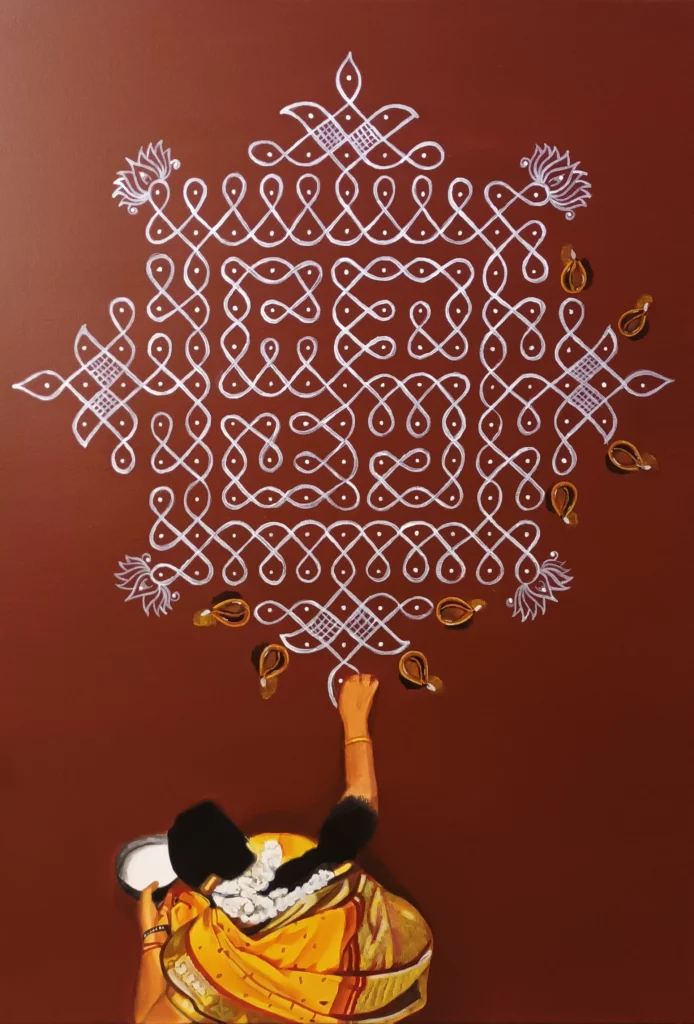
Bala Ayappa’s painting ‘Where the Dots Lead’
Between cultural inheritance and individual identity
The artist is interested in traditions not as fixed relics but as practices that change with the people who carry them. She recognises the artistic knowledge embedded in South Indian culture, from flower garlands and jewellery to textile designs and traditional architecture. At the same time, she questions what happens when inherited customs become rules that people follow without examining their meaning or consequences.
Sometimes, the same practices that carry such beautiful artistic knowledge can also limit people’s freedom to think differently or move beyond what has been handed down to them.
Bala Ayappa
This tension is central to her approach. She does not want to romanticise tradition, but neither does she want to dismiss it. Instead, she asks who has the freedom to reinterpret a practice and who is expected to maintain it. The questions are especially pertinent when a ritual celebrates women’s creativity while leaving the labour and responsibility behind it largely unquestioned.
For Bala, the challenge is to hold affection and criticism together. Moving away from home has given her the distance to revisit familiar customs without simply reproducing them. She can appreciate their beauty and emotional value while considering the social expectations that accompany them.
That balance has also shaped the way audiences encounter her work in London. Viewers have responded to the gender-based struggles represented in her paintings, particularly when they recognise that these are not merely historical concerns. The rituals she explores remain part of contemporary life, making their implications immediate rather than distant.
How distance reshaped her sense of belonging
Living between Thanjavur and London has not made Bala feel less connected to home. If anything, distance has given her more freedom to understand it on her own terms. What once seemed ordinary can now become the starting point for an artwork, a question or a reconsideration of what she has inherited.
She sees this shift as important to her development as an artist. Encountering different communities and ways of living has broadened her perspective, while returning to memories of South India has helped her identify the concerns that matter most to her. The result is a practice rooted in personal experience but open to conversations beyond its original context.
I no longer see heritage as something that must be preserved exactly as it was handed down to us. I see it as something living, something that changes as we change, and something each generation has the right to interpret differently.
Bala Ayappa
Away from her work, Bala enjoys sitting beneath a large tree and watching the sky. She also volunteers at galleries and museums, remaining connected to the art world as a place of discovery and learning. Her instinct to observe continues outside the studio, in the small details and encounters that may eventually find their way into a painting or photograph.
Looking ahead, she wants her work to make space for more nuanced conversations about identity, belonging and the traditions people inherit. She is less interested in offering definitive answers than in allowing seemingly familiar practices to be seen from another angle.
- Follow Bala Ayappa on Instagram
- To learn more about Bala Ayappa’s artistic practice, visit her website
ALSO READ: The Singh Twins: UK artists celebrating unity in art and identity
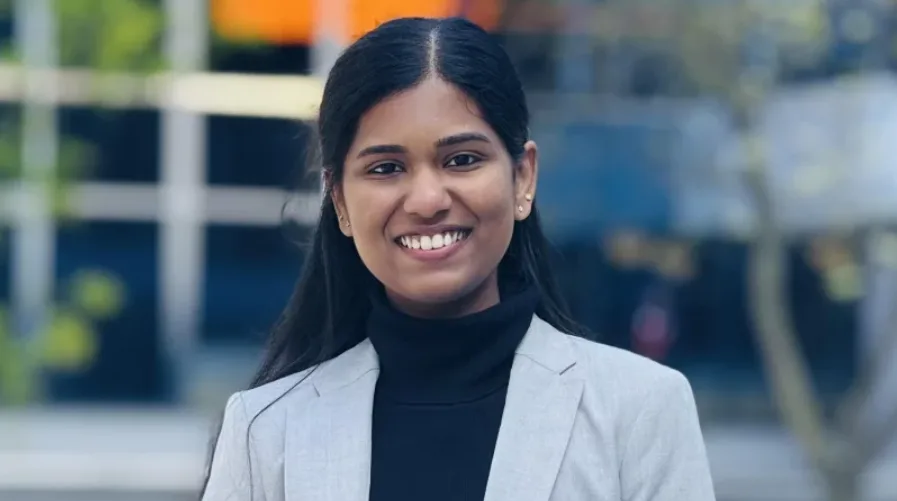
Bala Ayappa
| Born | Jun 6, Thanjavur, India |
| Based | London, UK |
| Studied | Bachelor's in Textile Science, Central University of Tamil Nadu, India | MA in Design, University of Greenwich, UK |
| Languages | Tamil, English |
Signature work
Bala Ayyappa’s multidisciplinary practice explores South Indian heritage, gender and identity through painting, photography and textile-inspired approaches.
Idea
Reinterpreting South Indian heritage and everyday rituals to explore gender, identity and cultural inheritance.
Network
Engaging with artists, galleries and cultural organisations in London, while drawing inspiration from her roots in Thanjavur.
Impact
Encouraging conversations about women's labour, inherited traditions and the freedom to reinterpret cultural practices across generations and cultures.
Inspired by Bala Ayappa 's journey?
Yours follows the same Hero's pattern — Separation, Initiation, Transformation, Return.
Share with


Written By: Deepa Natarajan Lobo
Priyanka Rana: The Bay Area sculptor listening to what wood has to say