
September 07 2026
Manjiri Bakre: From research in the US and Singapore to a Made-in-India AI innovation in breast cancer diagnostics

(Sep 7, 2026) After more than two decades of R&D across India, the US and Singapore, cell biology expert Dr Manjiri Bakre returned to India to found OncoStem Diagnostics, where she combines AI/ML and other advanced technologies to develop personalised cancer diagnostics, including CanAssist Breast, an AI-based test that helps determine which early-stage breast cancer patients may safely avoid chemotherapy.
When Manjiri was doing her PhD, she lost a close friend to breast cancer. She had early-stage disease and completed treatment, but the cancer returned. That experience stayed with Manjiri and made her wonder if there was a better way to identify which cancers were likely to come back.
After spending several years in research, she decided to pursue that question. She worked closely with oncologists across India and realised that many treatment decisions were still being made using conventional clinical parameters, often leading to chemotherapy being prescribed as a precaution.
But the question that stayed with her was, “Is it necessary?” That eventually led her to found OncoStem Diagnostics and develop its flagship product CanAssist Breast, an AI-based test that helps determine which early-stage breast cancer patients may safely avoid chemotherapy.
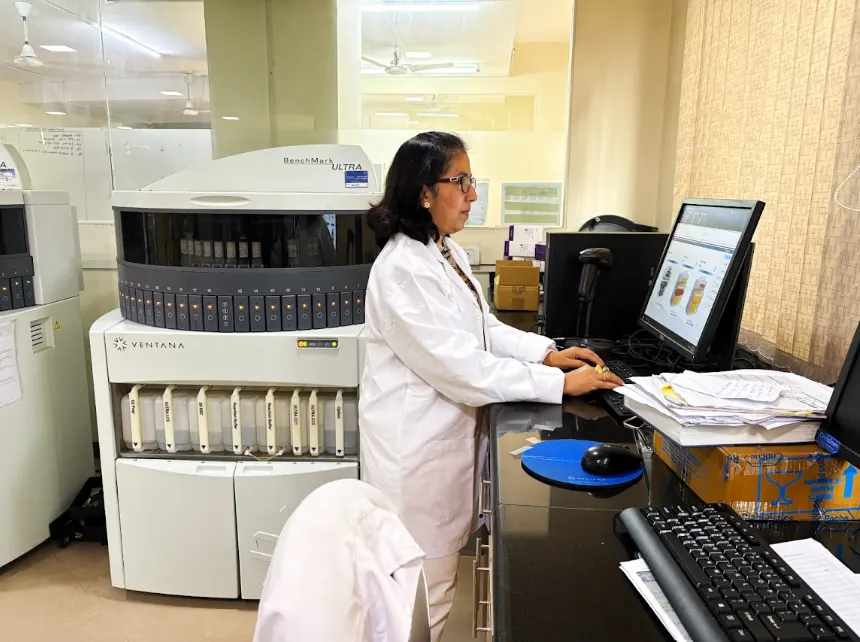
From Mumbai to global cancer research
Manjiri was born in Pune and grew up in Mumbai. She completed her bachelor’s degree in microbiology at R. Ruia College, Mumbai, followed by a master’s in microbiology and biochemistry from the University of Baroda.
“My love and curiosity for science eventually led me to pursue a PhD in cell biology at the Indian Institute of Science (IISc), Bengaluru. After my PhD, I moved to the United States, where I completed two postdoctoral fellowships, first at Icahn School of Medicine at Mount Sinai in New York and later at the University of California, San Diego. Those years exposed me to cutting-edge research and gave me a global perspective on science and a great perspective on work ethics. I later joined the Genome Institute of Singapore, where I worked in the field of stem cell research,” she recalls in a chat with The Global Indian.
Science has always been a constant in her life. Even as a child, Manjiri was curious and loved trying to understand how things worked. During college, she often stayed back in the laboratory long after classes had ended, simply because she enjoyed experimenting and figuring things out.
The medical field was one of the professions she was interested in. When that did not work out the way she had hoped, she chose microbiology instead.
Having doctors, researchers and microbiologists in my family also helped me realise that there were many ways to build a meaningful career in science, and research could have just as much impact as clinical practice.
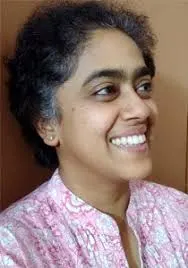
Dr Manjiri Bakre
From research in the US and Singapore to Indian innovation
Her years abroad gave Manjiri more than research experience. They shaped the way she approached problems, conducted experiments and eventually built a healthcare company.
During her PhD and postdoctoral years in the US, she learnt the importance of attention to detail and of working “hard and smart”. In scientific research, even a small observation or a tiny mistake can change the outcome of an experiment. Singapore brought another lesson, with its emphasis on discipline, processes and decisions based on thorough analysis.
Mumbai, meanwhile, taught her the value of time and hard work. “It’s a city that moves fast, and you naturally develop a sense of urgency and learn to make the most of every opportunity,” she says. “Looking back, I think every place added something to the way I think and work today,” she adds.
Returning to India with a global perspective
After her work in Singapore, Manjiri returned to India with a desire to use the knowledge and experience she had gained abroad to create something useful for patients.
I founded OncoStem Diagnostics, to develop new and innovative tests for cancer patients to plan their treatment. It is indeed heartwarming to see that the test developed by us is being used across India and has helped more than 12,000 patients till date.
Dr Manjiri Bakre
Her more than two decades of R&D experience across India, the US and Singapore had spanned both basic and applied research in academic and corporate settings. It had also given her experience across multiple technologies, including AI/ML, microfluidic assays, microarrays and proteomics.
At OncoStem, that scientific foundation has become central to her role as Founder and CEO. Alongside driving fundraising and investment management, Manjiri draws on her technical and research experience to steer the company’s R&D efforts.
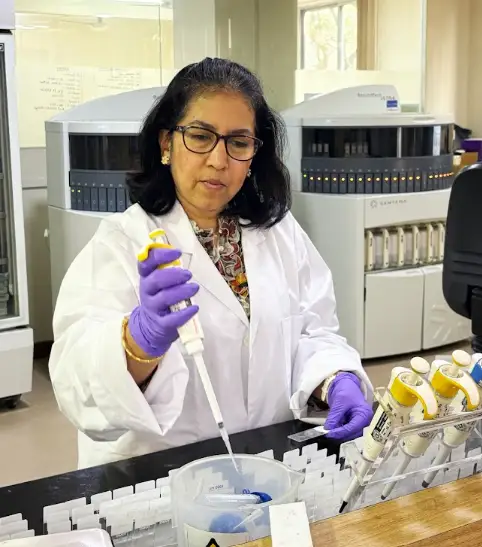
CanAssist Breast and the chemotherapy question
As the Founder and CEO of Bengaluru-based OncoStem Diagnostics, a biotechnology company focused on oncology and precision diagnostics, Manjiri leads the development of innovative tests designed to help doctors make more informed and personalised treatment decisions.
Its flagship product, CanAssist Breast, helps predict the risk of recurrence in a subset of early-stage breast cancer patients, giving oncologists additional information when deciding whether chemotherapy is necessary.
For most patients, hearing the word ‘chemotherapy’ brings a lot of fear and uncertainty. They have seen family members or friends go through it and know the physical, emotional, and financial toll it can take. What CanAssist Breast does is bring a sense of clarity to that decision of ‘Will I benefit from chemotherapy?’
Dr Manjiri Bakre
By understanding the biology of the tumour, the test helps identify patients whose tumours have less aggressive characteristics and who may safely avoid chemotherapy, while identifying those whose tumours show more aggressive biology and may benefit from it.
Nearly 70% of patients who underwent the test were able to safely avoid chemotherapy, according to Manjiri, giving them confidence in their treatment plan and helping them avoid unnecessary treatment.
Building trust in an Indian-made cancer test
Developing the technology was only one part of the challenge. Manjiri also had to convince doctors and the wider healthcare ecosystem that a test developed in India could be as robust and reliable as those developed elsewhere.
“There’s still not enough trust for Made in India products,” she says. Over time, she and her team worked to overcome that perception by generating clinical evidence and working closely with oncologists.
“Over time we eventually overcame this by constantly generating strong clinical evidence and working closely with oncologists to earn their trust. In addition, my educational background helped in building confidence among doctors. It didn’t happen overnight, but over 15 years, that trust has grown because we stayed focused on the science and the needs of patients,” she says.
The experience also taught Manjiri that healthcare entrepreneurship is a long game. Developing a new prognostic test requires years of research, validation and perseverance. Unlike many technology businesses, there is no quick hockey-stick growth in healthcare diagnostics.
A career built on research and innovation
Manjiri’s work has earned her several recognitions, including the Young Scientist Award from the International Union of Biochemists and Molecular Biologists in 2006, the Best Entrepreneur Award at the Global Women in STEM Start-up Awards in 2017 and the Entrepreneur of the Year Award from the Indian Achiever’s Forum in 2021.
She has published in peer-reviewed journals, including Nature Medicine, holds patents, mentors students and has spoken at international conferences in the US, Canada, Australia, Spain and South Korea. During the Covid-19 pandemic, she also volunteered with iSPIRT on rapid test development.
OncoStem has received recognition for its innovation as well, including the NASSCOM Best Innovation of the Year award, the ETHealthworld Health-Tech Innovator of the Year award in 2019-20 and the Aegis Graham Bell Award in 2021.
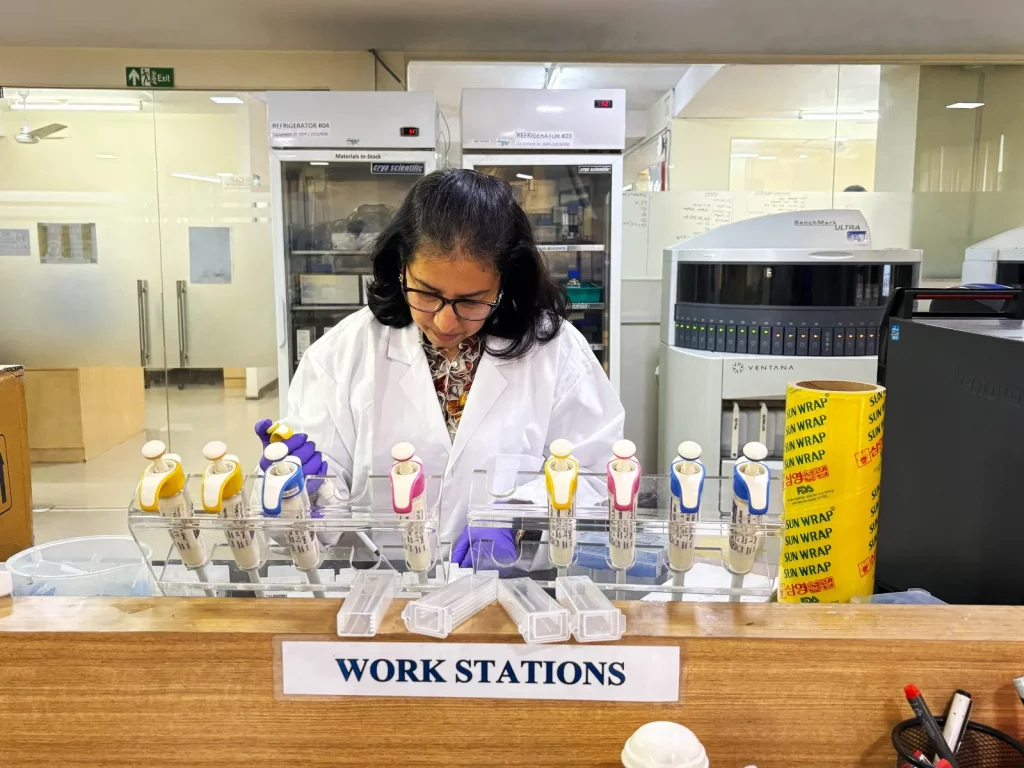
How global experience shaped OncoStem
Her international exposure continues to influence how Manjiri and her team have built OncoStem and developed CanAssist Breast.
I realised early on that while science is universal, the way it is approached and translated into real-world impact can be very different across countries. One of the biggest influences has been the emphasis on attention to detail. At OncoStem, every sample, every data point, and every patient matters. In precision diagnostics, even the smallest detail can make a difference, so accuracy and quality have always been non-negotiable for us.
Dr Manjiri Bakre
Her years abroad also reinforced the importance of collaboration. Taking an innovation from the laboratory to the patient requires researchers, clinicians, hospitals and industry to work together. That understanding has shaped the partnerships OncoStem has built over the years.
Why healthcare innovation is a long game
For Manjiri, building a healthcare company is fundamentally about patience, evidence and solving a genuine problem.
“My advice would be to focus on solving a problem that genuinely needs to be solved rather than chasing quick success. Take the time to build it well, never compromise on quality or attention to detail, and be patient-centric in your approach,” she says.
Her definition of being a Global Indian brings together the different chapters of her journey, from Mumbai and Bengaluru to New York, California and Singapore.
My time in the US and Singapore exposed me to different ways of thinking, problem-solving skills, different work cultures, work ethics, and thus different approaches to science and innovation. Those experiences shaped the way I think and the way I have built OncoStem. When I decided to return to India, I wanted to apply everything I had learnt abroad to solve a problem that mattered here. I believe being a global Indian is about taking the best of what you’ve learnt globally and using it to create an impact where your roots are.
Dr Manjiri Bakre
Making CanAssist Breast more accessible
Looking ahead, her immediate plan is to make CanAssist Breast available as a kit so hospitals and laboratories can perform the test at their own facilities instead of sending samples to a central laboratory.
“This has the potential to make the test more accessible, reduce turnaround time, and help many more patients benefit from it. Beyond that, we will continue developing innovative diagnostics for cancer that can enable more personalised treatment decisions,” she mentions.
Outside work, Manjiri enjoys embroidery, painting and cooking new dishes, particularly baking. She also enjoys hiking, running and staying fit.
- Follow Manjiri Bakre on LinkedIn
ALSO READ: Dr Vijay Anand Reddy: The oncologist who set aside a future abroad to uplift cancer care in India
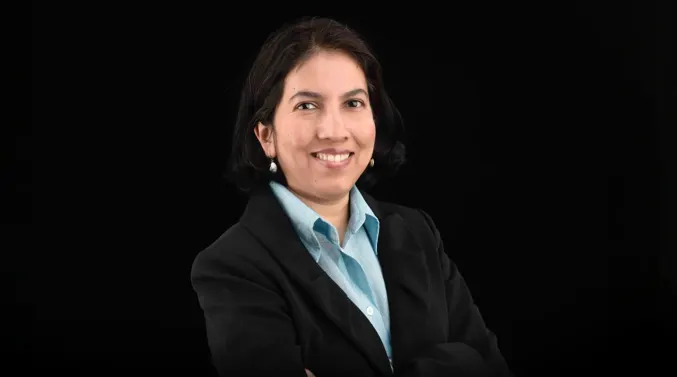
Dr Manjiri Bakre
| Born | Nov 4 |
| Based | Bengaluru, India |
| Studied | BSc, R. Ruia College, Mumbai | MSc, University of Baroda | PhD at IISc, Bengaluru |
| Languages | Marathi, Hindi, and English |
Signature work
Her venture OncoStem Diagnostics has developed CanAssist Breast, an AI-based diagnostic test that helps predict recurrence risk in certain early-stage breast cancer patients and supports oncologists in deciding whether chemotherapy is necessary. Used across India, the test has helped more than 12,000 patients, with nearly 70 percent of those tested able to safely avoid chemotherapy, according to the company.
Idea
To use advanced technologies such as AI/ML, cell biology and proteomics to develop personalised cancer diagnostics.
Network
Works closely with oncologists, researchers, hospitals and industry partners to translate scientific research into clinical applications.
Impact
CanAssist Breast helps oncologists assess recurrence risk and make more informed chemotherapy decisions, with the test used across India and more than 12,000 patients helped to date.
Giving Back
Mentored students, shared her expertise at international conferences and volunteered with iSpirt on rapid test development for Covid-19.
Inspired by Dr Manjiri Bakre 's journey?
Yours follows the same Hero's pattern — Separation, Initiation, Transformation, Return.
Share with



Written By: Vikram Sharma
Padma Shri Dr Manjula Anagani: Evolving the face of women’s healthcare
Cover Story, Indian Doctors

Written By: Vikram Sharma