
July 14 2026
Mahzarin Banaji: Harvard psychologist behind widely used Implicit Association Test, now among America’s Great Immigrants

(Jul 14, 2026) Few psychologists have changed how the world understands itself as profoundly as Mahzarin Banaji. Born in Secunderabad and educated in Hyderabad before leaving for America with just 80 dollars, she went on to help define the science of implicit bias and co-create one of psychology’s most influential research tools. As the United States celebrates 250 years of independence, Banaji’s selection among the Carnegie Corporation’s Great Immigrants, Great Americans brings renewed attention to both her groundbreaking work and the enduring value of immigration.
Mahzarin Banaji has spent the better part of four decades teaching the world that the mind holds beliefs it does not openly admit to, and makes hidden associations that shape judgement long before conscious thought catches up. Alongside a small circle of collaborators, she helped transform that insight into one of modern psychology’s defining frameworks. The journey began in the twin cities of Hyderabad and Secunderabad, in a Parsi household in the years after Indian independence. It has since taken her to Harvard University and, this year, to the Carnegie Corporation of New York’s list of Great Immigrants, Great Americans, announced as the United States marked 250 years of independence.
A childhood in Secunderabad
Banaji was born in 1956 in Secunderabad into a Parsi family belonging to India’s small Zoroastrian community, only nine years after Indian independence, when the country’s average life expectancy was around thirty years. Reflecting on those early years in a recent television interview, she spoke of growing up in a nation emerging from colonial rule, where investment in education offered young Indians hope for a different future.
In 1947, Indians on average lived to the age of thirty. I was born shortly after that, and still I consider myself very lucky, because I was born in a country that decided to invest in education, and I benefited from that.
Mahzarin Banaji
She credits her parents for making that investment possible. “My parents sent me to a very good school, and paid, I think, eleven rupees a month, to send me there,” she recalled. Looking back at the child she once was, she added, “I would say to that girl that she had no idea how lucky she was.”
Her schooling took her through St Ann’s High School in Secunderabad, followed by a bachelor’s degree at Nizam College and a master’s in psychology from Osmania University in Hyderabad, laying the foundation for the discipline she would later help reshape.
Eighty dollars and a one-way ticket
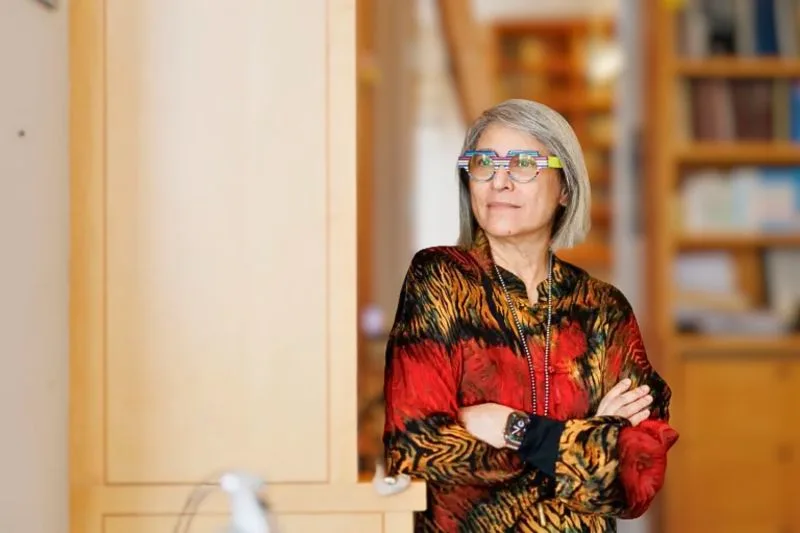
At twenty-four, Banaji left India for the United States with eighty dollars in her pocket to pursue a doctorate in psychology at Ohio State University. It is a detail that has come to symbolise the distance between her modest beginnings and the endowed Harvard professorship she would later hold.
Banaji completed her PhD in 1986 before undertaking a postdoctoral fellowship at the University of Washington, marking the beginning of a distinguished academic career in the United States.
Finding a home in American academia
After completing her postdoctoral research, Banaji joined Yale University, where she spent fifteen years on the faculty and held the Reuben Post Halleck Professorship of Psychology. In 2002, she moved to Harvard University as the Richard Clarke Cabot Professor of Social Ethics. She later held senior appointments at Harvard’s Radcliffe Institute for Advanced Study and the Santa Fe Institute, establishing herself as one of the world’s foremost scholars of social cognition.
The idea that defined a career
Working alongside long-time collaborator Anthony Greenwald and other pioneers in social cognition, Banaji helped establish the modern scientific understanding of implicit bias, the idea that people carry unconscious attitudes and stereotypes capable of shaping their judgements even when their conscious values point in another direction.
In 1998, together with Greenwald and Yale graduate student Brian Nosek, she co-developed the Implicit Association Test, a research tool that has since been completed by tens of millions of people around the world seeking to better understand their own hidden associations relating to race, gender, age and other social categories.
The test quickly travelled far beyond psychology laboratories. Its findings have informed training programmes in hospitals, courtrooms, police departments, universities and corporate boardrooms, helping bring unconscious decision-making into public conversation.
Turning the test on herself
Part of what gave Banaji’s work its credibility was her willingness to examine her own mind. She has spoken candidly about discovering biases in her own test results, describing the experience as transformative and a reminder that even our deepest convictions do not automatically protect us from unconscious bias.
From Blindspot to the mainstream
Banaji’s 2013 book with Greenwald, Blindspot: Hidden Biases of Good People, became a bestseller and remains one of the most widely cited works on unconscious bias. Her contributions have earned election to the National Academy of Sciences, the American Psychological Association’s Award for Distinguished Scientific Contributions, and, in 2024, the BBVA Foundation Frontiers of Knowledge Award.
The Great Immigrant recognition
Banaji’s latest recognition arrives at a particularly symbolic moment. This year, the Carnegie Corporation of New York named her to its annual Great Immigrants, Great Americans list, honouring naturalised citizens whose work has enriched American society. The 2026 edition coincides with the 250th anniversary of the Declaration of Independence and, for the first time, also commemorates eight immigrant signatories of the original 1776 declaration.
Asked about the significance of the occasion, Banaji pointed directly to that historical parallel. “I don’t know if you noticed, but in this year’s inductees, there are not just those of us who are living, but the Carnegie Foundation has decided to acknowledge eight Americans posthumously, who were signers of the original Declaration of Independence in 1776,” she said.
“So when America decided that it wanted to be an independent country from the British, and they wrote this incredible document called the Declaration of Independence, among the signers of that declaration in 1776 were eight naturalised citizens. They were not born in America, and yet they were part of asking for American independence. So this is a country that was created out of immigrants.”
Recognition amidst a national debate
Her comments resonate against today’s immigration debate in the United States, where immigration policy and rhetoric continue to dominate national conversation. Asked about receiving the honour during the time when America is celebrating 250 years of Independence, she mentioned, “I am very proud that I was born and raised in India, and benefited so much from being from there, I also lucked out in that I came to America, a country that allowed me to do the kind of work that I have been able to do,” adding, “I am deeply grateful to this country. I am an American patriot, as I am an Indian patriot.”
She was equally candid about her concerns, and hopeful that America can continue to remain open and welcoming to immigrants.
This moment in America is a difficult one. There are aspirations that many of us had that allowed us to come here, and it’s not clear whether America will remain that kind of country. America’s greatness is that it’s a country of immigrants.
Mahzarin Banaji
The next chapter
Banaji’s research has increasingly turned towards artificial intelligence, examining how large language models absorb, reproduce and sometimes amplify the same hidden social patterns long observed in human cognition. It is a natural extension of the question that has guided her work for decades on how minds, human or otherwise, quietly inherit the assumptions of the societies that shape them.
More than four decades after leaving Secunderabad with eighty dollars and a place in graduate school, Banaji’s questions remain as relevant as ever. At a time when artificial intelligence is forcing society to confront new forms of hidden bias and immigration itself has become one of America’s defining public debates, her work continues to illuminate how deeply our unseen assumptions shape the world around us. Her latest recognition celebrates not only an extraordinary scientific career but also the enduring contribution of immigrants to the American story, a journey that began in post-independence India and helped change how the world understands the human mind.
Selected honours and recognitions
– 2026 – Named among the Carnegie Corporation of New York’s Great Immigrants, Great Americans
– 2024 – BBVA Foundation Frontiers of Knowledge Award (Social Sciences)
– 2020 – Elected to the American Philosophical Society
– 2018 – Elected to the U.S. National Academy of Sciences
– 2018 – U.S. Congress Golden Goose Award (shared with Anthony Greenwald and Brian Nosek)
– 2017 – American Psychological Association Award for Distinguished Scientific Contributions to Psychology
– 2017 – Awarded an Honorary Doctor of Humane Letters by Carnegie Mellon University
– 2014 – William James Fellow Award from the Association for Psychological Science (lifetime contributions to psychological science)
– 2009 – Elected Herbert Simon Fellow of the American Academy of Political and Social Science
– Corresponding Fellow of the British Academy
- Follow Mahzarin Banaji on LinkedIn
ALSO READ: Five Indian-origin achievers in Great Immigrants 2026 list as the US marks 250th year
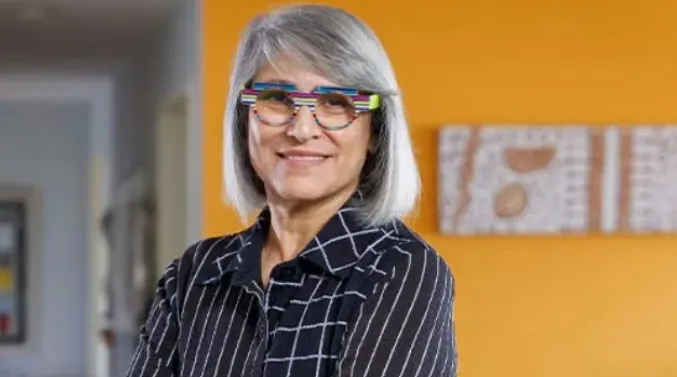
Mahzarin Banaji
| Born | 1956, Nagpur, Maharashtra, India |
| Based | Cambridge, Massachusetts, USA |
| Studied | BA in Psychology, Nizam College, Hyderabad | MA in Psychology, Osmania University, Hyderabad | PhD in Psychology, Ohio State University, USA | Postdoctoral Fellowship, University of Washington, USA |
| Languages | Gujarati, Telugu, Hindi, English |
Signature work
The Implicit Association Test, developed by her with Anthony Greenwald in 1998, measures unconscious associations around race, gender, age and other social categories. Taken by millions worldwide, it became the empirical foundation of implicit bias research, transforming how psychology, law and workplaces address unintentional discrimination.
Idea
Defined implicit social cognition and coined implicit bias, showing unconscious attitudes can shape judgement even in people who see themselves as fair minded.
Network
Her career spans Yale, Harvard, Radcliffe, and Santa Fe Institute; she also served as President of the Association for Psychological Science.
Impact
The Implicit Association Test developed by her has been taken by millions worldwide, shaping practices in courts, hospitals and workplaces. Her book brought the idea mainstream, extending its reach well beyond academic psychology.
Inspired by Mahzarin Banaji 's journey?
Yours follows the same Hero's pattern — Separation, Initiation, Transformation, Return.

Share with



Written By: Amrita Priya
Five Indian-origin achievers in Great Immigrants 2026 list as the US marks 250th year
Cover Story, Indians in USA

Written By: Vikram Sharma