July 02 2026
Five Indian-origin achievers in Great Immigrants 2026 list as the US marks 250th year
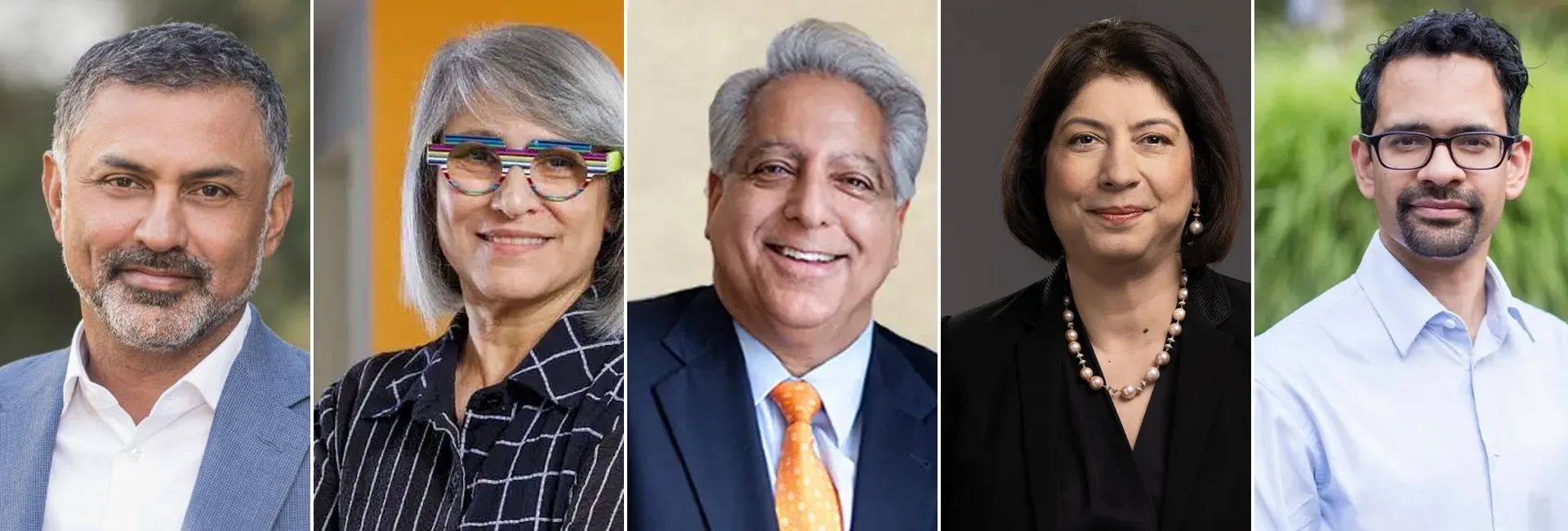
(Jul 2, 2026) On the eve of the United States’ 250th Independence Day, which falls on July 4, 2026, the Andrew Carnegie Foundation, formerly Carnegie Corporation of New York has named five people of Indian descent to its 2026 Great Immigrants, Great Americans list. Its a roll of honour that has, for over a decade, celebrated naturalised citizens who have shaped American life. Palo Alto Networks chairman and CEO Nikesh Arora, Harvard social psychologist Mahzarin Banaji, Harvard Medical School professor Dr Sanjiv Chopra, and Vertex Pharmaceuticals president and CEO Reshma Kewalramani feature among the 25 honourees drawn from 21 countries this year, alongside Kenyan-born Yale historian Sunil Amrith, whose parents emigrated from South India.
The 2026 class spans academia, business, medicine, and science, and will be celebrated through Carnegie’s annual Fourth of July campaign, which each year turns a spotlight on the contributions immigrants make to American public life.
For the Indian diaspora, the list is a familiar marker of a larger story, one of scientists, doctors, and executives who left home to build careers abroad. This year’s five honourees of Indian descent, connected to Ghaziabad, Secunderabad, Delhi, Mumbai, and Nairobi respectively, embody distinct routes through that story.
Nikesh Arora, Chairman and CEO, Palo Alto Networks
Immigrated from India to America in 1990
Nikesh Arora was born in 1968 in Ghaziabad, Uttar Pradesh. The son of an Indian Air Force officer studied at The Air Force School in Delhi before earning a degree in electrical engineering from the Indian Institute of Technology, Banaras Hindu University, in 1989. He went on to complete a master’s in finance from Boston College and an MBA from Northeastern University, laying the ground for a career that would move through telecommunications, technology, and eventually cybersecurity.
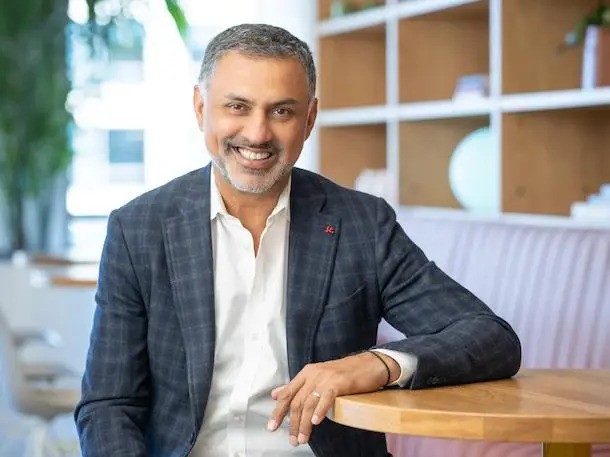
Arora’s early professional years were spent in finance and telecom roles, including as chief marketing officer for T-Mobile International and as founder of T-Motion, which later merged into T-Mobile. His defining decade came at Google, where he rose to senior vice president and chief business officer, becoming the company’s highest paid executive by 2013. In 2014, he moved to SoftBank as president and chief operating officer, a role from which he departed in 2016 after the company’s succession plans shifted.
In June 2018, Arora was named chairman and CEO of Palo Alto Networks, a position he still holds. Under his leadership, the company has grown into the world’s leading cybersecurity firm, expanding aggressively into AI driven security tools such as Precision AI. He sits on the board of Uber Technologies and has previously served on the boards of Sprint, Colgate-Palmolive, and Yahoo Japan, among others, marking him as one of the most consistently influential Indian-origin executives in Silicon Valley.
Mahzarin Banaji, Professor of Psychology, Harvard University
Immigrated from India to America in 1980
Mahzarin Banaji was born in 1956 and raised in Secunderabad in a Parsi family, attending St Ann’s High School before completing a BA at Nizam College and an MA in psychology at Osmania University, both in Hyderabad. She left India for doctoral study at Ohio State University, where she received her PhD in 1986, followed by a postdoctoral fellowship at the University of Washington that set the direction for her life’s research.
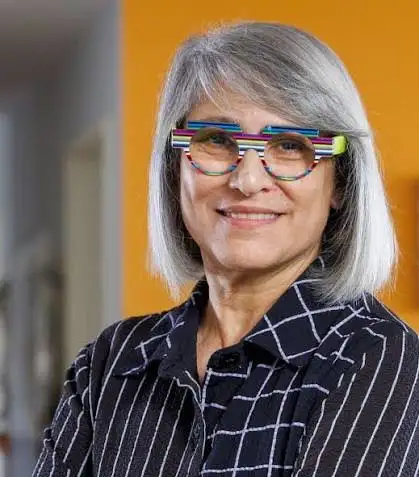
Banaji taught at Yale University from 1986 to 2001, holding the Reuben Post Halleck Professorship in Psychology, before moving to Harvard in 2001 as the Richard Clarke Cabot Professor of Social Ethics, a chair once held by her intellectual predecessor Gordon Allport. It was at Yale, working alongside Anthony Greenwald, that she helped define implicit social cognition and coin the term implicit bias. This work of hers led to the creation of the Implicit Association Test, now taken by more than twenty million people worldwide.
Her scholarship has reshaped how psychology understands unconscious attitudes around race, gender, and other social categories, with applications reaching law, medicine, and education. Banaji is a fellow of the American Academy of Arts and Sciences and was elected to the National Academy of Sciences in 2018. She co-authored the bestselling book Blindspot: Hidden Biases of Good People and continues to study how implicit attitudes form, evolve, and can be measured, most recently turning her attention to the cognitive signatures of large language models.
Dr Sanjiv Chopra, Professor of Medicine, Harvard Medical School
Immigrated from India to America in 1972
Sanjiv Chopra was born in 1949 in Pune, two years after India’s independence. The son of a prominent cardiologist in the Indian Army was educated at St Columba’s School and Hansraj College in Delhi before completing his medical degree at the All India Institute of Medical Sciences, where he also met his future wife, Amita. He went to United States in 1972 for postgraduate training, moving to Boston the following year and completing a fellowship in gastroenterology and hepatology by 1977.
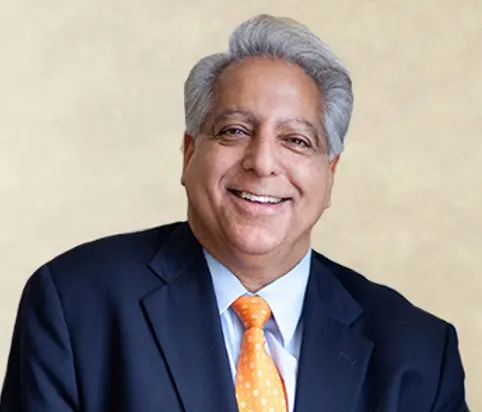
Chopra went on to spend nearly four decades on the faculty of Harvard Medical School, where he became professor of medicine and served for twelve years as Faculty Dean for Continuing Medical Education, overseeing a programme reaching tens of thousands of clinicians across more than a hundred countries each year. He has been a senior consultant in hepatology at Beth Israel Deaconess Medical Center and serves as editor-in-chief of the hepatology section of UpToDate, a clinical resource used by physicians worldwide.
Beyond his medical scholarship, Chopra has written extensively for a general audience, including Brotherhood, a memoir co-authored with his brother Deepak Chopra tracing their shared journey from India to the United States. He was designated a Master of the American College of Physicians in 2009 and received the Ellis Island Medal of Honor in 2012. His recognitions reflect a career built as much on teaching and mentorship as on clinical practice.
Reshma Kewalramani, President and CEO, Vertex Pharmaceuticals
Immigrated from India to America in 1988
Reshma Kewalramani was born in Mumbai in 1973 to a Sindhi Hindu family and immigrated to the United States with her parents in 1988, settling in Long Island at the age of eleven. She has often recalled that her family considered only three acceptable careers, engineering, medicine, or the priesthood, and she chose medicine, enrolling in the seven-year combined undergraduate and medical programme at Boston University, from which she graduated Phi Beta Kappa and summa cum laude in 1998.
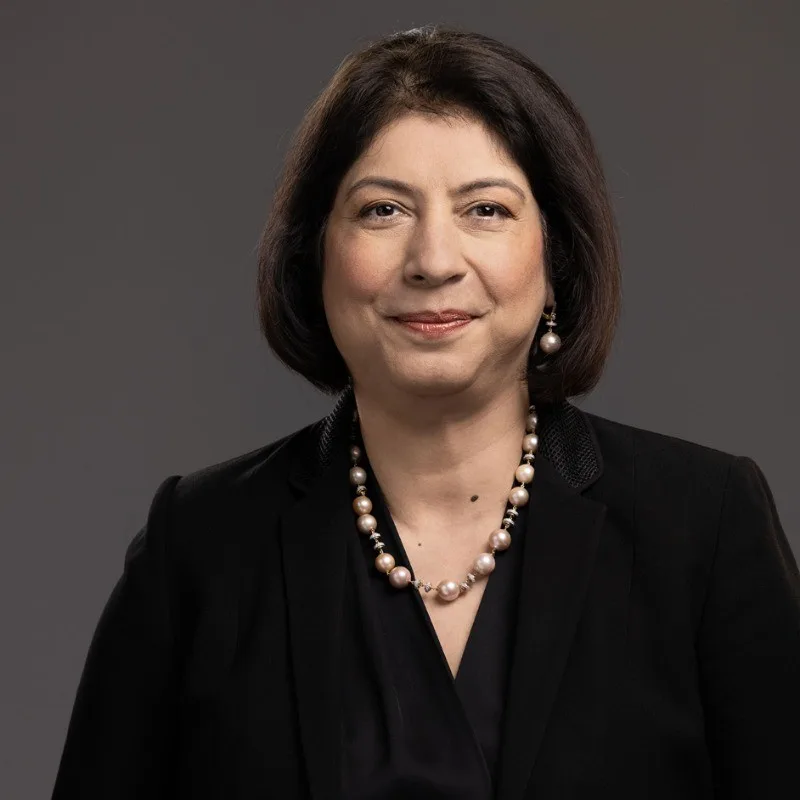
She trained in internal medicine at Massachusetts General Hospital and completed a nephrology fellowship across the combined MGH and Brigham and Women’s Hospital programme, practising as a physician and researcher before a chance call from Amgen drew her into the biopharmaceutical industry in 2004. Kewalramani spent twelve years there, rising to vice president, before joining Vertex Pharmaceuticals in 2017 and becoming its chief medical officer the following year.
In April 2020, she was named president and CEO of Vertex Pharmaceuticals, becoming the first woman to lead a major American biotechnology company. Under her leadership, Vertex has secured landmark approvals including Casgevy, the first CRISPR based gene editing therapy cleared in the United States, and Journavx, a new class of pain medicine. She has since appeared on Time’s list of the 100 most influential people and was named Time Woman of the Year in 2026, alongside recognition from Fortune and Barron’s for her leadership in reshaping the treatment of serious genetic disease.
Sunil Amrith, Professor of History, Yale University
Immigrated to America in 2015, by way of Kenya, Singapore, and Britain
Sunil Amrith was born in 1979 in Nairobi, Kenya, to South Indian parents. His father was a banker and mother an eye surgeon. The family moved to Singapore when Amrith was an infant. It was there, at a crossroads of trade and migration, that his lifelong preoccupation with how cultures meet and mix first took shape. He went on to Cambridge University for both his undergraduate degree and his PhD, completing his doctorate in 2005 under the historian Emma Rothschild.
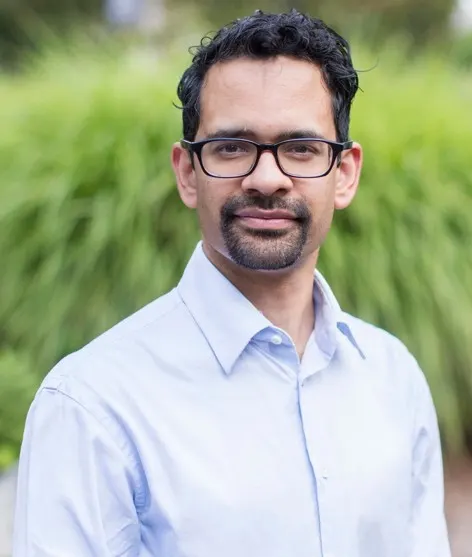
Amrith spent a decade teaching modern Asian history at Birkbeck, University of London, where his students were largely working adults attending evening classes, an experience he has credited with teaching him to make historical research accessible to a busy, curious audience. In 2015, he moved to the United States to join Harvard as the inaugural Mehra Family Professor of South Asian Studies, before moving to Yale University in 2020, where he now holds the Renu and Anand Dhawan Professorship of History and serves as vice provost for international affairs and director of the MacMillan Center for International and Area Studies.
His scholarship traces the movement of people, water, and climate across South and Southeast Asia, beginning with Crossing the Bay of Bengal, a history of the millions who migrated across that sea under British rule, and continuing through Unruly Waters and his most recent book, The Burning Earth, an environmental history of the last five hundred years that was named a 2024 essential read by The New Yorker and won the 2025 British Academy Book Prize. He is a MacArthur Fellow and a recipient of the Infosys Prize in Humanities, and lives in Hamden, Connecticut, with his wife and their two children.
Together, the five honourees trace a shared arc from classrooms and clinics in India and family homes in the wider diaspora to boardrooms, laboratories, and lecture halls across America, a reminder that the immigrant story that the Andrew Carnegie Foundation set out to honour this year is, 250 years on, still being written.
ALSO READ: Time 100 trailblazers Manjusha Kulkarni and Priyamvada Natarajan named Great Immigrants of 2025

Share with




Written By: Amrita Priya