
July 01 2026
MIT Provost Anantha Chandrakasan earns ‘Committed to Caring’ honour for exceptional mentorship
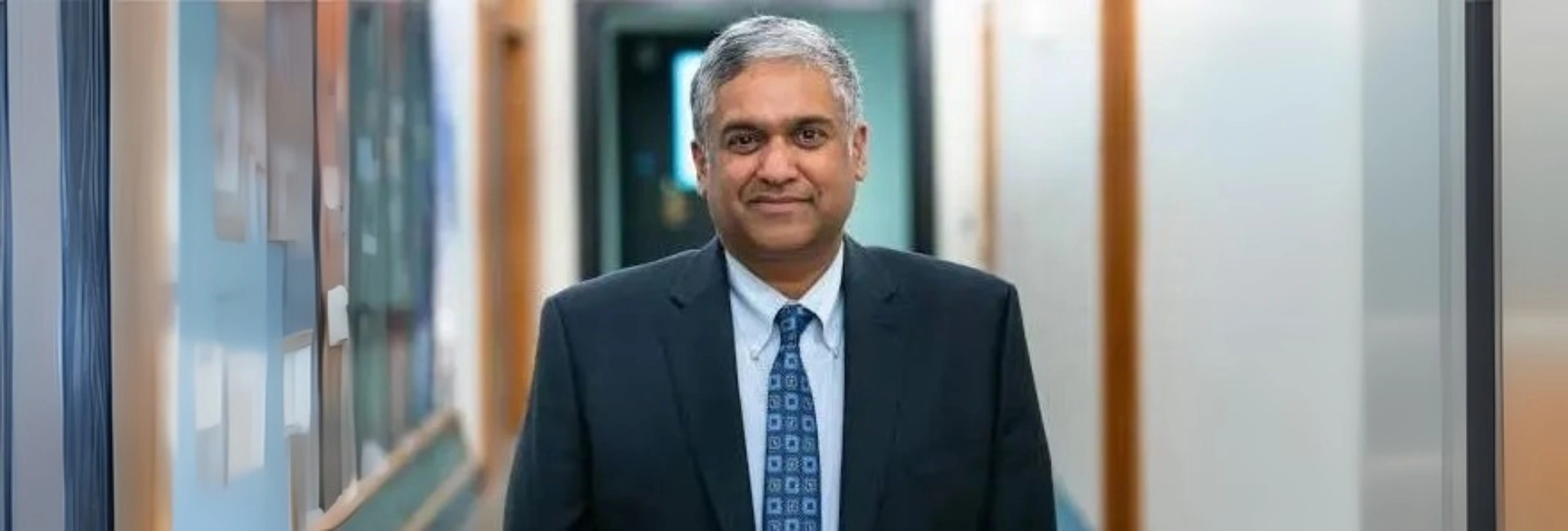
(Jul 1, 2026) From growing up in Chennai to becoming MIT’s first Indian-American provost and now the only Indian-origin faculty member honoured in the Institute’s ‘Committed to Caring’ cohort, Dr. Anantha P. Chandrakasan’s journey has been defined not only by scientific excellence but by a belief that great research begins with great mentorship.
At one of the world’s foremost research universities, technical brilliance is expected. What distinguishes exceptional academic leaders is often something less measurable, and that is the ability to extend their dedication beyond the classroom. That quality has earned MIT Provost Dr. Anantha Chandrakasan, a place among just 18 of more than 1000 faculty selected for the university’s 2025–27 Committed to Caring cohort, a student-driven honour recognising exceptional mentorship and the lasting impact that faculty can have on students’ academic and personal journeys.
Chandrakasan is the only Indian-origin faculty member among the 18 honourees to receive the recognition. It has come barely months after he made history by becoming MIT’s first Indian-American Provost, the Institute’s second-highest academic office since its founding in 1861.
Together, the two milestones tell the story of an academic leader whose influence extends well beyond laboratories, publications and administrative leadership. As reported by the MIT News, describing his own mentoring approach, Chandrakasan said, “My technical advising is direct, because I believe clarity is a form of care.” For many students, that combination of honest feedback, accessibility and encouragement has become one of the defining features of his leadership. In one of the interviews after being named the MIT provost Chandrakasan had mentioned:
I always put myself in somebody else’s shoes and I try to understand. Coupled with that I like to solve problems and get to solutions quickly.
Anantha Chandrakasan
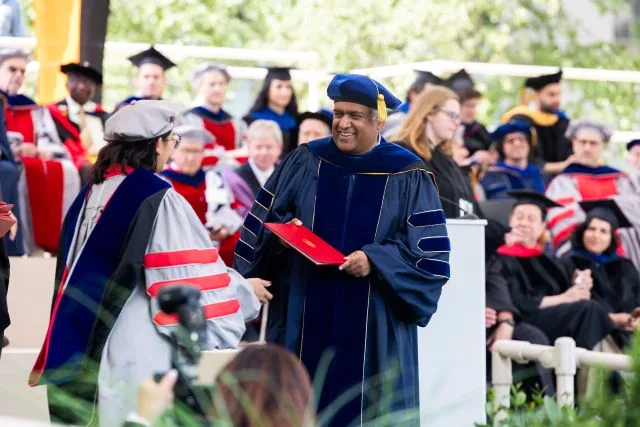
Provost Chandrakasan at one of MIT’s commencement ceremonies for the School of Engineering
Putting students before deadlines
Chandrakasan is known for helping young researchers navigate the intense pressures that often define doctoral education. Rather than allowing deadlines or setbacks to overwhelm students, he encourages them to see challenges within the broader arc of a research career.
As reported in MIT News, one graduate student recalled feeling immense pressure while trying to complete a conference paper during the first semester of doctoral studies. Seeing the stress build, Chandrakasan connected the student with a senior member of the research group, creating a support system that provided both technical guidance and a sense of community.
He also reminded the student that one deadline would never determine an entire career. “There will always be another opportunity,” he often tells students. MIT News notes that this philosophy is reflected across his research group, where collaboration, peer learning and thoughtful guidance are encouraged alongside scientific excellence.
A childhood curiosity born in Chennai
Long before leading one of the world’s most respected universities, Chandrakasan was a curious child growing up in Chennai.
Science was a natural part of family life. His mother, a biochemist researching collagen and wound healing, introduced him early to laboratory research. His father, who managed a sheet-metal fabrication business, nurtured his fascination with engineering and practical problem-solving while also instilling values of humility and kindness. Years later, Chandrakasan reflected on their enduring influence:
I only wish my parents were alive to see the continued impact they have had on me.
Anantha Chandrakasan
A summer visit as a high school student to the United States while his mother participated in the Fulbright Visiting Scholar Program proved transformative. He stayed on to pursue higher education, earning his bachelor’s degree in electrical engineering and computer science from the University of California, Berkeley, followed by a master’s degree and PhD.
Rejection opened unexpected doors
Chandrakasan’s journey is also a reminder that remarkable careers are rarely linear. As an undergraduate, he failed to secure an internship in low-power electronics with a wireless communications company. Instead, his adviser, the late Professor Robert Brodersen, invited him to spend the summer conducting research at Berkeley.
The experience fundamentally changed his outlook on research and later inspired him to establish MIT’s SuperUROP programme, giving undergraduate students opportunities to pursue long-term research leading to publication-quality work.
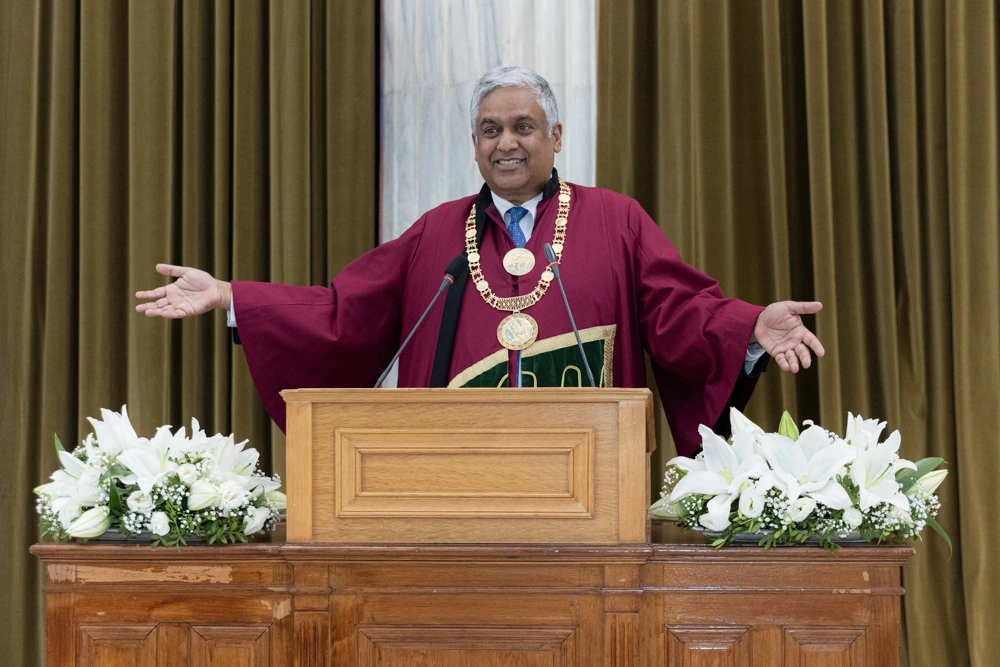
Anantha Chandrakasan
MIT itself initially rejected his application for graduate studies. He has often recalled telephoning the admissions office after receiving the decision and being treated with kindness despite the disappointment. Years later, after completing his doctorate at Berkeley, he applied for a faculty position at MIT. Once again, he was not the department’s first choice. Eventually, MIT offered him the appointment that would define the next three decades of his life.
Looking back, Chandrakasan has frequently encouraged students not to view rejection as failure.
Never forget that, when a door closes on you, if you keep looking for other doors, one of them will open.
Anantha Chandrakasan
Three decades of research and leadership
Since joining MIT in 1994, Chandrakasan has helped shape the Institute from multiple leadership positions. He has served as Director of the Microsystems Technology Laboratories, Head of the Department of Electrical Engineering and Computer Science, Dean of the School of Engineering and, in 2024, became MIT’s inaugural Chief Innovation and Strategy Officer before being appointed Provost in 2025.
Alongside these leadership responsibilities, he has remained one of the world’s leading researchers in low-power electronics and energy-efficient integrated circuits. His pioneering work has influenced technologies that underpin smartphones, wearable devices, sensors, communication systems and large-scale computing platforms, making modern electronics significantly more energy efficient.
Equally impressive has been his commitment to nurturing future researchers. Over the years, he has supervised nearly 80 doctoral students while continuing to lead the Energy-Efficient Circuits and Systems Group. Rather than stepping away from research after assuming senior administrative roles, he has continued working closely with students because he believes leadership is strengthened by remaining connected to the realities of academic research.
Increasing MIT’s global collaborations
As one of MIT’s senior-most leaders, Chandrakasan has increasingly represented the Institute in conversations that extend far beyond engineering.
Over the past year, he has engaged with world leaders, including the Prime Ministers of India and Greece and the President of South Korea, discussing technology, innovation and higher education. He has also helped expand educational programmes for U.S. policymakers and military leaders, covering rapidly evolving fields such as artificial intelligence, semiconductors and biotechnology.
For Chandrakasan, universities have an important role not only in advancing research but also in helping societies understand emerging technologies and prepare for future challenges. He has consistently argued that global collaboration remains essential to solving complex problems facing humanity.
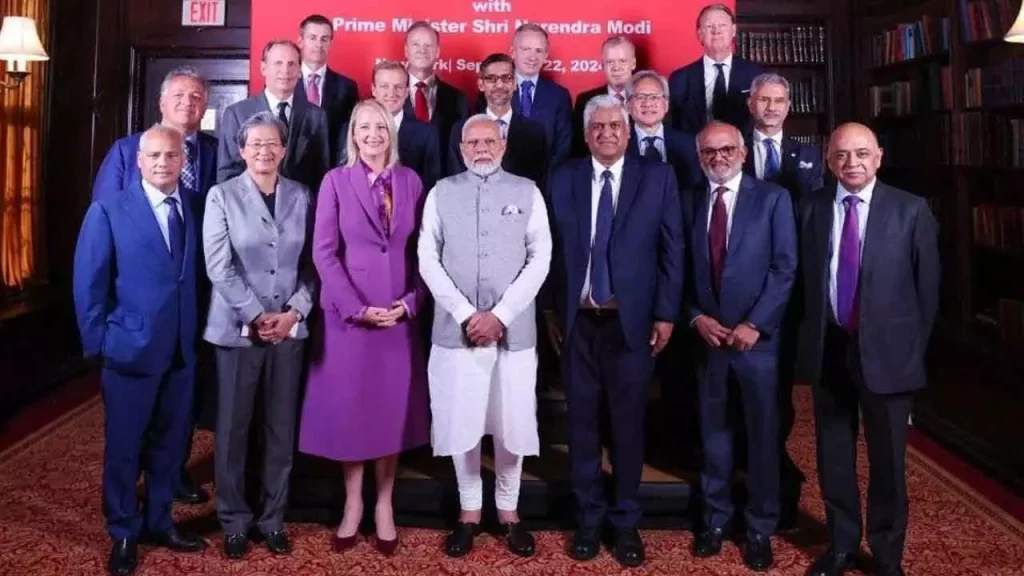
In 2024 Chandrakasan hosted and moderated a high-profile technology roundtable in New York where PM Narendra Modi engaged with 15 leading American tech CEOs.
Expanding opportunity in engineering
Throughout his career, Chandrakasan has worked to broaden participation in engineering education. He launched SuperUROP, giving undergraduates access to meaningful research experiences, and introduced Rising Stars, a career development programme supporting women PhD students and postdoctoral researchers pursuing careers in academia.
He has also established student and postdoctoral advisory initiatives designed to ensure younger researchers have a stronger voice in shaping the academic environment. These efforts reflect a belief that universities should not simply produce outstanding research, but also cultivate future scientific leaders.
A legacy measured by people
Scientific achievements have made Chandrakasan one of the world’s most respected electrical engineers. His appointment as MIT’s Provost established him as one of the most influential academic leaders in higher education.
Yet the Committed to Caring recognition acknowledges a different dimension of his career. Unlike honours measured by publications, patents or citations, this award is driven entirely by graduate students who choose to recognise faculty members whose guidance has made a lasting difference to their academic and personal journeys.
For Chandrakasan, whose own career was shaped by encouragement after setbacks and opportunities born from rejection, the recognition feels especially fitting.
From a curious child in Chennai to one of MIT’s most influential leaders, his journey has been built not only on scientific excellence but on a conviction that the most enduring legacy of a teacher lies not in the technologies they create, but in the people they inspire.
- Follow Anantha Chandrakasan on LinkedIn
ALSO READ: Priya Donti: MIT Professor powering a global movement through Climate Change AI
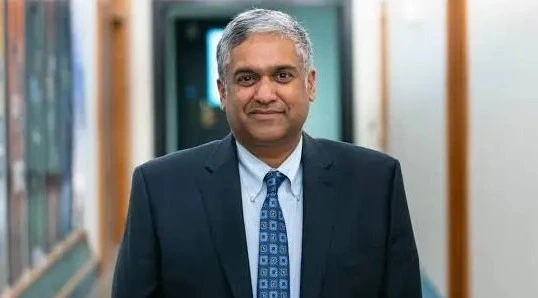
Anantha Chandrakasan
| Born | 1968, Chennai, India |
| Based | Cambridge, Massachusetts, USA |
| Studied | Bachelor's, Master's and Phd at University of California, Berkeley, USA |
| Languages | Tamil, Hindi, English |
Signature work
Authored one of the most cited papers in IEEE Solid-State Circuits history on low-power CMOS design, laying the foundation for energy-efficient chips in modern smartphones. Has advised several doctoral candidates across circuits, biomedical devices, and AI hardware at MIT.
Idea
To combine world-class research with compassionate mentorship, making empathy and student success central to academic leadership.
Network
Works closely with students, faculty, researchers, industry leaders, startups, and global academic institutions, particularly in semiconductors, AI, and higher education.
Impact
A globally recognised pioneer in low-power electronics, Chandrakasan has advanced energy-efficient chip design while mentoring generations of engineers and shaping the future of engineering education at MIT.
Giving Back
Supporting students beyond the classroom through mentorship and care, recognised with MIT's 'Committed to Caring' honour.
Inspired by Anantha Chandrakasan 's journey?
Yours follows the same Hero's pattern — Separation, Initiation, Transformation, Return.

Share with



Written By: Amrita Priya
Priya Donti: MIT Professor powering a global movement through Climate Change AI
Cover Story, Indian Professor


Written By: Mallik Thatipalli