
July 05 2026
Minali Thakkar: Turning environmental challenges into monumental public art, creating records along the way
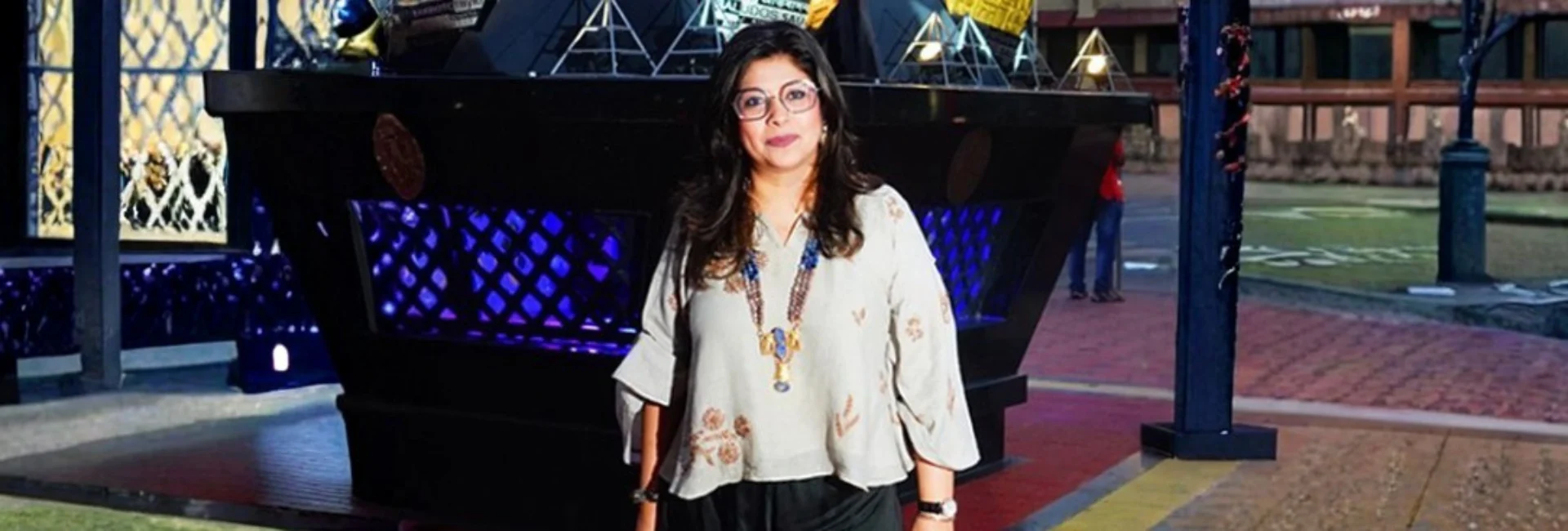
(Jul 5, 2026) Few artists can claim that their work has entered the Guinness World Records, Limca Book of Records, transformed discarded waste into some of India’s most recognisable public art, and brought together artists from over 25 countries on an international stage. Minali Thakar has done all four.
The Mumbai-based artist, curator and sustainability advocate has built a career that spans monumental public installations, global cultural collaborations and corporate art advisory, using creativity to transform waste into meaningful experiences that inspire communities and spark conversations across borders.
Addressing our ecological challenges requires not only policy changes and technological innovation but also a creative re-engineering of our everyday consumer choices and habits.
Minali Thakkar
She is the Co-founder and Director of Art Approach which has worked with over 200 corporate and more than 45 MNC clients, and Vice President of the Bombay Art Society, one of the oldest art institutions in the Asian subcontinent. Renowned for transforming recycled and discarded materials into monumental public art installations, Minali has emerged as one of India’s leading voices in sustainable art, community engagement and cultural curation. “An artist’s studio is anywhere the heart finds its rhythm,” Minali remarks in a chat with The Global Indian.
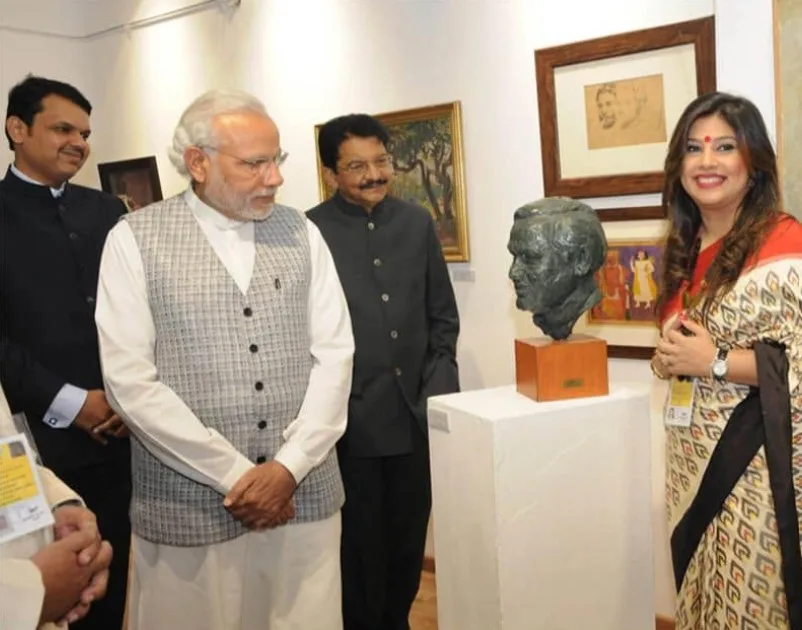
A landmark exhibition co-curated by Minali was inaugurated by Prime Minister Narendra Modi
Taking Indian art to the global stage
Minali’s curatorial journey has been defined by crossing both artistic and geographical boundaries. This vision culminated in her role as Festival Director for The Art Fest Dubai 2025.
“Directing an international art fair of this magnitude is much like conducting a vast cultural symphony,” says Minali. Under her leadership, the festival brought together more than 100 artists from over 25 countries, transforming it from a commercial exhibition into a platform for cultural dialogue.
One of its defining initiatives was the Vasudhaiva Kutumbakam Global Wall, inspired by the timeless Indian philosophy that “the world is one family.” Artists from over 25 nationalities contributed to a single collaborative installation, dissolving geographical boundaries through creative expression.
Minali also introduced an Open Call initiative, offering fully sponsored exhibition booths to emerging UAE artists selected by an independent jury. She conceptualised dedicated student engagement programmes and participated in speaking engagements across the UAE, sharing her perspectives on public art, sustainability, cultural exchange and the evolving role of art in society.
The project that earned a Guinness World Record
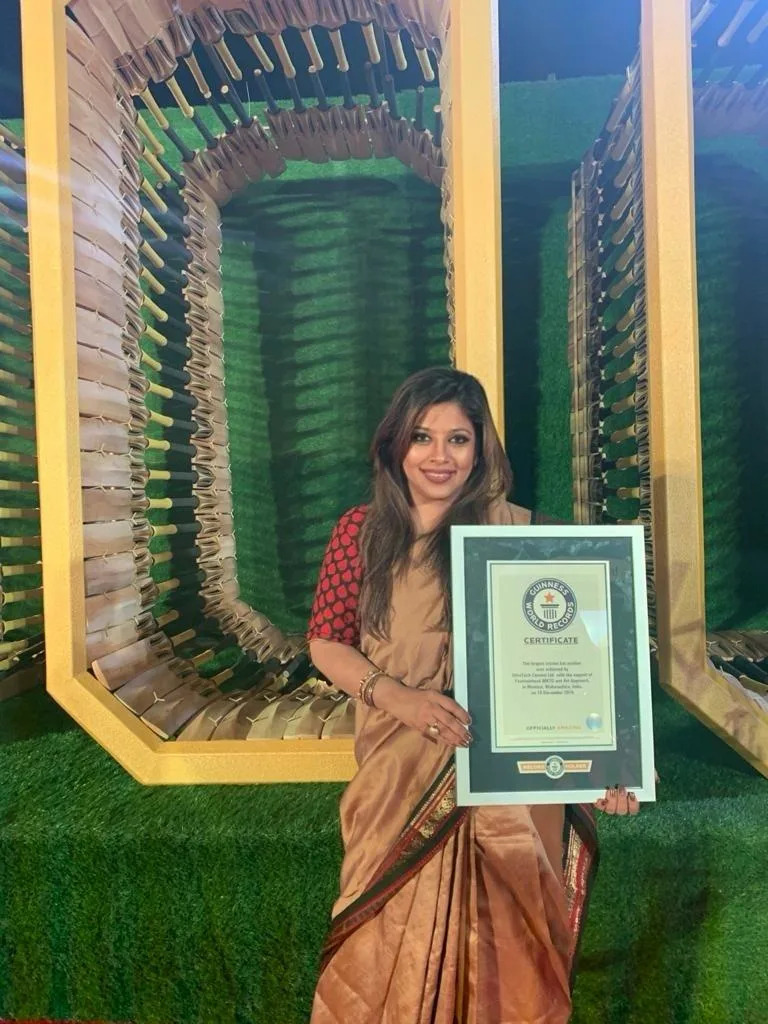
Long before Dubai, Minali had already created one of India’s most remarkable public installations for a project commissioned by UltraTech Cement Ltd. She questioned why art should remain confined to galleries when communities naturally gather in public spaces. The answer became a 100-foot-long installation created using over 1,200 cricket bats, 2,000 seasoned cricket balls and cricket stumps—transforming India’s love for cricket into a powerful symbol of collective identity. The project earned a Guinness World Record.
What made the feat even more remarkable was her insistence that not a single bat or ball be punctured, drilled or damaged.
Every component had to remain intact so that, once dismantled, it could be donated to the sports academies for the underprivileged. It was undoubtedly a challenge I willingly invited upon myself.
Minali Thakkar
The Guinness World Records adjudicators were impressed not only by the scale and technical execution of the installation, but also by the story behind it—the grit, design sensitivity, craftsmanship and soul that held the structure together.
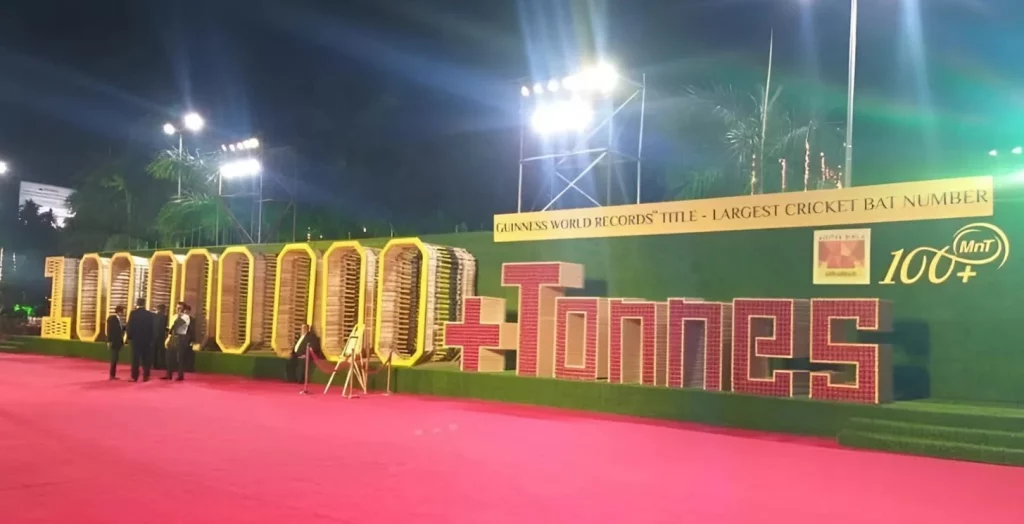
The installation that earned Guiness World Record
When one plastic bottle changed everything
A simple conversation with her young son transformed Minali’s artistic direction forever. While teaching him about natural sources of water, he walked to the refrigerator, picked up a plastic bottle and innocently said, “Mom, this is a source of water.” “The statement hit me like a physical slap,” she mentions.
She realised an entire generation had begun associating plastic bottles—not rivers, lakes or streams—with the origin of one of life’s most basic necessities. Instead of designing another awareness campaign, she decided to create an unforgettable visual experience. The result was Bottle Fall—an 11-storey waterfall cascading down the façade of Mumbai’s MET Education Trust Building, created using approximately 40,000 recycled plastic bottles.
Collecting the bottles became a community movement involving local waste pickers, transforming the initiative into both an economic and educational project through training and awareness sessions on safe waste management practices. The installation earned recognition in the Limca Book of Records and became the defining expression of Minali’s philosophy—Art with a Purpose.
Turning waste into powerful public stories
Bottle Fall was only the beginning. Over the years, Minali has transformed corporate and consumer waste into installations that educate as much as they inspire. Among her notable works are Bisleri’s mascot Binny the Bottle Bird and the company’s immersive Inspiration Centre, where walls, ceilings, installations and interactive games are all created using upcycled plastic bottles.
She has also created monumental sculptures from corporate waste for initiatives such as Bharat Ke Veer, demonstrating how art can honour national heroes while promoting responsible consumption and recycling.
Her portfolio further includes large-scale installations made from tyres, rubber sheets, gloves and rubber bands for the International Rubber Expo, sustainable Christmas trees and Diwali Kandils created from plastic waste, vibrant flamingo sculptures for the BPCL campus, artistic public benches made from recycled plastic bottles, and an oversized flowing tap installation at busy railway stations that highlighted how discarded plastic eventually returns to us as microplastics in our water.
Even the world of sports became a canvas for environmental storytelling through the Victory of Greens trophy, created from discarded pickleballs, shuttlecocks and table tennis balls. Many of these installations are created before live audiences.
When I hear people asking questions or expressing curiosity, they become part of my human library. Their perspectives often inspire ideas I may never have discovered on my own.
Minali Thakkar
View this post on Instagram
An artist shaped by family and determination
Long before international festivals and monumental installations, Minali grew up in Mumbai’s close-knit neighbourhood of Ghatkopar. “My childhood was shaped by a strong sense of community, curiosity and creativity,” she shares. Her mother, a mathematics tutor known for discipline and dedication, instilled in her resilience, a strong work ethic and the confidence to embrace ambitious challenges.
Her father, a businessman and passionate photographer, nurtured her artistic instincts. He often brought home hand-painted greeting cards, sparking a lifelong fascination with drawing and composition while teaching her the value of pursuing one’s passions wholeheartedly.
Growing up in a traditional Kutchi family, pursuing art professionally was not universally accepted. With her father’s unwavering support, she enrolled at Sir J J School of Art, earning both her Bachelor’s and Master’s degrees. One of her proudest academic milestones came after marriage, when she appeared for her final Master’s examinations and secured Second Rank in the state of Maharashtra.
Curating experiences that connect people and cultures
Alongside her artistic practice, Minali has built a distinguished career as a curator. Among her proudest milestones was co-curating a landmark exhibition inaugurated by Prime Minister Narendra Modi. She has also curated public art installations and cultural projects for the G20 Summit, International Rubber Expo, Mahalaxmi SARAS, Netflix production previews and Rotary International, among other platforms.
Each project reinforced her belief in art’s ability to create meaningful connections across communities, industries and cultures.
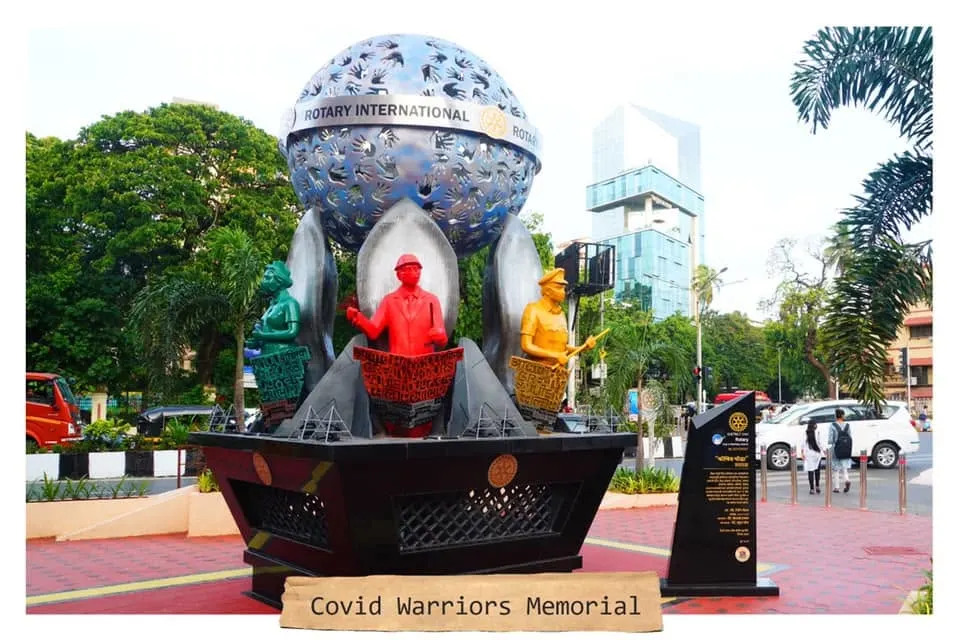
Covid Warrior Memorial at Bandra, Mumbai by Minali Thakkar as a tribute to their sacrifices
Where art, business and sustainability converge
Beyond festivals and exhibitions, Minali bridges the creative and corporate worlds through her art advisory firm, Art Approach, founded alongside her sister, Urmi Thakkar. She works with global financial institutions and corporations, helping them see art as a strategic asset, a reflection of organisational identity and a powerful tool for cultural engagement. For Minali, sustainability is not merely an environmental concern but an urgent necessity. She believes awareness becomes most powerful when it is experienced rather than merely explained.
Mentoring the next generation of changemakers
Having benefited from mentors throughout her own journey, Minali considers mentorship one of the most meaningful aspects of her career. She actively guides emerging artists, collaborates with art and design institutions, and shares practical insights that help bridge the gap between academic learning and professional realities.
Beyond the art world, she studies art therapy and conducts healing art workshops with NGOs, healthcare patients and public service departments.
View this post on Instagram
Looking towards the next canvas
Minali’s latest project is a series of monumental blooming flowers created from recycled plastic sheets, discarded bottles and PVC pipes—celebrating both the beauty of nature and the possibilities hidden within waste.
Outside her studio, she finds inspiration through travel, photography and scuba diving, making it a point to visit museums, galleries, artists’ studios and cultural landmarks wherever she travels. For Minali, every destination offers a new perspective, every discarded object holds untapped potential, and every public space is another canvas waiting to tell a meaningful story.
ALSO READ: Lalit Verma: The cultural curator whose work reached UNESCO, the Kumbh, and Cannes
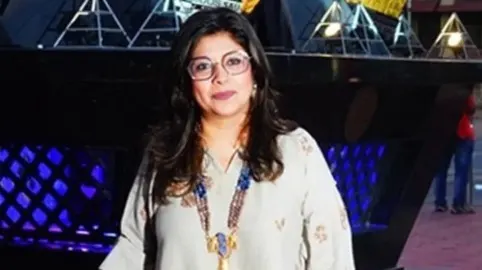
Minali N Thakkar
| Born | Mumbai, India |
| Based | Mumbai, India |
| Studied | Master of Fine Arts at Sir JJ School of Art |
| Languages | Marathi, Hindi, English |
Signature work
From world record-winning installations to landmark environmental artworks, Minali Thakkar has built a distinctive artistic language using waste as her primary medium. Her large-scale public art projects combine sustainability, storytelling and community participation, proving that discarded materials can become powerful catalysts for change.
Idea
Transforming recycled and discarded materials into monumental public art that inspires environmental awareness, community participation and behavioural change.
Network
Collaborates with artists from other countries, global financial institutions, corporates, government bodies, educational institutions and sustainability-focused organisations across India and the UAE.
Impact
Created Guinness World Record and Limca Book of Records-recognised installations, advanced sustainable public art in India, and used large-scale artworks to engage communities on waste management and environmental conservation.
Giving Back
Mentors emerging artists, conducts art therapy workshops with NGOs and healthcare patients, and works with communities and waste pickers to promote sustainability through education and creative engagement.
Inspired by Minali N Thakkar 's journey?
Yours follows the same Hero's pattern — Separation, Initiation, Transformation, Return.
Share with



Written By: Mallik Thatipalli
Simran KS Lamba: Breathing new life into industrial waste, creating timeless art

Written By: Mallik Thatipalli