
May 05 2026
Lalit Verma: The cultural curator whose work reached UNESCO, the Kumbh, and Cannes

(May 5, 2026) Lalit Verma is many things — photographer, founder of Aurodhan Art Gallery, curator of over three thousand cultural events, and India’s quiet cultural ambassador to the world. His photographs have graced the Indian Parliament House in New Delhi and UNESCO Paris, earning appreciation from the President and Prime Minister of India as well as the Director-General of UNESCO. His work has travelled from the banks of the Maha Kumbh to the festival screens at Cannes, earning him honours including a Lifetime Achievement Award and the Viswa Ratna. Yet beneath all of it runs a single, animating belief that life unfolds along two parallel paths — the earthly and the divine — and that art, at its best, is where the two meet. “When human aspiration meets divine grace, manifestation becomes possible,” he smiles, in conversation with The Global Indian.
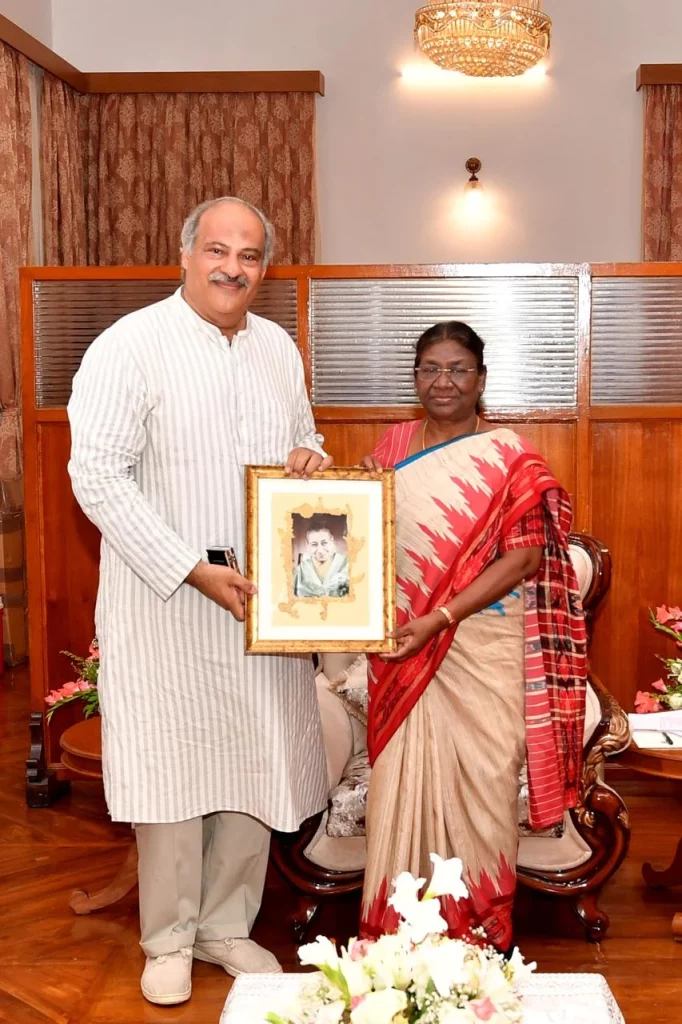
Lalit Verma with President Droupadi Murmu
The only Indian photographer to have his works auctioned by the prestigious Hessinks in Europe, Lalit has also been the photographer for numerous coffee table books A graduate of the Sri Aurobindo International Centre of Education and an MBA, his professional journey took him from the boardrooms of the Tata Group to a enriching stint at La Maison des Cultures du Monde in Paris. Fluent in seven languages, including French, and having served twice as President of the Alliance Française, he has curated and directed world-class festivals spanning art, literature, music, and dance across continents — all driven by a lifelong dedication to oneness, harmony, and the elevation of the human spirit.
A global voice for oneness
Lalit’s latest initiative — Oneness Through Yoga — is a natural extension of his long-running Oneness Through Art movement, exploring how creativity and inner awareness can transcend divisions. Over the decades, through more than three thousand events offered freely to the public, his work has steadily fostered harmony and goodwill, raising what he describes as art consciousness — a collective awakening to beauty, culture, and shared humanity.
There have been many moments that have embodied this vision. Ramli Ibrahim, a dancer of Muslim origin, once performed the Hindu classical form of Odissi at a Christmas celebration held at a Sikh Governor’s residence. “In such moments, identity dissolved into expression, and unity revealed itself naturally,” says Lalit. It is precisely this quality — art as a bridge across faith, culture, and background that has defined his life’s work, and, as he sees it, points toward something larger: a collective movement towards human evolution.
Yoga as a universal language
As part of the Oneness Through Yoga initiative, Lalit organised a special yoga session for children with special needs. Over 200 children from special schools participated in this inclusive offering, led by Swami Tyagarajananda Saraswati — a devoted sanyasi and master of Kriya, Tantra, Naad, Hatha, Raja, and Bhakti Yoga. “This event was part of the continuing effort to bring inner transformation through the universal language of Yoga,” says Lalit.
He believes India’s greatest inheritance is its spiritual heritage. “There is a need to preserve the spiritual legacy which has flourished through many centuries,” he says — a conviction that runs through everything he does, from the gallery he founded to the festivals he curates.
The French connection
Lalit was selected by the Government of France for Parcours de Femme, a project conceptualised by French Consul General Madame Lise Talbot-Barré, aimed at documenting and celebrating the journeys of women who have overcome extraordinary challenges to achieve remarkable success. Bringing his artistic vision to the fore, Lalit captured the stories of 15 inspiring women — among them Paralympic gold medalists, leaders in governance, sports, dance, and royalty, as well as transgender individuals.
His connection with France runs deep. A stint at La Maison des Cultures du Monde in Paris brought him into dialogue with cultural practitioners from across the globe, an experience that widened his understanding of humanity’s shared yet endlessly varied expressions. Extensive travel — across the United States, New Caledonia, Réunion, Europe, and Asia — has further enriched that understanding.
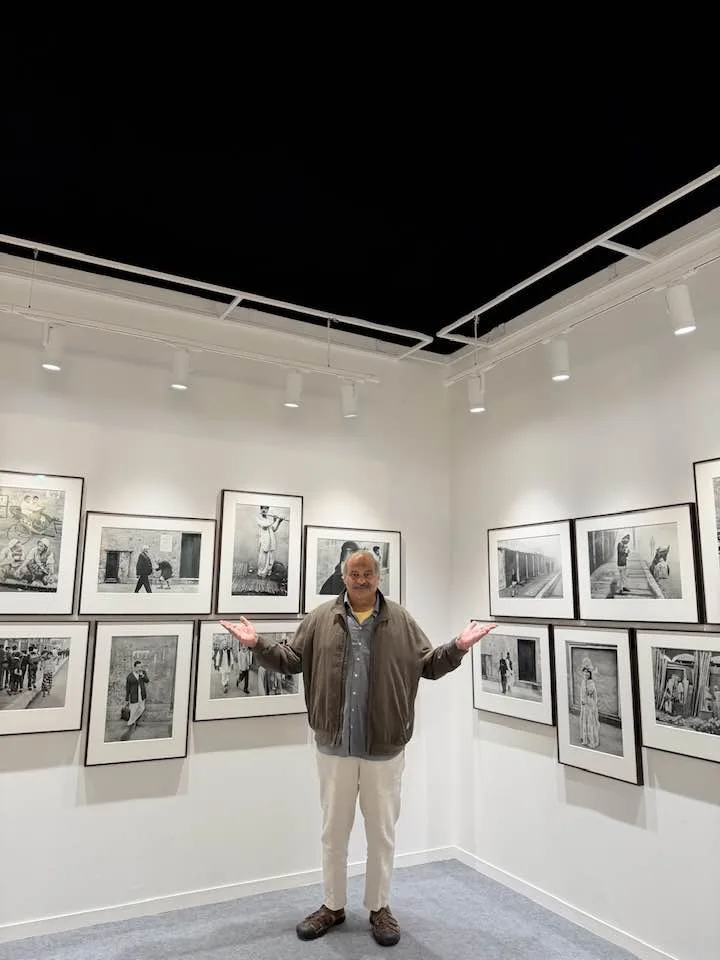
Roots in the forest
Born on 15 January 1965 in Ludhiana, Lalit spent his early childhood in the forests of Gomia, near Hazaribagh, where his father worked with Imperial Chemical Industries. “It was an environment both raw and formative — surrounded by nature, unpredictability, and a sense of quiet wonder.”
Among the memories of those years is one of young Lalit standing beside a Royal Bengal tiger that had been neutralised after turning man-eater, unaware of the deeper realities it represented. “Such moments, though not fully understood then, planted early seeds of fearlessness and acceptance of life in all its dimensions.”
The boy who listened inward
As a young student, Lalit would occasionally fall into a deep sleep during class — something that concerned his teachers. When this was brought to the attention of The Mother at the Sri Aurobindo Ashram, her response changed everything: “When he sleeps, do not disturb him, for that is when he comes to me.” What could have become a source of embarrassment was, in that single statement, elevated into something sacred. “It was an early experience of being seen beyond the surface,” recalls Lalit — a lesson in compassion, protection, and a higher way of understanding human nature.
His years at the Sri Aurobindo International Centre of Education in Pondicherry brought his personality into fuller bloom. Curious, energetic, and drawn to movement, he immersed himself in sports, science, music, and art, going on to hold several records in athletics, particularly in discus and shot put.
Yet one moment during those sporting years left a lasting imprint. “The throw that broke the record came not through effort, but through complete effortlessness,” he recalls. It pointed to something he would return to again and again — that beyond discipline and hard work lies a state of flow, where action is guided by something deeper.
There were also quieter moments of guidance. When someone once praised his physical height, an elder gently remarked, “I hope you grow just as tall from within.” That blessing stayed with him, becoming a quiet compass — reminding him that true growth is inward as much as outward.
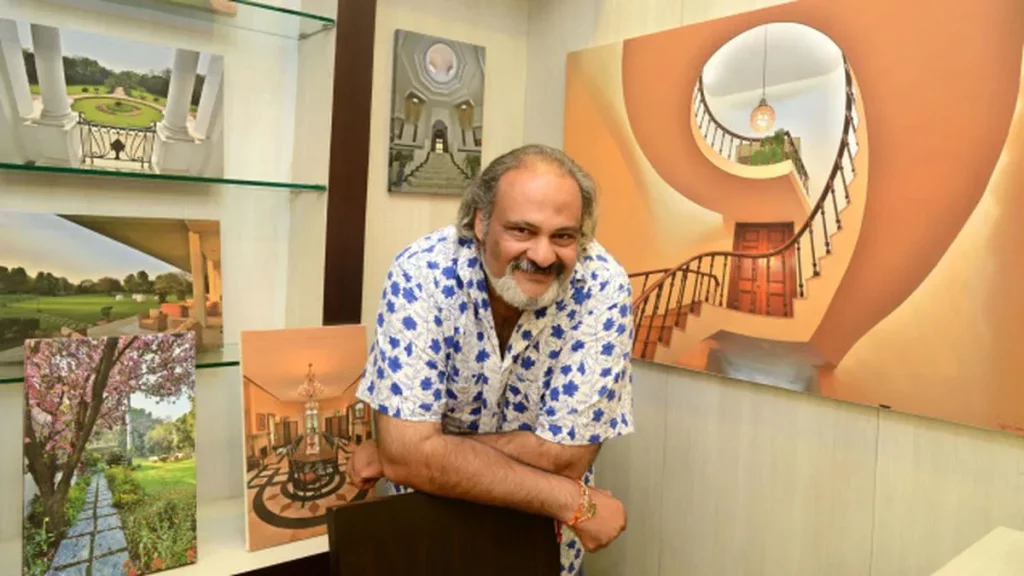
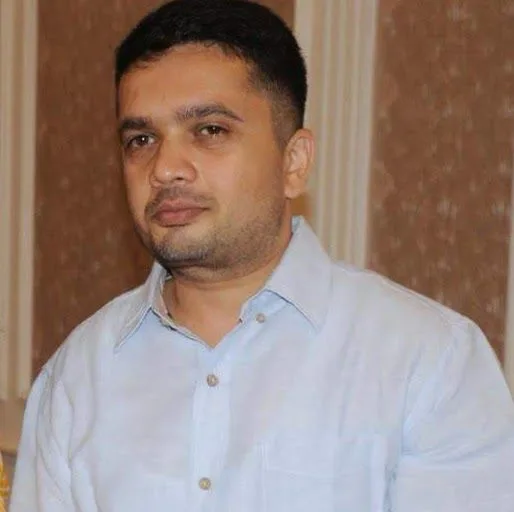
Lalit Verma in 2014 | Photo by Nagara Gopal
From Tata to Aurodhan
Though deeply engaged in physical and academic pursuits, a love for art had always been present. “As a child, I created drawings, crafted scenes, and found joy in expression.” That early inclination deepened over time, nurtured by travel and exposure to galleries across the world.
His professional life took shape in the boardrooms of the Tata Group, where he worked under leaders such as Russi Mody during the era of J. R. D. Tata. It was an experience that instilled in him a sense of excellence, discipline, and large-scale thinking — qualities he would carry into his next chapter.
That chapter was Aurodhan. When he founded the art gallery in Pondicherry, there were hardly any such spaces in the region, and some were openly sceptical of the idea. Through persistence and vision, Aurodhan evolved into a vibrant cultural institution — later recognised by The New York Times as one of India’s finest art galleries.
A living platform
Over the decades, the gallery has grown into far more than an exhibition space. It has become a living platform — bringing together visual art, photography, music, dance, theatre, literature, and dialogues with science, all guided by a single principle: goodwill. The gallery has hosted some of the finest artists in the country, among them U. Rajesh, Rajesh Vaidya, Shivamani, Aruna Sairam, Parvathy Baul, and many others, creating a continuous dialogue between tradition and contemporary expression.
The cultural journey expanded further with the founding of the Pondicherry Literature Festival and several other festivals dedicated to theatre, poetry, and the arts — each an exploration of what Lalit calls Bharatashakti, the inherent genius of India. Dance, in particular, has been a powerful medium, exemplified by the remarkable feat of organising 111 dance performances in a single day.
At the Kumbh
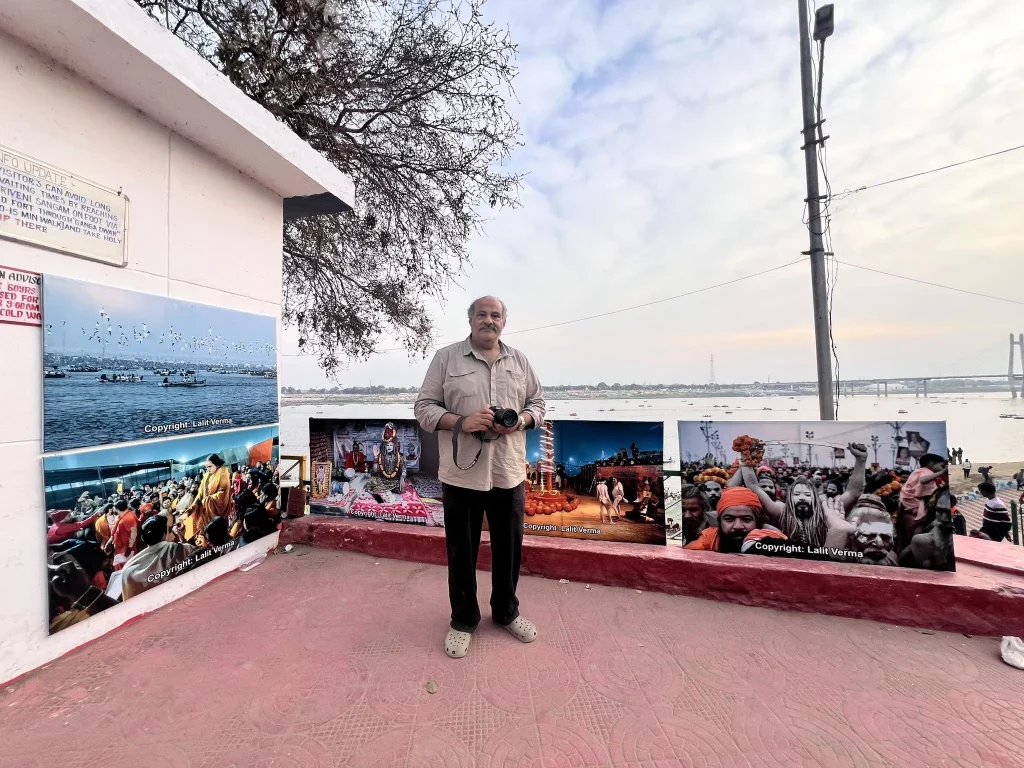
Among his bodies of photographic work, Lalit’s series on the Maha Kumbh Mela has been especially celebrated. “Pilgrims came from different parts, cultures, and different stories, united by a single-minded aspiration for transformation,” he says. Over a 20-day experiential stay at Prayagraj, he produced a vast collection of photographs titled Out of the Unknown We Move to the Unknown, later showcased at Aurodhan. The work subsequently travelled to Kuala Lumpur, while a documentary on the event was presented at Cannes. “Photography is not merely about capturing images — it is about discovering essence, using one eye to look outward and the other to look within.”
Walking lightly
Away from the gallery and the festivals, Lalit’s preferred companions are long walks, forests, and open skies. Yoga and meditation are inseparable parts of his daily life, and he is deliberate about health and stillness. It is a way of living that mirrors his philosophy entirely.
“True achievement is not merely in doing, but in being,” he reflects. “Beyond effort lies grace, and life, in its fullest expression, is an ongoing journey toward harmony — within oneself and with the world.”
ALSO READ: Raghuvamsh Chavali: Canada-based photographer turning stillness into global stories
Share with


Written By: Amrita Priya
World Photography Day: How photographs gave the Indian diaspora a sense of belonging

Written By: Amrita Priya
“I meet my God through my camera”: Raghu Rai (1942–2026), India’s master chronicler of six decades

Written By: Vikram Sharma
Many congratulations 🌼
well deserved🌼🌼
Keep going🌼🌼🌼
Lalitji is wonderful human a sense of deep understanding towards life.
I truly love his being and had a wonderful time at Aurodhan.
My best wishes and love ❤️
Heartiest Congratulations Lalit bhai! Pondicherry is blessed to hv u and ur the bridge between east & west. Keep shinning and be blessed always 🙏
Great work indeed.
jai ho congatulations lalithji. its always been a pleasure performing in aurodhan me coming from VIKKU VINAYAKRAM music legacy i have performed across many world musioc stages and i feel very moved when i perform in aurodhan.lalitji is embracing the art and culture that i awould call him a cultural ambassador of pondicherry.
Congratulations
Lalit ji is exactly what you would expect of someone who was educated as a child by a great saint and then later in life completed an MBA. He is a combination of greatly expanded vision and deep insights into what needs to be done to manifest something specific and lasting in the material world. Congratulations.