
May 04 2026
Mahesh M. Karambele: From Mumbai’s chawl to art platforms in more than 12 countries
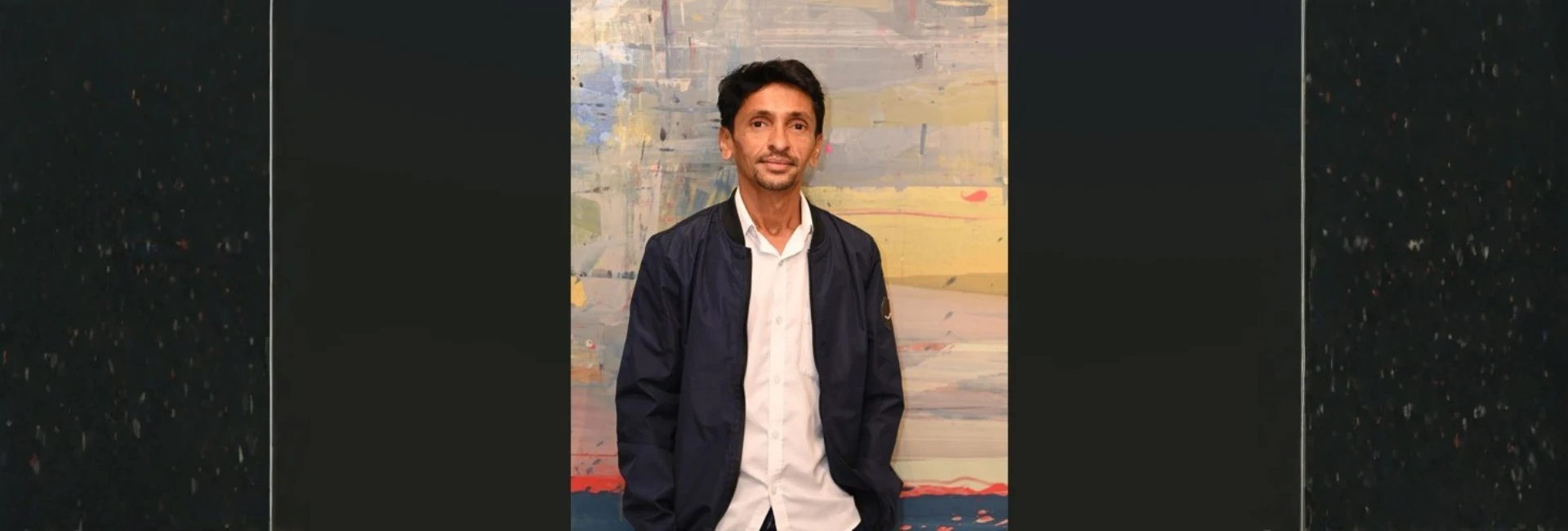
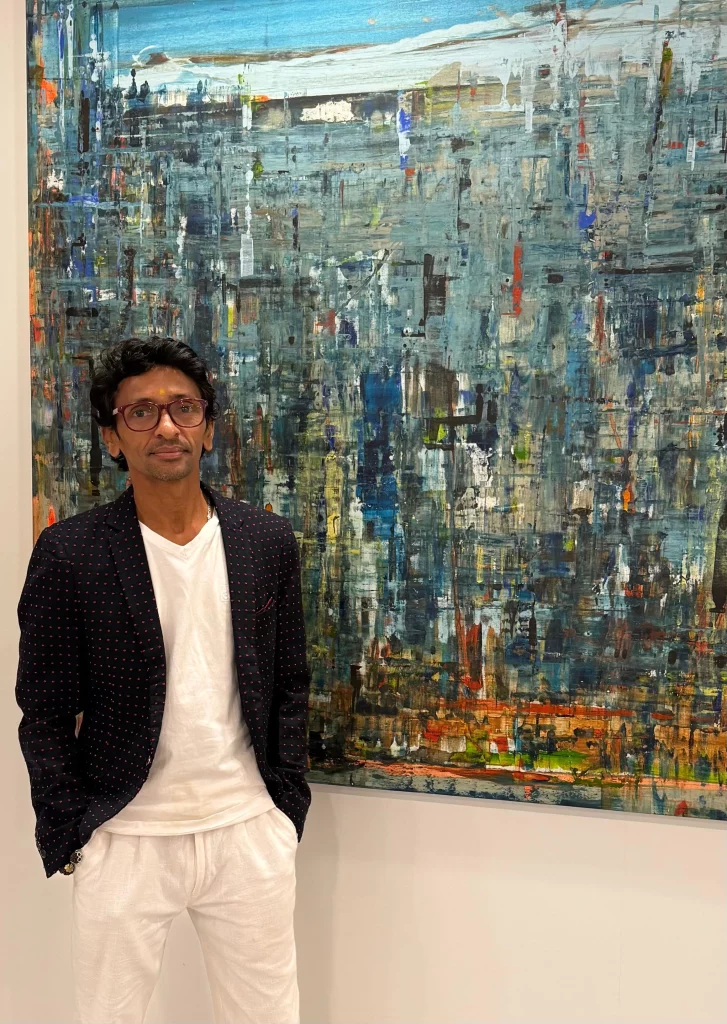
(May 4, 2026) The first exhibition Mahesh M. Karambele ever held was in a cramped chawl in Mumbai during a neighbourhood Satyanarayan Puja. His paintings leaned against monsoon-worn walls, drawing curious glances from neighbours. Among them stood his father, quiet after a long day’s work, who later remarked, “He’s stubborn, but he means it.” Today, that stubborn conviction has carried Karambele far beyond those modest beginnings. His work has since been shown in over 100 exhibitions and is held in collections across India, France, Portugal, London, Singapore, Germany, Amsterdam, and Dubai, tracing a journey from the chawls of Mumbai to major international art platforms across more than 12 countries.
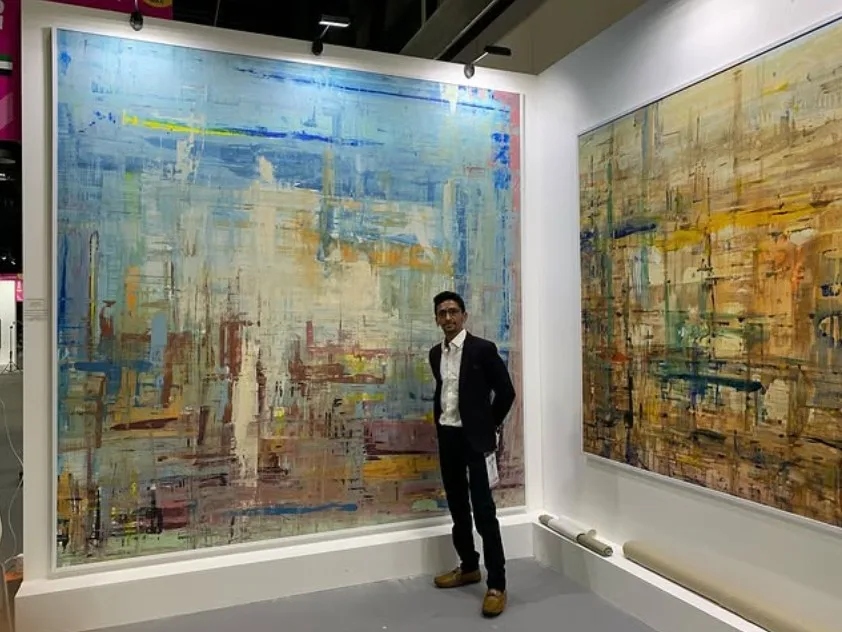
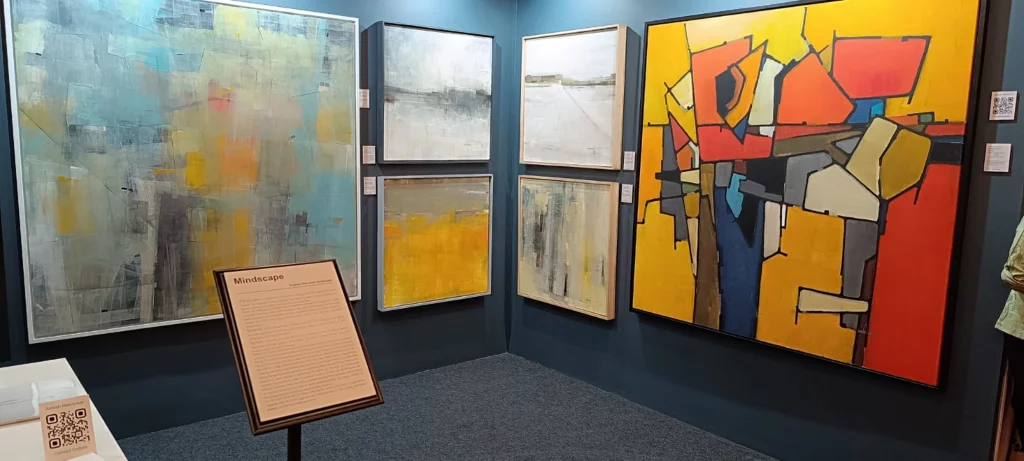
He has also held a solo exhibition at the Lalit Kala Academy, India’s national academy of art, and participated in numerous group exhibitions worldwide, including upcoming showcases at FOCUS Art Fair, New York (May 2026) and World Art Dubai (November 2026).
From Konkan soil to global canvases
Born in the coastal village of Aagve in Maharashtra’s Ratnagiri district, the 45-year-old artist’s early years were rooted in agrarian life. “Our family came from an agricultural background, and farming was the only source of food,” he recalls in a chat with The Global Indian. His father worked in Mumbai, while Karambele and his younger brother spent their childhood amidst rice fields, absorbing the rhythms of land and labour.
That connection to the earth would become a lasting influence. Even today, his works carry traces of that early life: textures that echo soil, surfaces that feel weathered, compositions that breathe like landscapes shaped over time.
At the age of six, life shifted dramatically when the family moved to Mumbai. They lived in a 120 sq ft room in Bhandup, a space that demanded constant negotiation, of movement, privacy, and survival. “Everything was layered, patched, and reused. The city is dense with repair and survival,” he says. That environment became his first visual language.
While financial constraints made formal art education impossible, the pull towards art was undeniable. “I told my parents I would give my life to art because I cannot live without it,” he says.
His father, despite limited means, quietly supported him, occasionally bringing home art supplies. That quiet encouragement, combined with the harsh realities of city life, shaped his artistic voice. Years later, that voice would resonate globally. From humble beginnings, the artist has exhibited in over 12 countries, with more than 100 shows to his name: an extraordinary trajectory that bridges local memory with international relevance.
The language of abstraction
The artist’s early work was rooted in realism: capturing chawl corridors, village fields, and the everyday lives often overlooked in mainstream narratives. “I painted what I knew… these lives felt invisible in galleries, but they were my entire world,” he says.
But over time, realism began to feel limiting. The turning point came while working on a painting of his childhood room in Bhandup. Despite repeated attempts, something felt missing. “I began sanding the surface back until only stains and scratches remained. In that damage, I saw the truth of that room more clearly than in any accurate drawing.”
That moment marked his shift to abstraction: not as a stylistic choice, but as a necessity. “I was more interested in what a place felt like than how it looked,” he explains.
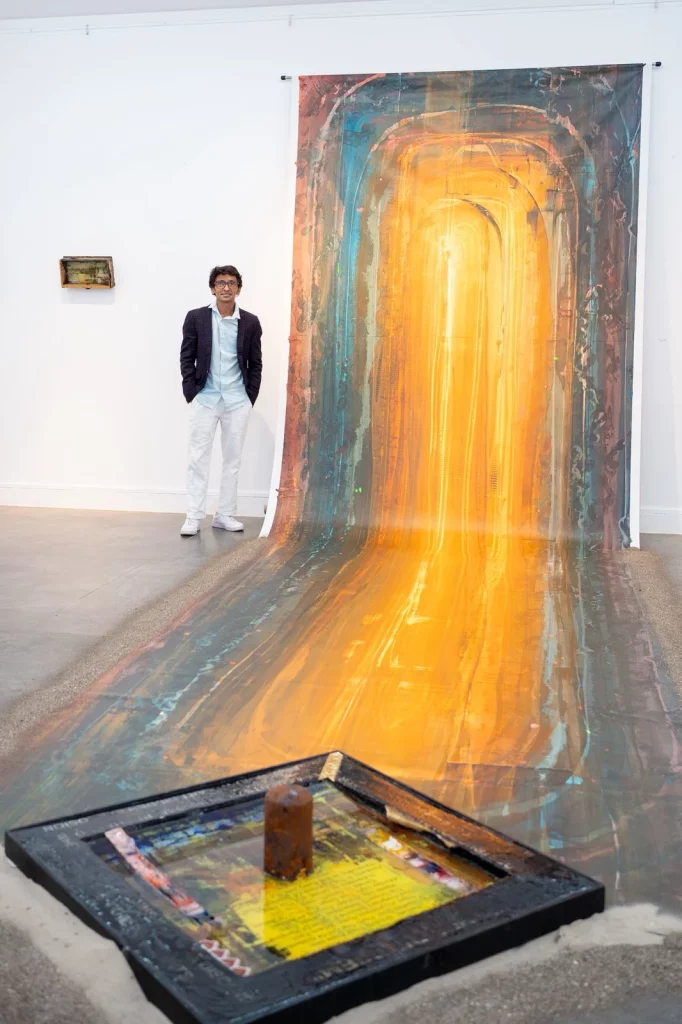
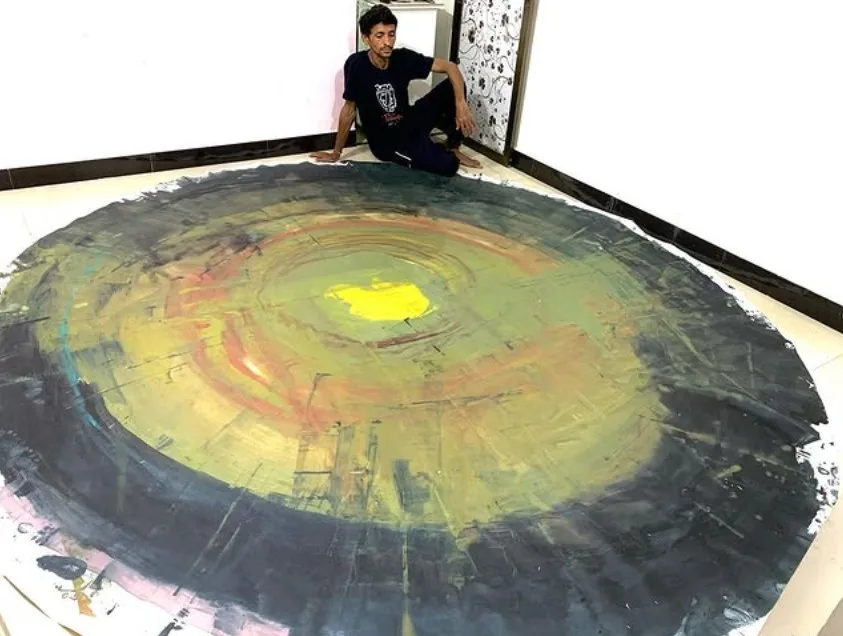
Today, his work is deeply tactile and layered, often incorporating reclaimed materials: wood, tarpaulin, fragments of fishing boats. In pieces like Tide’s Requiem, these materials are not symbolic but lived. “Material memory is a collaborator. My job is to listen and add without erasing what is already there.”
His process mirrors the environments he grew up in: layering, erasing, repairing. “I add, sand back, add again. Each layer is time, decision, and doubt.” The result is work that invites slow engagement: where meaning unfolds gradually rather than instantly.
Memory, material, and the poetry of Impermanence
At the heart of Karambele’s practice lies an exploration of memory, labour, and impermanence. Influenced equally by Konkan’s cyclical landscapes and Mumbai’s ever-changing urban fabric, his work reflects a deep sensitivity to time.
“Nothing holds its shape forever, but nothing is truly lost either,” he says. This philosophy is evident in his treatment of decay: not as an end, but as a transition. Surfaces in his paintings often appear worn, marked, or repaired, suggesting histories rather than fixed narratives. Light plays a crucial role in this experience.
“In the chawl, you knew the world through your body: damp walls, hot tin, rough concrete. Light changed a room every hour,” he explains. His works respond to this sensorial memory, shifting subtly depending on how they are viewed.
For Karambele, art is not about immediate impact but sustained engagement. “I hope for stillness. If someone notices a layer they missed the first time, that is the engagement I seek: not a glance, but a relationship.”
This ethos extends to his growing international presence. His works have been exhibited across Europe, the United States, and beyond, with audiences drawn to their universality: despite being rooted in deeply personal histories.
A journey of grit, gratitude, and global recognition
Behind the global acclaim lies a story of resilience. There were years when survival took precedence over art: walking long distances to save money, eating once a day, taking up small jobs to sustain his practice. “Sometimes life was so hard that I walked to exhibitions to save money for the next day,” he recalls.
Yet, those struggles became foundational rather than limiting. “Those days shaped me. I will never forget my past… because of them I have reached this level.”
Today, as he prepares for his upcoming presentation at FOCUS Art Fair New York 2026, his work continues to evolve while remaining anchored in the same core concerns: time, labour, and dignity. “The concerns are the same,” he says. “The fields of Kot and Aagve, and the walls of Bhandup—they all travel with me.”
From a chawl exhibition to global art fairs, Mahesh M. Karambele’s journey is all about staying true to lived experience, and transforming it into something that speaks across borders.
- Follow Mahesh M. Karambele on Instagram
ALSO READ: Amrish Malvankar: Expanding his canvas across continents
Share with



Written By: Amrita Priya
I met Mahesh during his exhibition at Chitra Kala Parishad in Bangalore. I was in awe of his paintings which were larger than life and mind blowing.Mahesh himself was so humble and down to earth and related some brilliant anecdotes in a very casual way. Overall, I was very pleased to have met him.