
May 21 2026
Three Indian-Americans on TIME100 Philanthropy 2026 List: Rajiv Shah, Deepak Bhargava, and Anna Verghese
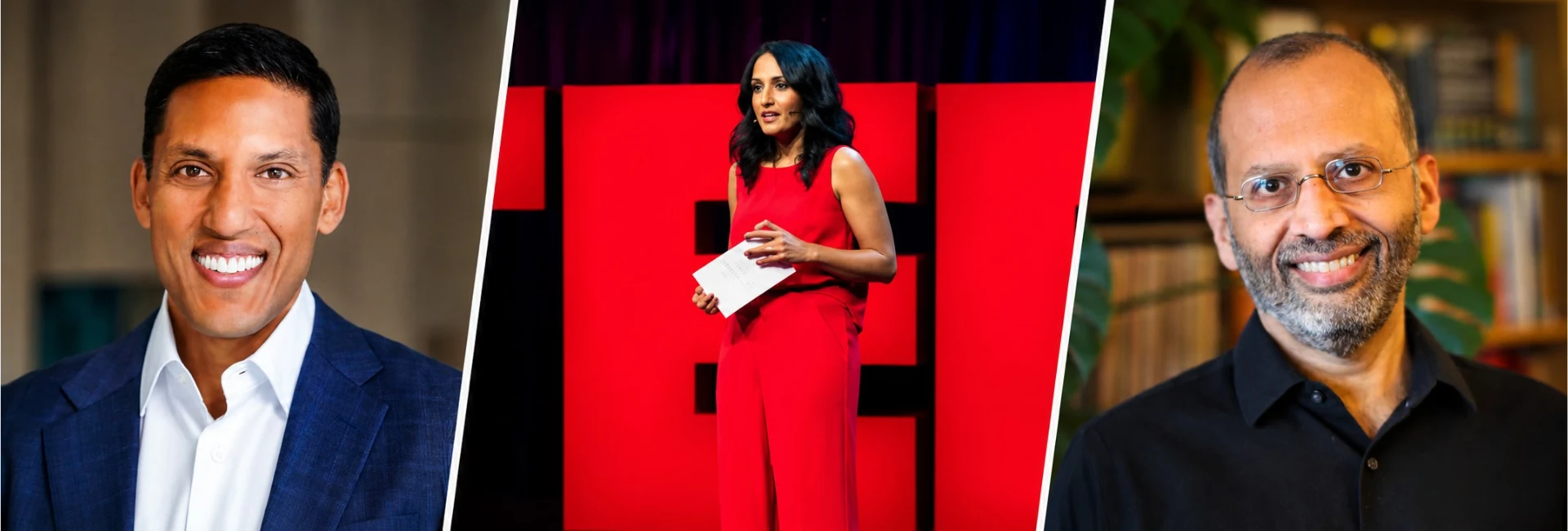
(May 21, 2026) The TIME100 Philanthropy 2026 list has recognised three Indian Americans whose work is transforming modern philanthropy through public health initiatives, democratic resilience, and billion-dollar collaborative giving. Rajiv J. Shah, President of the Rockefeller Foundation, Deepak Bhargava, President of the Freedom Together Foundation, and Anna Verghese, Executive Director of TED’s Audacious Project, have been named among the world’s most influential philanthropy leaders for 2026.Their work spans institutional philanthropy, grassroots democracy movements, and large-scale collaborative funding initiatives.
Alongside the Indian American leaders, the TIME100 Philanthropy list also includes Indian philanthropists Shiv Nadar, Torrent Group brothers Sudhir Mehta and Samir Mehta, as well as Indian-origin Tanzanian billionaire Mohammed Dewji, whose Gujarati ancestors migrated to East Africa in the late nineteenth century. Together, the honourees reflect the expanding global footprint of Indian-origin philanthropy across public health, education, democracy, and large-scale giving.
Rajiv J. Shah: The man who thinks in scale
Rajiv J. Shah’s career has moved across medicine, economics, philanthropy, and public service. Born in Detroit to Gujarati immigrant parents who settled in Michigan in the late 1960s, Shah grew up in the Ann Arbor suburbs before studying economics at the University of Michigan. He later earned a master’s degree in health economics from the Wharton School and a medical degree from the Perelman School of Medicine.
Before entering government, Shah worked at the Bill & Melinda Gates Foundation as a health economist. During that period, he helped build the International Finance Facility for Immunization, a financing mechanism that raised more than $5 billion for GAVI, the global vaccines alliance. The initiative became one of the largest funding efforts in global immunisation.
In January 2010, Shah became the sixteenth administrator of USAID. Only five days into the role, a 7.0 magnitude earthquake devastated Haiti, flattening large parts of Port-au-Prince and killing more than 200,000 people. President Barack Obama tasked Shah with leading the American response to the disaster, placing him immediately at the centre of one of the largest humanitarian operations of the decade.
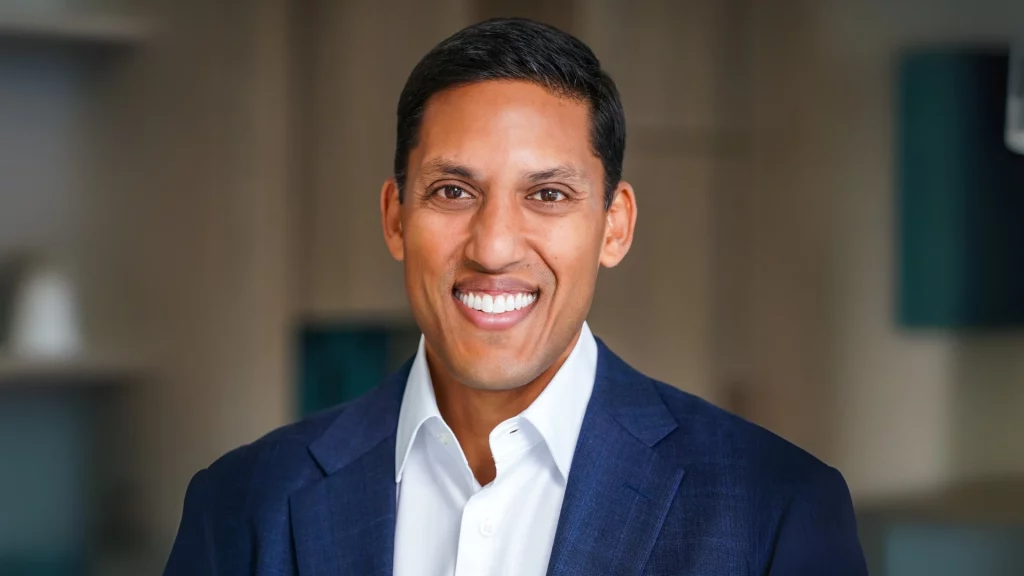
Rajiv J. Shah, President of the Rockfeller Foundation
Between 2010 and 2015, Shah oversaw major changes to USAID’s development and health programmes. He restructured $2.9 billion in global health investments and co-created “A Promise Renewed,” a partnership that brought together more than 100 countries to improve child survival rates and redesign approaches to maternal and child health funding. He also launched Power Africa, an initiative that mobilised billions in private investment to expand electricity access across sub-Saharan Africa.
In 2017, Shah became the thirteenth president of the Rockefeller Foundation and the first Indian American to lead the institution. Under his leadership, the foundation expanded its work in climate resilience, pandemic preparedness, food systems, and economic opportunity across the Global South.
We need to work with faith-based institutions, and heads of state, government officials, with entrepreneurs, and with academic scientists.
Rajiv J.Shah
His 2023 book, Big Bets: How Large-Scale Change Really Occurs, outlined the approach he has followed through much of his career. Shah argued that transformative outcomes require concentrating resources on a few ambitious goals, taking political risks, and remaining engaged long after public attention has shifted elsewhere.
TIME recognised Shah for leading one of the world’s oldest philanthropic institutions while pursuing large-scale interventions on issues including global health, climate, and economic equity.
Deepak Bhargava: Activist in the foundation seat
Deepak Bhargava spent much of his career outside major philanthropic institutions before eventually leading one. Born in Bangalore, Bhargava grew up in the Bronx, New York, after his family emigrated from India. He attended Harvard College, where he graduated summa cum laude in 1990 with a BA in social studies.
Rather than moving into a conventional economics or finance career, Bhargava chose community organising. He spent nearly a decade at ACORN before joining the Center for Community Change in 1994. By 2002, he had become executive director of the organisation, a position he held for 16 years.
During his tenure, Bhargava helped build the Fair Immigration Reform Movement and became closely associated with campaigns around immigration reform, labour rights, and economic justice. In 2011, he was arrested outside the White House during an immigration protest. He was later credited with helping influence the Obama administration’s 2012 decision to reduce deportations of undocumented immigrants.
Following his years at the Center for Community Change, Bhargava joined the CUNY School of Labor and Urban Studies as a Distinguished Lecturer. He also co-founded the Leadership for Democracy and Social Justice institute there.
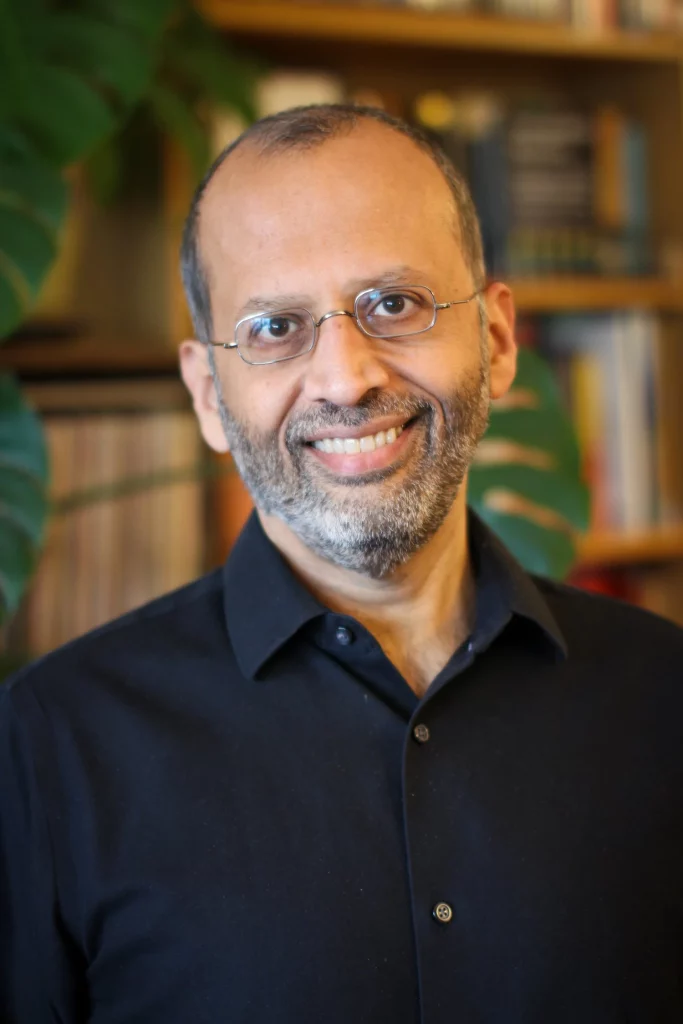
Deepak Bhargava, President of the Freedom Together Foundation
Bhargava entered institutional philanthropy in 2024, when he was selected to lead the JPB Foundation. The foundation itself had a notable background. It was created using funds connected to the estate of financier Jeffry Picower after a settlement worth more than $7 billion was paid to victims of Bernie Madoff’s fraud.
One of Bhargava’s first decisions was to rename the institution the Freedom Together Foundation, shifting its public identity away from donor legacy and toward a mission focused on democracy and civic participation. Under his leadership, the foundation increased its payout rate from the standard five percent required of private foundations to 10 percent annually, with a commitment to maintain that level through 2026.
We are at an inflection…with severe challenges to fundamental rights, the rule of law, and basic norms. That demands an extraordinary response.
Deepak Bhargava
In the year ending 2025, the foundation distributed more than $400 million through over 530 grants, with roughly 70 percent directed toward pro-democracy initiatives. Since Bhargava took over, the organisation has also added more than 300 new grantees.
TIME also highlighted Freedom Together’s role in co-leading a solidarity campaign alongside the MacArthur Foundation and McKnight Foundation defending philanthropy’s freedom to give according to its values. In 2025, the foundation launched the Courage Project, which provided cash awards to organisations engaged in acts of civic bravery, including groups offering legal support to immigrants detained by authorities.
Bhargava told TIME that the United States was at “an inflection” marked by challenges to democratic norms, the rule of law, and civil rights, and that the situation demanded “an extraordinary response.”
Anna Verghese: Architect of collaborative philanthropy
At TED’s Audacious Project, Anna Verghese has helped build one of the most influential collaborative funding platforms in global philanthropy. Verghese pursued a BA in American Studies at King’s College London before joining TED more than a decade ago.
She began at TED as an assistant and gradually moved through a series of roles, including Director of the TED Prize, before taking charge of the Audacious Project when it launched in 2018. The initiative was designed to identify nonprofits with ambitious, scalable ideas and connect them with major philanthropists willing to fund projects collectively and over multiple years.
The model differed from traditional grantmaking in several ways. Rather than treating nonprofit proposals as standard funding applications, Audacious presented them to donors as large-scale ideas worth investing in. Verghese and her team focused on organisations tackling urgent global problems that had often remained underfunded despite having ambitious and viable plans.
Since 2018, the Audacious Project has channelled more than $8 billion into 70 projects spanning health, climate, science, education, and justice. According to project figures, for every $10 million raised directly through Audacious, grantees have gone on to leverage an average of an additional $6.5 million from other funding sources. Around 84 percent of Audacious projects have met or exceeded their original fundraising targets.
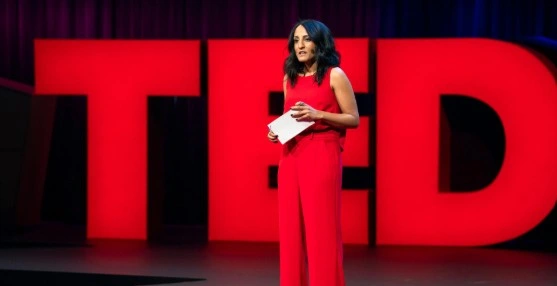
Anna Verghese, Executive Director, The Audacious Project at TED
TIME particularly recognised Verghese for a gathering she organised in October 2025, when 35 major philanthropists committed more than $1 billion to 13 nonprofits over two-and-a-half days. Those participating included Melinda French Gates, Reed Hastings and his wife Patty Quillin, as well as Connie Ballmer. The nonprofits and initiatives supported during the gathering ranged from biomedical research to projects aimed at reducing ocean plastic pollution.
This kind of collaborative philanthropy space is fledgling. It’s growing year by year.
Anna Verghese
Verghese has described collaborative philanthropy as a relatively young but rapidly growing space. She has also spoken about building confidence gradually over years within TED rather than entering philanthropy through established donor networks. Her rise within the organisation, from assistant to executive director of one of the world’s largest collaborative funding initiatives, became part of the story highlighted by TIME.
Together, Shah, Bhargava, and Verghese represent three distinct visions of philanthropy in America. One works through legacy institutions, another through activism and democratic engagement, and the third through large-scale donor collaboration. Yet all three share a belief that philanthropy must move faster, think bigger, and take greater risks in confronting the world’s most urgent challenges. Their inclusion on the TIME100 Philanthropy 2026 list reflects not only individual achievement, but also the growing imprint of Indian Americans on the future of global civic leadership.
ALSO READ: Five Indian-origin leaders, one Indian on TIME’s 100 Most Influential People list for 2026

Share with



Written By: Charu Thakur
Meet Dr. Reshma Kewalramani: The immigrant-turned-biotech leader on TIME’s 100 most influential list


Written By: Charu Thakur