April 18 2026
Five Indian-origin leaders, one Indian on TIME’s 100 Most Influential People list for 2026
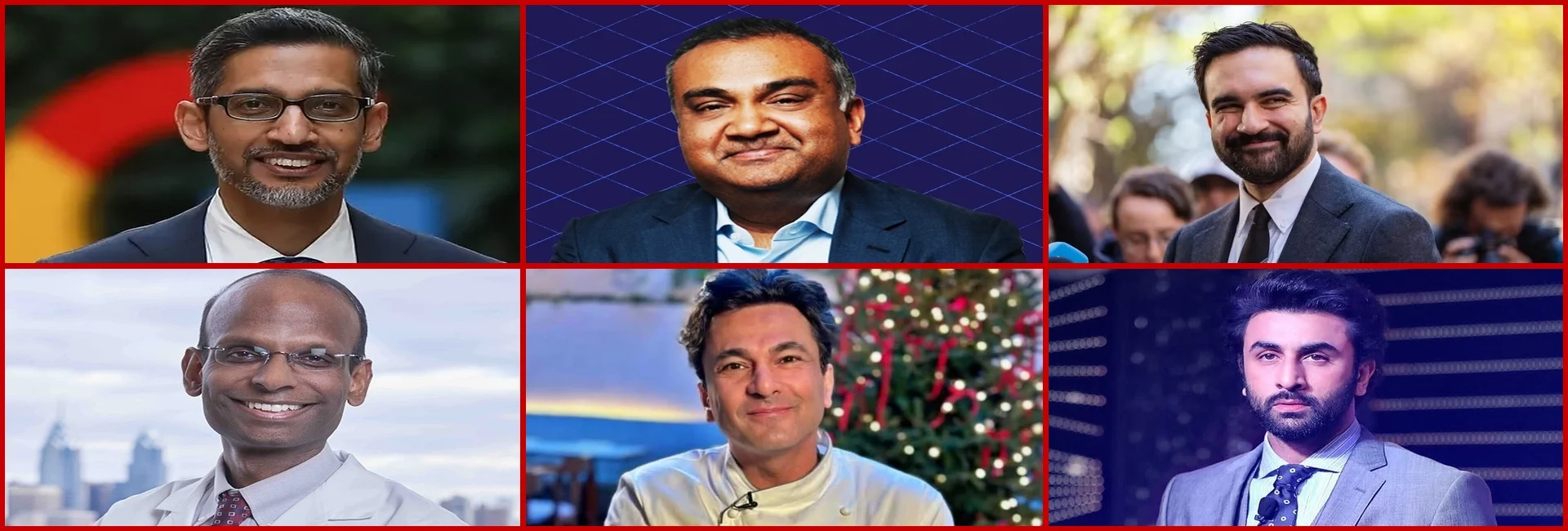
(April 18, 2026) A chef, a doctor, an actor, a mayor, and two men shaping how the world uses the internet are part of the TIME 100 2026 list. Together, they make the most eloquent case yet for what India is capable of producing.
Every year, TIME’s list of the world’s 100 most influential people serves as a mirror to the moment. The 2026 edition is no different. World leaders, surgeons, athletes, artists, and chefs all share the same pages. As TIME’s describe its process, the selections are led by the stories shaping the world each year and the people who write them, some well known to many, others recognised only within their fields, found by polling reporters and sources across the globe.
This year, six individuals of Indian origin made the cut, across technology, governance, medicine, food, and cinema. Four are Indian Americans who crossed oceans to build new lives. One is the son of Indians born in Uganda who now governs New York City. And one works in India as an actor, yet carries a cultural influence that crosses borders. Once, Indian names on a list like this were the exception. But now, they are beginning to look like the rule. The 2026 TIME 100 Most Influential People list is simply the latest evidence of how thoroughly the Indian-origin talent has woven itself into the fabric of global influence. The Global Indian throws the spotlight on this year’s defining Indian-origin names.
Sundar Pichai
CEO, Google and Alphabet
Pichai Sundararajan better known as Sundar Pichai was born in Madurai, Tamil Nadu, and grew up in a two-room apartment in Chennai that he shared with his parents and younger brother. The family had no car and no television. His father, an electrical engineer at GEC, saved for two years to afford the household’s first telephone. When it finally arrived, young Sundar memorised every number dialled on it, a photographic recall that colleagues at Google would later come to know well. He slept in the living room.
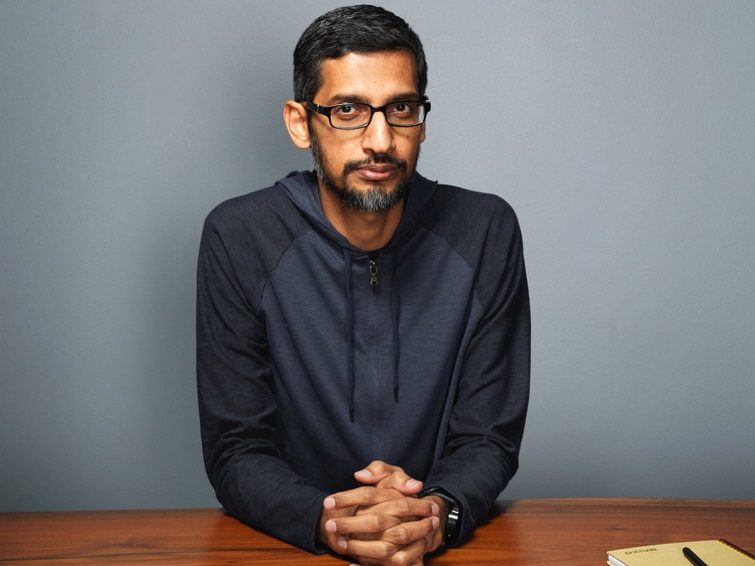
Sundar Pichai
He earned a metallurgical engineering degree from IIT Kharagpur, where he took the Institute Silver Medal, before a materials science master’s at Stanford and an MBA at Wharton. He joined Google in 2004, steadily building influence across Chrome, Gmail, Maps, and Drive before becoming CEO in 2015. After OpenAI captured the public imagination with ChatGPT in 2022, Pichai moved decisively, merging Google Brain and DeepMind into a unified lab and rolling out Gemini as a standalone AI platform. In his TIME profile, AI expert Andrew Ng wrote: “In an era when AI is redefining knowledge, work, and power, Pichai’s influence lies not only in what Google builds, but in how widely it is used. Few leaders have brought artificial intelligence to more people.” Alphabet’s market capitalisation has at times exceeded $2 trillion. The boy from Chennai who slept in the living room now steers what may be the most consequential technology company of the AI age.
Neal Mohan
CEO, YouTube
Neal Mohan was born in Lafayette, Indiana, to parents who had emigrated from Lucknow, Uttar Pradesh. His father, Aditya Mohan, an IIT Kharagpur graduate, had arrived in the United States with $25 in his pocket to pursue a PhD in civil engineering at Purdue University. Neal grew up in the American Midwest, but at 12 his family moved back to Lucknow, where he completed high school at St. Francis’ College in Hazratganj. He learned nine years’ worth of Hindi and Sanskrit, and later described the experience of moving from a small midwestern town to one of India’s great northern cities as teaching him to roll with change and come out the other side stronger.
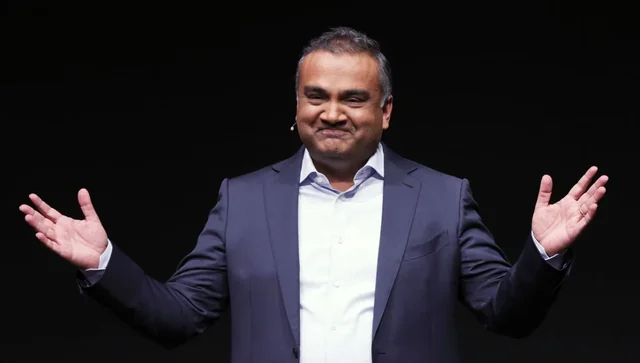
Neal Mohan
He returned to the United States for a degree in electrical engineering at Stanford, later adding an MBA from Stanford’s Graduate School of Business, where he was named an Arjay Miller Scholar. After stints at Accenture and a startup called NetGravity, he joined DoubleClick, which Google acquired in 2007 for $3.1 billion. Mohan came with it, spending the next decade and a half becoming indispensable to YouTube, leading the launches of YouTube TV, YouTube Music, YouTube Shorts, and YouTube Premium. When Susan Wojcicki stepped down in February 2023, Neal succeeded her as CEO. TIME noted that the role demands someone with “enough nerdiness to earn the respect of software engineers plus sufficient charm to woo advertisers,” adding that “approachability is one of Neal’s superpowers.” The list suggests, he has both in abundance.
Zohran Mamdani
Mayor, New York City
Zohran Mamdani was born in Kampala, Uganda, to two of the most culturally significant Indians of their generation. His mother, Mira Nair, is the Oscar-nominated filmmaker behind Salaam Bombay!, Monsoon Wedding, and The Namesake, raised in New Delhi and educated at Harvard. His father, Mahmood Mamdani, was born in Mumbai and is a professor of postcolonial studies at Columbia University. Zohran spent his early childhood in Uganda and Cape Town before the family moved to New York City when he was seven. He attended the Bronx High School of Science, graduated from Bowdoin College with a degree in Africana Studies, and became a naturalised American citizen in 2018.
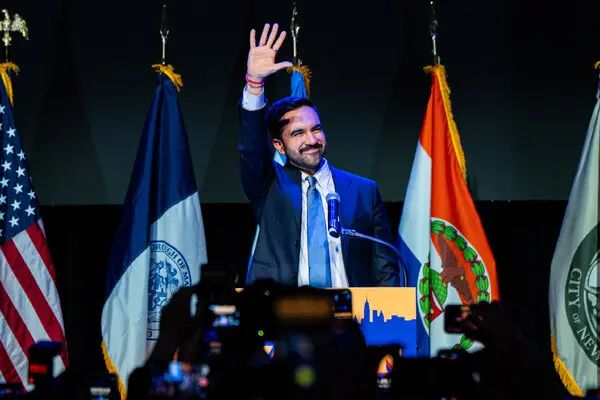
Zohran Mamdani
Working first as a housing counsellor helping low-income homeowners in Queens fight eviction, Mamdani was elected to the New York State Assembly in 2021. In November 2025, the 34-year-old democratic socialist stunned the political establishment by defeating former Governor Andrew Cuomo to become New York City’s 112th mayor, its youngest in over a century, and its first Muslim, South Asian, and African-born leader. He took office in January 2026. TIME described him as bringing “a new source of momentum” to the Democratic Party, noting that he has “collaborated with Governor Kathy Hochul on a childcare plan, won federal housing funds” and so far avoided the predicted exodus of businesses and wealthy residents that critics had forecast. The son of two Indians who built their lives across three continents now governs the most complex city on Earth.
Dr. Kiran Musunuru
Professor of cardiovascular medicine and genetics, University of Pennsylvania
Kiran Musunuru was born in the United States to Indian immigrant parents with roots in Andhra Pradesh. He graduated from Harvard College in 1997 with a degree in Biochemical Sciences, then earned his MD from Weill Cornell Medical College and his PhD in Biomedical Science from Rockefeller University, later adding a Master of Public Health from Johns Hopkins and a law degree from Penn. The breadth of that education reflects a career deliberately built at the intersection of science, medicine, policy, and ethics, where the most consequential decisions in genetic medicine tend to happen.
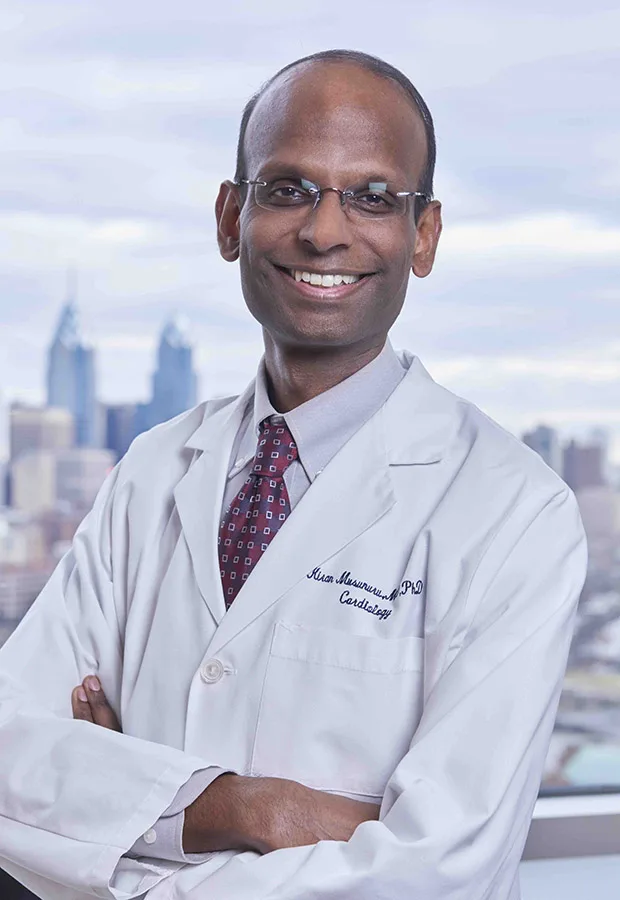
Dr Kiran Munsunuru
Musunuru is now a Professor of Cardiovascular Medicine and Genetics at the University of Pennsylvania’s Perelman School of Medicine and one of the world’s foremost experts in CRISPR gene editing. His laboratory was among the first to demonstrate that CRISPR-Cas9 could alter cholesterol-regulating genes in the liver, opening a path toward a one-shot preventive therapy against heart attacks, the leading cause of death globally. In 2025, he and Dr. Rebecca Ahrens-Nicklas made history at the Children’s Hospital of Philadelphia by successfully treating a nine-month-old baby for a rare and previously fatal metabolic disorder using a bespoke CRISPR base-editing therapy, designed and delivered in just six months, a first in medical history. TIME honoured him alongside Dr. Ahrens-Nicklas, celebrating their work as proof that we are “inspired by the genius of doctors” who are pushing the boundaries of what medicine can do. For Musunuru, those boundaries are moving faster than ever.
Vikas Khanna
Chef, author, humanitarian, and founder of Bungalow in New York
Vikas Khanna was born in Amritsar, Punjab, with a clubfoot, a deformity that meant he could not walk properly until he was 13, requiring years of leg braces and wooden shoes. Doctors advised his mother to temper her expectations, but she refused. His grandmother brought him into the kitchen instead, and at the Golden Temple’s langar, the Sikh community kitchen that feeds thousands daily, young Vikas found both purpose and education. By the time he became a teenager he was helping sell chole bhature to local schools. By 17 he had started his own catering venture in Amritsar.

Vikas Khanna
He graduated from the Welcomgroup Graduate School of Hotel Administration in Manipal, trained under the Taj, Oberoi, and Leela hotel groups, and in 2000 immigrated to New York City, taking on 31 different jobs while studying at the Culinary Institute of America, living through years of financial uncertainty and professional rejection. His persistence produced Junoon, a fine-dining Indian restaurant in Manhattan that earned a Michelin star in 2011, and later Bungalow in New York’s East Village, which won a Michelin Bib Gourmand in 2024 and sold out its opening reservations in eleven seconds. During the COVID-19 pandemic, his Feed India initiative distributed over 50 million meals across India. TIME described the power of Khanna’s work mentioning, “a meal prepared by chef Vikas Khanna” is, in itself, an act of influence. The boy from Amritsar who was told he might never walk has fed a continent.
Ranbir Kapoor
Actor, Indian film industry
Ranbir Kapoor was born in Mumbai, into a family that is as close to cinematic royalty as the Indian film has produced. His great-grandfather, Prithviraj Kapoor, was a pioneer of the Hindi stage and screen. His grandfather, Raj Kapoor, directed and starred in films that shaped the emotional language of a generation. His father, Rishi Kapoor, and mother, Neetu Singh, were leading Bollywood stars of the 1970s. To be born a Kapoor is to inherit not just a surname but an expectation, and Ranbir’s earliest instinct was to earn the name rather than coast on it. He completed his schooling at Bombay Scottish School, then travelled to New York to study filmmaking at the School of Visual Arts and method acting at the Lee Strasberg Theatre and Film Institute.
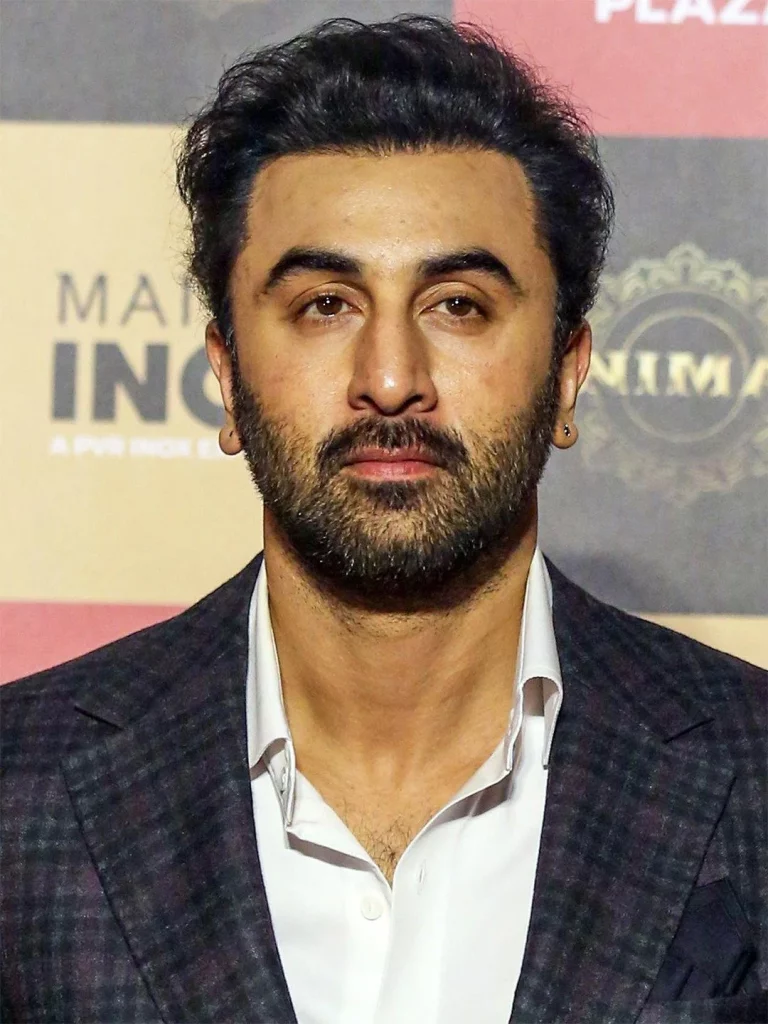
Ranbir Kapoor
He made his debut in 2007 with Sanjay Leela Bhansali’s Saawariya, and over the 18 years since has built a filmography defined by deliberate, often uncomfortable choices like the raw grief of Rockstar, the wordless charm of Barfi!, the biographical intensity of Sanju, and the morally provocative darkness of Animal, which crossed ₹900 crore at the global box office in 2023 while dividing critics. Now he is preparing for his most ambitious role yet, Lord Ram in Nitesh Tiwari’s two-part Ramayana, a ₹1,600 crore epic scheduled for Diwali 2026, being positioned as India’s answer to the global blockbuster. It was fellow actor Ayushmann Khurrana who wrote his TIME profile, and his tribute cut to the heart of what makes Kapoor matter: “There are actors who chase legacy, and there are actors who become one through their craft. Ranbir Kapoor is the latter. He shows our culture through quiet restraint. He represents the India that is finally learning how to listen to itself.” He is the first Indian actor to appear on the TIME 100, and at 43, only just getting started.
A generation ago, this list would have been remarkable. Today, it is beginning to feel inevitable.
ALSO READ: Time 100 trailblazers Manjusha Kulkarni and Priyamvada Natarajan named Great Immigrants of 2025
Share with