April 27 2026
On TIME100’s Most Influential list, Dr Kiran Musunuru is developing gene-editing to prevent heart disease

(April 27, 2026) Included in TIME magazine’s 100 Most Influential People of 2026, Indian-American Dr Kiran Musunuru is pioneering gene-editing treatments that could turn heart disease prevention into a one-time, lifelong solution.
There is a village called Uppaluru in Andhra Pradesh’s Krishna district that likely has no idea that it is connected to one of the most consequential scientific careers of our time. Dr Kiran Musunuru, born in New York City to a cardiologist who emigrated from that village in 1976, grew up in Florida shaped by both worlds.
It is a familiar migration story, but one that led to an unusually ambitious goal to end heart disease altogether. That ambition has now placed him on TIME’s list of the world’s most influential people, adding to a long list of honours for his work in science. A physician-scientist at Penn Medicine, Musunuru is helping translate CRISPR gene editing from breakthrough science into real-world treatment. The technology allows scientists to edit DNA, the material in our cells that carries instructions for the body, by cutting it at targeted points. It can then modify sections of the genome, the complete set of a person’s DNA, to correct faulty genes or change how they function.
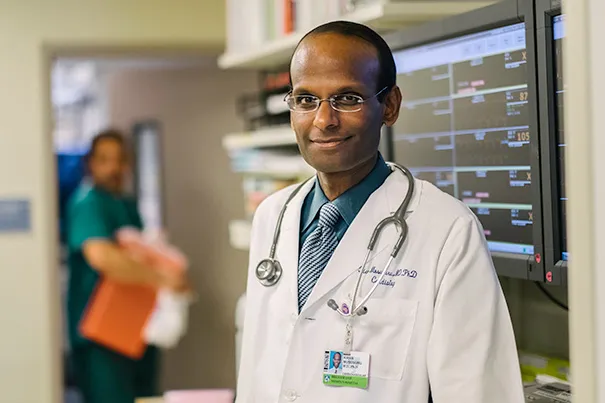
With training spanning Harvard, Rockefeller University, Johns Hopkins and University of Pennsylvania, Dr Kiran Musunuru brings an unusually broad foundation in science, medicine and public health to his work.
Baby KJ and six-month miracle
In 2025, Dr Kiran Musunuru, alongside Dr Rebecca Ahrens-Nicklas, led a landmark effort to treat Baby KJ, an infant born with a rare, life-threatening genetic disorder. In just six months, their team designed and delivered a personalised gene-editing therapy demonstrating how quickly such treatments can move from concept to patient. As TIME noted, “A decade from now, their names will be in medical textbooks, not only for baby KJ, but for opening the door to personalized genetic medicine for thousands of children after him.”
The work, published in the New England Journal of Medicine, marked a turning point. It showed that personalised gene-editing treatments could be created quickly enough to save lives. It was also a glimpse of a future where advanced medicine may not remain confined to a few countries, but could eventually reach patients everywhere.
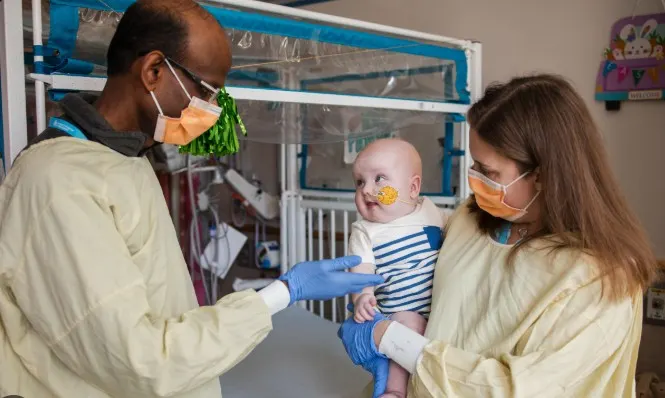
Dr Munsunuru with his infant patient | Image Credit: The Philadelphia Inquirer
From treating disease to preventing it at the source
For Musunuru, this breakthrough is part of a larger vision. He grew up watching his father treat heart disease, while also seeing how outcomes varied across access and geography. That early exposure shaped his belief that medicine must move beyond managing disease to preventing it altogether.
At his lab, he and his team are working on what once seemed like science fiction, identifying genetic mutations that drive cardiovascular disease and rewriting them at the source. The idea begins with a simple insight that some people are born with natural protection, with lifelong low cholesterol and dramatically reduced risk.
Years ago, Musunuru posed a question that would come to define his work: “What if we could give everyone those protective mutations?” Today, that once-theoretical question is inching closer to reality. If it finds its answer, it could transform how the world approaches disease, not as something to be managed over a lifetime, but as something that can be prevented before it begins.
The genetic lottery, and how to recreate it
In one case, Musunuru and his team studied a family with extraordinarily low cholesterol levels. They were not following a special diet or treatment plan. Instead, their bodies simply processed cholesterol differently. Since high cholesterol is a major risk factor for heart disease, this finding immediately drew scientific attention. The answer lay in a gene called ANGPTL3. In these individuals, the gene was effectively turned off and that turned out to be protective.
“They were essentially born with a natural advantage,” Musunuru has explained. “Almost like winning the genetic lottery.” For scientists, the question quickly became, ‘could that advantage be shared?’
From lifelong treatment to a single shot
Today, people at risk of heart disease often rely on daily medication to manage cholesterol levels. These drugs work well, but they require consistency over decades. In reality, many patients struggle to stay on long-term treatment.
“It’s not the patient’s fault,” Musunuru has said. “We’re asking people to take medication every day for the rest of their lives.” For millions of families, especially those navigating healthcare systems with limited follow-up, a treatment that works once and lasts a lifetime could change everything. That is where his work is headed: replacing lifelong management with a one-time intervention.
Editing the code of life
The tool making this possible is CRISPR, a breakthrough that allows scientists to edit DNA with remarkable precision. Musunuru’s team focuses on the liver, where cholesterol is regulated. Using delivery systems similar to those used in mRNA vaccines, they send genetic instructions into liver cells. These instructions guide the cells to make a tiny, precise change in the DNA, effectively switching off genes like ANGPTL3.
The change is small, but the impact is lasting. Instead of taking medication for decades, a single treatment could reduce cholesterol levels for life.
A glimpse of what’s possible
The idea is no longer theoretical. Early studies have shown promising results, with significant and sustained reductions in cholesterol levels. Human trials are now underway, beginning with patients at the highest risk. The path forward will be gradual from rare genetic conditions to broader use in high-risk populations. But the direction is clear. “If this works well,” Musunuru has said, “we could one day offer it like a vaccination against heart disease.”
A journey that comes full circle
Kiran Musunuru has never been interested in incremental change. His goal is to make one of the world’s deadliest diseases preventable with a single intervention. His father came to the United States from a village in Andhra Pradesh and spent his career treating heart disease. His son is working toward a future where heart disease can be prevented altogether.
That is not ambition for its own sake. It is an effort to take the work a step further by shifting from treatment to prevention.
Awards and recognitions earned by Dr Kiran Musunuru
- Named to TIME’s 100 Most Influential People of 2026
- Outstanding Investigator Award, American Federation for Medical Research (2019)
- Judson Daland Prize for clinical investigation, American Philosophical Society (2018)
- Elected to the American Society for Clinical Investigation (2017)
- Translational Award for Early Career Investigators, Gill Heart and Vascular Institute (2017)
- Award for Meritorious Achievement, American Heart Association (2016)
- Fannie Cox Prize for Excellence in Science Teaching, Harvard University (2014)
- Presidential Early Career Award for Scientists and Engineers (2013)
ALSO READ: Dr Prokar Dasgupta: The surgeon who performed the UK’s first long-distance robotic surgery

Share with



Written By: Amrita Priya
Dr. Aseem Malhotra: Tapped by Trump as Chief Medical Advisor to Make America Healthy Again (MAHA)

Written By: Amrita Priya
How Indian-American surgeon Atul Gawande’s WHO checklist is transforming global healthcare