
April 20 2026
Subir Saha: From moving to the US as a student to leading Indo-American trade
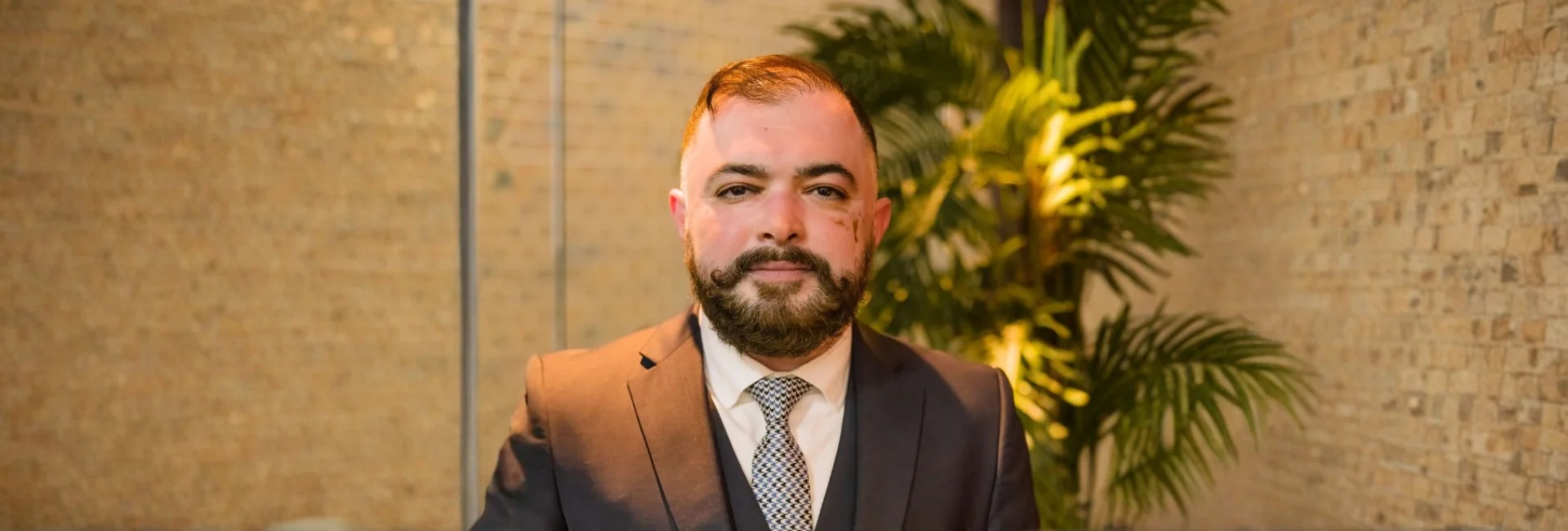
(April 20, 2026) It’s a memory that still lingers vividly for Subir Saha, the excitement of walking into a small internet café in Hyderabad in the late 1990s, waiting patiently for his turn at a bulky desktop computer, and checking his email with almost childlike anticipation. There were no smartphones, no instant messaging, no constant connectivity. “I used to get so excited at the thought that someone had sent me an email. I just wanted to read it,” he recalls in a chat with The Global Indian.
It’s a simple image, but one that sharply contrasts with the hyper-connected global life he leads today. As Chairman and President of the National American and Indian Chamber of Commerce (NAICCO) since 2022, he operates at the meeting point of global trade, entrepreneurship, and policy.
A seasoned entrepreneur who has built and scaled multiple technology and healthcare ventures, he now represents business interests across the United States while fostering international collaborations. But long before boardrooms, delegations, and global forums, Subir’s journey began in a far simpler setting, one that makes his rise all the more compelling.
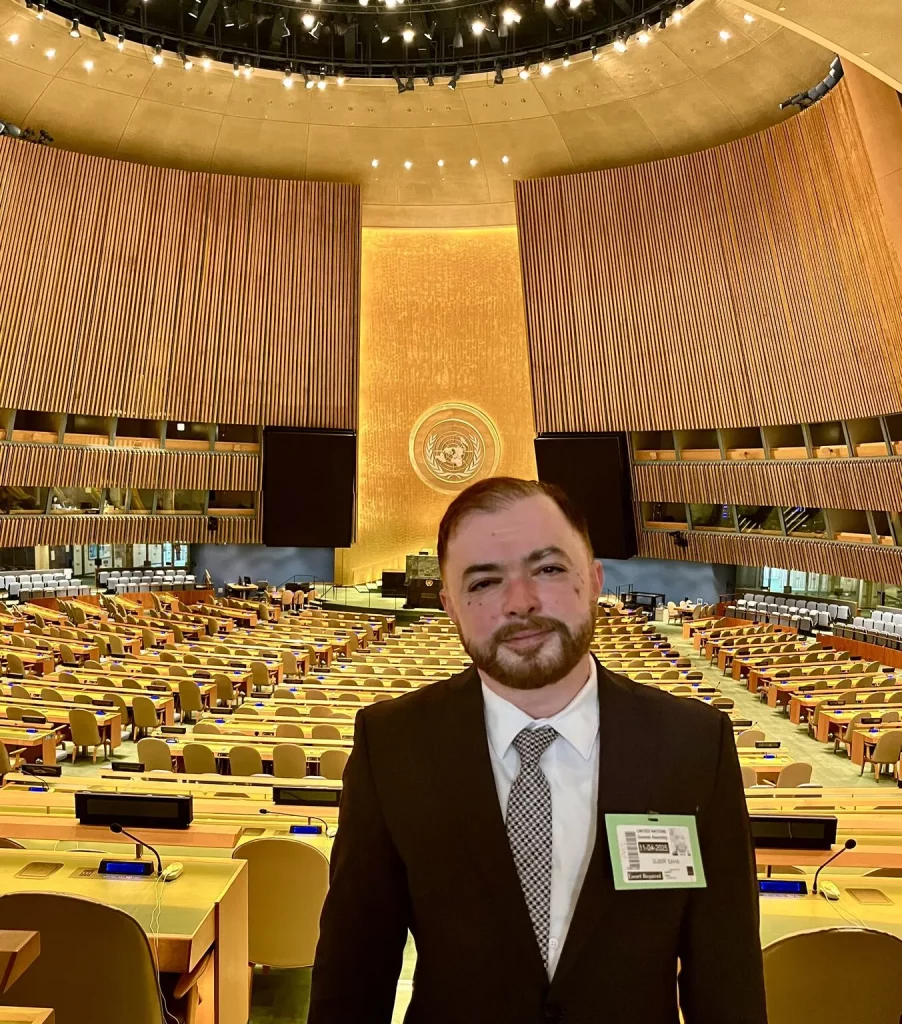
Subir Saha as a speaker at the 24th Infopoverty World Conference at the United Nations Headquarters in New York City
Growing up grounded
Born in Jabalpur into an Indian Army family, Subir’s early years were shaped by movement and discipline. His family relocated to Secunderabad when he was just a year old, and from there, Hyderabad became home. Growing up in cantonment areas and attending Kendriya Vidyalaya, his childhood was, as he describes it, ‘pretty normal’ but deeply rooted in simplicity and close-knit relationships.
“I came from a very humble background,” he says. “We didn’t have much, but we had a strong sense of community.”
Unlike the expansive social networks of today, Subir preferred a tight circle of friends. “If my friends didn’t go somewhere, I wouldn’t go either,” he admits with a smile. He wasn’t particularly extroverted then, a striking contrast to the role he plays today, which demands constant networking and public engagement.
Life in the 80s and 90s was slower, more deliberate. “We didn’t have cell phones, iPads, or even computers at home. That life was different; we were more grounded,” he reflects. Those years built resilience, adaptability, and a sense of belonging. These qualities would later prove invaluable.
After completing his schooling, Subir pursued a bachelor’s degree in Electronics from Bharatiya Vidya Bhavan in Sainikpuri. Like many from his generation, the path seemed pre-defined: engineering, stability, and a structured career. But life had other plans.
Finding opportunity in the United States
In 1999, Subir made a life-changing decision: to pursue his master’s in Information Systems at Ferris State University in Michigan. It was his first major step outside India, and the transition was anything but easy.
“My first month, I remember calling my mom and being terribly homesick,” he admits candidly. “I didn’t know how to cook. I didn’t know how to manage things.”
International calls were expensive, made through prepaid calling cards, and homesickness was intense. The university, located in a relatively remote area, had a small Indian student population, “maybe 50 or 60 Indian students in total,” he recalls. The diversity of his living situation added another layer of adjustment: he shared an eight-bedroom house with students from different countries, including Americans and Africans. “It was a shock,” he says. “In India, someone always asks if you’ve eaten, especially mothers. There, nobody cared. You had to figure everything out yourself.”
Yet, it was precisely this independence that shaped him. Over time, Subir adapted, not just to the lifestyle, but to the mindset of a country driven by opportunity and innovation.
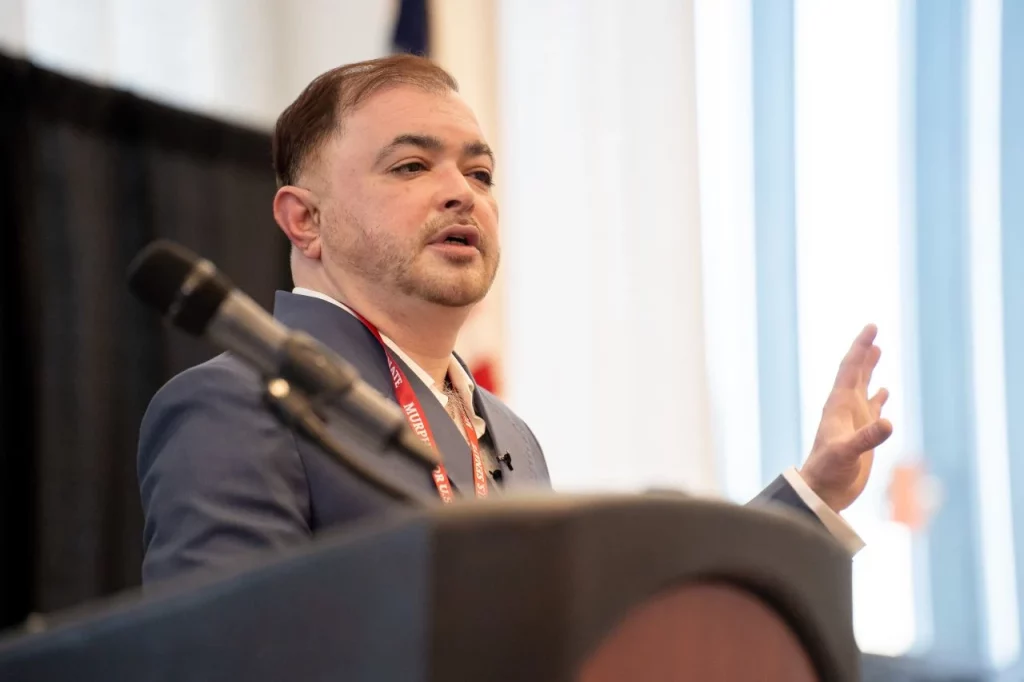
Subir Saha as the keynote speaker at an event at New Jersey’s Rider University
After graduating in 2001, he began his career in technology consulting, working with firms like Enterprise Business Solutions and Pursuit Software, as well as taking on projects with major clients, including Medtronic, Sears, and UPS. What started as a one-year contract with UPS turned into a five-year stint, during which he also grew increasingly comfortable with life in New Jersey, a state he had initially never imagined settling in. “New Jersey surprised me,” he says. “It’s incredibly diverse, with a strong Indian community. Over time, it started feeling like home.”
Building, risking, leading: The entrepreneurial shift
Despite a stable career, Subir sensed a turning point. “I realized that I was helping companies solve problems, but maybe I could do it on my own,” he explains.
The decision to transition from employee to entrepreneur wasn’t easy. Leaving a steady paycheck meant stepping into uncertainty. “The biggest difference is that your paycheck isn’t guaranteed anymore,” he says. “There were times when I didn’t pay myself, but I had to pay my employees.”
He launched his first company in 2008, navigating the challenges of building a business from scratch, financial risk, operational pressures, and the isolation that often accompanies entrepreneurship. Over the years, he founded and sold multiple companies, eventually establishing his current venture, INSISE, in 2022, along with interests in healthcare and technology enterprises. “Entrepreneurship is a lonely world,” he admits. “You make decisions on your own, and sometimes you only realise later if they were right or wrong.”
Yet, the risks paid off, not just financially, but in shaping his leadership perspective and opening new avenues.
On a national stage: The Chamber of Commerce journey
In 2022, Subir took on what he describes as his most significant role yet, as a national representative for the National American and Indian Chamber of Commerce.
The organization was built with an ambitious vision: to facilitate trade, foster business networks, and create cross-border opportunities between India and the United States. Unlike most chambers that start locally, Subir and his team launched at a national level from day one, a rare and challenging feat.
“That was our biggest achievement,” he says. “We didn’t want to think small. We wanted to operate globally from the beginning.” The chamber’s work involves analysing trade agreements, identifying opportunities for businesses, and organising international delegations. Within just a few years, they successfully led a foreign delegation to Panama, an accomplishment that many established chambers take years to achieve.
“We were a two- or three-year-old organization, engaging with foreign governments, meeting ministers, and discussing trade. That’s not common,” he explains.
His role now places him at the intersection of business and policy, interacting with lawmakers, attending global forums, and even speaking at platforms like the United Nations and the World Economic Forum. “It’s an exciting world,” he says. “You get to understand how countries think, how decisions are made, and where opportunities lie.”
Challenges, change, and a global perspective
The entrepreneur acknowledges that global business is not without its challenges. Trade tariffs, for instance, have posed significant hurdles for businesses importing and exporting goods between India and the U.S. “When tariffs increase, it affects everyone, from businesses to consumers,” he explains. “Some companies operate on very thin margins. Even a small increase can disrupt everything.”
While recent adjustments have brought some relief, the experience underscores the importance of adaptability and foresight in global commerce. Through it all, what continues to drive him is curiosity and connection. “Meeting new people, understanding new markets, and identifying opportunities, that’s what excites me,” he says.
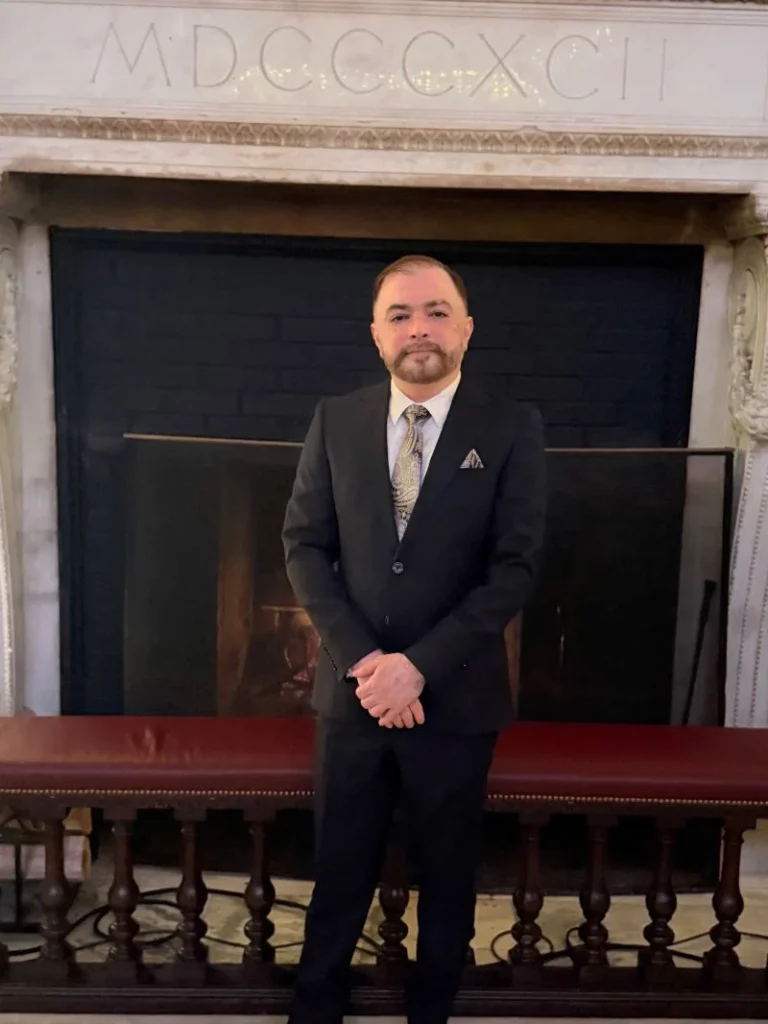
Subir Saha at the the Metropolitan Club in NYC during Qatar Day celebrations
Balancing life beyond boardrooms
Beyond boardrooms and policy discussions, Subir’s life remains deeply rooted in family and community. Based in New Jersey, he spends weekends with his 12-year-old daughter, Ayona, often attending events within the Indian Bengali community.
He’s also an avid golfer and a former student pilot, a passion he hopes to revisit soon. “I haven’t flown in a few years, but I want to get back to it,” he says. These pursuits offer balance, a reminder that even in a fast-paced global career, personal passions and cultural connections remain essential.
Advice to the next generation
“Dream big and think beyond degrees. Education is important, but it shouldn’t be the only goal. There should be a conscious effort to broaden horizons and explore diverse opportunities beyond conventional paths.”
He emphasizes on being adaptable and open to learning as success in a global environment requires curiosity, flexibility, and a willingness to continuously learn and evolve. He also stresses embracing risk and working hard. “The U.S. offers immense opportunities, but they come with challenges. Persistence, discipline, and the courage to take risks are essential to building a successful career,” he signs off.
- Follow Subir Saha on LinkedIn
ALSO READ: Meet Dr Mukesh Aghi: A significant pillar of the US-India ties
Share with



Written By: Amrita Priya
Surender Singh Kandhari: Building enterprise, philanthropy and community over 50 years in Dubai


Just awesome n Great .. Proud of you