
April 19 2026
Sri Bodanapu: Telling the stories behind regional cuisines through Heirloom Cities
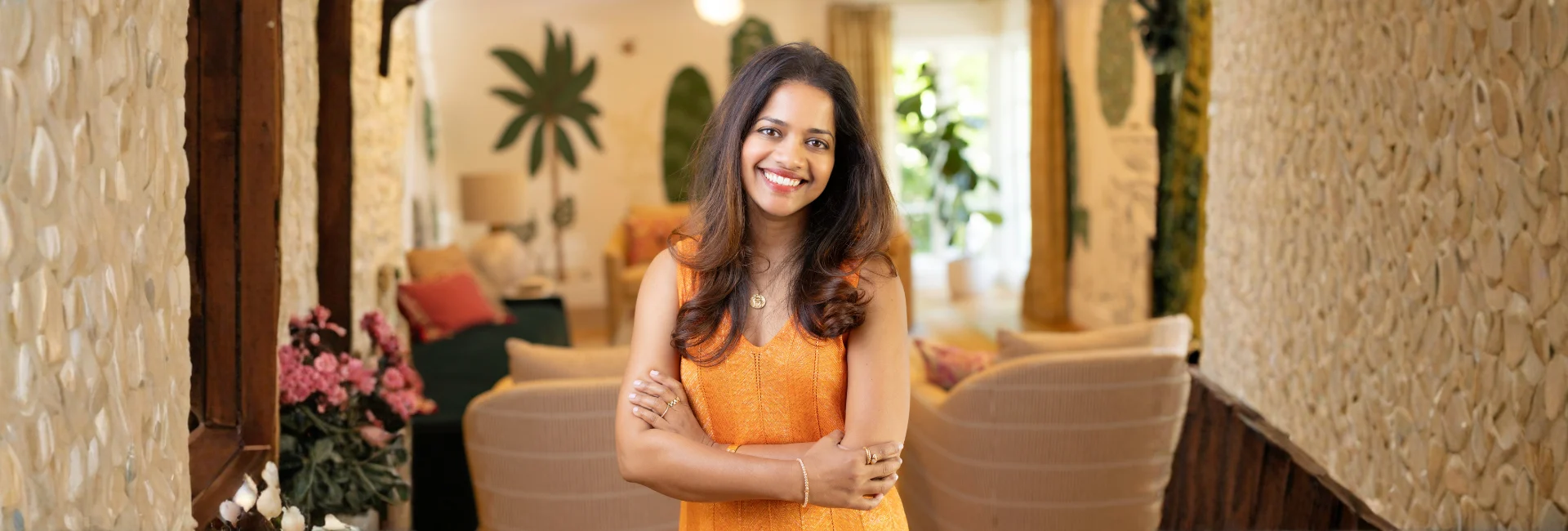
(April 19, 2026) Somewhere between a handwritten recipe and a map of migration, Sri Bodanapu found her calling—tracing how food carries memory, identity, and place across borders. Today, the San Francisco-based founder of Heirloom Cities is building an archive of regional food cultures, translating them into beautifully designed books and visual narratives for a global audience.
At its core, Heirloom Cities is a design-led publishing company that sits at the intersection of food, culture, and geography where deeply researched storytelling meets visual craft. With a background that spans engineering, communication research, and food systems, Sri’s work follows the journey of local cuisines as they travel, adapt, and find new meaning far from home.
Her own path mirrors that movement. From roles in market research and Fair Trade to nutrition consulting and business development at Meta, Sri eventually chose to step away and retrain in baking in Paris—marking a decisive pivot into food and publishing. “Living in the US has exposed me to a wide range of cuisines, where food can offer a lens into a culture beyond religious or political discourse. I’ve seen innovation in food systems firsthand, including through my investment in Forage Kitchen, a food incubator,” she tells The Global Indian.
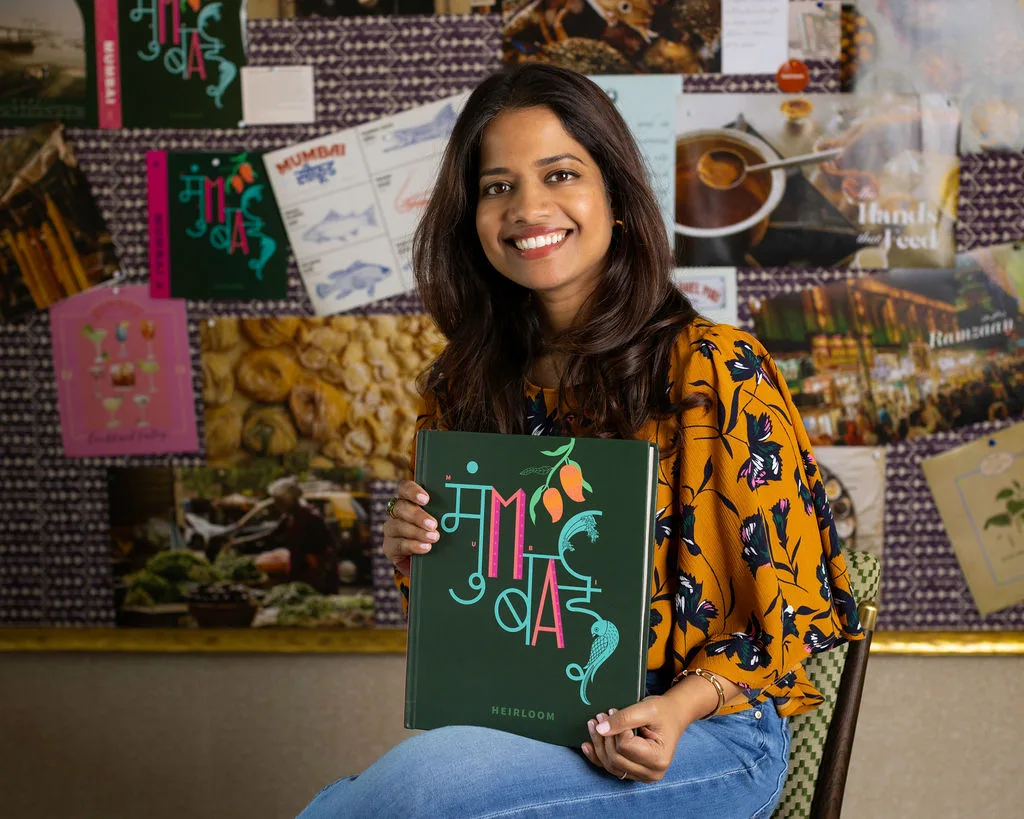
Sri with Heirloom Cities’ first book Mumbai
Growing up with food and ideas
Sri grew up in a home full of academics and entrepreneurs in Hyderabad. Her mother’s side of the family had many physicians, while her father started an engineering services company in the early ’90s. Academic rigour was seen as the path to professional success, and she was encouraged to get an engineering degree before she moved to the US for her post-graduation in market research and communications.
It was also a home that was brought closer by food and the sharing of it with each other. “My love for food was shaped by two generations. My grandmother expressed her love through cooking, and my parents hosted guests often, bringing together people from around the world over home-cooked South Indian meals. My mother’s lamb biryani, vegetable cutlets, and rasam were always at the centre of these gatherings, shaping my belief in food to nurture both ideas and communities. That belief returned full strength when I turned 30. I left my role in business development at Facebook now Meta to study baking in Paris and made a complete pivot into food and publishing,” tells the food enthusiast who completed her B.E. in electronics and communications engineering from Osmania University, followed by an MA in Communication Management and Market Research from the University of Southern California.
From family recipes to first book
While her maternal grandmother was an incredible cook who expressed her love through food, her uncle had begun documenting her recipes nearly 40 years ago. He later handed these to Sri, trusting her to turn them into something meaningful. While on a break from work in 2015, she did just that, writing and editing the cookbook A Heritage of Food, which preserved those recipes alongside memories that wove her family together.
Living far from home, food became her strongest connection to her culture. “In the process of publishing the book, I began to see how fragmented and expensive self-publishing could be, which led me to start a company that helps families create custom cookbooks.” Through this work, she also recognised a gap in how Asian food cultures are represented globally, a realisation that eventually led to the creation of Heirloom Cities.
View this post on Instagram
Drawn to food, shaped by the Valley
Having lived in Silicon Valley for almost 20 years, Sri started her career in technology. She has now been in the food industry for over a decade, and the Valley has had a strong influence on how she thinks. “The diversity of ideas there has pushed her to be more purpose-driven and ambitious about the impact she wants to create. It also trains you to think about scale what systems and decisions will have the greatest leverage,” she remarks.
Her work in Fair Trade was particularly formative because it taught her about the role sustainability plays in building long-term, resilient supply chains. “Combined with abundant access to farmers’ markets and seasonal produce, this continues to shape how I think about preserving food systems today,” she says.
Reframing cities through food
Kolkata is the second book in the Heirloom Cities series. Sri Bodanapu’s goal with the brand is to take readers on a journey through regional cuisines around the world that are often reduced to a single, possibly reductive idea of a country’s food. “Kolkata is a fascinating city, one that remains largely undiscovered by a global audience. From its time as the capital of the British Raj and its role as a global trade centre, the city introduced Indian cuisine to new ingredients and influences. It’s a place deeply rooted in its past while continuing to evolve its culinary identity,” she says.
With this book, they take readers through its vibrant markets, street food, and the history of Kolkata, while also introducing a reader to its lesser-known dishes, like mutton panthers, bhaja moshla aloor dom, and deem torka. The visual essay on Durga Pujo and a series of original illustrations on the journey of Hilsa are especially stunning.
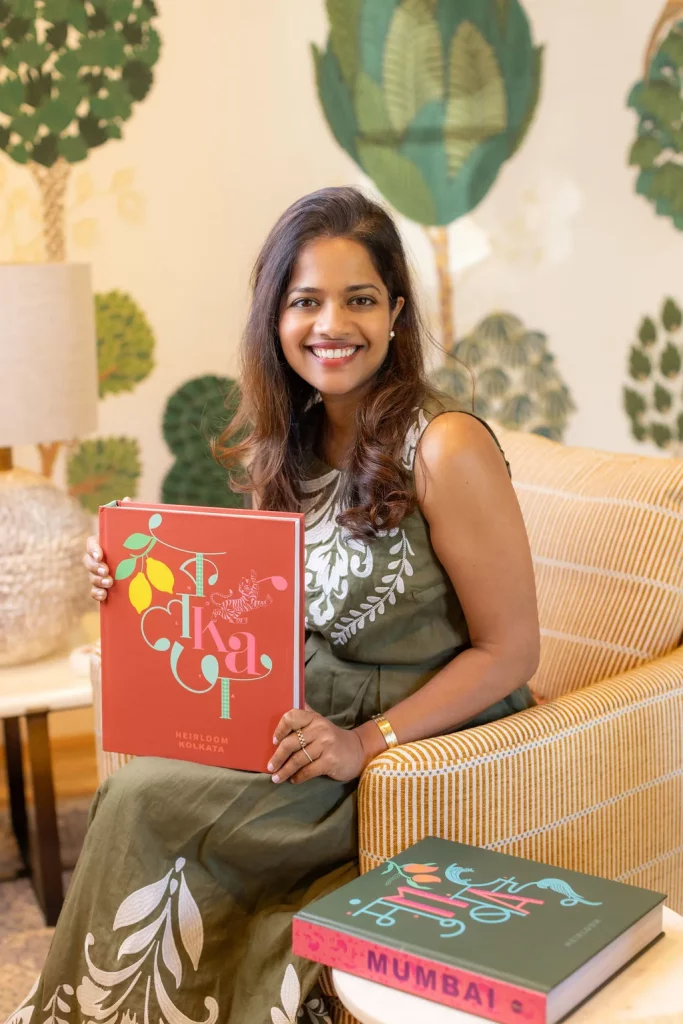
Kolkata, the second book published by the Heirloom Cities
Food and technology
Technology can play an important role in documenting and preserving food cultures, especially ones with deep, oral histories that risk being lost to time, believes Sri. “In many ways, technology allows us to capture these stories through writing, photography, and design, offering multiple ways to make them more accessible to a global audience. It should, however, be used thoughtfully. Food traditions are deeply rooted in context, people, and communities, and that nuance can easily be lost when things are scaled too quickly.” For her, the role of technology is not to simplify or standardise these stories but to support more thoughtful storytelling and create greater access.
India and the global creative shift
As someone with global exposure, Sri sees the Indian creative and food ecosystem evolving in comparison with the U.S. and feels it is at a really interesting point right now. “Through our work at Heirloom Cities, I get to work with a range of creative people, and there’s a growing confidence in telling our own stories, rather than looking outward for validation. We’re seeing more work rooted in local culture but presented in a way that feels both contemporary and globally relevant,” she says.
Compared to the US’ more mature, structured creative industry, India still feels more fluid and less defined. That comes with challenges, but it also creates space for experimentation, agility, and new voices. “What excites me most is the rising interest in documenting and preserving culture. Our stories matter, and the ability to present them through elevated design, art, and storytelling is only growing stronger,” she adds.
Lessons from startups
One of her biggest takeaways from the startup culture in San Francisco is the openness to trying things and evolving quickly based on what works. In food and hospitality, which can often be more traditional, that mindset can be valuable. Additionally, there is a focus on thinking about scale from the start, building systems, processes, and brands that can grow beyond a single location or format.
“Startups are also clear about what they stand for, even early on, which helps them connect with a larger audience. For Indian entrepreneurs, marrying that mindset with the depth of our food culture can lead to businesses that are both rooted and scalable,” she says.
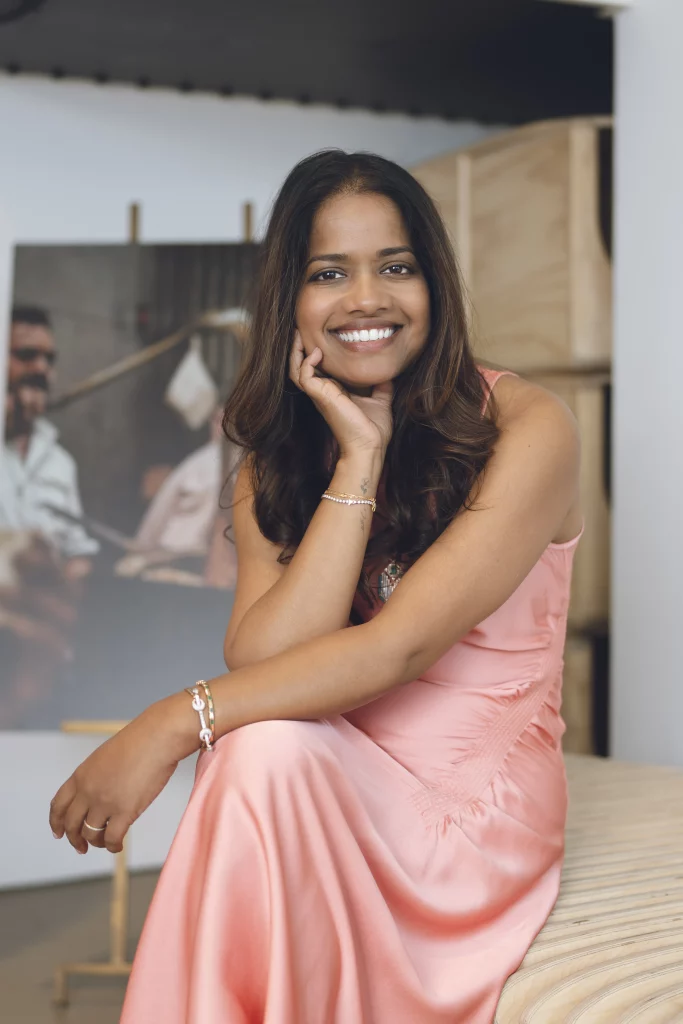
Building with intention
Food and culture-focused platforms don’t scale in the same way as tech-first companies. They’re inherently more nuanced and people-driven, with feedback loops that often take longer, believes Sri. “For brands like Heirloom Cities, which are trying to unlock new spaces in publishing, this makes it harder to standardise or replicate quickly. Tech companies are built to move fast, iterate, and scale aggressively. With brands like ours, the work requires time. The level of research, vetting, and storytelling involved means being more deliberate, and this can make growth feel slower, albeit more intentional,” she says.
For her, the focus is on building thoughtfully, growing while preserving the integrity of the work. Even if that needs a more measured approach than tech-first companies,” she says.
Looking ahead
Looking ahead, Sri Bodanapu is excited to build out the Heirloom universe over the next three to five years. With upcoming titles on Dubai and Sri Lanka, she is continuing to identify cities with complex food legacies and bring their stories to a global audience.
“While we remain a design-led publishing house at the core, my goal is to also introduce city specific collectibles that invite readers into the art, textiles, and design of each place. I think there are many ways to preserve food cultures, and we hope to expand our storytelling into other mediums and objects in the near future,” she signs off.
ALSO READ: Archana Pidathala: Award-winning cookbook author exploring food, memory, and belonging, from Spain
Share with



Written By: Minal Nirmala Khona
From Mumbai’s Irani cafés to khansamas of Uttar Pradesh – they all find expression in Chef Naved Nasir’s food

Written By: Amrita Priya