June 19 2026
Sanjay Laul: From failed ventures to a two-decade career in international education across multiple countries

(Jun 19, 2026) Sanjay Laul, founder of MSM Unify, a global platform connecting students, institutions and recruitment partners across more than 20 countries, has spent over two decades building businesses in international education. Over the years, he has led ventures spanning student recruitment, education technology and higher education across multiple regions of the world.
Sanjay Laul grew up in Lucknow with no business education, no mentor, and no family income after his father died when he was in grade eight. Today, he is the founder of MSM Unify, a platform that connects students, institutions, and recruitment partners across more than 20 countries, helping students find programmes, apply to universities, navigate visas, and settle into life abroad. What lies between those two points is not a straight line but a long, ungainly arc of failure, reinvention, and quiet persistence.
The driving force behind everything I’ve done has been to create more accessible and transparent pathways for students pursuing an international education.
Sanjay Laul
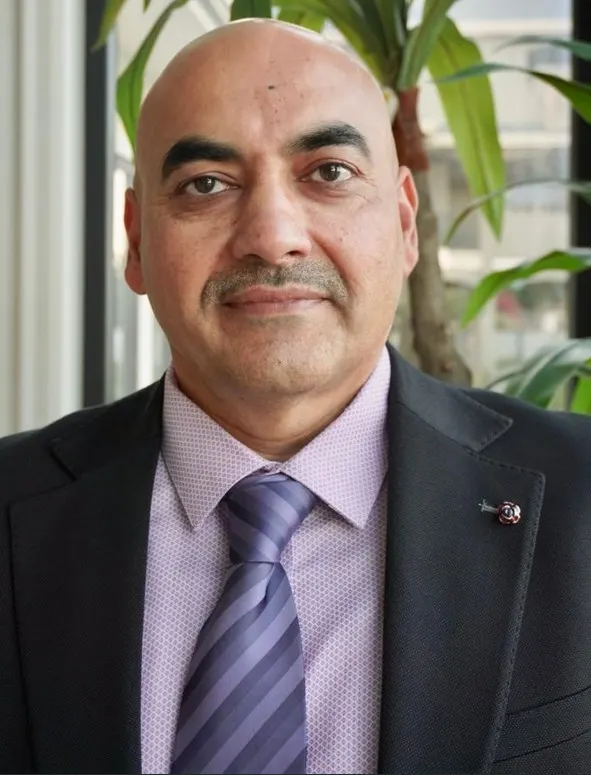
A student no one would have bet on
Laul was, by his own admission, a below-average student. Ambition, however, was never the problem. He knew from his school days that he would never take a job. The question was always what to do instead, and for a long time, he had no good answer.
He dropped out of engineering in 18 months, returned to Lucknow and started a ready-made garment shop in front of his home, following his mother’s suggestion. It did not last. Over the next 10 to 12 years, he moved through one small business after another, each one failing. He had no understanding of finance or accounts. Every decision ran on gut instinct. The pressure at home was considerable. His mother, a homemaker, bore the weight of neighbours and relatives asking, with barely concealed sarcasm, what he was doing now.
Over the years, he experimented with several ventures, trying different ideas, but none gained traction. Eventually, his search for opportunities brought him to Delhi, where the course of his career slowly began to change.
The queue that changed everything
In Delhi, Laul began accompanying a cousin who was exploring immigration to Canada. He watched people wait three to four hours outside immigration consultancies just for a brief appointment. He could not afford to emigrate himself. But he began to wonder whether he could become the person running the office rather than waiting outside it.
He partnered with cousins and friends to start an immigration consulting firm. The first two months brought no clients. Partners left, one by one, until he was alone, without even money for petrol. Then his first client arrived. It was a visitor visa case, for ₹3,000. It proved to be a turning point. Three years after serving that first client, he had built a network of multiple offices across Gujarat.
When Canada revised its permanent residency rules and the immigration pipeline began to look uncertain, he pivoted into education consulting. That decision, taken in 2003, set the direction for everything that followed. In 2005, he launched Kampus Landing, laying the foundation for a business that would continue to evolve over the next decade.
Drawing on years of experience in international education, he launched MSM Unify in 2013. What began as a service-oriented business gradually transformed into an AI-integrated marketplace connecting students, educational institutions and recruitment partners across more than 20 countries.
“Originally starting with only a few services through my own personal company, I slowly built it up over time until I curated an AI-integrated international marketplace called MSM Unify where students, educational institutions and agents can connect and discover each other across 21 countries,” he shares with The Global Indian.
Building credibility before scale
As his business expanded and evolved credibility became more important than speed. The early years of MSM Unify were not defined by rapid growth. Institutions were cautious about new partnerships, and India’s future potential in the international education sector had not yet been widely recognised by global universities. Laul chose depth over speed.
Rather than focusing on rapid expansion, I concentrated on solving real-time problems. The Northern Lights College in British Columbia became one of our earliest institutional partners. This relationship validated our approach and laid the foundation for future growth. We stayed disciplined and focused on delivering value consistently.
Sanjay Laul
One early partnership with Northern Lights College brought a steady flow of international students to Fort St. John in northern British Columbia through MSM Unify’s work. Their presence supported housing demand, local businesses and, in some cases, entrepreneurial activity, as some graduates chose to remain in the community. For Laul, the experience reinforced a lesson he still holds. “Looking back, I can say that sustainable growth comes from credibility and actual execution rather than short-term momentum,” he says.
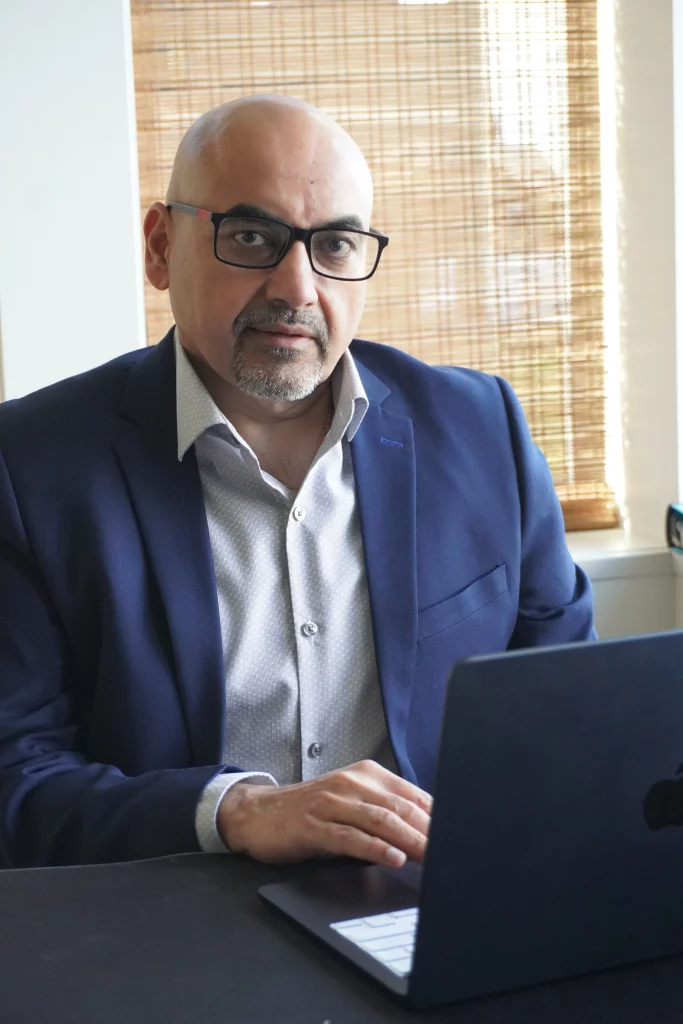
Learning to read a different world
Moving to Canada in 2014 was not, for Laul, a leap into the unknown. He had spent years preparing for it, in his own way. He had received his first passport at 26, not knowing at the time what a visa was. His first international trip was to Malaysia, followed by the UK, and then gradually, country by country, he developed what he describes as a practice of studying each destination before arriving, its culture, its government, its expectations, its unspoken norms. By the time he settled in Vancouver with his family, the adjustment was less a rupture than a continuation.
What the platform is built around
When Laul launched MSM Unify, the problem he was trying to solve was structural. Students had to navigate multiple disconnected platforms for guidance, applications, visas, accommodation, and post-arrival support. Institutions and recruitment partners faced their own difficulties around transparency and compliance. “We wanted to create a platform that could solve all of these problems. MSM Unify was designed as an AI-powered marketplace where students, institutions and agents could interact more efficiently. Our objective was to simplify this complex journey and create better outcomes for everyone,” he explains.
The platform today spans more than 20 countries and works with public and private institutions across multiple continents. MSM Unify also acts as a global marketing and regional representative office for overseas institutions, handling branding, agent engagement, school outreach, pre-departure orientation, and post-landing support in the markets it operates in.
The larger ambition
As MSM Unify has grown, so has the scope of what Laul is working towards. The mission has shifted from facilitating student movement to something he frames in terms of national development, building pathways for education and workforce development that can serve countries, not just individuals.
For countries like India, the opportunity is enormous. India has one of the world’s largest youth populations, and the global economy increasingly depends on skilled talent. If we can create more trusted pathways for education and employability, we are not just helping individuals; we are contributing to long-term economic and social progress. That remains the mission that continues to drive me.
Sanjay Laul
The boy who ranked near the bottom of his class in Lucknow is now working toward reaching millions of learners. It is the same ambition he carried through the garment shop, the immigration offices, and every business that did not work out. He just eventually found the right problem to apply it to.
ALSO READ: Abhishek Pal: From Sweden’s tech ecosystem to helping IT professionals find their place in the world
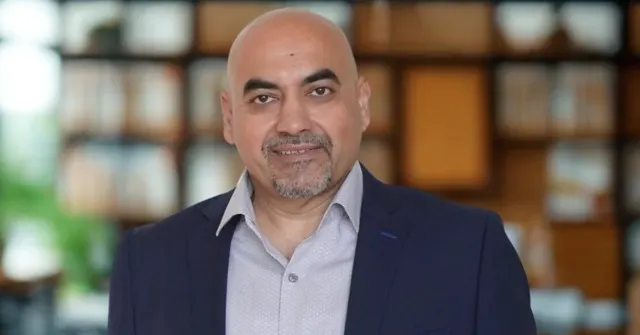
Sanjay Laul
| Born | Jun 1, Lucknow, India |
| Based | Greater Vancouver Metropolitan Area, Canada |
| Studied | Bachelor of Commerce at EILM University, Sikkim |
| Languages | Hindi, English |
Signature work
Sanjay Laul is an entrepreneur who has spent more than two decades building businesses in international education across multiple countries. He is best known for founding MSM Unify, a platform that connects students, institutions and recruitment partners, while helping simplify the international education journey.
Idea
Creating transparent, technology-enabled pathways for international education.
Network
Partnerships with institutions and education stakeholders across more than 20 countries.
Impact
Helping connect students with global opportunities while contributing to the growth of the international education ecosystem.
Inspired by Sanjay Laul 's journey?
Yours follows the same Hero's pattern — Separation, Initiation, Transformation, Return.

Share with



Written By: Amrita Priya
Viral Doshi: Two decades of Ivy League mentorship, and now a calming force in the Harvard storm

Written By: Amrita Priya
Priyanka Kulkarni: Reimagining the American Dream through AI and immigration innovation