October 09 2026
G. Ravinder Reddy: From village festivals to the international world of contemporary art
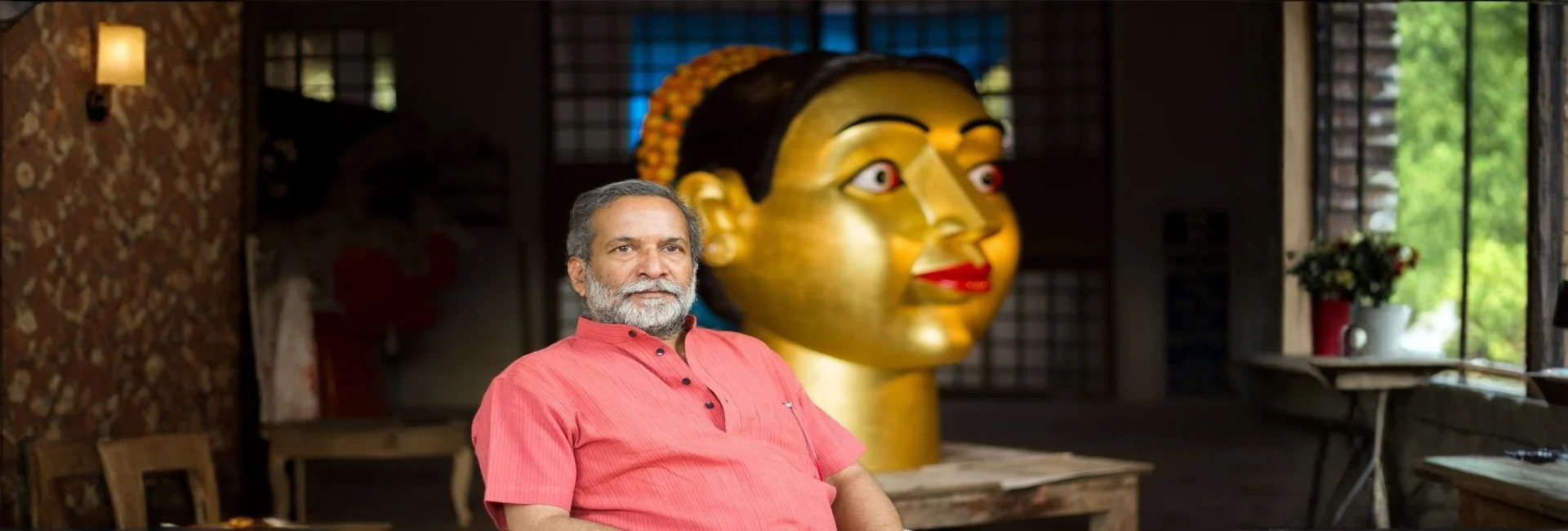
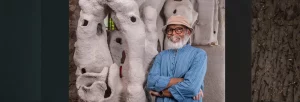
(Oct 9, 2026) G. Ravinder Reddy is a sculptor of international repute known for his monumental works, especially female forms. He has displayed his work at solo exhibitions in places including New York, London, Paris, Pittsburgh and Washington, D.C. His sculptures are part of the collections at Victoria & Albert Museum, the Peabody Essex Museum, Fukuoka Asian Art Museum, Virginia Museum of Fine Arts and Queensland Art Gallery.
Long before G. Ravinder Reddy’s pieces began appearing in galleries and museums around the world, it was the colour, movement and spectacle in his own little village in Andhra Pradesh during his childhood that left him fascinated.
Be it the Muharram processions with colourful ‘tazia’, tribal melas, village celebrations, songs during Dasara, Bonalu or festivals centred around the village goddess shrines; each experience planted a seed of creativity in the young Reddy’s impressionable mind.
“Every observation doesn’t manifest itself immediately. It’s only over a period of time, you begin to understand its importance. So there was a long incubation period to realise what I had observed,” recalls the Visakhapatnam-based artist during a chat with The Global Indian.
The village was his first canvas
Hailing from a farming community where art was hardly considered a conventional career option, Reddy still followed his heart and went to the MS University of Baroda, where he studied sculpture. He also took several trips across the temples of the country to study the carvings on them. “Looking at rhythmic movements on the wall panels, the postures and the grace with which sculptures were carved, I learnt a sense of proportion.”
For him, these were not remnants of a distant past but living forms of knowledge that continue to co-exist with contemporary art.
I also started looking at folk and tribal art, and popular sculptures. They attracted me for their colours, boldness and simplicity, and remained in my mind. It started to strike me that when we have such a rich culture, why should we draw inspiration from the outside?
G. Ravinder Reddy
When he went to London too to pursue art and design at Goldsmiths’ at the Royal College of Art, he visited several museums and galleries across Europe. The global art world, in a sense, became his cultural bazaar — a place to encounter new ideas without letting go of the ones he grew up with. “During my years as a student in England in the early 1980s, I visited places like the British, Victoria and Albert Museums. I also travelled to the Louvre in Paris and went across Germany. Seeing things first-hand, rather than only reading about them in books, was a great learning experience,” he notes.
An Indian voice on the global stage
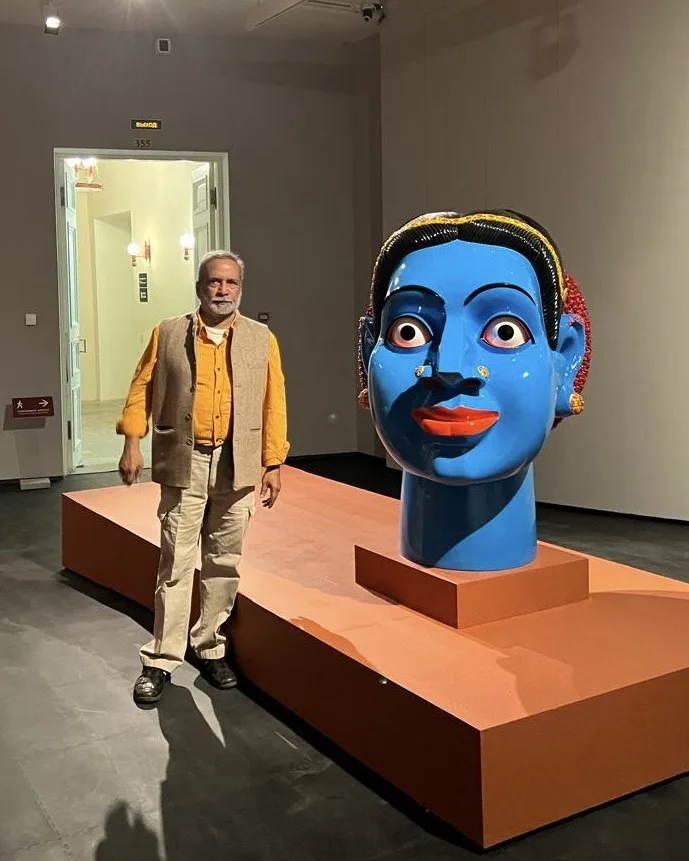
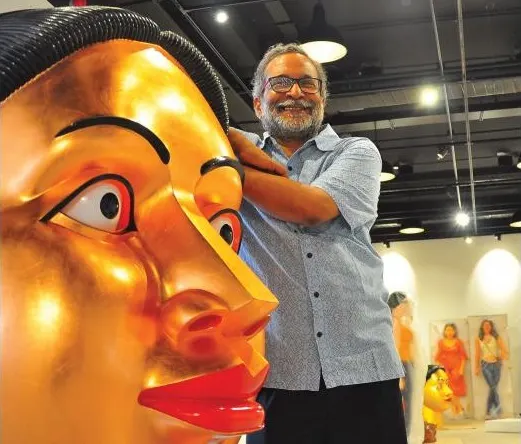
Reddy’s own visual language evolved when he returned to India where he continued to create striking works. His early figures in terracotta and clay eventually gave way to larger sculptural forms, and fibreglass opened up possibilities of scale, colour and form that traditional materials could not easily offer. Brightly coloured heads, with exaggerated proportions and direct gaze, became his signature.
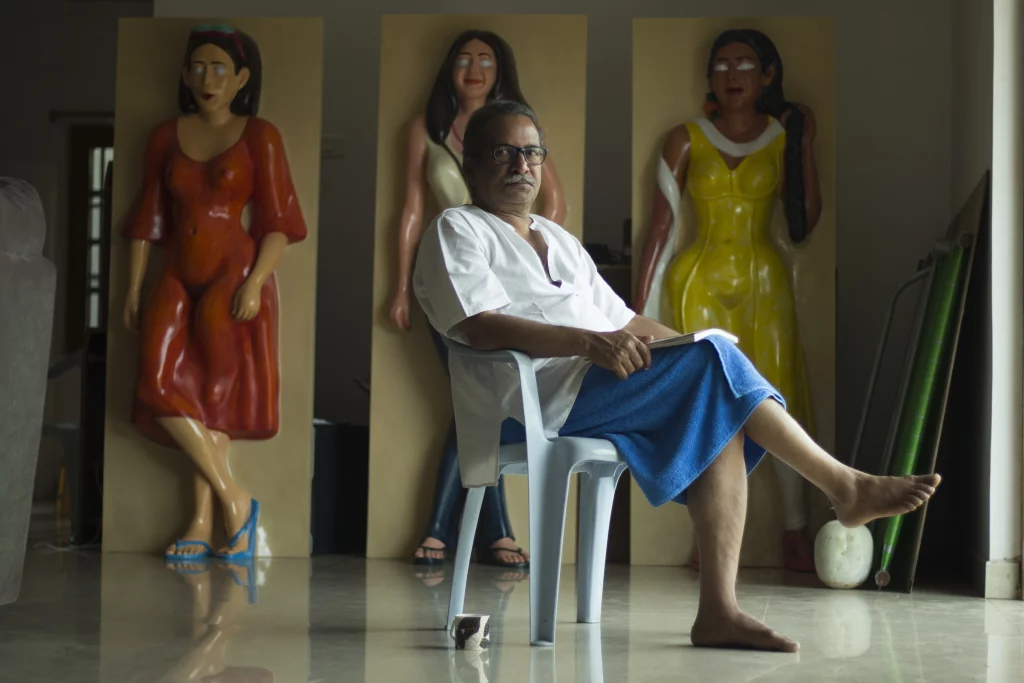
The women in his sculptures emerged from his observation of people and everyday life, filtered through his understanding of Indian visual traditions.
My work has always been deeply rooted in India and my main inspirations are my culture and surroundings — what I see around me every day.
G. Ravinder Reddy
His work travelled extensively, with solo exhibitions in several places abroad. He also taught art in reputed institutions, a practice which he says brought a different kind of discipline because it required him to be responsible for his time and that of the others.
Art in the age of AI
The art ecosystem has changed dramatically since he began. The internet has made information instantly accessible, while a growing market has created greater opportunities for artists and collectors.
With AI increasingly reshaping the art world, Reddy sees both possibilities and challenges. He believes that technology can allow people without formal training in sculpture or visual art to turn ideas into objects, giving writers, musicians and others new ways to express themselves. Imitation however, he admits, is a challenge but it can be turned into something genuine. “It has always existed but if one genuinely contributes their own ideas to it, AI can help create great original works,” he informs.
The discipline behind the art
At 70, Reddy continues to maintain the energy and discipline of a young artist who is just starting out. His day in the studio begins around 10 am and stretches to about 6 pm. “If I am not working, I am looking back at unfinished works, which is also a part of the artistic process,” he says.
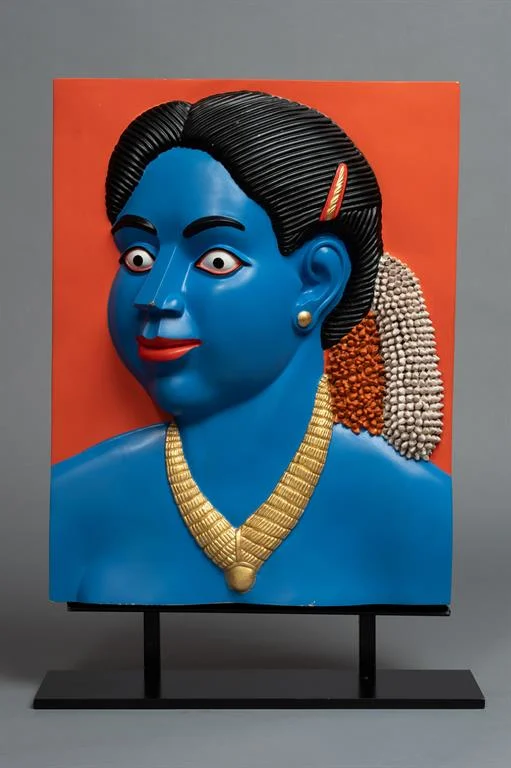
His journey was recently revisited in Bengaluru through In Search of the Perfect Image, a solo exhibition at Gallery Sumukha, which was warmly received by the audiences. The show, which marked the gallery’s 30th anniversary, brought together works spanning different periods of his practice, including the large-scale Portrait of Parvati from 2019 and a new series of wall-mounted reliefs from 2026, was extremely well-received.
When he looks back at his remarkable journey from a small village in South India to the international art world, he is filled with gratitude.
I am so blessed that every venue and visitor has had a positive attitude towards my work and the contemporary Indian art scene on the whole. Fortunately, my work also draws people towards it because of its size and scale.
G. Ravinder Reddy
When asked what advice he would offer young artists, he says, “Today, with the internet, knowledge is more freely available and requires much lesser effort. Yet, there is no shortcut in life. Work sincerely, trust your thoughts, and allow your work to develop organically. If you try to force it out, it will end up becoming an imitation,” he signs off.
ALSO READ: Naresh Kumar Kumawat: Sculpting India’s spirit for the world
G. Ravinder Reddy
| Born | 15 May 1956, Suryapet, India |
| Based | Visakhapatnam, India |
| Studied | Maharaja Sayajirao University of Baroda | Goldsmiths' College, University of London | Royal College of Art, London |
| Languages | Telugu, Hindi, English |
Signature work
Ravinder Reddy is known for his monumental sculptural heads and female forms, which combine the scale and presence of contemporary sculpture with influences drawn from Indian folk, tribal and temple traditions. His works are held in major collections around the world.
Idea
Ravinder Reddy brings India's visual traditions into contemporary sculpture, drawing on their colour, scale, rhythm, proportion and simplicity to create a visual language of his own.
Netork
His work has connected Indian artistic traditions with international art audiences. His teaching has also extended his engagement with younger artists.
Impact
Reddy has brought distinctly Indian forms, colours and visual references into contemporary art internationally. His teaching has further extended the influence of his artistic approach beyond his own practice.
Inspired by G. Ravinder Reddy 's journey?
Yours follows the same Hero's pattern — Separation, Initiation, Transformation, Return.
Share with



Written By: Mallik Thatipalli
How Harsha Durugadda built a global sculptural career from a Chilkur farm