October 31 2026
Kulsum Shadab Wahab: Empowering acid attack survivors through fashion

(Oct 31, 2026) From supporting children with disabilities in Ballari to founding Ara Lumiere, an award-winning fashion enterprise employing more than 100 acid attack survivors and burn victims, Kulsum Shadab Wahab has championed dignity and economic independence. Her work has earned recognition at Milan Fashion Week, and in November 2025, she was appointed Women Empowerment Ambassador by Italy’s national fashion chamber.
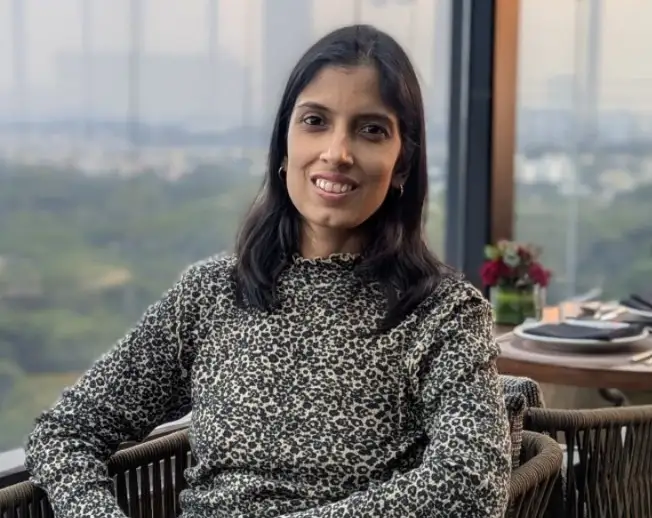
She grew up in an influential political family in Bengaluru where early on in life, the seed of helping others was sown into the very fabric of her being. “Giving back was considered very important,” Kulsum Shadab Wahab, the internationally acclaimed entrepreneur and philanthropist, tells The Global Indian. “Often, I would collect coins in a piggy bank and give them to someone in need. Helping others brought me a very different kind of joy,” she adds.
She also recalls watching her grandfather reach his pockets for money and give it to those in need. “Once I asked him why doesn’t he check how much money he gives out. He told me, ‘Just give without calculating or expecting anything in return. Someday, God will give it back to you ten-fold’. That always stayed with me,” she reminisces.
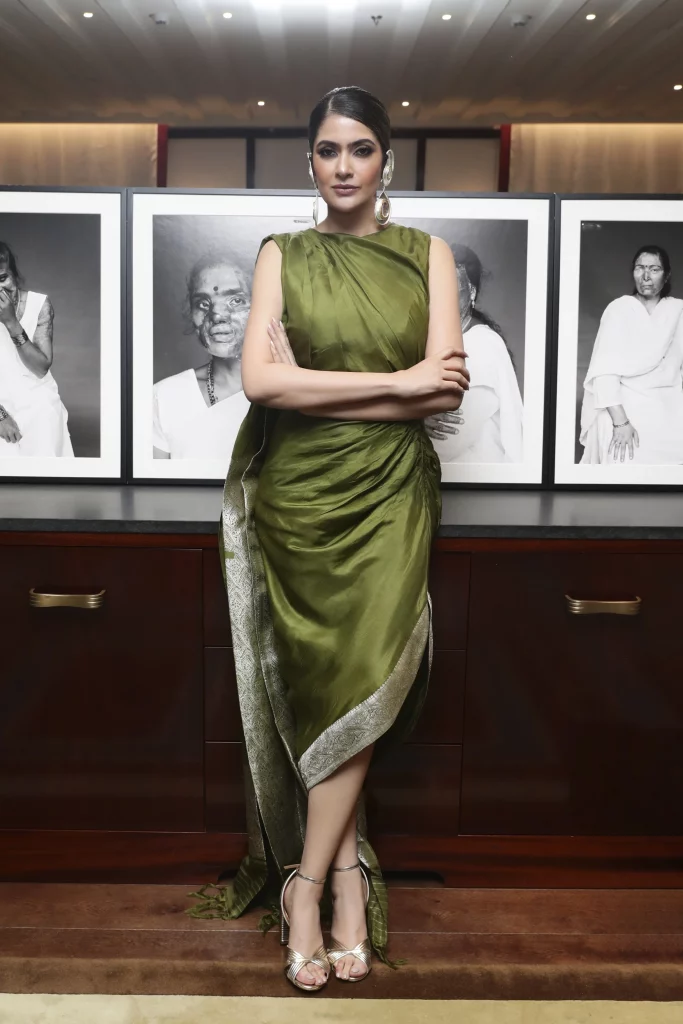
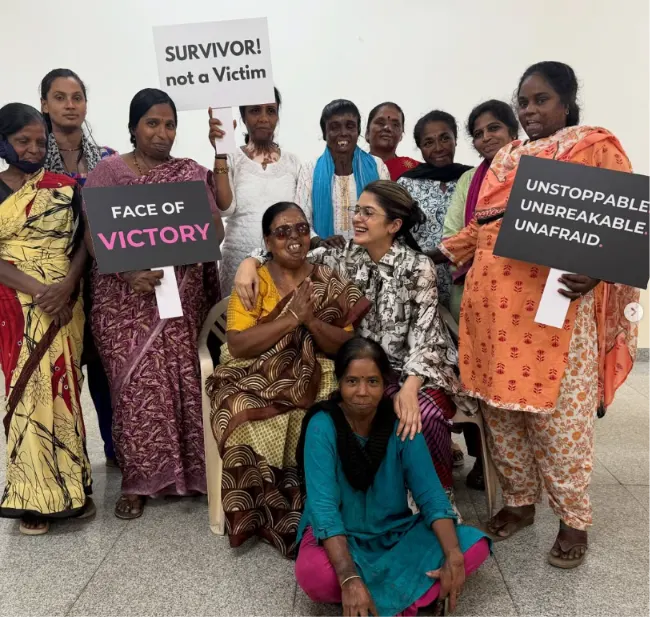
Today, Kulsum is the founder of Ara Lumiere, an award-winning social enterprise that employs more than 100 acid attack survivors and burn victims to bring their artistry into the world of high fashion, and helps them rebuild their lives with dignity. She is also the creator of The Phoenix Circle, a global initiative advocating for survivors’ dignity, visibility and empowerment.
A cause to be invested in
The instinct to help the society continued post marriage too, when Kulsum moved to Ballari and became part of a family that had established the Hothur Foundation. Its work spanned education, medical and maternity care, and infrastructure, including road shelters, bus stands and toilets in remote areas, as well as support for girls’ education.
Along with her husband and his family, Kulsum continued supporting several initiatives but was on the lookout for a cause that she could personally be invested in. This happened around 2008-09, during a casual visit to the park with her daughter one evening, when she came across differently-abled children playing with little access to art materials. “Some were floating little boats, while the others were scribbling with broken crayons and sketch pens,” she explains.
Gradually, she began buying them supplies and started ‘Colours of Hope’ with the help of a friend who worked in the field of art therapy. What began with 5-6 children grew to include more than 200, including those with Down syndrome and cerebral palsy.
An unexpected encounter
Her visits to the children undergoing medical treatments eventually brought her face to face with the realities of acid attack victims. “I was quite naïve back then and didn’t even know what an acid attack was,” she admits.
On learning more, she was determined to meet a survivor despite being repeatedly told that the victims didn’t want to meet anyone due to the extent of their sufferings. In due course, she finally met the woman – a turning point that made her realise the sheer number of people with similar experiences who needed help.
Kulsum initially offered financial assistance, but soon realised that money alone could not address the challenges faced by the women. Often, their husbands took away the money, leaving them without much resources.
From rehabilitation to livelihood
Hence, she began exploring ways for them to earn a livelihood and be self-sufficient. “I decided to conduct workshops where these women could learn skills, make products and earn,” she says, recalling workshops in stitching, basket-making and bangle-making. The initiative also supported a leprosy colony whose members made bags.
Medical treatment was yet another pressing concern. Survivors often needed extensive reconstructive surgeries and skin grafts, prompting Kulsum to work with hospitals and raise awareness about skin donation and skin banking.
For Kulsum, the work was about looking beyond the immediate aftermath of an attack to what followed the rest of their lives: access to treatment, financial independence, the opportunity to start afresh and find acceptance in society.
View this post on Instagram
An unexpected journey to Milan
Fashion entered the picture almost by accident when one of the employees recreated a headband that Kulsum had left on a table, using scrap fabrics, including Banarasi textiles. “I thought the headband was wonderful and decided to wear it,” recalls Kulsum.
An editor from a prominent international magazine noticed the headpiece right away and encouraged her to put together a lookbook for a talent initiative at the Milan Fashion Week. While Kulsum had little experience in fashion at the time, she saw it as an opportunity to bring greater visibility to the women and their work.
Soon, she travelled to Milan with around 14 or 15 headpieces. “Each piece was made by a different woman associated with our organisation. I carried their photographs and spoke about them more than the headpieces,” she informs.
By the end of the seven-day event, the initiative had won its first award, opening doors to further recognition in Milan and eventually, leading to the launch of a clothing line.
Fashion gave us a language the world understands. We chose to use it to tell stories the world could no longer ignore.
Kulsum Shadab Wahab
A global fashion line
In 2019, Ara Lumiere took shape as a fashion brand and social enterprise, training survivors of acid attacks and gender-based violence to be artisans. Since then, the brand has gained international recognition, winning the Fashion Hub Market prize at Milan Fashion Week in 2019 and the Social Impact Award at the CNMI Sustainable Fashion Awards in 2022. It has also received support from celebrities such as Shah Rukh Khan and Sonu Sood.
Kulsum is now exploring collaborations with the United Nations, alongside developing new projects for the clothing line. Last year, on November 25, the International Day for the Elimination of Violence Against Women, she was appointed Women Empowerment Ambassador for Camera Nazionale della Moda Italiana (the Italian National Fashion Chamber, which organises Milan Fashion Week).
In September 2026, she collaborated with contemporary artist Raghava KK on ‘Passport’, an art project which had survivors transforming their own portraits into expressions of identity and self-reclamation. These works were then displayed at the Milan Fashion Week.
View this post on Instagram
Building a more inclusive world
Kulsum often speaks at educational institutions and other public forums about the importance of treating survivors and their families with empathy. “We need a strong law that imposes the death penalty for acid attacks. We also need to stop the sale of acid, which continues despite the restrictions,” she informs.
Beyond legislation, even the society needs to become more inclusive, she points out. “Survivors should be welcomed into our communities rather than ostracised. Many a time, even their children face difficulties getting admission into schools because of the prejudice against their mothers.”
When the stardust settles
While the world sees the glamour of international fashion runways, red carpets and recognition, there is a far more difficult side to Kulsum’s work that rarely finds its way into the spotlight. Spending long hours in hospitals, meeting survivors and listening to their stories often takes an emotional toll on her and she regularly attends therapy to process what she sees and hears.
She also relies on daily prayers, meditation, pranayama and journaling to stay grounded, drawing inspiration from the teachings of Joe Dispenza and the law of attraction. “I still get affected by what I see,” she shares and adds, “But working with these women has taught me to more grateful and look at life differently. Things that seem ordinary to us can be a huge privilege for someone else.”
When asked to sum up her journey in a nutshell, she says it was all “God’s plan”. “The almighty had a plan for me, even when I didn’t have any for myself. Ultimately, if your intentions are sincere, the universe truly conspires to bring things together,” she concludes.
- Follow Kulsum Shadab Wahab on Instagram
ALSO READ: Jay Deivasigamani: From growing up around cotton fields to driving sustainable fashion innovation