
August 17 2026
Jay Deivasigamani: From growing up around cotton fields to driving sustainable fashion innovation

(Aug 17, 2026) From growing up in a modest agricultural settlement in Tamil Nadu to studying textile science and industrial engineering in the US, Jay Deivasigamani is using textile innovation to reduce water consumption, rethink waste and drive responsible manufacturing while building sustainable fashion brands EcoJay and Caslay.
Jay was born and raised in a small village near Tiruppur in Tamil Nadu, surrounded by cotton fields and farms. His father was the first graduate in their village and later started a cotton ginning business, where raw cotton from nearby farms was processed before moving into the textile supply chain. “As a child, I didn’t realise it then, but those early years gave me a front-row seat to how something as simple as cotton travelled from a farm to becoming fabric. Life was uncomplicated. I cycled to school every day, spent time outdoors, and was always curious about how things worked. Science fascinated me because it encouraged questions instead of simply giving answers. That curiosity has stayed with me throughout my life and continues to guide almost every decision I make,” he recollects in a chat with The Global Indian.
After school, he pursued mechanical engineering at PSG College of Technology in Coimbatore, graduating with distinction in 2001. While engineering taught him discipline and problem-solving, he knew he wanted to explore the textile industry more deeply. “It wasn’t just my family’s business—it was an industry that had endless opportunities to innovate,” he adds.
Sustainability is one of the defining challenges of our generation, and I genuinely believe India has both the knowledge and the capability to lead that change.
Jay Deivasigamani
View this post on Instagram
From cotton fields to engineering
The same year of graduating college in Coimbatore, he received a scholarship to pursue graduate studies at the University of Wisconsin–Madison in the United States. Until then, most of his life had been spent in and around small towns in South India. “Moving halfway across the world was exciting but also overwhelming.
“Everything felt different—the culture, the classrooms, the weather, and even the way people approached learning. What struck me most wasn’t just the access to advanced technology but the culture of asking questions. Nobody expected you to simply accept the way things had always been done. You were encouraged to challenge ideas, experiment, and think differently. That mindset changed me,” he reminisces.
Building blocks
During his time in the US, he studied industrial engineering and textile science, co-authored a research paper published in the AATCC Review, and was part of a student team whose business plan on antimicrobial textiles received recognition from the governor of Wisconsin. Those achievements meant a great deal, but the biggest lesson he brought back wasn’t academic. It was the confidence to look at problems differently.
Living in another country taught me something equally important. I met people from different cultures, each with their own perspectives and ways of thinking. Even when opinions differed, I learned to appreciate the reasoning behind them. That experience made me more open-minded, and it continues to shape how I work with teams, customers, and partners across the world. Despite the opportunities abroad, I always knew I wanted to return home.
Jay Deivasigamani
Returning home to family business
In 2005, he joined his family’s textile business, which had by then expanded into fabric manufacturing. He took charge of technical operations and production, working closely with customers across Europe and the United States. “Those years helped me understand not only the technical side of manufacturing, but also the growing expectations around quality, compliance, and innovation.” he says.
From manufacturing to sustainable fashion
Currently he is the managing director of EcoJay, a sustainable fashion brand on a mission to solve the global climate change crisis. “At the helm of affairs, I lead the company’s overall vision, strategy, and execution, driving the integration of sustainable innovation across design, manufacturing, and supply chains. I am also the founder of Caslay, India’s most sustainable apparel brand, powered by EcoJay,” he adds.
One milestone I am particularly proud of was being among the early adopters of open-width fabric processing technology in India. It allowed us to develop premium blended fabrics for global brands and reinforced my belief that innovation isn’t about doing something different for the sake of it—it’s about solving real problems.
Jay Deivasigamani
View this post on Instagram
Rethinking how textiles use water
Textile processing is one of the most water-intensive industries in the world. Conversations often revolved around treating wastewater more efficiently, but he found himself asking a different question. Instead of focusing only on treating wastewater after it was created, why not reduce the amount of wastewater generated in the first place? “That question led us to years of experimentation,” he says.
Through process improvements and continuous innovation, we reduced water usage from around 85 litres per kilogram of fabric to nearly 38 litres. It wasn’t an easy journey. There were setbacks, failed trials, and countless refinements. But every challenge reinforced my belief that meaningful innovation requires patience.
Jay Deivasigamani
Turning textile waste into possibilities
In 2022, we took an even bigger step. We developed a process that eliminated conventional dyeing for selected products by using pre-coloured recycled cotton waste. Instead of consuming fresh water and chemicals to create new colours, we gave existing textile waste a second life. Around the same time, we also secured a patent for improving the durability and softness of recycled yarn, helping overcome one of the biggest challenges associated with recycled textiles. Those innovations eventually became the foundation for EcoJay and later Caslay,” he explains.
Global outlook shaped by different perspectives
His global exposure has influenced his views on work, success, leadership, and the aspirations that drive him. “I think it has made me more willing to listen. Travelling and working with people from different backgrounds has taught me that there is rarely only one right answer. Good ideas can come from anywhere, provided you’re open enough to hear them, ” he says.
“I’ve also realised that success isn’t something you achieve alone. Every milestone is the result of people working together—our teams, partners, customers and even the communities around us. Leadership, to me, is about creating an environment where people feel encouraged to learn, question and contribute.”
Staying curious and challenging conventional thinking
His advice to young people who want to be entrepreneurs is to stay curious. “You don’t have to start a company to think like an entrepreneur. Whatever role you’re in, keep asking questions, stay conscious of the impact your work creates, and don’t be afraid to challenge conventional thinking. Innovation often begins with a simple question that nobody else thought to ask,” he suggests.
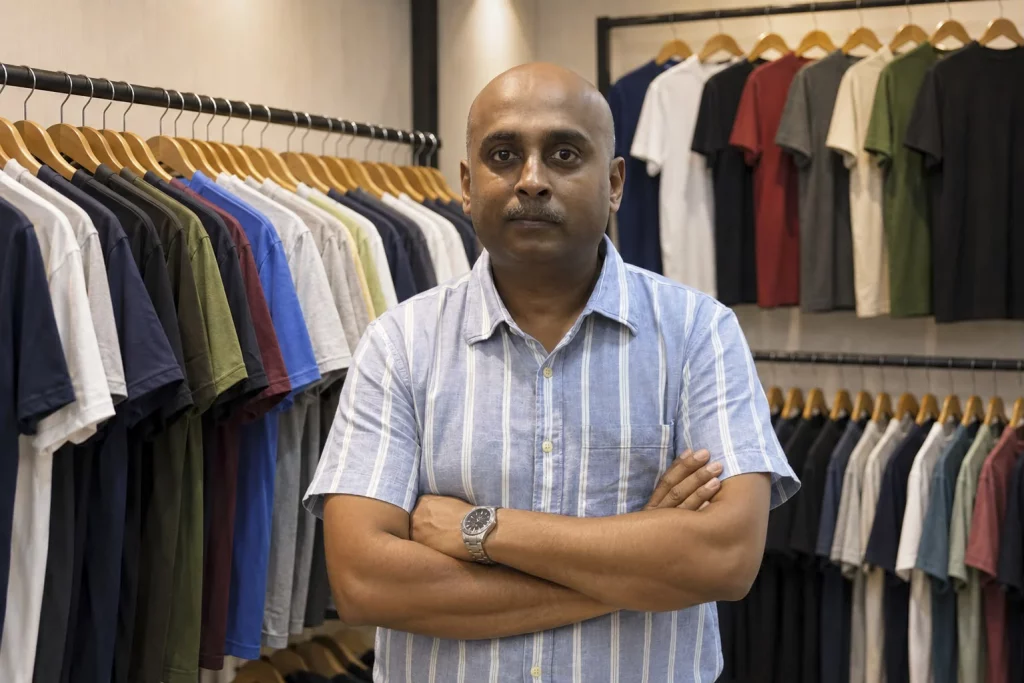
Photography and meaningful conversations
Outside work, he enjoys photography whenever he can find the time. “It gives me a chance to slow down and notice details that are often overlooked. I also enjoy interacting with students, entrepreneurs, and industry professionals through various forums. These conversations are incredibly energising because they remind me that learning never stops, no matter how many years you’ve spent in an industry,” mentions the entrepreneur.
Looking ahead
Looking ahead, his goal is simple. “I want EcoJay and Caslay to become globally recognised brands that demonstrate what responsible innovation can achieve. But beyond building successful businesses, I hope we can inspire others in the textile industry to rethink old practices and embrace a more sustainable future. At the end of the day, I still see myself as someone who enjoys solving problems. The setting may have changed—from a small village in Tamil Nadu to working with global customers—but the curiosity that started my journey remains exactly the same,” he concludes.
- Follow Jay Deivasigamani on LinkedIn
ALSO READ: Woven with Purpose: Dubai-based Vino Supraja’s international eco-fashion story
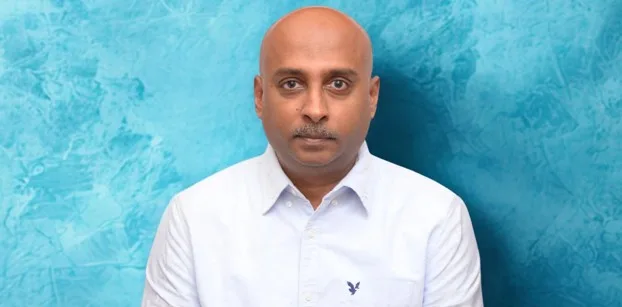
Jay Deivasigamani
| Born | Feb 24, 1979 |
| Based | Trippur, Tamil Nadu, India |
| Studied | PSG College of Technology, Coimbatore, India | University of Wisconsin–Madison, US |
| Languages | Tamil, English |
Signature work
Championing textile processing innovations that reduced water consumption from around 85 litres to nearly 38 litres per kilogram of fabric. He also developed a process using pre-coloured recycled cotton waste to eliminate conventional dyeing for selected products and secured a patent to improve the durability and softness of recycled yarn.
Idea
Reimagining textile production by reducing water use, minimising chemical-intensive processes and finding new applications for recycled cotton waste.
Network
Connects textile manufacturers, global customers, sustainability-focused partners, industry professionals, entrepreneurs and students across India and international markets.
Impact
Reduced water consumption in textile processing from around 85 litres to nearly 38 litres per kilogram of fabric while advancing recycled textile innovation and more responsible manufacturing.
Inspired by Jay Deivasigamani 's journey?
Yours follows the same Hero's pattern — Separation, Initiation, Transformation, Return.

Share with



Written By: Vikram Sharma
Woven with Purpose: Dubai-based Vino Supraja’s international eco-fashion story

Written By: Vikram Sharma
Meghna Goyal: Building a travel fashion brand that helps remove plastic waste with every order

Written By: Lubna Reshi