
May 27 2026
Dr Padma Gurmet: Padma Shri 2026 awardee reviving Himalayan medicine through AYUSH and UNESCO
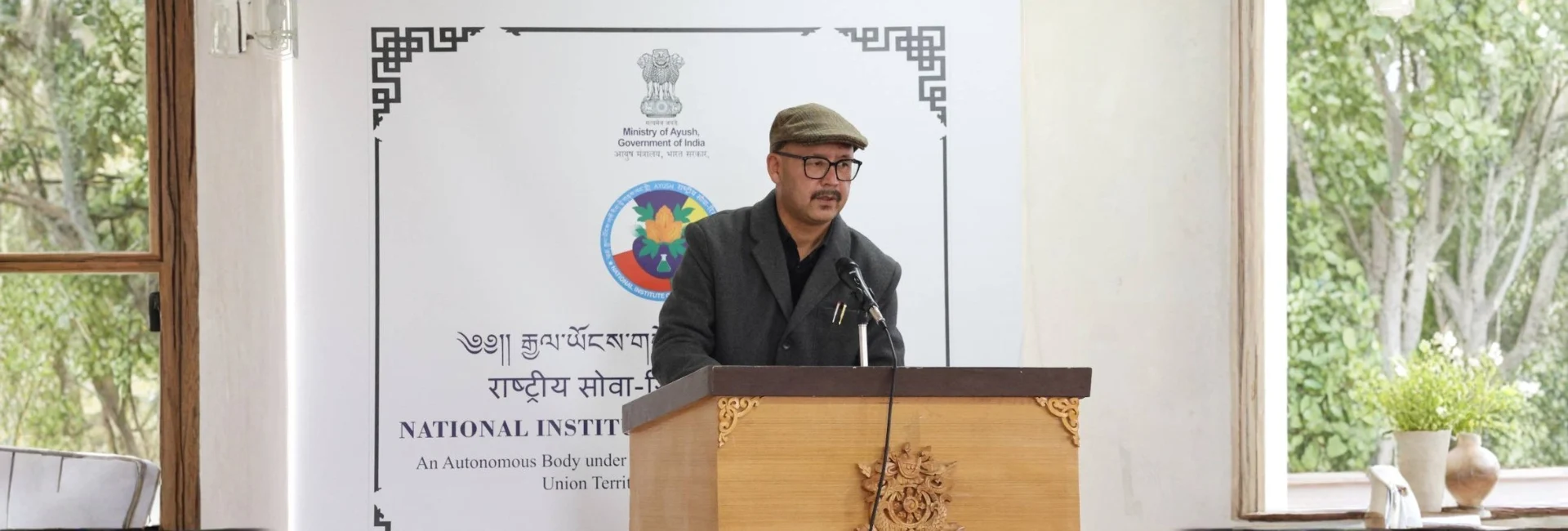
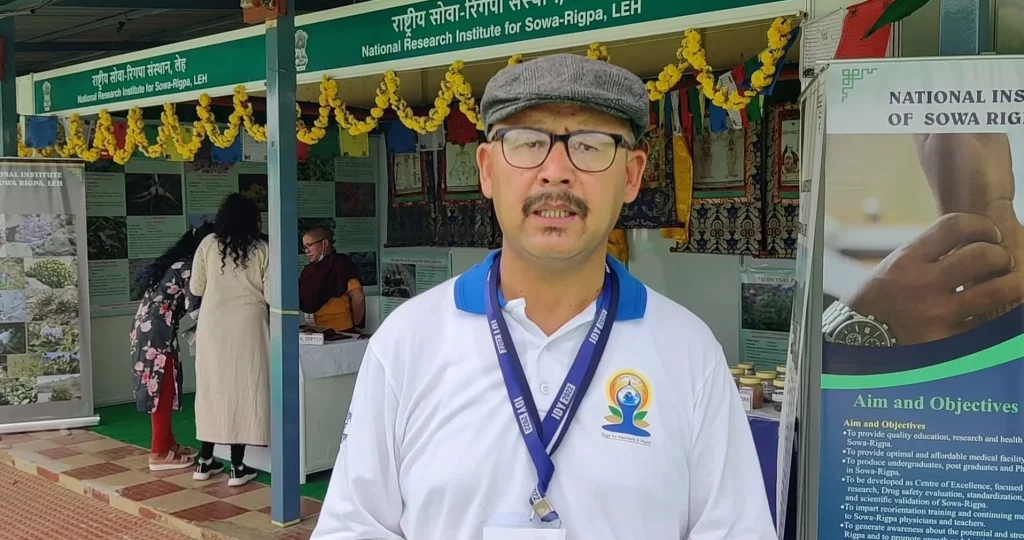
(May 27, 2026) Dr Padma Gurmet is the Founding Director of the National Institute of Sowa-Rigpa under India’s Ministry of AYUSH. Honoured with the Padma Shri in 2026, he helped bring Sowa-Rigpa under AYUSH, built a research institution from the ground up, and led India’s UNESCO nomination efforts for the Himalayan healing tradition.
He grew up watching his father answer late-night calls from distant Ladakhi villages. Decades later, he has transformed that inheritance into a nationally recognised medical system, a research institution, and a UNESCO nomination effort, all from the world’s highest cold desert.
Sowa Rigpa practitioners have been serving public health needs for centuries and are deeply embedded in the social fabric of Ladakh and other Himalayan regions.
Dr Padma Gurmet
From mountain healer’s son to guardian of a fading tradition
In Leh, before there were district hospitals, there were Amchis. These traditional healers were practitioners of Sowa-Rigpa, the Himalayan medical system, and the only thread between remote mountain communities and any form of organised healthcare. Dr Padma Gurmet’s father was one of the most respected among them.
“From childhood I saw his practice, the way he dealt with patients, and the way he made medicine,” Gurmet said in an interview. Those days, modern medical facilities were quite weak in Ladakh. I remember he used to get calls at night from different villages, and he had to go to those places.”
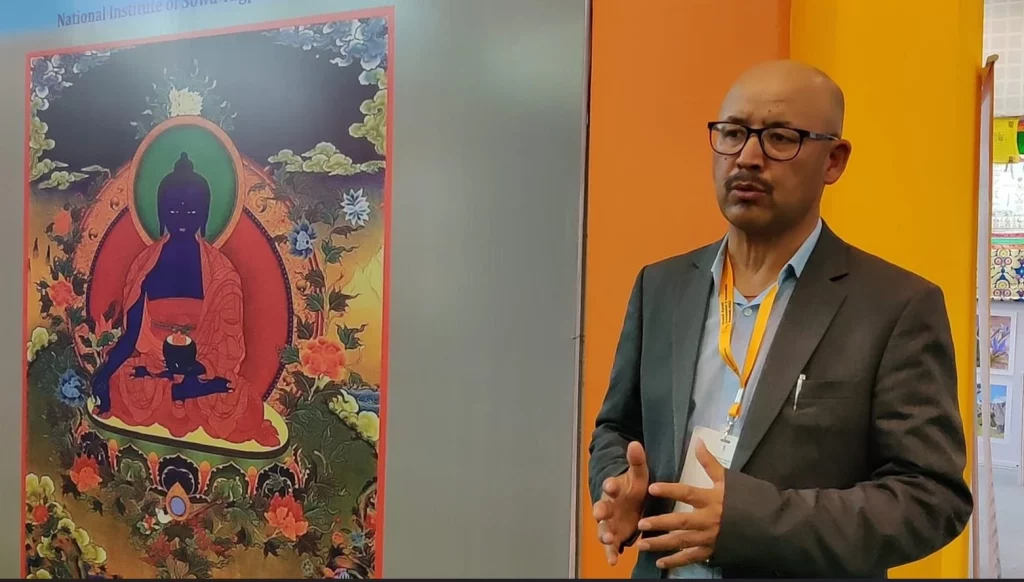
What the young Gurmet absorbed was not simply a pharmacopoeia of Himalayan herbs. It was an ethic. “I saw his practice as service,” he recalled.
My father practiced with a pure heart. For him, it was not a business; it was more of a religious practice. Serving patients was the main motto of his life.
Dr Padma Gurmet
Yet the boy was not immediately drawn to follow. Like many of his generation in a Ladakh slowly opening to the wider world, he weighed the possibilities of a modernising economy against the traditions of his household. What resolved the question for him was not sentiment but alarm at the sight of a knowledge system, irreplaceable and thousands of years old, quietly fading.
What Sowa-Rigpa actually is
The name translates, roughly, as the science of healing. It is one of the world’s oldest codified medical traditions, and its foundational texts trace back to the 8th century and are attributed, in the tradition’s own telling, to a discourse given by Gautam Buddha at Bodh Gaya. The system spread from India into Tibet, where it was refined across centuries into a sophisticated structure covering physiology, pharmacology, pulse diagnosis, urine analysis, and a vast materia medica drawn from alpine plants, minerals, and animal sources.
Sowa Rigpa has played a significant role in public health in Ladakh. Until as recently as 30-40 years ago, it was the only medical system available.
Dr Padma Gurmet
In Ladakh, it survived not as a museum piece but as a working public health system. For generations, Amchi practitioners were often the first, and the only, medical responders available to communities cut off by altitude and weather. The plants they used grow at elevations exceeding 4,000 metres, where conditions of extreme cold, intense ultraviolet radiation, and thin air force medicinal compounds to concentrate in ways that low-altitude equivalents cannot replicate. Gurmet has noted that some plants gathered at the Khardung La pass adapt to temperature swings of over 25 degrees Celsius within a single day, and that this biological stress is precisely what makes them potent.
What this system lacked, for most of its modern history in India, was official standing. It had no legal recognition. Its practitioners held no formal qualifications the state would acknowledge. Its medicines had no regulatory pathway. Without those foundations, it could not enter the public health system, attract research funding, or be transmitted to the next generation through any institution of record.
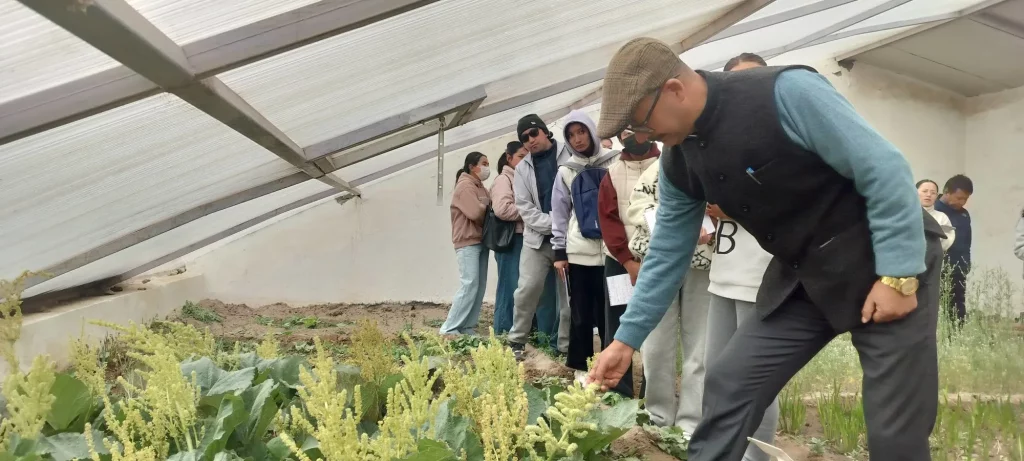
Dr Padma Gurmet during a training programme
Thirty years of bureaucratic climbing
Gurmet’s work began inside government corridors, where many practitioners would not have the patience to start. Through the 1990s and 2000s, he worked alongside a small community of advocates to build a case for Sowa-Rigpa’s formal inclusion within India’s medical framework. The argument required demonstrating not simply that the tradition was ancient and culturally significant, as that was not enough. It had to be proved that it met the criteria for a defined, teachable, and regulatable system of medicine.
The primary challenge was to convince the Government of India that Sowa Rigpa was a full-fledged medical system. It is an Indian Buddhist tradition of medicine, and we had to make the case that unless steps were taken to develop and protect it, the system would gradually disappear. Young people were no longer taking it up.
Dr Padma Gurmet
In 2010, the effort succeeded. An amendment to the Indian Medicine Central Council Act brought Sowa-Rigpa into the official fold, making it one of six recognised systems of medicine under what is now the Ministry of AYUSH. The change was more consequential than it might appear from the outside. Recognition meant practitioners could be licensed. It meant academic programmes could be formalised. It meant, crucially, that Amchis could be deployed into the public health infrastructure at primary health centres and district hospitals as credentialled professionals.
“Earlier, the younger generation was not taking it up, and the system was slowly declining,” Gurmet observed. After recognition, that changed. Seats in Sowa-Rigpa courses that had once gone unfilled began attracting applicants. Today, approximately 80 Sowa-Rigpa practitioners serve at primary health centres across Ladakh, a structurally significant integration of traditional knowledge into the state’s health delivery architecture.
From oral tradition to institutional memory
Gurmet was appointed Founding Director of the National Institute of Sowa-Rigpa in Leh, established as an autonomous body under the Ministry of AYUSH. The institution is not merely a teaching college. Under his direction, it has become a research centre, a living repository, and a biodiversity outpost.
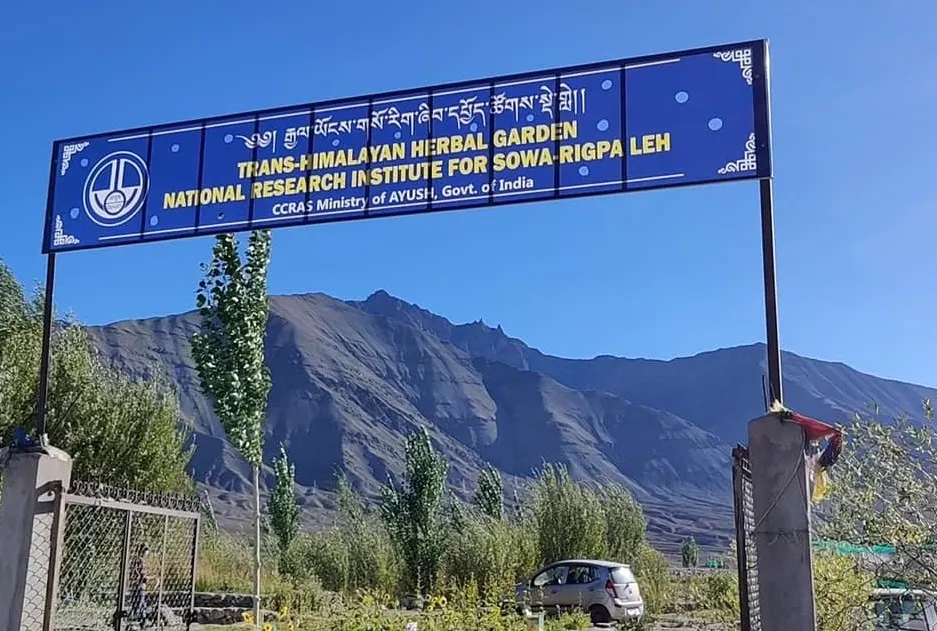
He established the Trans-Himalayan Herbal Garden on the institute’s grounds as a cultivation and conservation site for medicinal plants that are, in many cases, endangered in the wild. The garden serves simultaneously as a pharmaceutical source, a gene bank, and a field laboratory for studying how high-altitude plants develop their properties. Over 1,000 classical Sowa-Rigpa formulations and medical texts have been documented and catalogued under his watch. More than 200 practitioners from remote Himalayan communities have been trained in formal settings, ensuring that expertise which once lived only in family lineages now also exists in institutional memory.
The institute has active research collaborations with the Council of Scientific and Industrial Research, the Indian Council of Medical Research, and the National Institute of Pharmaceutical Education and Research. Gurmet has been direct about the standard this requires meeting. “We cannot say that since Sowa-Rigpa is a traditional knowledge system, it should automatically be respected. It has to meet scientific parameters as well.”
From Himalayan villages to UNESCO’s cultural stage
In recent years, Gurmet’s work has taken on an unexpected geopolitical dimension. China, which administers Tibet, filed a nomination with UNESCO to have Tibetan traditional medicine listed as an element of its Intangible Cultural Heritage. For many in Ladakh and for Indian authorities, this was a provocative appropriation. Sowa-Rigpa’s textual origins, its unbroken practice in Ladakh, and its living communities of Amchi healers all predated the system’s Tibetan evolution.
The philosophical foundation of Sowa Rigpa remains Indian. So the Chinese cannot call it their traditional medical system because the classical texts are clear.
Dr Padma Gurmet
It was Gurmet who prepared and submitted India’s own UNESCO dossier in response, asserting the country’s prior claim on historical and textual grounds. “India has the right to claim it as its heritage,” he told WION. “I think in the coming days India will pursue this again.” India’s nomination is yet to be inscribed, but the dossier is filed and the case is formally before the UN body. The filing itself is evidence of how far the work has come: from a practitioner’s son watching his father walk to distant villages in the dark, to a man placing India’s oldest Himalayan medicine before the world’s cultural memory institution.
Padma Shri for keeping ancient wisdom alive
When the 2026 Padma Shri was announced, Gurmet’s response was characteristically unself-referential. “Sowa-Rigpa is not just a medical system, it is our cultural heritage,” he said. “This recognition will help us preserve, research and integrate it with modern healthcare for the benefit of future generations.”
The Padma Shri, in this case, is less an individual honour than a signal, that a tradition once disappearing into the margins of Indian public life is now considered worth protecting at the highest levels of state recognition. For the Amchis working in remote health centres across Ladakh, for the students filling seats that once went empty, and for the medicinal plants slowly being coaxed back into cultivation in a garden built on cold desert ground, that signal carries weight.
- Follow Dr Padma Gurmet on Facebook
ALSO READ: Dr Vasant Lad: The man who helped America discover Ayurveda
Dr Padma Gurmet
Founding Director of the National Institute of Sowa-Rigpa
| Born | 1960s |
| Based | Leh, Ladakh, India |
| Studied | Sowa-Rigpa Acharya degree, Central Institute of Buddhist Studies, Leh |
| Languages | Ladakhi, Tibetan, Hindi, English |
Signature work
Turned a fading tradition of Sowa-Rigpa into an institutionally anchored medical system under AYUSH, and filed India's right to own it at UNESCO.
Idea
A vanishing Himalayan medicine, rescued by one man with a research file and thirty years of patience
Network
From Leh's cold desert to AYUSH corridors to UNESCO's Geneva offices without ever relocating from Ladakh
Brand India
The oldest medicine India forgot it owned, until Padma Gurmet reminded the world
Giving Back
A son who inherited a father's legacy and returned it to Ladakh as an institution
Inspired by Dr Padma Gurmet 's journey?
Yours follows the same Hero's pattern — Separation, Initiation, Transformation, Return.
Share with



Written By: Amrita Priya