
July 07 2026
Dr Radhika Balakrishnan becomes first Carnatic vocalist to receive Royal Birmingham Conservatoire’s honorary fellowship
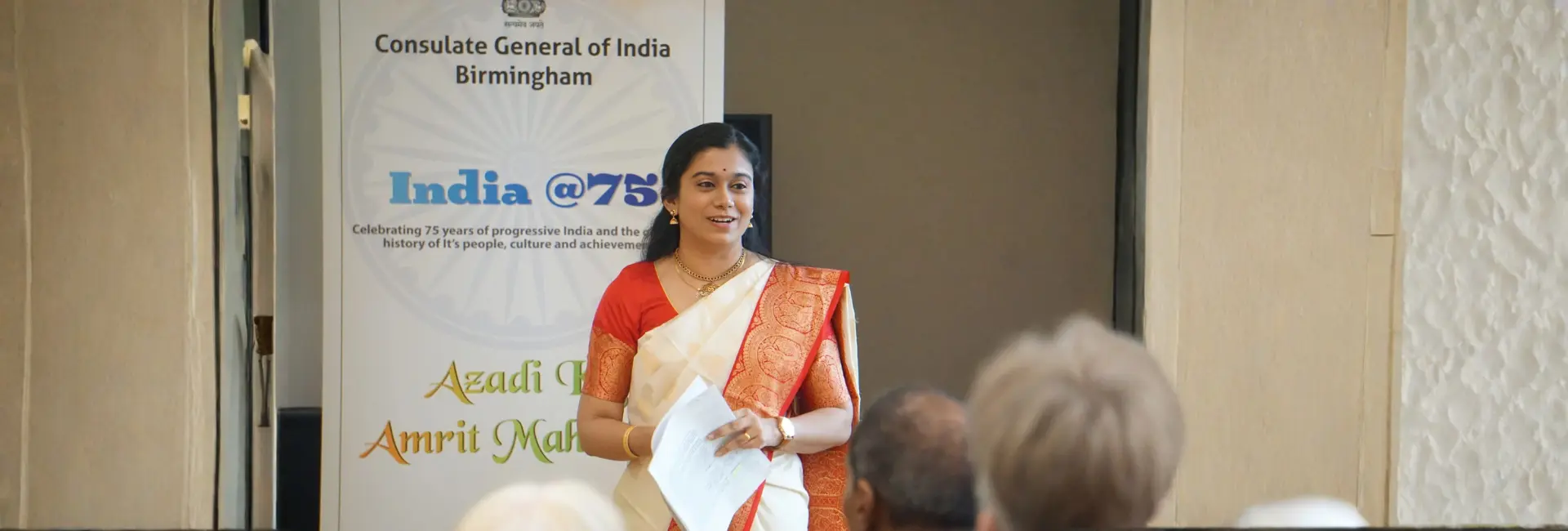
(Jul 7, 2026) On June 26, 2026, Dr Radhika Balakrishnan became the first Carnatic vocalist to receive an honorary fellowship from the Royal Birmingham Conservatoire, one of the UK’s leading institutions for music and the performing arts. Three years earlier, she had already made history there as the Indian Council for Cultural Relations’ first Chair of Indian Studies (Music), introducing Carnatic music to a new generation of international students.
From a young student in Mysore with no family background in classical music to becoming the first Carnatic vocalist to be awarded an honorary fellowship by the Royal Birmingham Conservatoire in the UK, Dr Radhika Balakrishnan’s journey is all about the power of music to connect cultures. Today, as an educator, researcher, performer, and cultural ambassador, she is redefining how Indian classical music is taught and appreciated across the border. In a conversation with The Global Indian, she reflects on her artistic journey, global experiences, personal setbacks, and her mission to make Carnatic music a universal language.
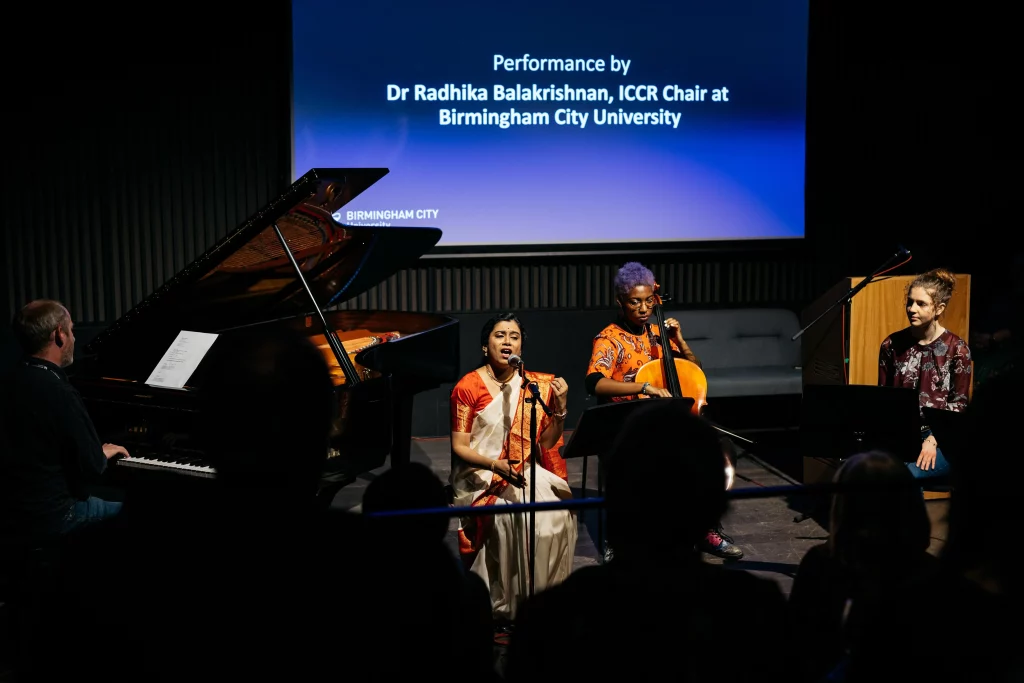
Royal Birmingham Conservatoire’s highest honour
Unlike an academic fellowship, the Honorary Fellowship (HonFRBC) is the Royal Birmingham Conservatoire’s highest honorary distinction. Conferred annually, it recognises individuals who have made exceptional contributions to the Conservatoire or achieved distinction in the performing arts. Becoming the first Carnatic vocalist to join this distinguished community of internationally recognised artists and educators is a historic milestone for Radhika.
Founded in 1886 as the Birmingham School of Music, the Royal Birmingham Conservatoire is one of the United Kingdom’s leading institutions for music, acting, and the performing arts, and is part of Birmingham City University. Granted the prestigious ‘Royal’ title by Queen Elizabeth II in 2017, it trains undergraduate, postgraduate, and junior conservatoire students from around the world, offering world-class education in music, theatre, stage management, and performance. Known for its state-of-the-art facilities, internationally renowned faculty, and strong industry links, the Conservatoire has built a global reputation for nurturing accomplished performers, composers, actors, and researchers while fostering cross-cultural artistic collaboration.
Looking back
Radhika was born in Mumbai but grew up in Mysore, a place which she proudly calls home. She studied at Manasarowar Pushkarini Vidyashrama until her tenth grade, completed her pre-university education in arts, and went on to earn both her bachelor’s in fine arts and master’s in music from the University College of Fine Arts for Women, Mysore. She completed my PhD in music from the University of Mysore in 2016.
A holistic foundation in the arts
“During my bachelor’s degree, I specialised in Carnatic Classical Vocal, Theatre, and Bharatanatyam. Training in these three disciplines gave me a holistic understanding of Indian aesthetics, their fluidity, interconnectedness, and expressive depth. While I was deeply drawn to all three art forms, it was my guru, Dr R. N. Sreelatha, whose guidance and inspiration encouraged me to dedicate myself fully to Carnatic vocal music,” she reminisces.
Teaching international students
One of her earliest experiences with international students was teaching American exchange students at the Vivekananda Institute of Cultural Studies in Mysore.
“Their curiosity and thoughtful approach inspired me to view Carnatic music not only as a performing art but also as a cultural language. It challenged me to present the music in a way that helped non-Indian students appreciate its musical intricacies while understanding its deeper significance in Indian life and heritage. It also challenged me to present the music in a way that helped non-Indian students appreciate not just its musical intricacies but also the rich history and cultural context from which it emerged,” she says.
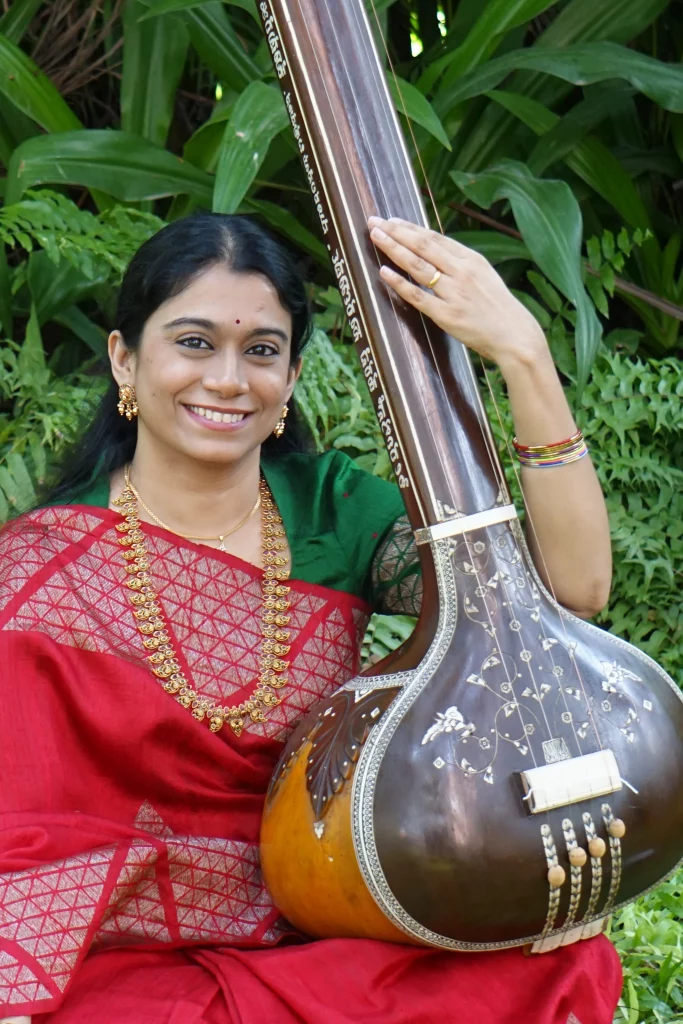
This experience led her to explore how India’s extraordinary musical diversity can be understood through the unifying concept of ‘raga’ and how the same melodic framework can find different expressions from Carnatic music to Hindustani traditions, Qawwali, and regional folk music.
Representing India in the UK
In 2023, she was selected by the Indian Council for Cultural Relations (ICCR) as the first Chair of Indian Studies (Music) at the Royal Birmingham Conservatoire. “Serving in this role as a cultural ambassador for India gave me the opportunity to move beyond conventional teaching methods. I began creating interdisciplinary programmes that presented Indian music in a way that resonated with Western classical musicians while remaining deeply rooted in its own traditions,” she says.
Learning from students across cultures
Teaching students from different parts of the world has been one of the greatest learning experiences of her career. While teaching at the Shankar Mahadevan Academy and working with students from Iowa, she realised how often popular culture presents an incomplete picture of American society.
I discovered an approach to learning music that went far beyond technique, encouraging students to understand the meaning behind every composition. Similarly, I have admired the discipline and attention to detail of my students in the United Kingdom. The conservatoire is built on a culture of mutual respect, where students from different backgrounds learn and grow together.
Dr Radhika Balakrishnan
These experiences have complemented her own Indian upbringing and reaffirmed her belief in the Indian philosophy of Vasudhaiva Kutumbakam – the world is one family. “Despite our different backgrounds, I have found that the pursuit of art has a unique ability to bring people together through a shared passion for learning and expression,” she explains.
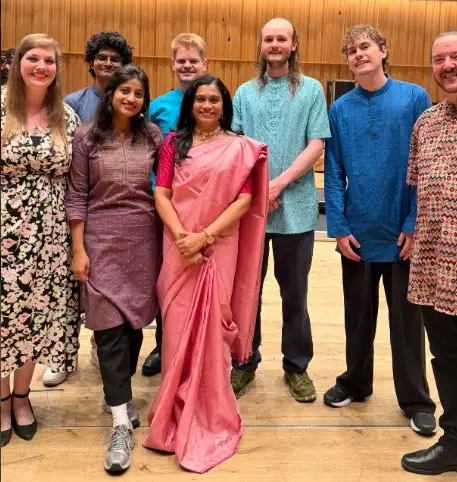
Dr Radhika Balakrishnan with members of Royal Birmingham Conservotoire
A historic honour
Being the first Carnatic vocalist to receive an Honorary Fellowship from the Royal Birmingham Conservatoire is one of the greatest honours of her life.
“When I first joined the Conservatoire, I had the privilege of introducing many students and colleagues to Carnatic music through a fresh lens. There was already a genuine appreciation for Indian classical music among the faculty, and I wanted to do justice to the tradition by presenting it with richness and artistic brilliance,” she says.
Receiving this fellowship after years of dedicated work is both humbling and deeply meaningful to her.
Charting an unconventional path
One of the greatest challenges she faced was entering a field in which she had no family background. In Indian classical music, many musicians inherit generations of musical tradition, whereas she was the first in her family to pursue Carnatic music professionally.
“Although I attended music classes from a young age and loved singing, I was not initially seen as someone destined for the concert stage. Everything changed when Vidushi H. N. Rajalakshmi recognised my potential and introduced me to my Guru, Dr R. N. Sreelatha, whose rigorous training transformed my life. My Guru and my late father believed in me wholeheartedly and encouraged me to pursue both performance and research with discipline and commitment,” she says.
Finding strength through loss
Losing her father when her son was still very young was one of the most difficult periods of her life.
“For a time, I almost lost my desire to sing. It was through the unwavering support of my Guru, my husband, and my mother that I gradually found my way back to music. That experience taught me resilience. I learnt that setbacks are part of every journey, that it is okay to make mistakes, and that every new beginning brings fresh strength. It has also made me a more compassionate teacher, helping my students navigate their own challenges with confidence and patience,” the singer recollects.
Preserving India’s musical legacy
Teaching and performing internationally has reinforced her appreciation for India’s classical music traditions.
“It has also made me realise how much more we can do to preserve, promote, and celebrate them, especially among younger generations. Global exposure has taught me that personal success is inseparable from the wellbeing of the art form itself. No artist succeeds alone. We stand on the foundations laid by generations of great musicians, from M. S. Subbulakshmi to Pandit Bhimsen Joshi, whose dedication has preserved this remarkable heritage,” she says.
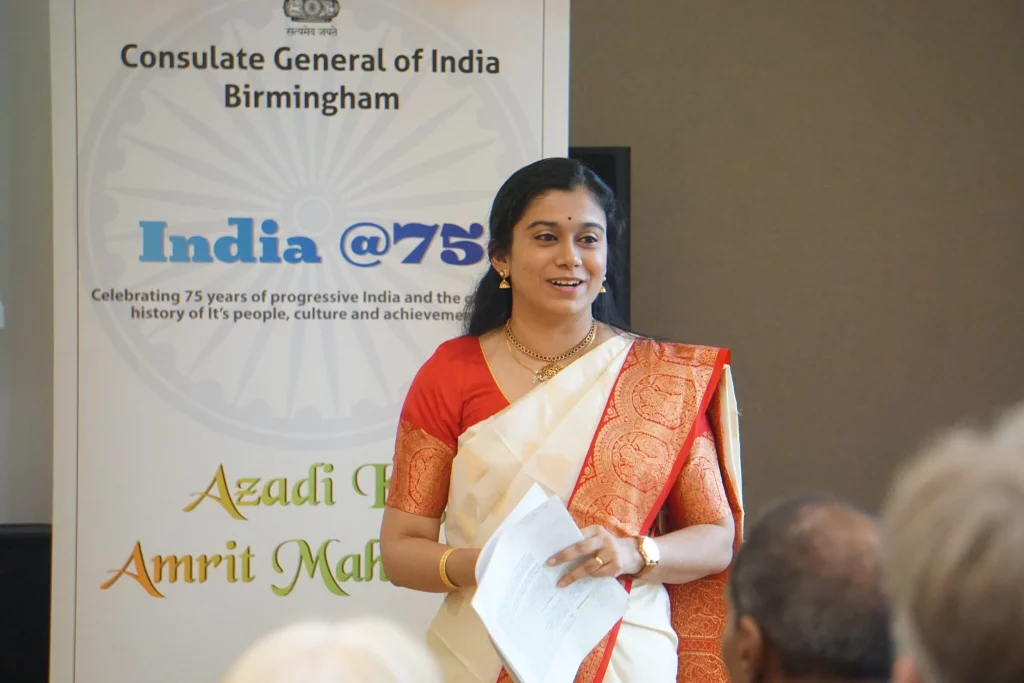
Music as a spiritual journey
“Growing up in a country that celebrates unity in diversity has taught me to respect every culture and every faith while taking pride in my own,” says the Carnatic singer. For someone who firmly believes that no artist is greater than the art they serve, her aspiration is simply to touch as many lives as meaningfully possible through teaching and performance, offering joy, solace, and a sense of connection.
For me, classical music is ultimately a spiritual journey, and I hope to honour that spirit throughout my life.
Dr Radhika Balakrishnan
Advice to the next generation
Her advice to young musicians is to trust one’s guru completely and practise with consistency and sincerity.
“There is no substitute for disciplined riyaz. Listening is just as important as practising, immersing yourself in live concerts and learning from great musicians. Develop a love for languages, especially your mother tongue, because understanding literature and pronunciation enriches musical expression. Most importantly, enjoy the journey. Make music your passion, your companion, your way of life, and never be afraid of making mistakes. Every mistake is an opportunity to grow,” she explains.
Building the future of Carnatic music
Outside her professional work, she enjoys mentoring young musicians and creating opportunities for communities to experience Indian classical music. Her vision is to continue expanding the Carnatic Classroom, making high-quality Carnatic music education accessible to students across the world.
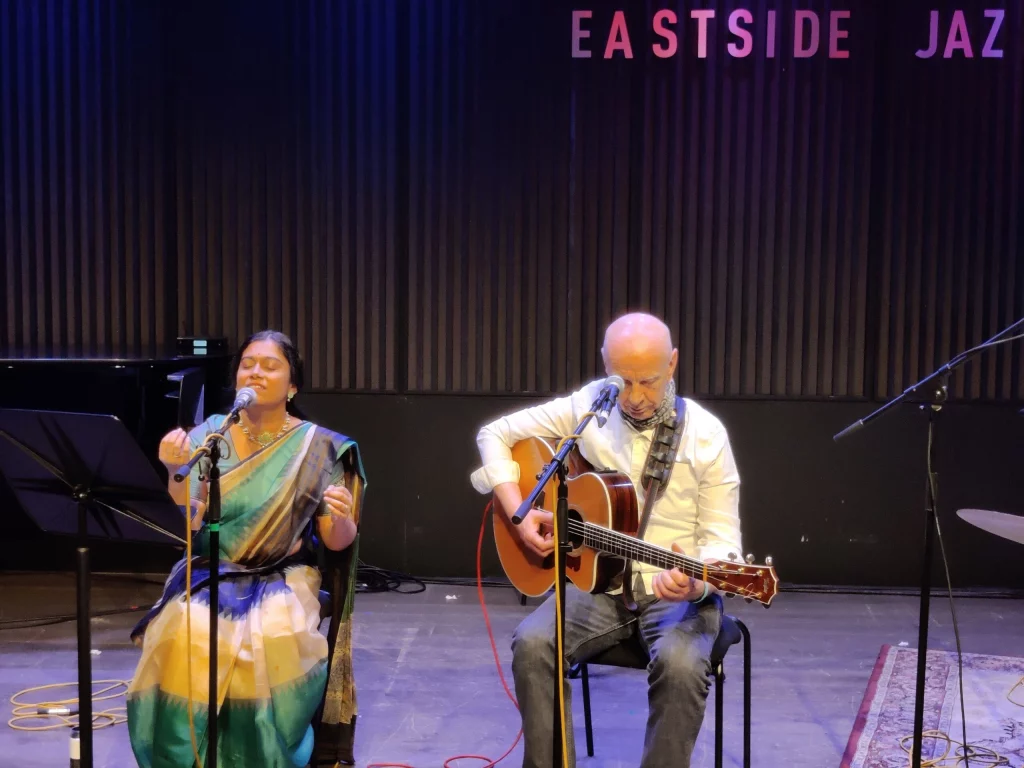
Radhika with Kevin Dempsey at East Side Jazz Club Birmingham
“I also look forward to continuing my work with the RBC India Ensemble and strengthening collaborations between Indian and international musicians. Another important goal is to develop a lecture-demonstration series across the UK and Europe, presenting India’s rich musical heritage through engaging performances, storytelling, and cultural dialogue. Through teaching, research, and performance, I hope to continue building meaningful bridges between cultures through the universal language of music,” she signs off.
ALSO READ: Corporate Life to 300 Concerts and the Grammys Circle: Kavitha Jayaraman’s global Carnatic journey
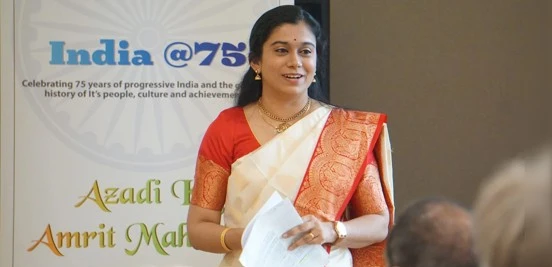
Dr Radhika Balakrishnan
| Born | 13 July, Mumbai, India |
| Based | Bengaluru, India |
| Studied | PhD in Music from University of Mysore |
| Languages | Malayalam, Kannada, Tamil, Hindi, English |
Signature work
Dr Radhika Balakrishnan is known for globalising Carnatic music through innovative teaching, research, and performance. As the ICCR's first Chair of Indian Studies (Music) at the Royal Birmingham Conservatoire, she has created new pathways for international audiences to engage with India's classical musical heritage.
Idea
To make Carnatic music a global language by combining performance, research, and innovative teaching, enabling international audiences to experience Indian classical music in its cultural and artistic depth.
Network
Her work connects musicians, students, educators, and cultural institutions across India, the United Kingdom, and the United States. Through the ICCR, Royal Birmingham Conservatoire, Shankar Mahadevan Academy, RBC India Ensemble, and the Carnatic Classroom, she fosters cross-cultural learning and artistic collaboration.
Impact
Her work has introduced Carnatic traditions to international classrooms, strengthened cultural dialogue, and inspired students from diverse backgrounds to engage with India's rich musical heritage.
Inspired by Dr Radhika Balakrishnan 's journey?
Yours follows the same Hero's pattern — Separation, Initiation, Transformation, Return.
Share with



Written By: Amrita Priya
Corporate Life to 300 Concerts and the Grammys Circle: Kavitha Jayaraman’s global Carnatic journey

Written By: Bindu Gopal Rao