
August 27 2026
Dr Debojyoti Dhar: Supporting healthier lives through microbiome testing, building a global business from India

(Aug 27, 2026) Dr Debojyoti Dhar, co-founder and director of BugSpeaks, combines training in biochemistry and biomedical science from Delhi University, a PhD from Indian Institute Science, and postdoctoral research in the USA to advance microbiome science. From launching one of South Asia’s first microbiome test in 2018, his business has expanded to 10 international markets.
When Dr Debojyoti Dhar and his colleagues launched Leucine Rich Bio in Bengaluru in 2014, they brought together expertise in genomics, systems biology, molecular biology, information technology and bioinformatics to tackle challenges in the emerging field of microbiome science.
The team curated thousands of research papers to build proprietary databases covering different aspects of microbiota, their links to diseases and the nutrients found in food. They also developed algorithms and matrices that could process raw data from next-generation sequencing machines and convert it into actionable reports using their in-house databases.
That work eventually led to the launch of BugSpeaks in mid-2018, one South Asia’s first comprehensive microbiome test.
“Me and my colleagues were always interested in understanding biology at a deeper level, and the microbiome presented an area where a significant amount of biology was still unexplored,” says Dr Dhar, co-founder and director of BugSpeaks, in a conversation with The Global Indian. BugSpeaks is currently the only Indian brand offering both gut and skin microbiome testing.
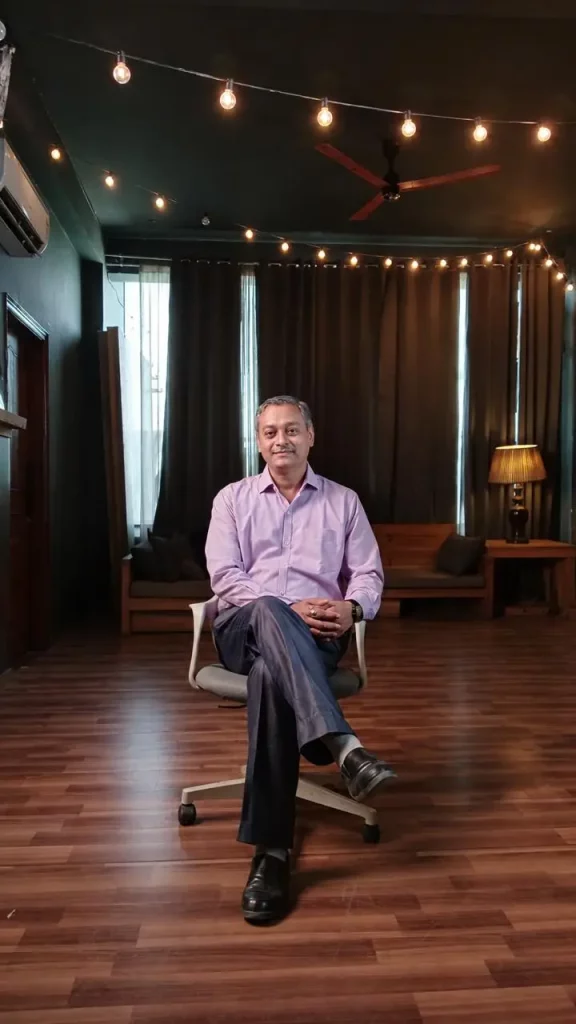
From drug discovery to microbiome testing
Dr Dhar’s journey to BugSpeaks began well before the company was launched. At Leucine Rich Bio, he worked in drug discovery alongside colleagues Kumar Sankaran and Prabhath Kamati Manjappa. Those experiences shaped how he approached healthcare and scientific research.
We were interested in understanding biology at a deeper level, and the microbiome presented an area where a significant amount of biology was still unexplored.
Dr Debojyoti Dhar
Leucine Rich Bio was launched when microbiome science had limited visibility, both in India and internationally. For the team, this presented an opportunity to develop the scientific and technological infrastructure needed to understand an emerging area of biology.
Next-generation sequencing and personalised insights
BugSpeaks approaches the microbiome as a measurable component of human health rather than simply as a gut-health or wellness concept. “Our gut microbiome testing uses next-generation sequencing to identify thousands of microbial species and analyse the composition of an individual’s microbial ecosystem.”
The objective goes beyond producing a list of bacteria, fungi or viruses found in or on the human body. BugSpeaks interprets the data in relation to metabolic health, inflammation, nutrition and susceptibility across more than 15 chronic conditions, translating the findings into a personalised nutritional roadmap.
Making microbiome science actionable
One of the company’s earliest challenges was explaining why analysing microorganisms could have clinical value. “We had to build the science, the laboratory capabilities and the evidence simultaneously,” says Dr Dhar.
Developing BugSpeaks as South Asia’s first gut microbiome test became an important milestone. But the team soon recognised that scientific accuracy alone was not enough. The findings also had to be presented in a way that doctors and individuals could understand and act upon. This became an important part of the company’s approach as it moved from research and testing towards personalised health applications.
Expanding from gut to skin microbiome
The company subsequently expanded into skin microbiome testing. Dr Dhar explains that the skin has its own microbial ecosystem, and changes within it can be relevant to conditions such as acne, inflammation and other skin concerns. “Our work is therefore moving towards understanding different microbial environments rather than treating the gut as the only important microbiome.”
The BugSpeaks team has also developed personalised microbiome-based probiotics, taking the next step from identifying an individual’s microbial profile towards designing interventions around it.
View this post on Instagram
Taking an India-built microbiome platform global
BugSpeaks has expanded into 10 international markets: Thailand, the Philippines, Malaysia, Singapore, the UAE, Lebanon, the UK, the USA, Brazil and Bulgaria. The company is also working towards expansion into Qatar and the broader Middle East.
Our international expansion has been an important test of whether an India-built microbiome platform can work across very different populations.
Dr Debojyoti Dhar
For Dr Dhar, the expansion has demonstrated both the universality and the contextual nature of microbiome science. Diet, geography, lifestyle, genetics and environmental exposure can influence microbial composition, meaning that population-specific data remains important.
Building a South Asian microbiome dataset
While international expansion has broadened BugSpeaks’ understanding of population-specific patterns, its South Asian dataset remains an important foundation.
For us, going global is therefore not only about market access. It is also about building a more representative understanding of human microbiome diversity.
Dr Debojyoti Dhar
This combination of a South Asian scientific foundation and data from international populations is helping the company broaden the relevance of its microbiome platform.
Education in India and the USA
Born in Delhi, Dr Dhar studied at SAIL School in Bhilai, Central School and Ramjas Tagore International School, Delhi. His early exposure to science sparked an interest in understanding how things function.
“My early childhood experience fostered my interest in the science discipline and how things function. Biology always interested me during my school days.” He completed his graduation in Biochemistry (Honours) from Delhi University, followed by postgraduate studies in Biomedical Science at the All India Centre for Research and Development (ACBR), Delhi University.
He then completed his PhD at the Indian Institute of Science before pursuing postdoctoral research at UMass Chan Medical School in the USA.
“My educational background equipped me with a good base in science and finally directed me to biotechnology and drug discovery,” he says. For Dr Dhar, academic qualifications were only one part of his education. “In fact, I have always thought that academic achievement is just one aspect of learning. The more important part is developing the ability to question, investigate and stay curious.”
Research, partnerships and business
Dr Dhar continues to spend considerable time following new research, discussing scientific questions with his team and exploring how microbiome science can be applied to medicine. His role also extends beyond research. As a co-founder, he is involved in strategy, research, partnerships, business development and corporate communications.
“As a co-founder, my job is not limited to one discipline but is spread across R&D, business development, corporate communications etc.”
View this post on Instagram
Expanding personalised health
Looking ahead, BugSpeaks aims to move beyond microbiome testing and build a broader ecosystem around personalised health. The roadmap includes strengthening research capabilities, expanding into different microbiome sites, developing personalised interventions and building stronger global collaborations. “We will be launching vaginal and oral microbiome testing soon,” says Dr Dhar.
The company currently works with nearly 90 percent of India’s diagnostic centres, according to Dr Dhar. He is also interested in developing microbiome-based drug discovery solutions for unmet medical needs. “The larger objective is to help move healthcare towards earlier, more individualised prevention.”
Looking beyond science
Outside work, Dr Dhar’s interests include sports, travel, reading the news and aviation. He also has a strong interest in animals. “I like to know more about animals. I kind of see different personalities in different animals and adore them a lot.” His interest in science is closely tied to a belief that research should ultimately have a practical impact on people’s lives.
Turning research into social impact
Dr Dhar believes scientific discoveries have little significance unless they contribute to improving people’s lives.
“This philosophy affects our work in BugSpeaks, especially our commitment to translating science in the domain of the microbiome into preventive healthcare.” Going forward, he wants to contribute more to initiatives that strengthen scientific awareness, research participation and access to evidence-based preventive healthcare.
Studying the Baiga tribe’s microbiome
His work also reflects an interest in understanding India’s biological diversity. Dr Dhar points to research on the gut microbiome of the Baiga tribe as an example of how scientific investigation can contribute to a broader understanding of Indian biology. The Baiga, an indigenous central Indian community, traditionally follow a fibre- and nutrient-rich diet that includes millets, pulses and forest-foraged greens.
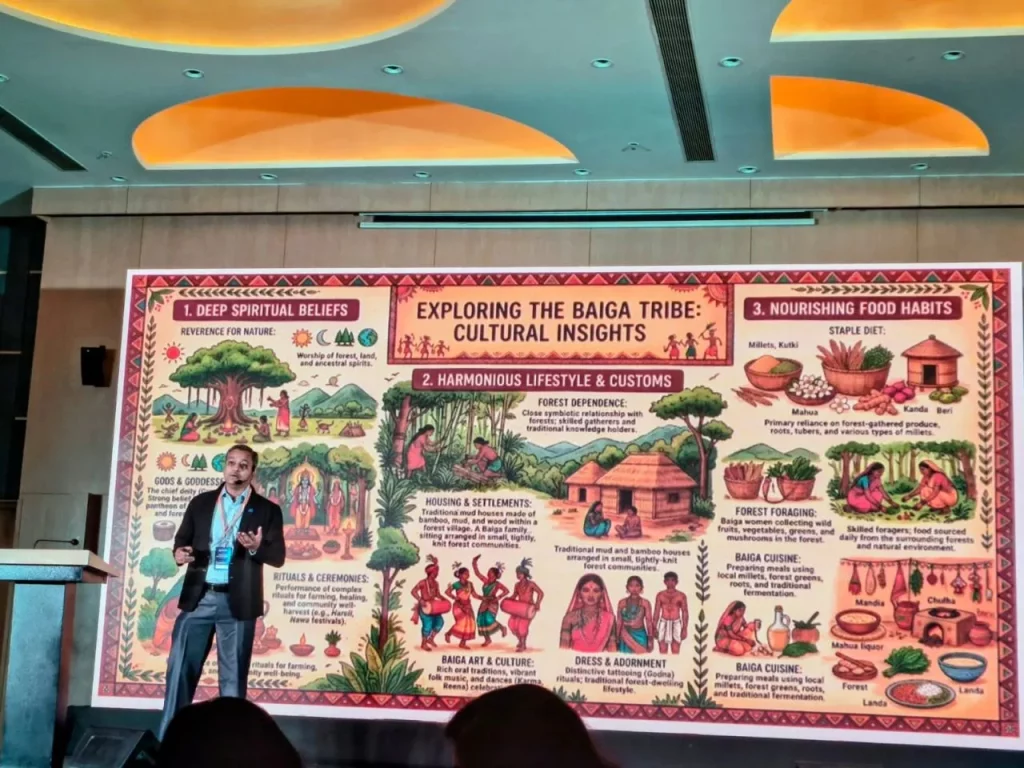
“Such research is important not only for the community being studied but also for building a more representative understanding of Indian biology,” he signs off.
- Follow Dr Debojyoti Dhar On LinkedIn
ALSO READ: How Prof. M Madhavi is using Indian medicinal plants to tackle vector-borne diseases worldwide
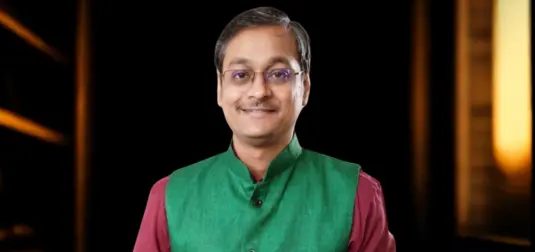
Dr Debojyoti Dhar
| Born | Dec 7, 1977, New Delhi |
| Based | Bengaluru, India |
| Studied | IISc, India | UMass Chan Medical School, USA |
| Languages | Bengali, Hindi, English |
Signature work
Dr Debojyoti Dhar combined experience across biotechnology, healthcare and business strategy to launch BugSpeaks, one of South Asia’s first microbiome test, taking it to markets across Thailand, the Philippines, Malaysia, Singapore, the UAE, Lebanon, the UK, the USA, Brazil and Bulgaria.
Idea
To use microbiome science, next-generation sequencing and data analytics to understand microbial ecosystems and translate the findings into personalised health insights and interventions.
Network
Has built connections across science, healthcare, academia and industry, with Leucine Rich Bio and BugSpeaks extending its microbiome testing platform from India to international markets.
Impact
Helping make microbiome science actionable in preventive healthcare while contributing to a broader understanding of population-specific microbiome patterns through research and global expansion.
Inspired by Dr Debojyoti Dhar 's journey?
Yours follows the same Hero's pattern — Separation, Initiation, Transformation, Return.
Share with


Written By: Vikram Sharma
How Prof. M Madhavi is using Indian medicinal plants to tackle vector-borne diseases worldwide


Written By: Vikram Sharma