
August 25 2026
Radhika Agarwal: From Berkeley and Forbes 30 Under 30 to rethinking acne care with Neothera

(Aug 25, 2026) Radhika Agarwal, founder of Bengaluru-based Neothera, is building an inside-out approach to treating acne, looking beyond skincare to hormones, nutrition and behaviour. A UC Berkeley graduate with experience in Silicon Valley and Vancouver, she was named to the Forbes 30 Under 30 Asia 2023 list in the Finance & Venture Capital category for her work as an investor at Blume Ventures, where she also built Lead Tribe, an accelerator and community for women founders.
Radhika Agarwal is building Neothera around a simple but unconventional premise that acne should be treated as a health issue, not merely a skincare problem. The Bengaluru-based startup takes an inside-out approach to conditions such as acne and eczema, looking at possible hormonal, nutritional, behavioural and lifestyle triggers before building an individual treatment plan. It is a shift from the conventional focus on treating the skin only from the surface.
“My thesis is that acne is usually a symptom of a few things happening together — hormonal, nutritional, behavioural — not something one product fixes,” says Radhika in a conversation with The Global Indian.
For Radhika, Neothera is the latest chapter in a journey that has taken her from Delhi to California, from economics and psychology at the University of California, Berkeley to finance and consulting, and eventually to India’s startup and venture capital ecosystem. Recently the startup secured र9 crore in in a pre-seed funding round. The founder of the science-led skin health startup plans to use the investment to expand its technology platform, strengthen research and development, grow its clinical and scientific team, broaden its product portfolio and increase customer base.
View this post on Instagram
From Silicon Valley to Blume Ventures
After graduating from Berkeley, Radhika spent a few years working with KPMG’s Vancouver and Silicon Valley offices as a senior analyst in its Economic & Valuation Services division. She moved back to India in 2019 and joined Blume Ventures as an investor. She spent about four and a half years at the early-stage venture capital firm, working across its investment team and focusing on consumer technology.
At Blume, she looked at investments across education, healthcare, content, gaming and e-commerce, supporting sourcing and running investment processes across consumer-focused companies, including in media, e-commerce and edtech.
“Having spent a lot of my formative years abroad before joining Blume, I felt I had a lot to learn about the Indian market and consumer,” she says. She had never been particularly close to startups before joining the firm and was keen to understand how the ecosystem worked. Blume became her learning ground for both India and startups.
Building Lead Tribe for women founders
One of Radhika’s most distinctive contributions at Blume was Lead Tribe, an accelerator and community programme she built for women founders. The programme was designed to help women entrepreneurs build a strong peer community and learn from seasoned operators and investors. It ran across three cohorts and brought together founders who, Radhika says, continue to support one another.
“We had some incredible founders join this program over three cohorts and that community is still standing strong for each other,” she says. Her investment work at Blume, combined with her efforts to create a stronger ecosystem for women founders, eventually earned her a place on the Forbes 30 Under 30 Asia 2023 list in the Finance & Venture Capital category.
Forbes recognised her work as an investor at Blume as well as her role in creating Lead Tribe, making the honour closely tied to the work she had done during her time at the venture capital firm. For Radhika, the recognition was particularly meaningful. “It was the kind of thing that I had secretly dreamt about as a kid, but never imagined would actually happen,” she says, describing the Forbes honour as a surreal experience.
From investor to founder
By 2023-24, Radhika was ready to build something of her own. She decided to start from scratch, leading to the creation of Neothera. The startup aims to develop a new way of caring for skin conditions such as acne and eczema by looking at their possible root causes rather than treating only what appears on the surface.

Radhika Agarwal at Neothera’s R&D facility
We wanted to build a new way to care for skin conditions like acne and eczema — looking at them from the root cause and inside-out, instead of just on the surface.
Radhika Agarwal
The transition also marked a shift in her role. At Blume, she had spent years evaluating founders, markets and businesses. At Neothera, she became the founder responsible for building one herself.
Why skin became the problem to solve
The idea emerged from spending time with people dealing with skin conditions. Radhika saw how deeply acne and related conditions could affect people physically and mentally, as well as how desperate many were to find solutions.
“It was causing people deep physical and mental pain — and they were desperate to find a solution. What keeps us going is seeing how much this problem affects the people we’re building for,” she says. One of her biggest early realizations was that skin conditions were almost always being treated on the surface, through products such as creams and soaps.
But the science pointed to a broader picture. “Skin conditions really began deeper — in the gut, hormones, habits, lifestyle, environment. Unless those were looked at and fixed, the skin condition couldn’t be fixed,” says Radhika. That thinking shaped Neothera as a health-first company, with skin viewed as the body’s largest organ rather than its “gift wrapping.”
Finding dermatologists who shared her approach
Building that model also meant finding medical professionals willing to look beyond conventional approaches. Radhika wanted to work with dermatologists who were open to research, reading clinical papers and spending significant time on detailed patient consultations.
“It was very hard to find the right kind of derm early on — one who looked at the root cause instead of invasive procedures or aesthetics,” she says. She spent hours each day looking for dermatologists through her network, Instagram, LinkedIn and within her city before finding a few who fit the approach she was developing. She also realised that a broader medical panel was needed, bringing in a nutritional coach and a gynaecologist advisor.
How Neothera approaches acne
Radhika’s approach begins by understanding why someone may be experiencing acne. Her team then curates a plan aimed at addressing potential triggers and provides clinically validated topical and oral formulations developed through rigorous R&D.
Her focus is also on understanding the person behind the condition — how they describe their problem, what they have already tried and how long they have been trying to solve it. The approach combines better habits to address potential root causes with products designed to treat the skin itself.
View this post on Instagram
The human side of treating acne
One of the hardest challenges Radhika has encountered during Neothera’s first year has not been scientific but behavioural. The recommendations can be simple: eating less sugar for someone whose acne may be linked to insulin spikes, or regularly cleaning pillowcases for someone whose acne may be associated with bacterial transfer and surface residue.
“These are things that are easy to suggest but hard to follow,” she says. Radhika learnt that recommendations needed to fit into people’s lives rather than expecting people to reorganise their lives around them.
The team therefore spent considerable time researching how to make recommendations easier to follow without compromising their effectiveness. Instead of simply telling someone to stop having dessert, for example, she may suggest having a fibre- or protein-rich snack 30 minutes beforehand. “It cuts the GI spike from the dessert, thus reducing the acne impact. Same effect, easier follow through,” she says.
Growing up in Delhi
Long before startups and venture capital, Radhika was a teenager in Delhi considering a very different future. She grew up in Delhi and studied at DPS RK Puram in New Delhi.
Her school years were marked by a wide range of interests. She trained in Hindustani vocal music and Odissi dance, while also playing badminton, tennis and volleyball and briefly attending summer art classes. “Being in so many extracurriculars helped me become more confident on stage and be more well rounded in general,” she says.
From 2006 to 2012, she received her high school’s Gold Medal for seven consecutive years of academic and co-curricular excellence. She also spent considerable time debating and participating in Model United Nations, experiences that helped her overcome stage fright and become more aware of issues around the world. Academically, she particularly enjoyed mathematics, economics and political science.
From law to economics and psychology
In her early teens, Radhika wanted to become a lawyer and even took law school entrance examinations. “Now when I look back, I realize this was largely because my older sister was a lawyer,” she says. As she approached the end of school, however, her interests shifted towards academics.
“I wanted to study Economics, Psychology and their confluence — and perhaps even do a PhD in Consumer Psychology,” she says. At 18, she moved to California to study at the University of California, Berkeley. She initially pursued Economics and Psychology, drawn to the university’s academic and research environment and the technical side of economics. By her second year, however, she switched from Economics-Psychology to Economics-Business.
The change also reflected a shift in ambition: from potentially pursuing a PhD and research to building a career in finance.
What Berkeley taught her about contradictions
“When I think back to my time at Berkeley, what stands out the most is the confluence of tech, capitalism, and liberalism,” says Radhika.
She describes Berkeley as a deeply technical university, shaped by its strong focus on engineering and computer science. At the same time, it was home to professors such as Janet Yellen, former United States Secretary of the Treasury, and Robert Reich, former United States Secretary of Labor, who brought a strong focus on socio-economic issues and politics.
“On the one hand it fed into Silicon Valley, Investment Banks, Consulting firms, but on the other these same students took part in student protests for issues that affected the whole world — from environmental protection, to Palestine, to gender.” For Radhika, that contrast became an important lesson. Berkeley taught her that people can hold two strong views that sometimes conflict with each other at the same time.
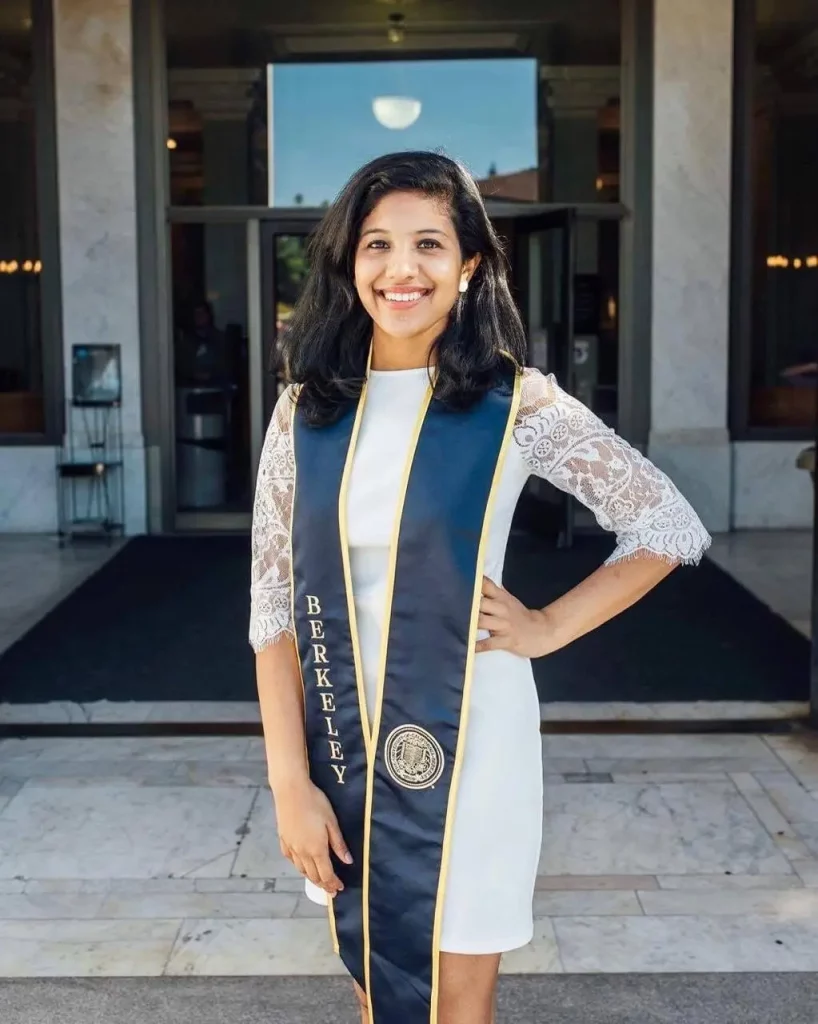
I think those four years on campus UC Berkeley taught me to appreciate contradictions and diverse viewpoints — a skill that I think a founder cannot do without.
Radhika Agarwal
She was also a member of Omicron Delta Epsilon, UC Berkeley’s Economics Honor Society, which recognises students who rank among the top 5% of their economics class.
Building Neothera for the long term
Radhika plans to spend the next several decades building Neothera. While acne is its focus today, she sees potential to apply the same inside-out, root-cause-first approach to other skin and scalp conditions, including dandruff, eczema and melasma. “We hope to build similar inside-out, root cause first, treatment systems for each of these conditions. We’re a small but ambitious team — we’re working day and night to build a company and brand that outlives us all,” she says.
Beyond startups and skincare
Away from work, Radhika enjoys sports, particularly badminton, as well as cooking. She tries to prepare at least one elaborate meal every Sunday, which she considers a stress reliever.
She is also a keen board-game enthusiast and makes time for board-game afternoons with friends on weekends. At present, the group is “addictively” playing Modern Art.
Her ambitions extend beyond entrepreneurship, too. Later in life, she wants to build a school for underprivileged girls to help them create better lives for themselves. “I want to teach and perhaps actually get a PhD and own a farm at some point where I grow my own vegetables to make the Sunday cooking an even happier experience,” she signs off.
ALSO READ: Palak Sehgal: From Danish agri-tech to Indian skincare, a cross-continental leap in entrepreneurship
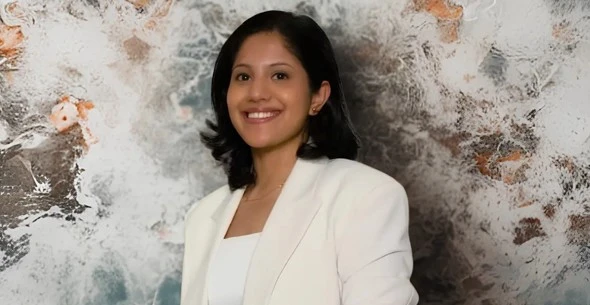
Radhika Agarwal
| Born | 1995, New Delhi |
| Based | Bengaluru, India |
| Studied | Economics at UC Berkeley, USA |
| Languages | Hindi, English |
Signature work
Through Neothera, Radhika Agarwal is bringing her investor’s lens to healthcare, building an evidence-led, inside-out approach to acne treatment.
Idea
Radhika founded Neothera to rethink acne care through an inside-out, root-cause approach that considers hormones, nutrition, behaviour and lifestyle alongside clinically validated treatments.
Network
Her journey spans UC Berkeley, KPMG's US and Canadian offices and Blume Ventures, where she invested in consumer-tech startups and built Lead Tribe, a community for women founders.
Impact
Through Neothera, Radhika is working to make acne treatment more personalised and evidence-led. At Blume, she also helped create a strong support network for women entrepreneurs through three Lead Tribe cohorts.
Inspired by Radhika Agarwal 's journey?
Yours follows the same Hero's pattern — Separation, Initiation, Transformation, Return.

Share with



Written By: Bindu Gopal Rao
Palak Sehgal: From Danish agri-tech to Indian skincare, a cross-continental leap in entrepreneurship

Written By: Amrita Priya
From cerebral palsy to skincare entrepreneur: How Atul Bhatara is building a brand with purpose

Written By: Bindu Gopal Rao