
October 29 2026
Dr Arun Krishnan: The technologist bringing Indian history to life through fiction

(Oct 29, 2026) Having worked in the US, Singapore and Japan across engineering, computational biology and technology, Dr Arun Krishnan returned to India, where he now heads a manufacturing company while pursuing his passion for historical fiction. The author of five books in six years, he draws on his interest in India’s past to tell stories he believes deserve greater attention. His latest work, Mahakshana, explores defining moments in the Mahabharata through human emotions, choices and consequences.
The portrayal of Indian history in school textbooks has always disappointed Dr Arun Krishnan. “People come from outside, beat us and go back,” is how the historian, US-educated engineer and technologist sums up the version of history he believes has been taught in schools for decades.
He wonders why students were not taught more about Lachit Borphukan, whose army defeated the Mughals in the Battle of Saraighat, or Raja Marthanda Varma, whose forces defeated the Dutch at the Battle of Colachel. What about Rajendra Chola and the Chola navy, which undertook expeditions across Southeast Asia?
His passion for history turned him into a storyteller who set out to tell stories he believes have been overlooked in history books. It led him to write five books in the span of six years.
“Every nation teaches its children history in a way that inculcates pride in their country. Ours is the only country where children are taught the country’s history as a long series of losses,” says Dr Krishnan, whose latest work, Mahakshana, was released recently.
Having worked in the US, Singapore and Japan, Dr Krishnan is currently the chairman and managing director of Mysore Polymers and Rubber Products, a specialty rubber products company.
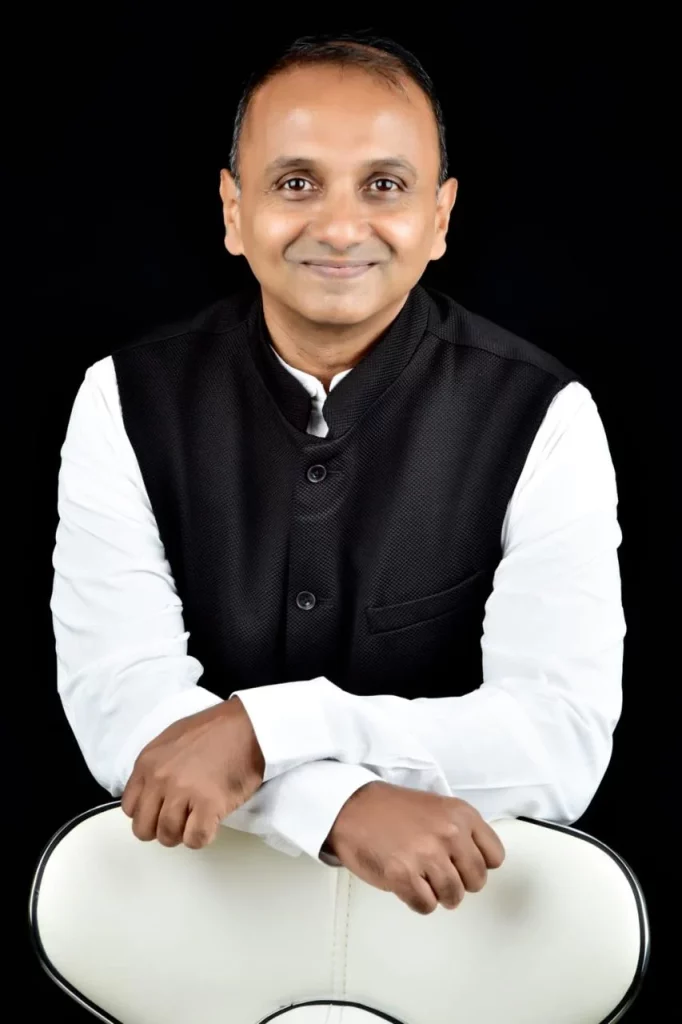
How a trilogy sparked a writing journey
Dr Krishnan’s journey as a storyteller began after he read renowned author Amish Tripathi’s Meluha trilogy. “That sparked something in me and prodded me into putting down my own thoughts on paper,” says the history enthusiast, who holds a PhD in Chemical Engineering from the University of South Carolina, in a chat with The Global Indian.
“Our ancestors fought long and hard to ensure that we repulsed wave after wave of attacks from outside. Why then, are we not taught that history?” wonders Dr Krishnan.
His latest book, Mahakshana, started with an attempt to tell the story of the Mahabharata through diverse points of view. Rather than merely recounting the epic from beginning to end, the book pauses at defining moments when choices are made, emotions collide and destinies change forever.
“Through these moments, the ancient epic becomes a reflection on the dilemmas that remain deeply familiar even today,” he says.
From Devavrata’s transformation into Bhishma and Amba’s turn towards vengeance to Karna’s dilemma over the Shakti, Bhima’s wait to confront Kichaka and Abhimanyu’s contemplation before entering the Chakravyuha, Mahakshana explores the epic through moments of decision, consequence and irreversible change.
“These are not stories of gods, warriors and heroes. They are stories of desire and doubt, rage and love, ambition and guilt—of ordinary human emotions colliding with extraordinary destinies,” says the author.
He believes the book is especially relevant to contemporary readers because human emotions continue to influence relationships, leadership, conflict and choices in the world today.
Sometimes, history is shaped in a single moment. Mahakshana traces the story of the Mahabharata through these key moments.
Dr Arun Krishnan
Previous books
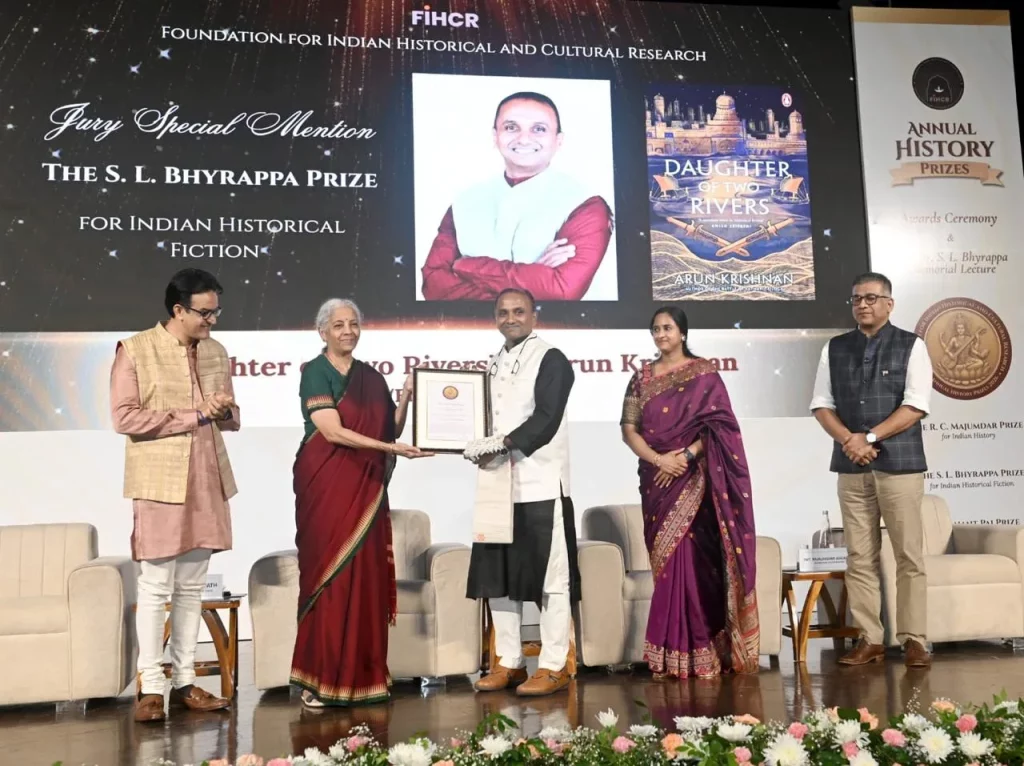
Among Dr Krishnan’s previous books are The Battle of Vatapi trilogy, published by HarperCollins, and Daughter of Two Rivers, which was longlisted for the IGF Archer-Amish Award and received a Special Jury Mention for the SL Byrappa Prize for Historical Fiction.
The Battle of Vatapi trilogy is set in seventh-century India, when three prominent rulers shaped the political landscape. They were King Harsha in the north, King Pulakeshin II of the Chalukyas and King Narasimhavarman I of the Pallavas.
The story of Daughter of Two Rivers is set in a time and place roughly 3,800 years ago.
Working in the US, Singapore and Japan
Dr Krishnan completed his PhD in chemical engineering from the University of South Carolina. His first job involved setting up a control system at a Miller Beer plant. “So, I know how to make beer, I just don’t drink it,” he smiles.
He worked in the US for a year before moving to Singapore, where he got an opportunity to conduct research in various fields, including distributed and parallel computing, bioinformatics and computational biology. “In those days, bioinformatics wasn’t a structured field with courses. Engineers and those from the hard sciences with experience in algorithms were hired to work on DNA and protein sequence analysis,” says Dr Krishnan.
He taught himself genetics and genomics and went on to publish more than 50 papers in the field. He subsequently moved to Japan, where he worked as an assistant professor at the Institute for Advanced Biosciences at Keio University before returning to India in 2008.
From an analytics startup to manufacturing
After returning to India, Dr Krishnan pursued an Executive MBA at the Indian School of Business in Hyderabad. He later established his own analytics startup, nFactorial Analytical Sciences.
“It was a product company that made software products for continuous employee and customer feedback,” he says.
The company had to shut down in 2020 due to the pandemic. Today, Dr Krishnan is at the helm of Mysore Polymers and Rubber Products, one of India’s manufacturers of vehicle inner tubes and other specialty rubber products.
We also make products for Indian defence as well as ISRO among others. Every single PSLV or GSLV launch has rubber bellows from my company. It is used during the heat-shield separation phase.
Dr Arun Krishnan
He describes his job as challenging, with numerous things to take care of every day. He enjoys the variety and would not have it any other way, as a fixed routine tends to bore him.
A childhood interest in India’s past
Dr Krishnan was born in Delhi and grew up in Rourkela, Odisha, and Haldia, West Bengal. His father, who hails from Thanjavur, Tamil Nadu, is an engineer who worked for various public and private organisations.
The family regularly visited Thanjavur because their family temple is located there. Their visits also took them to the Brihadeeshvara Temple, known locally as Periya Kovil, or Big Temple.
We would often visit the Brihadeeshvara Temple. I would stand there imagining what it would have been like for Raja Raja Chola to have stood at that exact same spot.
Dr Arun Krishnan
In the mid-1980s, his father was seconded to the Democratic Republic of Congo, then known as Zaire. As a result, Dr Krishnan had to go to boarding school, first at Bhavan’s Gandhi Vidyashram in Kodaikanal and then at Madras Christian College Higher Secondary School in Chennai.
He subsequently pursued his undergraduate studies in chemical and electrochemical engineering at the Central Electrochemical Research Institute, a CSIR laboratory based in Karaikudi, Tamil Nadu.
A memorable history teacher
Despite his interest in the past, Dr Krishnan was disappointed by the way history was taught at school. He recalls teachers who, in his view, showed little interest in the subject.
“Except for one year, when a teacher took the trouble to go to the National Museum in Calcutta and copied Ashoka’s inscription (that starts with Devanampiya Piyadasi) and then made us learn to write it in the original script.”
The experience stayed with him, as did his interest in writing. Although he wrote sporadically during childhood, he later began contributing cricket articles to a few sports websites.
Following his father’s footsteps
Like his father, Dr Krishnan had always been interested in becoming an engineer. “I got admission to a direct PhD program at South Carolina, which helped me immensely.”
He enjoyed his time in the US, particularly the experience of studying there.
As a young 23 year old, going to the US was a dream come true. I loved studying there and their education system is the best. It is no wonder that the US leads the world in technology and innovation.
Dr Arun Krishnan
Over time, however, he realised that he would not be able to make the US his home. “I always felt like an outsider to the land. I missed my family too much to be able to spend the rest of my life far away from them.” He eventually returned to India, where he built a career spanning technology, entrepreneurship and manufacturing while continuing to pursue his interest in writing.
Writing plans and weekly targets
Dr Krishnan has several books in the pipeline. Three have already been written: two historical fiction novels and a socio-political commentary based on a recent Trans-Siberian train journey he and his wife undertook in Russia. The latter is co-authored by the couple.
Apart from these, he is also in the midst of writing another historical fiction novel. “Given my work and other commitments, I am hopeful of finishing that in another 3-4 months,” he says.
His goal is to publish at least one book a year. To keep himself on track, he sets weekly targets of about 10,000 words. “For the most part, I stick to those targets. As a result, I can finish a book in about 3-4 months,” he signs off.
- Follow Dr Arun Krishnan on LinkedIn
ALSO READ: Manu S Pillai: The historian who’s changing how India reads its past


Written By: Mallik Thatipalli
Manu S Pillai: The historian who’s changing how India reads its past
Written By: Minal Nirmala Khona
Aman Nath: Transforming India’s forgotten historical ruins into living heritage

Written By: Deepa Natarajan Lobo