July 28 2026
Manish Sabharwal: The TeamLease co-founder chronicling Lupin’s role in making India the pharmacy of the world

(Jul 28, 2026) From building one of India’s largest staffing firms to embracing the idea of becoming “a good ancestor,” Manish Sabharwal has spent over 25 years shaping conversations on jobs, entrepreneurship and institution building. In his latest book, he tells the story of Dr Desh Bandhu Gupta, founder of Lupin, one of India’s largest pharmaceutical companies and a leading global maker of generic medicines, to explore how vision, policy and perseverance helped make India the pharmacy of the world.
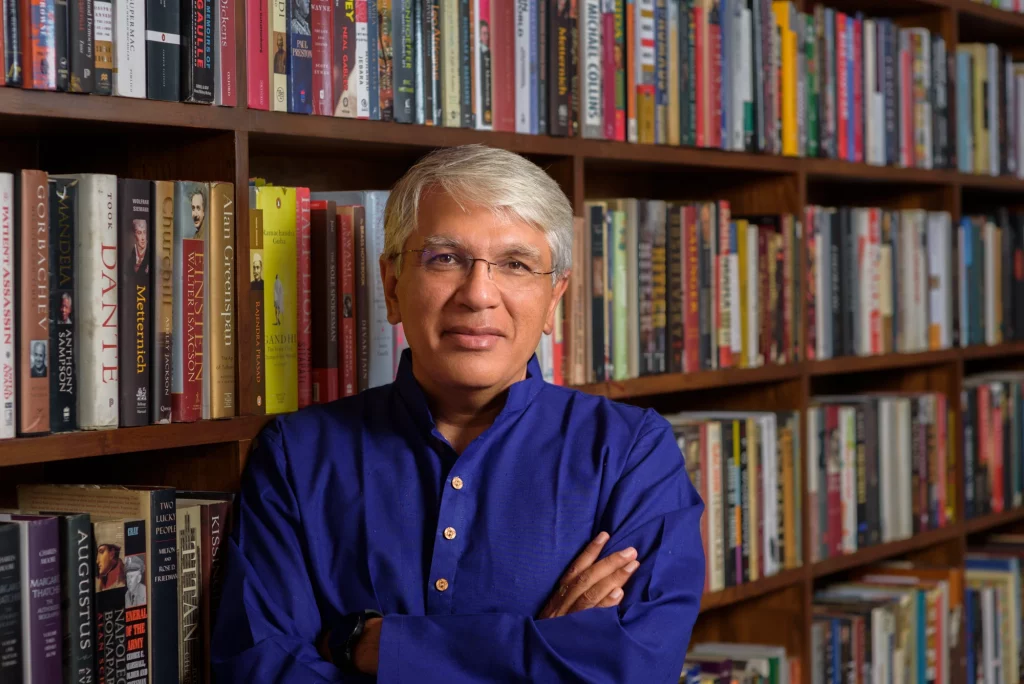
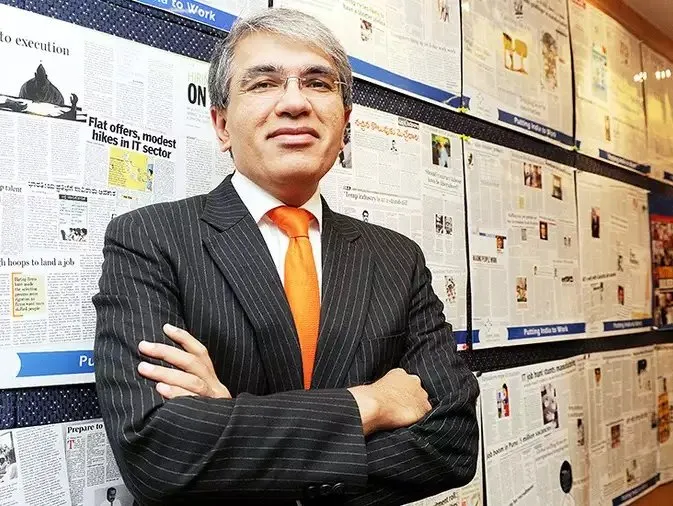
Over the last three decades, Manish Sabharwal has carved out a niche in India’s growth story. As the co-founder of TeamLease Services, one of the country’s largest staffing firms, he has spent years shaping conversations around employment, entrepreneurship, education and the future of work.
For Sabharwal, entrepreneurship has never been just about building successful companies. It is about creating institutions, generating opportunities and, perhaps most importantly, becoming what he calls “a good ancestor.”
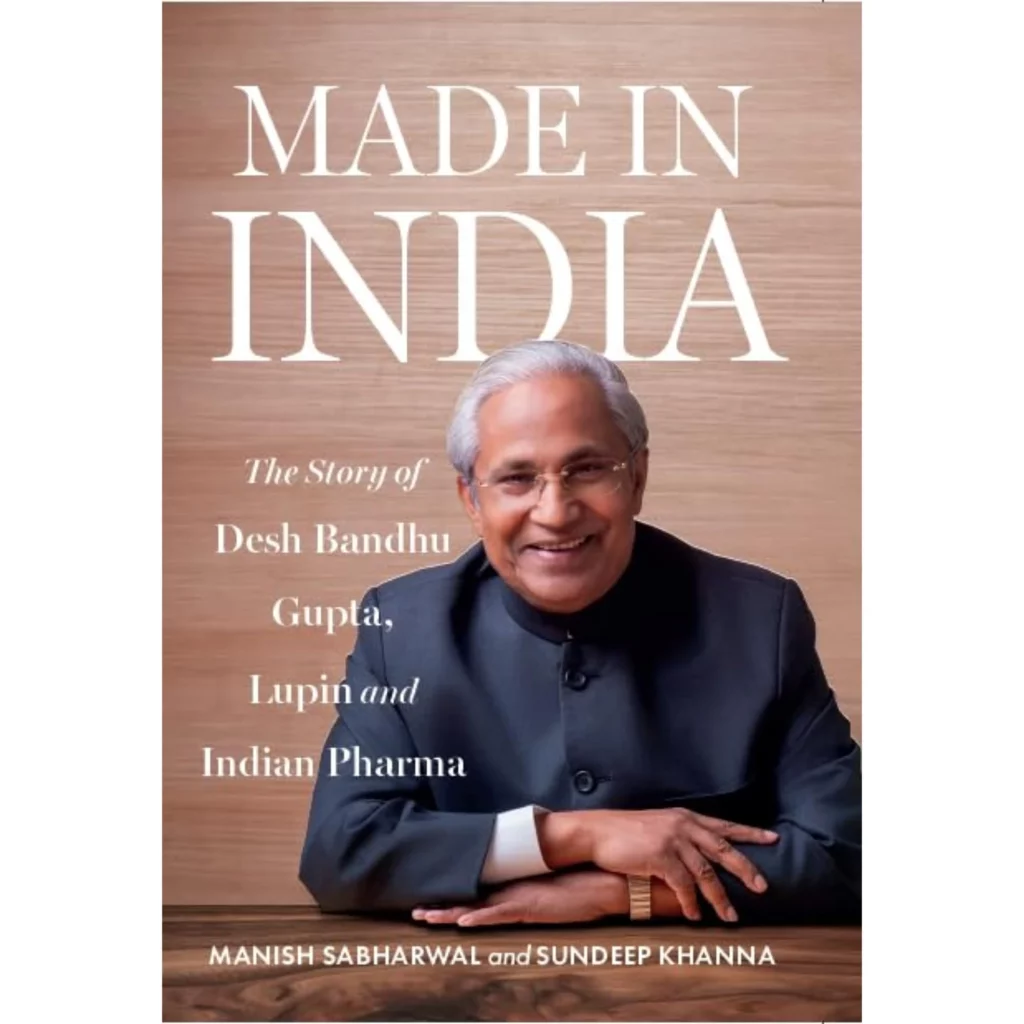
That philosophy also inspired his latest book, Made in India: The Story of Dr Desh Bandhu Gupta, Lupin and Indian Pharma. While Gupta, the founder of pharmaceutical giant Lupin, is also Sabharwal’s father-in-law, the book is far more than a personal tribute. Instead, as an author, Sabharwal sees it as the story of modern India itself, where bold ideas, supportive policies and determined institution builders transformed a developing nation into the pharmacy of the world. Through Gupta’s remarkable journey, Sabharwal chronicles the rise of one of India’s most influential pharmaceutical companies while exploring how vision, policy and perseverance shaped both Lupin and India’s entrepreneurial ascent.
The roots that shaped the entrepreneur and author
Born and brought up in Jammu & Kashmir in a family of civil servants, TeamLease co-founder Manish Sabharwal learnt early on that life is far more complex than balance sheets. “There was an early realisation that we don’t live in an economy but a society. That made me think spatially and gave me much greater situational awareness,” he reminisces and adds, “Our lives are, what historians call, path-dependent; history matters.”
There were practical lessons too. Watching his parents manage with limited resources instilled lifelong financial discipline. “Investors tend to swing between growth at all costs and profits at all costs depending on the mood of the market,” he says. “But return on equity, how much money you spend to make how much money you make, is evergreen.”
And of course, not every lesson was comfortable. Coming from a family where stability was envisioned also made entrepreneurship seem like a risky path. “My parents were really worried when I decided not to take a job after Wharton and instead start a company,” he recalls.
Lessons beyond the classroom
From attending boarding school at Mayo College in Ajmer to studying commerce at Delhi University’s Shri Ram College of Commerce; Sabharwal believes all the institutions shaped him in various aspects of life.
He went on to work for four years as an executive assistant to Nrupendra Rao, then Chairman of the Pennar Group, and eventually, completed an MBA at The Wharton School in the United States. While Wharton did change the size of his thoughts, he admits that watching a company being built from close quarters gave him something a business school never could—the confidence to believe he too could become an entrepreneur.
I always tell young people not to obsess over joining a multinational or a large company. Take a big job in a small company rather than a small job in a big company. That’s how you get a helicopter view of business.
Manish Sabharwal
Building TeamLease and watching India change
After returning to India, Sabharwal co-founded TeamLease Services, a company that would grow into one of the country’s largest staffing firms. Like the path of every entrepreneur, this journey too came riddled with its own challenges. Looking back, he sums it up simply, “They were the normal challenges that every entrepreneur faces—building a team, raising money, balancing poetry and prose, taking bigger risks, and ensuring you have a strategy that keeps up with the ever-changing world.”
Those decades also shaped his understanding of India’s economy. “We have created magnificent mass democracy but we haven’t created mass prosperity alongside it,” he reinstates, pointing out that India and China began the 1990s at almost identical levels of per capita income before taking dramatically different paths. “We’ve made enormous progress, but there is still work to be done in making ourselves economically stronger.”
Over the next 25 years, he found himself at the centre of conversations around employment, education and entrepreneurship, while witnessing India’s economic transformation from close quarters.
Telling the story of modern India
Many of these ideas eventually found their way into ‘Made in India: The Story of Dr Desh Bandhu Gupta, Lupin and Indian Pharma’, Sabharwal’s latest book
on Lupin founder Dr Desh Bandhu Gupta. While it follows Gupta’s extraordinary journey from growing up in a house without electricity or running water to building one of India’s largest pharmaceutical companies, Sabharwal believes it is equally a story about modern India.
Growing up in Kashmir, he often heard about the Sufi concept of Lauh-e-Azal—the belief that every life is already written. “Many cultures have this concept of Kismet, Maktub or fate. But Desh Bandhu Gupta, his company Lupin, and Indian pharma defy the notion of destiny,” he says. The story of Lupin, he adds, challenges that notion.
No economist predicted that a country ranked 28th in per capita GDP would one day manufacture half the world’s medicines and sell them in over 200 countries.
Manish Sabharwal
The book also acknowledges the role of policy in shaping entrepreneurship. “The Indian Patents Act of 1970 and America’s Hatch-Waxman Act of 1984 were extraordinary examples of how policy can catalyse entrepreneurship.” For Sabharwal, the story is ultimately proof that vision, perseverance and the right policies can change the course of both businesses and nations.
Having worked with entrepreneurs and business leaders for decades, Sabharwal believes one quality stands above all others—bravery. “The first three words of my book are Veer Bhogya Vasundhara (the brave inherits the earth).”
Being a good ancestor
Among the many ideas that have influenced his thinking, one remains closest to his heart. Borrowing from Jonas Salk, the inventor of the polio vaccine, Sabharwal often asks himself a simple question: “Are you being a good ancestor?”
He also recalls another lesson from his childhood in Kashmir. “There are two words for property— ‘jaagir’ and ‘amaanat’. ‘Jaagir’ belongs to you, but ‘amaanat’ is only entrusted to you. You are expected to hand it over in better condition than you received it.”
That philosophy has shaped the way he approaches business, leadership and institution building. Companies, he believes, should outlast their founders, and every generation has a responsibility to leave something stronger for those who follow.
The road ahead
Even after decades in business, Sabharwal still considers himself a student. For over 40 years, he has read nearly a book every week, largely on history, psychology, biology and economics. One title he returns to repeatedly is ‘Strategy: A History by Lawrence Freedman’. This year, he has challenged himself to ensure that at least 20 per cent of his reading comes from authors whose views differ from his own. “The world always looks different after a good conversation or a good book,” he says.
Having recently stepped away from his executive role at TeamLease, Sabharwal is now devoting more time to writing, public policy and what he calls “the battle for ideas.” He also hopes to expand his family’s philanthropic work through universities, schools and think tanks, with a particular focus on strengthening India’s intellectual infrastructure. “Human capital is the only renewable energy for any country,” he concludes.
- Follow Manish Sabharwal on LinkedIn
ALSO READ: Designed to Win: How S. Devarajan transformed Tata Elxsi under Ratan Tata’s watch
Share with




Written By: Vikram Sharma
Designed to Win: How S. Devarajan transformed Tata Elxsi under Ratan Tata’s watch