July 16 2021
Deepinder Goyal, the former Zomato CEO who turned a canteen menu into Eternal
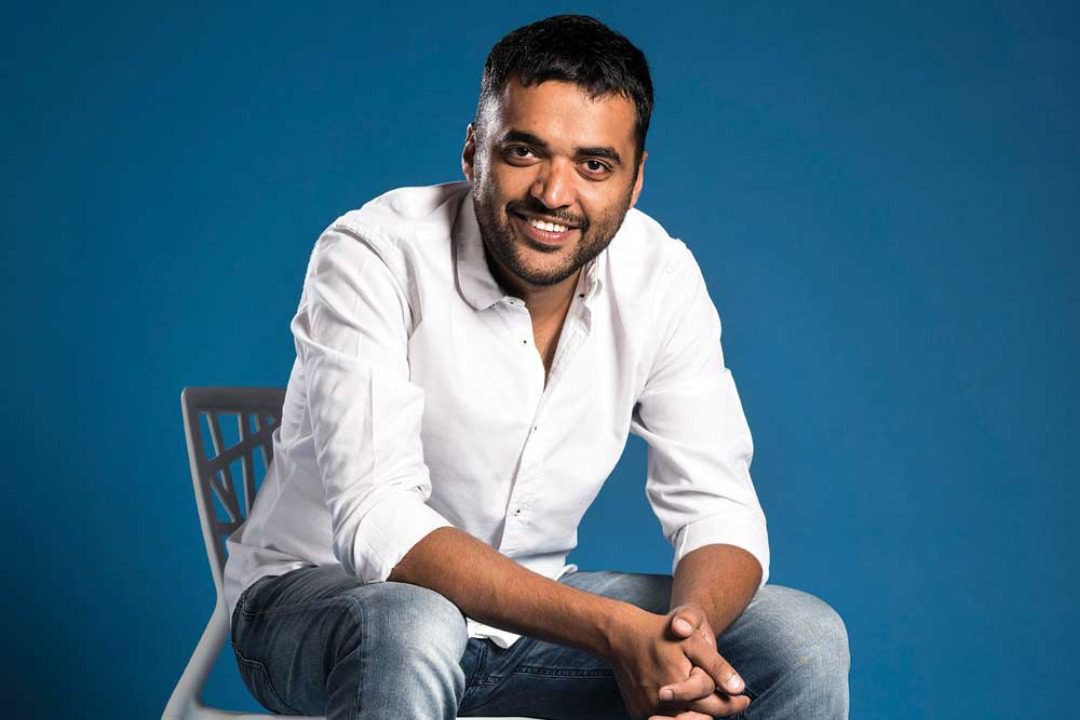
Deepinder Goyal, the former Zomato CEO and co-founder of one of India’s best-known consumer internet companies, is writing a new chapter. The company he started in 2008 now goes by Eternal, its quick commerce app Blinkit has become its biggest growth engine, and Goyal has stepped away from day-to-day leadership to build Temple, a wearable that tracks blood flow to the brain.
It is a striking turn for an entrepreneur whose journey began with something as ordinary as a lunch queue. Here is how Deepinder Goyal built Zomato from an office side project into Eternal, and why he chose to walk away from the top job.
Who is Deepinder Goyal?
Deepinder Goyal is an Indian entrepreneur best known for co-founding Zomato, the food delivery app that millions of Indians use every day. A graduate of IIT Delhi, he began his career as a management consultant at Bain & Company before turning a simple idea into a household name.
Today, he serves as vice chairman on Eternal‘s board. Most of his energy, however, now goes into new ventures in health technology, longevity research and aerospace.
How Zomato started in a Bain canteen
The problem Zomato solved was one Goyal knew well. Since his student days, finding restaurant menus had always been a struggle, and the frustration followed him into the corporate world.
At Bain, the idea returned. Goyal noticed colleagues crowding the office canteen at lunchtime, struggling to place orders. Together with Pankaj Chaddah, a colleague and fellow IIT Delhi alumnus, he scanned the canteen menu and those of nearby restaurants and put them online.
That simple fix became Foodiebay, launched in 2008. It quickly turned into a hit around the office. Encouraged by the response, the pair took Foodiebay beyond Delhi to Mumbai, Kolkata and Pune, and in early 2010 left Bain to run the business full time.
The email that changed everything
Foodiebay was growing steadily when an unexpected email changed its course. Sanjeev Bikhchandani, founder of Naukri.com and Info Edge, wrote to Goyal saying he wanted to invest.
In 2010, Info Edge gave Foodiebay its first institutional funding, a seed round of $1 million. It proved to be one of the most rewarding early bets in Indian start-up history. Bikhchandani has remained a vocal supporter of Goyal ever since.
Why Foodiebay became Zomato
With fresh capital came a bigger question, the name. Info Edge’s then CFO, Ambarish Raghuvanshi, pointed out that the last four letters of Foodiebay echoed eBay, which could invite trademark trouble as the business grew.
In November 2010, the company relaunched as Zomato, a playful twist on “tomato”. The idea was to keep food at the heart of the brand while choosing a name that felt timeless and was not limited to food alone. More than a decade later, as the group expanded into groceries, events and supplies, that thinking looks remarkably far-sighted.
Going global and learning hard lessons
Zomato’s early ambitions were international. From 2012, it launched in markets such as the UAE, Sri Lanka, the UK and the Philippines, brought Sequoia Capital on board as an investor, and bought restaurant discovery platforms in New Zealand, the Czech Republic, Poland and the United States, where it acquired Urbanspoon in 2015.
The pace, however, proved costly. In 2015, Zomato let go of about a tenth of its staff and scaled back its approach in smaller markets. That same year, it made the most important pivot in its history by launching food delivery in India.
The Zomato vs Swiggy rivalry
Food delivery put Zomato head to head with Swiggy, in a rivalry that still shapes how Indians order food. The battle pushed both companies to promise faster deliveries, wider restaurant choice and sharper discounts.
The years that followed tested Goyal’s resilience. Co-founder Pankaj Chaddah left in 2018, and restaurant partners later pushed back against steep discounts and commissions. Zomato kept growing regardless. In January 2020, it strengthened its position by acquiring Uber Eats’ India business.
Zomato IPO, a landmark for Indian start-ups
In July 2021, Zomato went public in one of the most closely watched listings in Indian start-up history. The IPO was a test of whether public markets would back a fast-growing consumer internet company, and investors responded with strong demand.
Congratulations poured in from across the start-up world, including from Chaddah and Bikhchandani. For many, the listing marked the moment India’s new-age tech companies came of age.
From Zomato to Eternal
After the IPO, Goyal pushed the company well beyond food. In 2022, Zomato acquired Blinkit, formerly Grofers, betting that Indians would want groceries and essentials delivered in minutes. It also built Hyperpure, a supplies business for restaurants, and launched District, an app for going out.
In February 2025, the listed company renamed itself Eternal to reflect this wider family of businesses. Zomato remains the name customers know for food delivery, while Blinkit has grown into the group’s fastest-expanding business.
Why Deepinder Goyal stepped down as CEO
In January 2026, Goyal announced that he would step down as Group CEO of Eternal, with effect from 1 February. He said he wanted to explore new, higher-risk ideas that did not fit the scope of a listed company.
He handed the reins to Albinder Dhindsa, the Blinkit chief he credited with taking the quick commerce business from acquisition to breakeven. Goyal stayed on the board as vice chairman and returned his unvested stock options to the company’s employee pool, a gesture aimed at rewarding Eternal’s next generation of leaders.
Temple and Goyal’s next act
Goyal’s next big bet is Temple, a wearable that sits on the side of the head and continuously tracks blood flow to the brain. It is initially aimed at elite athletes who want deeper insight into how their brains handle stress and performance.
Temple drew backing from founder friends and early Zomato investors. Alongside it, Goyal funds Continue, a longevity research effort, and is a non-executive co-founder of LAT Aerospace, a regional aviation start-up launched in 2025 with former Zomato COO Surobhi Das. The product has yet to launch, and its science still has to prove itself, but the ambition is unmistakable.
What Deepinder Goyal’s journey teaches entrepreneurs
Goyal’s story is a reminder that big companies often begin with small, everyday frustrations. A crowded canteen became Zomato. A clunky brand name became a lesson in thinking long term. A costly global expansion became the push towards food delivery.
Now, the former Zomato CEO is starting again, this time with the human brain. Whether Temple succeeds or not, Goyal has shown a rare willingness to leave a comfortable position for an uncertain one. India’s start-up ecosystem, which watched Zomato grow from a canteen menu into Eternal, will be watching closely once more.
- Follow Deepinder Goyal on LinkedIn
RELATED READ: Meet Rahul Garg, the man behind India’s first hinterland unicorn




Written By: Bindu Gopal Rao