
September 06 2026
Priyanka Rana: The Bay Area sculptor listening to what wood has to say
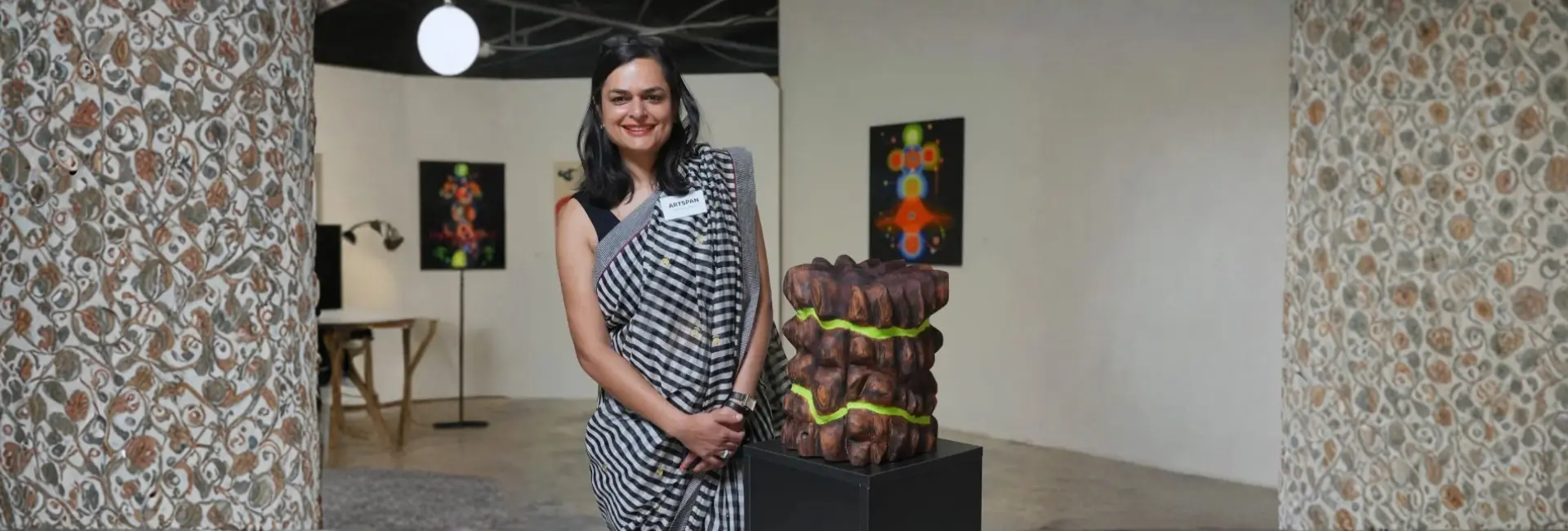
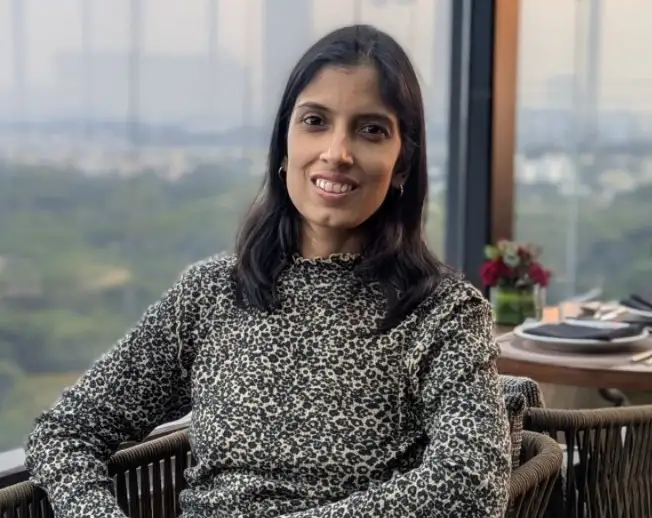
(Sep 6, 2026) From mathematics and economics to chainsaws and sculpture, Bay Area-based wood sculptor Priyanka Rana found her calling in naturally felled wood. Today, she transforms wood into sculptural works inspired by nature, and her explorations of craft, science and the cosmos. In 2025, one of her artworks was miniaturised onto a tiny, durable film called a nanofiche and sent to the moon as part of a lunar time capsule.
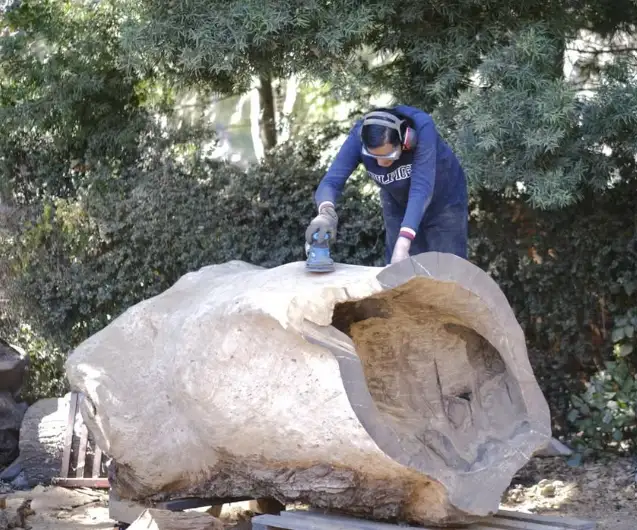
Imagine a busy chaotic morning: getting two children ready for school, soring breakfast, and getting the household to move. And then, once the dust settles, suiting up in protective gear and heading into a studio to work with more dust – albeit of a different kind! It’s the one where chainsaws replace utensils and power tools take over chopping board to coax naturally felled wood into extraordinary forms.
That’s a typical day in the life of Bay Area-based wood artist Priyanka Rana. “I dress like an astronaut,” she laughs and tells The Global Indian. “I wear a mask, multiple covers, and have a strict protocol with my kids. They can’t just surprise me while I’m working with power tools unless it’s an emergency.”
The familiar path
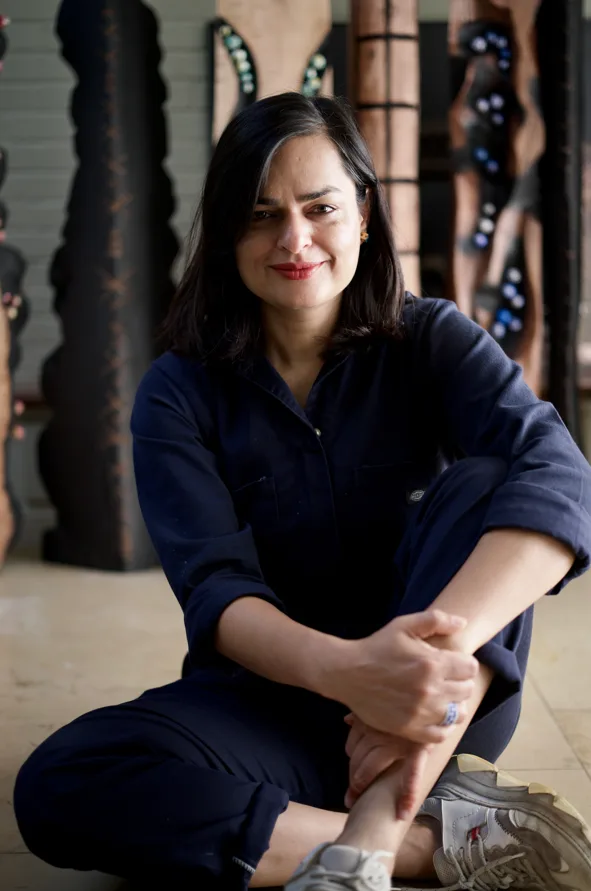
Born and brought up in parts of Haryana such as Faridabad and Gurgaon in the 80s and 90s, Priyanka never even gave art a second thought while growing up. “Artists and museums were like unicorns back then. I had no idea what one could even do to become an artist,” she jokes. Her visits to her grandparents’ farmhouses in the countryside, however, became an early gateway to a world of creativity.
Her first memorable tryst with an art show came almost by accident, when she read about a Picasso exhibition at the National Gallery of Modern Art in Delhi in the 1990s. “I convinced myself to take an overnight bus from Chandigarh, bunk at my sister’s place in Delhi, and see it,” she recalls. “That was my first close encounter with a maestro’s work.”
Like all “good Indian kids”, she went on to do her undergraduate studies in mathematics and economics, followed by an MBA, and worked as a market research consultant in Gurgaon. “I moved to France for a brief time after marriage and then, to my favourite Indian city of Bengaluru for a while. We moved to the US in 2008 and have been in the Bay Area ever since.”
Being in the dirt and playing in the sand made me get used to the mess, which probably helps now, because working with wood is a very messy medium. There’s sawdust everywhere, no matter how covered up I am.
Priyanka Rana
The moment everything shifted
The serious rendezvous with art began in 2017, during a two-and-a-half month backpacking trip in Japan with her husband and small children. “There, I saw a woman bow down to a train before stepping in to clean it, and something within me shifted,” she recalls. “I wanted to do a job that allows me to bow down to it every day.”
Back in the US, she began taking classes and apprenticing with a handyman. She had never used power tools before, let alone a chainsaw. But the learning curve did not scare her. “One day I just said, ‘let me order a chainsaw on Amazon; what can go wrong?’”
America’s do-it-yourself culture helped. “There’s so much knowledge and so many tools if you seek them out,” she says.
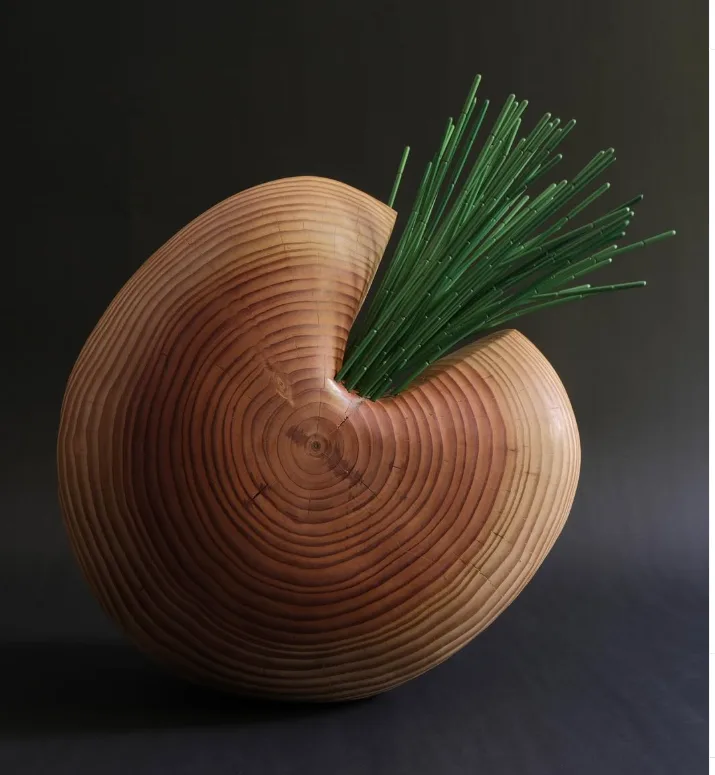
Today, Priyanka works largely with naturally felled local wood, particularly California redwood, using chainsaws, grinders, hand tools and fire to reveal forms within the material. Much of her practice is about allowing the wood to have a say in what eventually emerges.
View this post on Instagram
The ritual of making
Her days begin early, with meditation, followed by yoga or strength training to keep her upper body ready for the physical demands of sculpture. Once her family leaves for school and work, she heads to the studio and lets the creative process take over till the family is back home.
Some of her most personal works emerge when she steps away from the expectations that come with exhibitions and commissions. One such piece, ‘Taming the Expectations’, remains her favourite. She ground the word “expectations” into the wood and then charred it so intensely that a block gave way, creating a negative space through which one could see. Rose prickles from her backyard were then embedded into the work.
Another favourite, ‘Invitation to Play’, emerged from a very different place: a creative block. Instead of forcing the work, she lay beneath a tree and looked up. “The branches looked like a canvas against the sky and that became ‘Invitation to Play’.”
Another time, during a birthday hike with a friend, Priyanka spotted a beautiful root lying on the ground, already beginning to rot. She loved it enough to persuade her friend’s husband and cousin to help drag it home. Then, it sat in her driveway for two years. “Eventually, I connected with it by drawing from the holy ritual in temples where threads are tied around trees,” she informs.
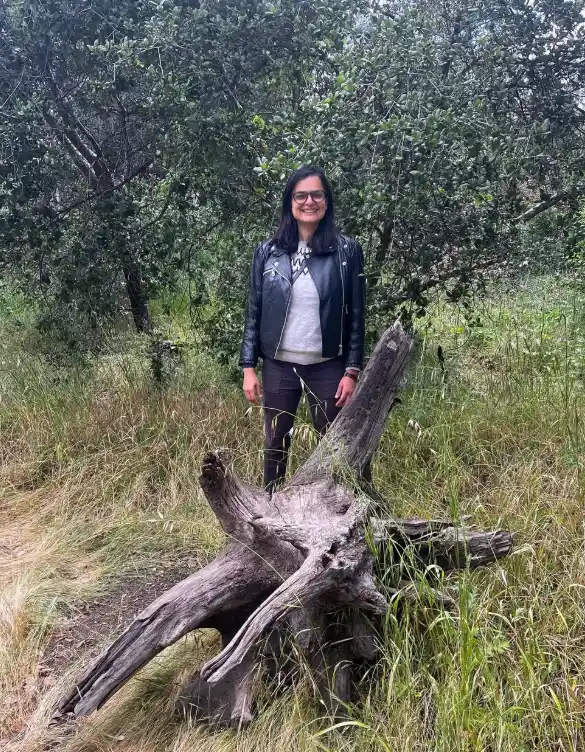
Priyanka began wrapping threads around the root. “I loved that idea: the simple act of tying threads elevates the tree’s status.” The threads also made her think of mycelium—the underground fungal networks through which trees communicate and support one another.
Trees are wise. Scientists say they are sentient, smart and adaptive. They talk to each other through the mycelium network, and send nutrients to struggling neighbours like we send food to our neighbours.
Priyanka Rana
Inspired by global traditions
Two artists in particular occupy an important place in her thinking. The first one is Ruth Asawa, the Japanese-American sculptor who grew up in a farming community, spoke about sculpting in terms Priyanka immediately understood.
Then, there is the British wood sculptor David Nash, whose relationship with the material has influenced the way Priyanka approaches her own medium. “He plays beautifully with cracks and the natural behaviour of wood,” she says. “Following his works, I have understood that wood is participatory—it cracks, shifts, moves. You can’t fully control it; you have to listen to it.”
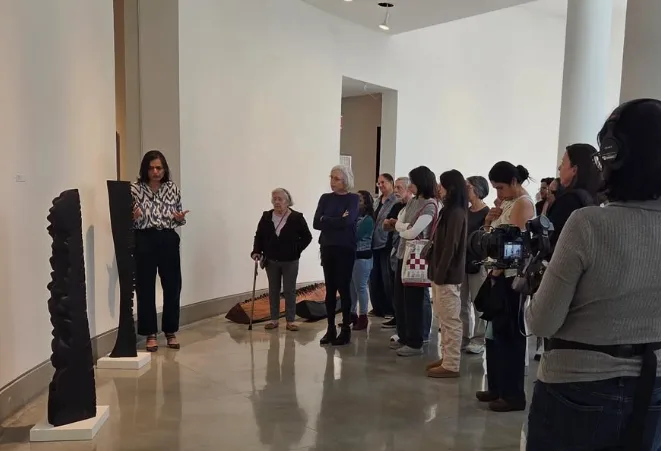
While Priyanka Rana travels frequently for work, with a recent residency in Mexico adding to her experiences and learnings, India has been a recurring destination for enlightenment. During one such visit to Kolkata, she travelled to Kumortuli to learn how Durga sculptures are made from China Paul, one of the few women artisans in the field. Later, in Jaipur, she learnt the intricate craft of Tarkashi from artisan Mohan Lalji.
The century-old technique involves wire inlay on wood, using tiny dots and lines to create intricate patterns and her latest project, ‘Darshan’, takes this traditional Indian craft into the realm of contemporary science. Inspired by images captured by the James Webb Space Telescope, she uses the precision of Tarkashi to recreate galaxies and nebulae on wood, bringing together an age-old craft and some of humanity’s newest glimpses of the universe.
To the moon and back
Her work has even travelled to beyond the earth! In 2025, a nonprofit initiative working with NASA selected artworks from 40 countries to be sent to the moon. One of Priyanka’s works was etched onto nanofiche and included in the lunar time capsule. The project also carried a seed bank—the first outside earth to land on the moon.
Now, she is working on proposals for two permanent public artworks and experimenting with translating her wooden forms into metal. For the latter, she is casting some works in bronze while trying to retain the texture, form and character of the original wood. “It’s fascinating to see what remains of the wood in that transition,” she says.
The move into bronze opens another possibility: taking forms that began as pieces of naturally felled wood and placing them in public spaces where they can endure for generations.
Beyond the studio
For all the seriousness of her practice, Priyanka’s life outside the studio remains firmly rooted in family. Walks, vacations, skiing, hiking and camping fills her time, along with the more ordinary pleasure of hanging out with their cat.
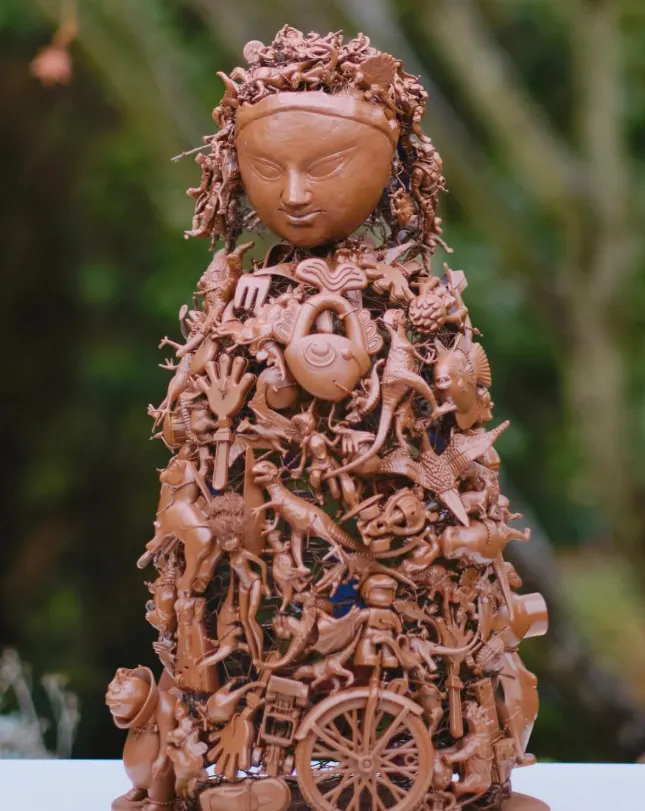
Although she has stepped back from serving on organisational boards, she continues to work on community art activations. One project involved making “memory pods” with people who shared personal memories and then transformed them into objects.
She later created a version of the project with children at a library in Faridabad, using craft packages from a museum. More than making something with their hands, the project gave the children a glimpse of what an artist’s working life could look like. “They were so excited,” she gushes. “It takes nothing, and everything.”
If there is one thing sculpting has taught Priyanka, it is patience. Some works come together quickly; others require her to wait until the material tells her what it wants to become.
With an aim to make at least 12 pieces a year, she often works on two or three sculptures at once, moving between carving, sanding and finishing while giving her body a break from repetitive movements. But sometimes, the waiting stretches into years.
She sums the experience to the process of raising children. “It’s like parenting. How much time does it take to parent a child? It takes nothing and it takes everything,” she concludes.
- Follow Priyanka Rana on Instagram
ALSO READ: Satish Gupta: The ‘accidental’ sculptor whose work adorns Ambani home, Isha Foundation
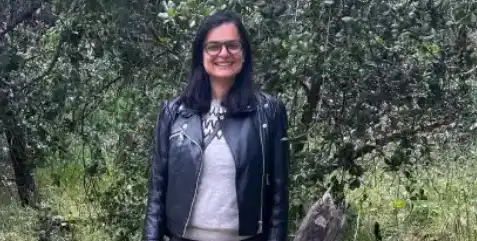
Priyanka Rana
| Born | May 12, 1980 |
| Based | San Francisco Bay Area, USA |
| Studied | MBA at Lal Bahadur Shastri Institute of Management, New Delhi, India |
| Languages | Hindi and English |
Signature work
Priyanka explores the relationship between nature, material and human experience, often allowing the natural form of fallen wood to guide the final sculpture. Her work brings together wood, fire, traditional craft and contemporary ideas.
Idea
Transforming naturally felled wood into contemporary sculptures while allowing the material’s natural form, cracks and textures to influence the creative process.
Network
Her practice connects her with artists, artisans and craftspeople across cultures, including those she has learnt from in India and artists such as Ruth Asawa and David Nash.
Impact
She brings greater visibility to wood as an expressive art medium while connecting traditional craft with contemporary ideas. Her work has also reached beyond Earth, with one artwork sent to the moon in 2025.
Inspired by Priyanka Rana 's journey?
Yours follows the same Hero's pattern — Separation, Initiation, Transformation, Return.
Share with



Written By: Bindu Gopal Rao
Naresh Kumar Kumawat: Sculpting India’s spirit for the world
Cover Story, Indian Sculptor
Written By: Vikram Sharma
Satish Gupta: The ‘accidental’ sculptor whose work adorns Ambani home, Isha Foundation
Art & Culture, Cover Story
Written By: Bindu Gopal Rao