
May 12 2026
Asha Sharma: Steering Microsoft’s Xbox as CEO

(May 12, 2026) Asha Sharma grew up with a single mother earning $7 an hour, founded a teen centre as a student, and built a career delivering groceries to strangers’ doors. Now she is three months into one of the most scrutinised jobs in the gaming industry, and is already rewriting the rules.
The first thing Asha Sharma did after stepping into the top job at Xbox was log on and start playing. She had barely played video games before. She created an account under the username AMRAHSAHSA, her surname spelled backwards, and got to work. “I’m coming into gaming as a platform builder,” she told in an interview. Her goal, she said, was to “earn the right to be trusted by players and developers” through consistency over time.
A combination of candour and confidence has defined Asha’s rise through some of the most competitive corners of corporate America from a startup that fixed the kitchen taps, to the company that built the world’s most-used messaging apps (Facebook), to a grocery delivery service that went public on the stock market. In February 2026, Microsoft added a new entry to that list, handing her Xbox, its video game division that has spent the last few years quietly losing ground.
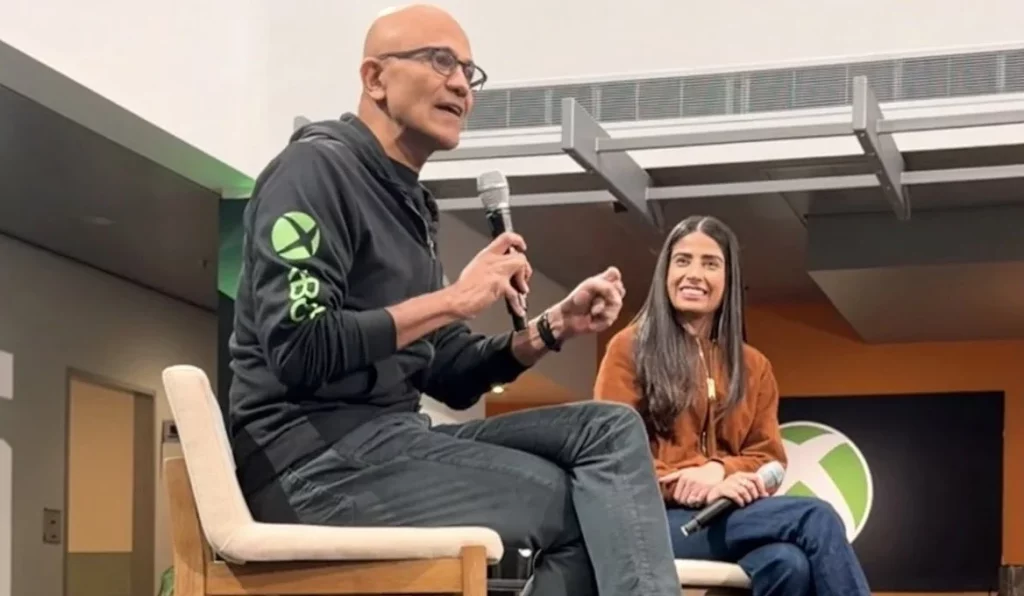
Xbox CEO Asha Sharma with Microsoft CEO Satya Nadella at an Xbox townhall
A device, a subscription, and 500 million players
Microsoft’s Xbox is a gaming platform that allows millions of people around the world to play interactive games on their television, laptop, phone, or tablet. Unlike watching a film or a show, games put the player in control of the story, the action, and the outcome.
Running Xbox means running a large, complicated business: the physical consoles, the games created in-house, the network that connects millions of players online, and a subscription service called Game Pass that works like Netflix for games. Subscribers pay a monthly fee, and access hundreds of titles.
Asha described what she inherited on her first day mentioning that over 25 years, Xbox had grown to reach more than 500 million monthly active players around the world, across nearly 40 studios responsible for some of the most recognised franchises in entertainment — Minecraft, Halo, Call of Duty, The Elder Scrolls, World of Warcraft, Fallout. “Our reach today spans devices, geographies, and generations,” she wrote on social media.
It is a business with an intensely loyal community that does not take kindly to decisions made by people who do not understand them. Phil Spencer, the man Asha replaced when he retired in February 2026 after 38 years at Microsoft, was one of those rare executives who genuinely did. Asha, by her own admission is not one of them, yet.
The department store worker’s daughter
Asha Sharma was born in Racine, Wisconsin, a city of about 75,000 people on the shore of Lake Michigan, more famous for manufacturing than for producing technology executives. Her parents divorced when she was young. Her mother worked the floor of a department store for $7 an hour. As a teenager, Asha found a job on a golf course.
She went on to study business at the Carlson School of Management at the University of Minnesota, graduating in 2011. While still a student, she founded and ran a free programme for at-risk teenagers called the A-list, in the suburb of Brooklyn Park. The programme closed when she left.
From home repairs to grocery deliveries
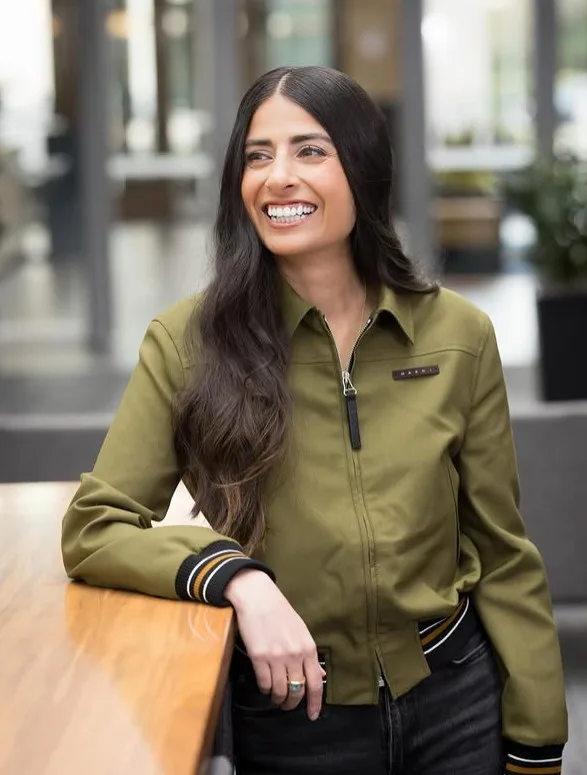
After university she joined Microsoft’s marketing department, far from the gaming world she now leads. Two years later, she moved to Porch, a startup whose business was connecting homeowners with tradespeople like plumbers, electricians, and painters. She eventually became its chief operating officer, the person responsible for keeping the whole operation running. She also sat on its board.
From Porch she moved to Facebook, now called Meta, where she led the product and engineering teams behind Messenger and Instagram Direct, the private messaging features used by hundreds of millions of people every day. It was here that Asha first operated at genuine scale: systems that had to work, without fail, for a significant fraction of the world’s population.
Then came Instacart. The app, which allows customers to order groceries online and have them delivered within hours, appointed Asha as its chief operating officer in 2021. She joined at a pivotal moment: in September 2023, Instacart went public on the stock market, meaning ordinary investors could buy shares in the company for the first time. At the point of listing, Asha’s stake was worth $19 million. She had spent just over two years there.
The surprise appointment
The business executive returned to Microsoft in February 2024, this time to run the CoreAI division — the engineering group responsible for products including GitHub Copilot, a tool that uses artificial intelligence to help software developers write code, and Visual Studio Code, one of the most widely used coding environments in the world. It was a significant role, sitting at the intersection of two of the biggest trends in technology: artificial intelligence and developer tools.
Two years later, in February 2026, Microsoft announced she would take over Xbox. The reaction from the gaming community was swift and pointed. Asha Sharma had no professional experience in the video game industry. Spencer’s deputy, Sarah Bond, had been widely expected to take the job. Instead, Microsoft chose someone who, at the time of her appointment, was not a gamer.
Microsoft’s reasoning was rooted in a problem the company had been reluctant to say out loud. Xbox has struggled. Gaming revenue totalled $5.3 billion in the most recent quarter, down from $5.7 billion a year earlier, declining in four of the past six quarters. Hardware revenue fell 33 per cent. The consoles are selling less well than Sony’s PlayStation. What the business needed, Microsoft decided, was not another games veteran but someone who has spent her career finding new users and growing platforms from the inside. That is precisely what Asha has done, repeatedly, across five companies.
What she believes about games
The business executive has not pretended to arrive as an expert. She logged on under a pseudonym to learn. But on the question of what games should be, she has been direct. She wrote on her first day that gaming “brings together art and engineering in ways few other media can” — a combination she described as the reason the work mattered to her personally. It was not the language of a business executive calculating market share. It was the language of someone who had thought about what the medium was actually for.
On artificial intelligence — the subject the industry has been watching her most closely on, given her background, she has taken a position that surprised some observers. Despite having spent two years running an AI engineering group, Asha has said she has no tolerance for its careless use in games. The statement released when she was appointed included a specific pledge: Xbox would not “flood our ecosystem with soulless AI slop.”
The first two months
“It’s been a wild and wonderful first 62 days as Xbox CEO,” Asha recently shared on social media. In these two months, she dropped the name “Microsoft Gaming” and returned the division to simply being called Xbox. She cut the price of Game Pass Ultimate, the subscription service that gives players access to hundreds of games, after acknowledging it had become too expensive. She brought in a new leadership team, drawing largely from the AI division she had previously run, while two executives who had each spent 24 years at Microsoft departed. And she cancelled an AI chatbot feature called Copilot that had been in development for over a year, describing it as something that no longer fit where the company was going.
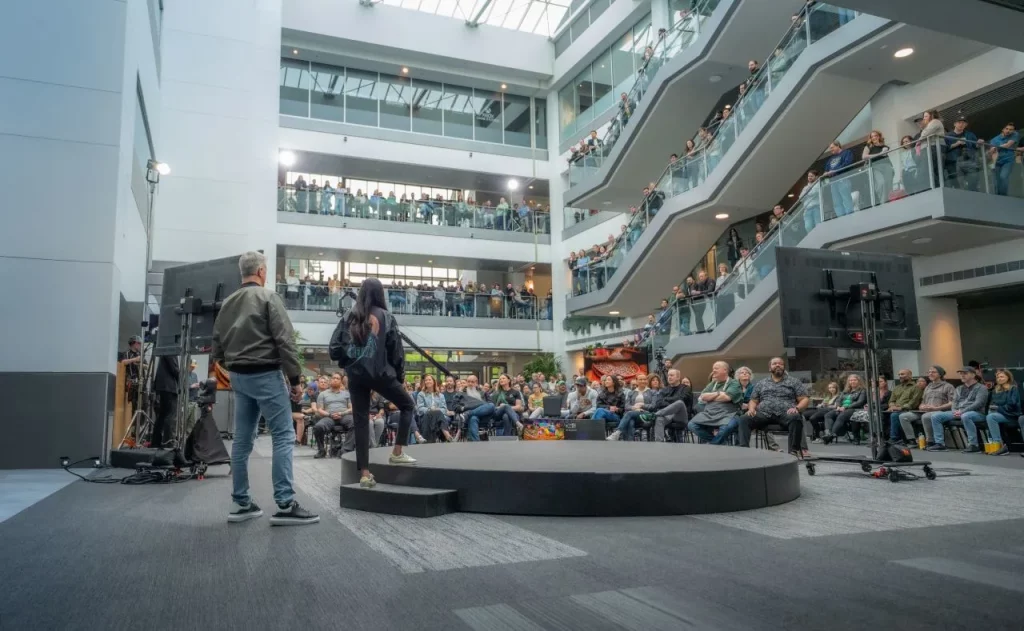
Asha Sharma addressing the Xbox team
For someone who had to teach herself to play video games after taking the top job, the first three months have been anything but quiet. Whether the moves she has made will translate into growth is a question only time will answer. The hard work of winning back players, reversing declining sales, and earning the trust of a community that did not ask for her is still ahead.
- Follow Asha Sharma on LinkedIn
ALSO READ: Microsoft CEO Satya Nadella’s success comes from empathy

Share with





Written By: Bindu Gopal Rao