
April 17 2026
Vas Narasimhan, CEO of pharmaceutical giant Novartis, joins Anthropic board amid rising focus on AI safety
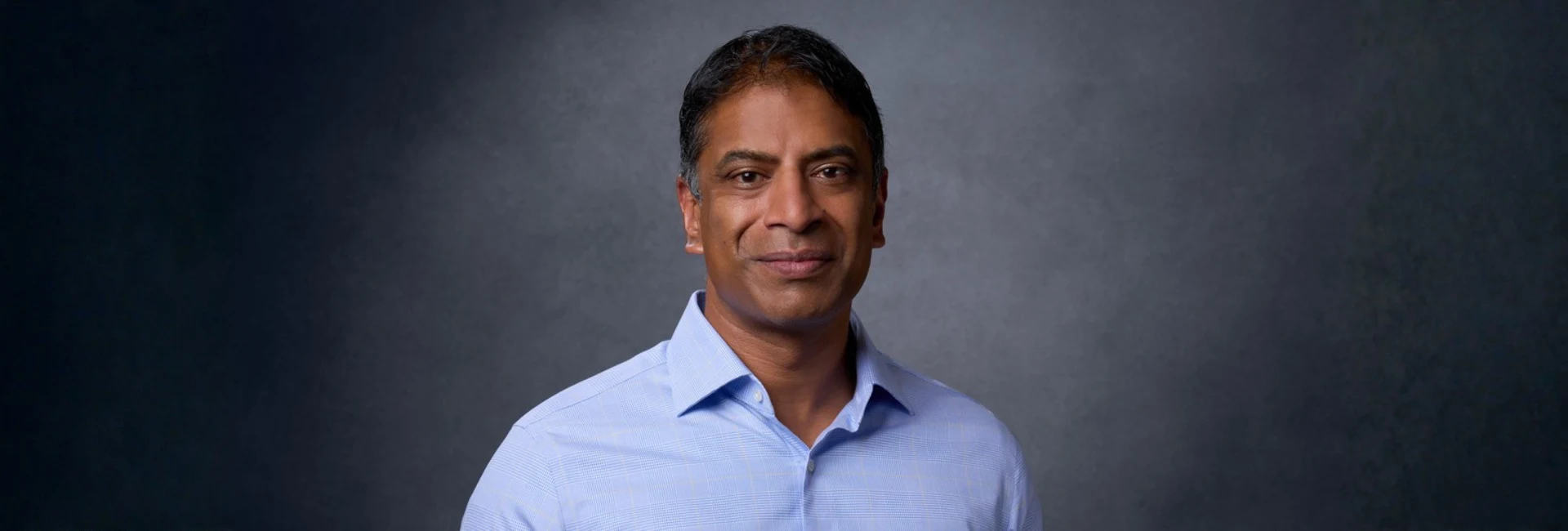
(April 17, 2026) A physician-scientist who never thought he would run a pharmaceutical giant has just joined the board of Anthropic, the world’s leading AI safety and research company working to build reliable and steerable AI systems. His journey from Tamil village roots to the corridors of two of the world’s most consequential institutions is anything but ordinary.
On April 14, 2026, Anthropic, the San Francisco–based artificial intelligence company behind Claude, its flagship AI system, announced the appointment of Vasant “Vas” Narasimhan to its Board of Directors. The appointment was made by the Long-Term Benefit Trust, an independent body that exists to keep the AI company’s mission honest.
Named to the 2025 TIME100 Most Influential People in Health, Narasimhan is a physician and global health veteran, and the CEO of Novartis, a global pharmaceutical company headquartered in Switzerland. He joins a board that includes Anthropic’s co-founders, Dario and Daniela Amodei, venture capitalist Yasmin Razavi, tech entrepreneur Jay Kreps, Netflix co-founder Reed Hastings, and former White House official Chris Liddell. Narasimhan’s appointment signals that trust, safety, and real-world consequences are becoming central to how frontier AI is built and governed.
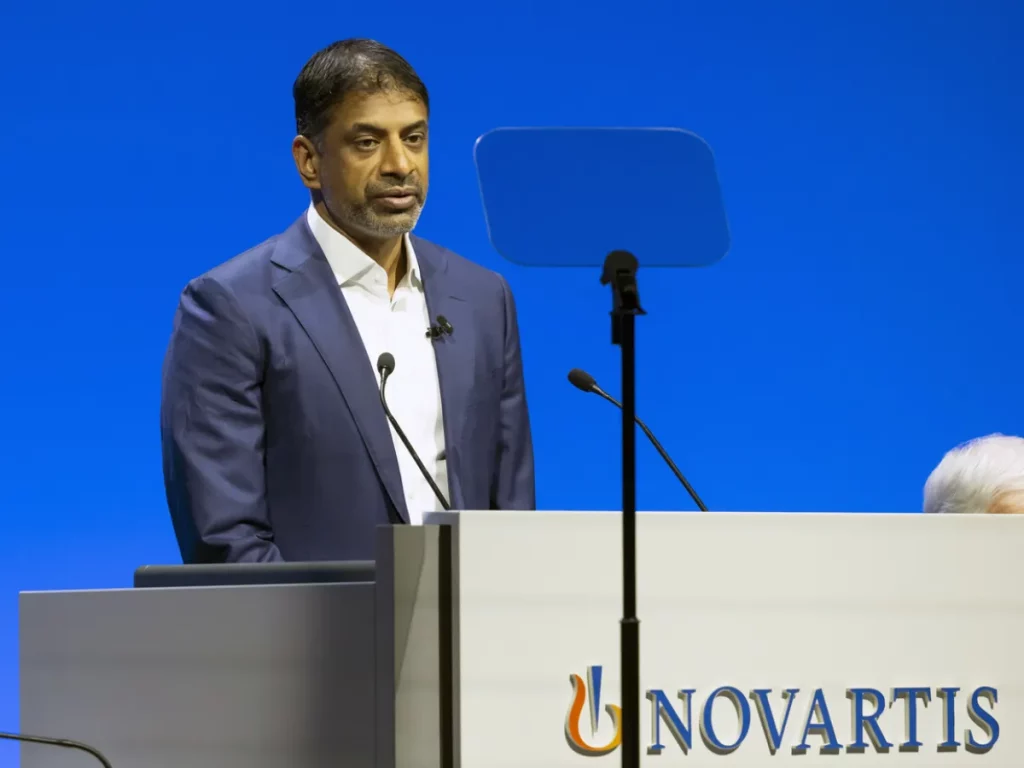
“Vas brings something rare to our board,” said Daniela Amodei, “Getting powerful new technology to people safely and at scale is what we think about every day at Anthropic. Vas has been doing exactly that for years.” He has overseen the development and approval of more than 35 novel medicines and spent a lifetime learning to lead, not by planning for it, but by throwing himself into situations where he had no choice but to figure it out.
From Tamil Nadu to Pittsburgh, one generation at a time
Narasimhan was born in Pittsburgh in 1976, the son of two first-generation immigrants whose own parents had farmed small villages in southern India. His father climbed from nowhere to the executive ranks at Hoeganaes Corporation, repeatedly leaving secure positions to bet on himself. His mother was a nuclear engineer at Westinghouse who raised three boys while making ends meet in a steel town that had not yet seen many families like theirs.
The family helped found the Shri Venkateshwara temple in Penn Hills, and Narasimhan grew up speaking Tamil before English, with the Bhagavad Gita as household reading. Yet what truly shaped him was the trips back to India. His mother took the family to India repeatedly, in deliberate counter to the comfort of Pittsburgh. “She would always take us back and say: you’ve had these extraordinary opportunities. What could you do for the world?” he shared in a recent podcast. Hundreds of millions of people did not have what his family had. He absorbed that fact young, and it never quite left him.
Medicine, malaria, and the long way round to McKinsey
In his twenties, Narasimhan worked with the Red Cross in The Gambia. He later worked with street children and child labourers in Kolkata, alongside a woman he had been dating for three months who would later become his wife. He went on to work on one of the first HIV/AIDS treatment programmes in Botswana, and on malaria in Tanzania. He earned his MD degree at Harvard Medical School and a master’s in public policy at the Harvard Kennedy School, mentored by Paul Farmer and Jim Kim.
“Through those experiences I also saw that management and leadership was not very evolved in public health, and so my first step into the business world was very much motivated by that desire to learn how to lead, how to make change happen at scale.” he said.
So he went to McKinsey to learn, as he put it, talking about one of his first jobs. Less than two years later, a Novartis executive called and told him he could have a real impact. He trusted that and joined the pharmaceutical company.
The small unit that changed everything
In 2006, one year into Novartis, Narasimhan made what he now considers one of his best decisions even though it looked strange at the time. He moved to the newly acquired vaccines division. It was a small unit, losing money, and made two percent of company sales. What it gave him was disproportionate responsibility. He was suddenly running clinical programmes, development, and launches. His learning curve “went up through the roof.” By 32 he was testifying before Congress on the H1N1 pandemic.
Then production fell behind on swine flu contracts he had personally won. His CEO told him he had put the company’s reputation at risk. “I had high levels of cortisol. I couldn’t sleep,” he said. “These are the fight-and-flight responses. The triggers have simply changed, where our ancestors had predators, modern leaders have inboxes. Now it’s the email you get saying, ‘What the hell did you just do?'”
The crisis taught him something he has carried since that a leader’s job is to absorb pressure so the organisation beneath can still function. “If you let it pass through you into the organisation, the organisation simply cannot perform. You have to be an absorptive buffer.”
The sheet of paper that became a strategy
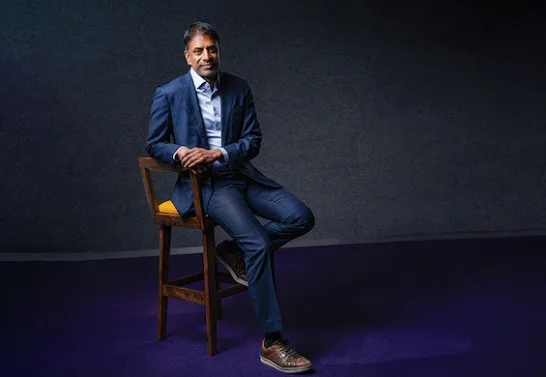
In 2017, Narasimhan was named CEO of Novartis. It was a role he had not sought and had not seen coming. When HR told him he was a candidate, he thought they were joking. Before the appointment was announced, he wrote his vision on a single sheet of paper. “Cultural transformation, a pure-play medicines company, a bet on data and digital.” He did not yet know that would become AI. He wrote it anyway.
Three months into his tenure, a series of crises began to unfold. There was a $1.2 million contract with Michael Cohen that had been signed before he took over, alongside investigations in Greece and Asia, and an FDA probe into manipulated gene therapy data. His first instinct was to point out that none of it had happened on his watch. He later called that wrong. “I’m the steward of the company. I need to own it.” 18 months of crisis management built the thick skin the job required.
The hardest decision came during the pandemic, eliminating more than 10,000 jobs. In Basel, a small city in Switzerland where everyone knows everyone, some were the parents of his sons’ school friends. He spent the time explaining the why, not just the strategy, but the human logic.
When the drugs work
The part of the job that spreadsheets do not capture is what happens when a phase three trial succeeds. He cries with joy every time. There was Kisqali for breast cancer. Pluvicto for prostate cancer. And last November, the first new malaria drug in twenty-five years, closing a loop that began in a hospital in Tanzania, where, as a young man, he watched children die of a disease that should have been beatable decades earlier.
“Flashing back to sitting in a hospital in Tanzania, watching children die of malaria, knowing my company has provided Coartem to 1.2 billion people, and then making that next discovery. Of course you cry. You put your whole heart and soul into this work. That’s the only way you can do it,” he remarked.
At the intersection of AI and the hardest problems in medicine
Narasimhan’s appointment to Anthropic’s board is not, in his framing, a departure. It is a continuation. “In healthcare, AI is accelerating solutions to some of the hardest scientific challenges, from deepening our understanding of disease biology to designing better medicines,” he said after the announcement.
What he brings is the experience of moving something genuinely powerful like a novel medicine through a system designed to protect people from it with regulatory scrutiny, clinical failure rates, and the years between discovery and patient. He understands that safety and speed are not opposites, rather they are the same discipline, applied differently.
A partnership built on shared ambition and purpose
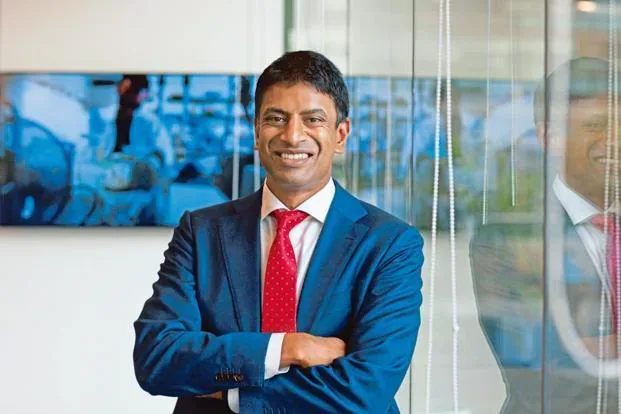
The boy from Pittsburgh whose grandparents farmed in Tamil Nadu, who went to West Africa with the Red Cross, who sat with child labourers in Kolkata, who watched malaria take away children in Tanzania is now on the board of the company arguably doing great consequential work in technology. He did not plan it. He followed the mission, stayed in the ring, and trusted the people who believed in him, and one thing led to another.
His wife, Srishti Gupta Narasimhan with four Harvard degrees to his three is the CEO of Idorsia pharma. They met at Harvard, went to Kolkata together three months into dating, and now live in Basel with their two sons. He believes they may be the only married couple in the world who are both CEOs of publicly listed companies, and that he would be nowhere without her.
- Follow Vas Narasimhan on LinkedIn
Share with


Written By: Amrita Priya
Aravind Srinivas and Perplexity AI: Helping the world sleep wiser than it woke up

Written By: Bindu Gopal Rao
From Guwahati to Silicon Valley: Hrishikesh Dewan’s long road to making AI affordable and accessible
Written By: Amrita Priya