

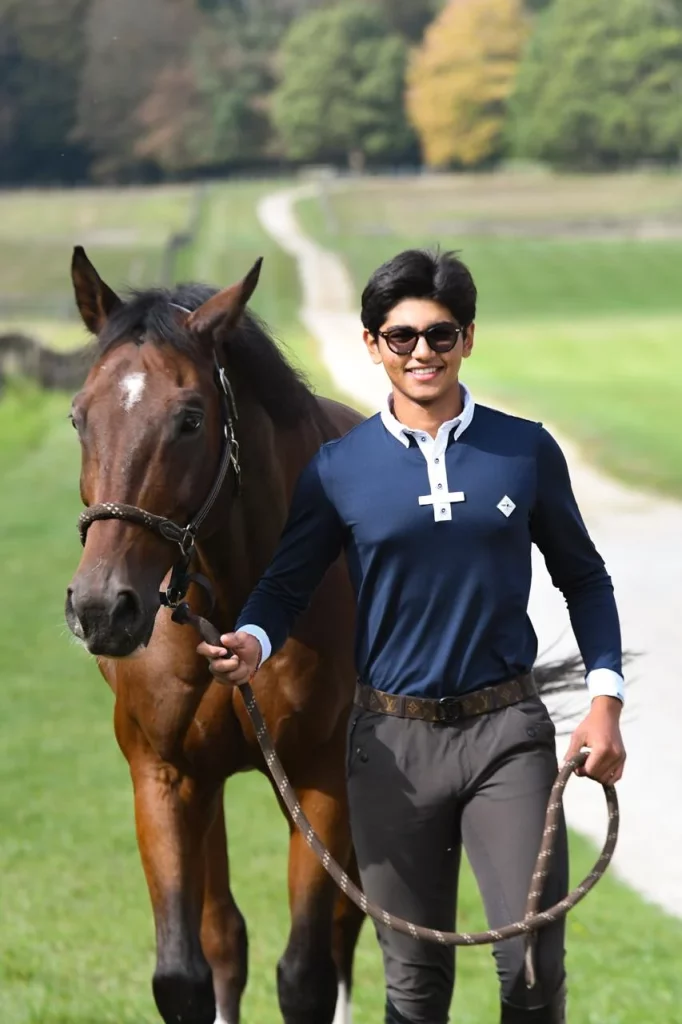
(Sep 27, 2026) When Shashank Singh Kataria first started horse riding, it was never intended to become a competitive career. Born and raised in Gurugram, Haryana, he took up riding on a doctor’s recommendation for physical fitness and spent almost a year training in polo. Today, the 21-year-old is based in Melbourne, where he is pursuing a Bachelor of Design with a major in Urban Planning at the University of Melbourne, while building an international career in Eventing.
Initially, what attracted him was the speed, the freedom and the feeling of sitting on an animal so powerful while learning to move in sync with it. Eventually, that connection led him to pursue horse riding professionally.
In 2025, Shashank was part of the Indian equestrian team that competed at the FEI Asian Championships in Pattaya, Thailand. His sixth-place finish on championship debut, along with India’s team silver, marked an important step in his progression as a rider competing at senior international level.
“Pattaya was not my first international event, but it was my first major senior championship representing India, and emotionally that made it completely different from anything I had experienced before,” says Shashank, in a chat with The Global Indian.
From international competitions to a senior championship
Prior to the 2025 FEI Asian Championships, Shashank had already spent several years building international experience. He had competed in Italy, France, the Netherlands and Poland.
“Those competitions had been extremely important in developing me as a rider, but a championship is different,” he says.
He finished sixth individually and was part of the Indian team that won silver alongside teammates Ashish Limaye and Shashank Kanumuri. “It boosted my confidence and proved my capabilities at a major senior championship, competing alongside experienced international riders. But the Team Silver gave me something more powerful — belief.”
Building a partnership with Bullseye
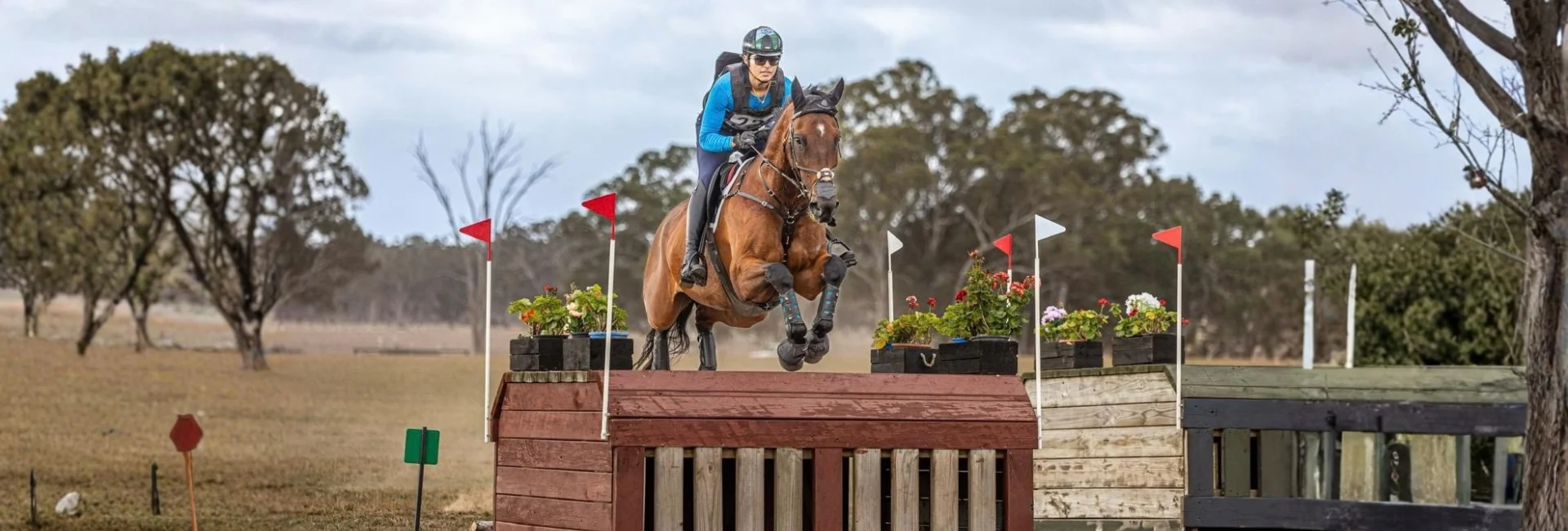
Shashank’s horse for the championship was Bullseye, an Australian Thoroughbred. “We had to build the partnership from the beginning. I understand his temperament, how he responds in Dressage, how brave and adjustable he is and how he recovers between phases. He also needed to understand me. That process took time.”
Getting Bullseye from Australia to Thailand required months of preparation. There were quarantine requirements, veterinary protocols, health certificates, flight and ground transport, among other things.
“And throughout all of that, the horse still had to remain physically and mentally ready to compete at championship level,” he mentions.
Riding for India
By the time he arrived in Pattaya, Shashank felt an enormous sense of responsibility.
“I was riding alongside established international combinations, including riders with far more championship experience than I had,” he says, pointing out that in a championship, every decision carries the additional responsibility of the country one represents.
The Indian team also faced an additional challenge. “We competed as a three-rider team rather than the more usual four. That meant there was no discard score, every score counted. Every combination had to complete. There was no cushion if one rider had a difficult day.”
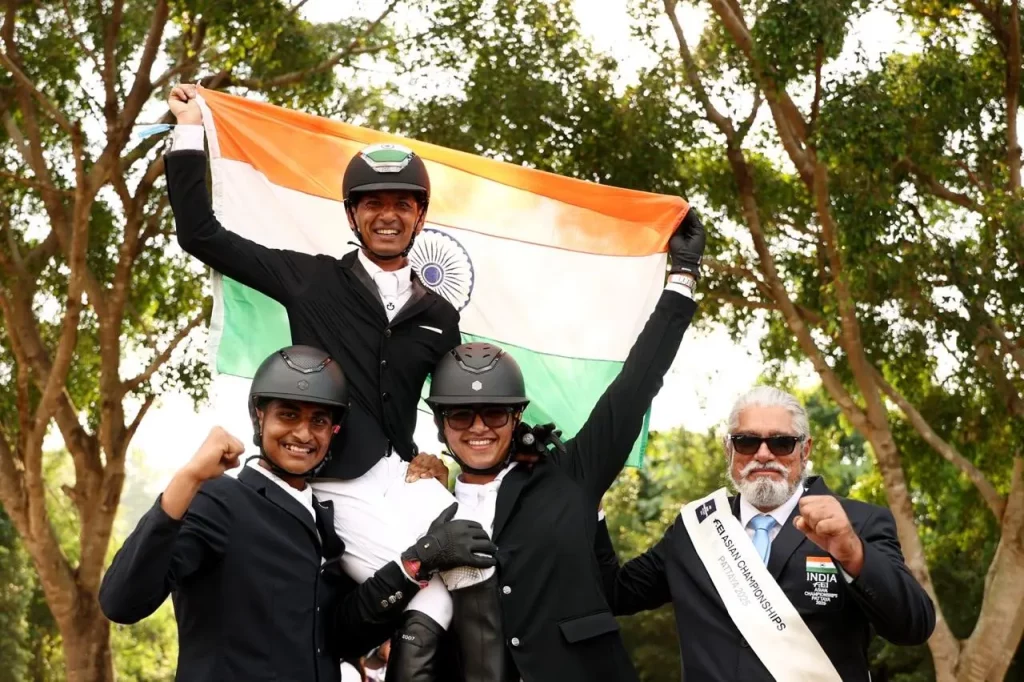
Standing there as part of the Indian team, he says, was a completely different emotion. “There is something very powerful about seeing the Indian flag at an international championship and knowing that the result beneath it has come from years of preparation by so many people.”
A sporting journey that began in Gurugram
There were no horses at home, no equestrian tradition in the family and no sporting legacy that Shashank was expected to follow.
“Nobody was planning an international riding career for me,” smiles Shashank, who enjoyed speaking and debating during his school years.
Born in Gurugram in 2004, he studied at GD Goenka World School in Sohna, Gurugram. He received formal training in cricket, played basketball, enjoyed swimming and was part of the school band as a drummer. “Music gave me a completely different kind of energy from sport,” he mentions.
Model United Nations became another major interest. “I participated in several conferences, won a number of MUN awards and eventually had the privilege of serving as Head Boy.” From this varied sporting and extracurricular background, it was horse riding that eventually became the pursuit he chose to take seriously.
Learning the sport one horse at a time
His first equestrian horse was Saptjit, an off-the-track Thoroughbred. “He was a racehorse learning a completely new job, and I was a young rider trying to understand a completely new sport. We learned together, made mistakes together. There were plenty of falls,” says Shashank, who used to train at Army Polo and Riding Centre in New Delhi.
As he progressed through equestrian sport, Shashank began competing seriously in Dressage and Show Jumping. Dressage fascinated him because of its precision.
“In Show Jumping, there is a decision that has to happen almost instantly. You have to see a distance, feel the horse underneath you and commit,” says Shashank, who eventually discovered Eventing.
Finding his arena in Europe
From 2022 onwards, Shashank began spending time in Europe, training and competing internationally.
“Europe was an education in itself. Suddenly, I was surrounded by a depth of equestrian sport that I had never experienced before,” says the horse rider, who began understanding the difference between being successful nationally and becoming consistently competitive internationally.
His competitions in Italy, France, the Netherlands and Poland became part of that learning curve, giving him experience against riders from a wider international field before his senior championship debut in Pattaya.
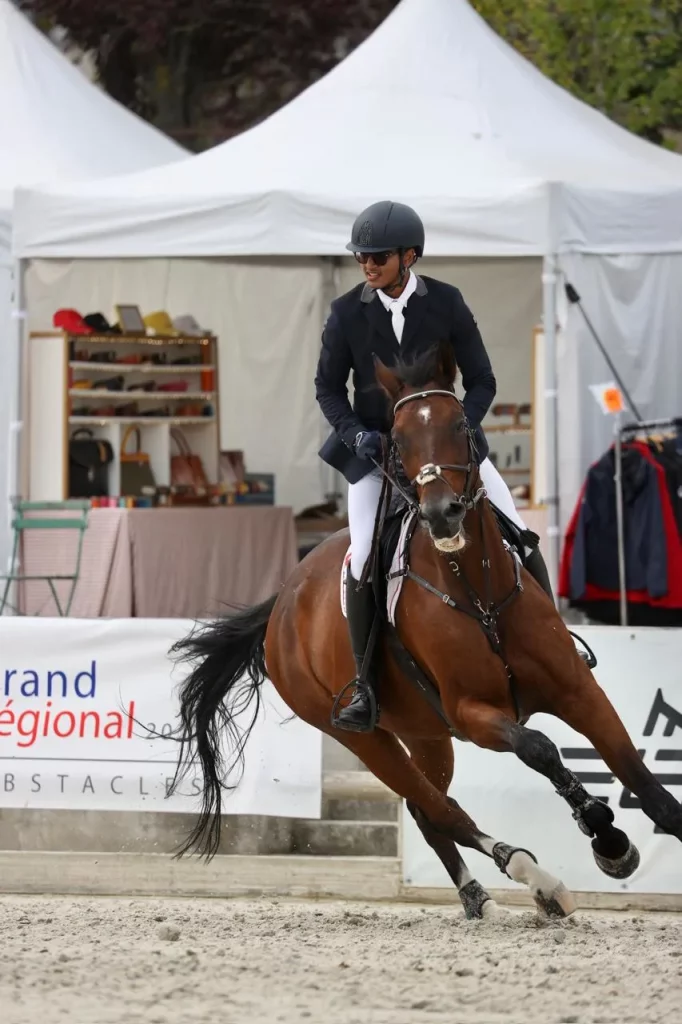
From Europe to Melbourne
In 2024, Shashank moved to Melbourne and joined the University of Melbourne, where he is pursuing a Bachelor of Design with a major in Urban Planning. “My life in Melbourne revolves primarily around two demanding commitments, university and international Eventing.”
The move has allowed him to continue his academic journey while remaining connected to the international Eventing circuit.
Why Thoroughbreds appeal to him
Shashank has a natural affection for Thoroughbreds.
“I love their heart, stamina and courage. For Cross Country, a good Thoroughbred can give you an extraordinary feeling when you open the gallop,” says Shashank, who has also ridden Warmbloods and horses with completely different qualities. Over time, he realised that the individual horse matters more than the label.
Working in the stable has helped him understand horses much better. “Cleaning stables, grooming, checking legs, helping with feeding routines, organising vet appointments and being involved in the day-to-day management created a completely different relationship from simply arriving, riding and leaving,” he mentions.
Training beyond the saddle
The physical demands of Eventing extend to the rider as well. “My own training also has to fit around the riding programme,” says Shashank, who spends time on strength, mobility and cardiovascular fitness.
“There are days when I move directly from the stable into classes or academic work, and other days when the competition programme dictates the entire schedule. It can be demanding, but I have become used to planning my weeks very carefully.”
Preparing for Los Angeles 2028
Shashank is now looking to build the qualifications required for the Olympics and put himself in the strongest possible position for Los Angeles 2028. “But for me, the dream is not simply to reach the Olympics. I want to arrive there as a rider who is genuinely ready to compete.”
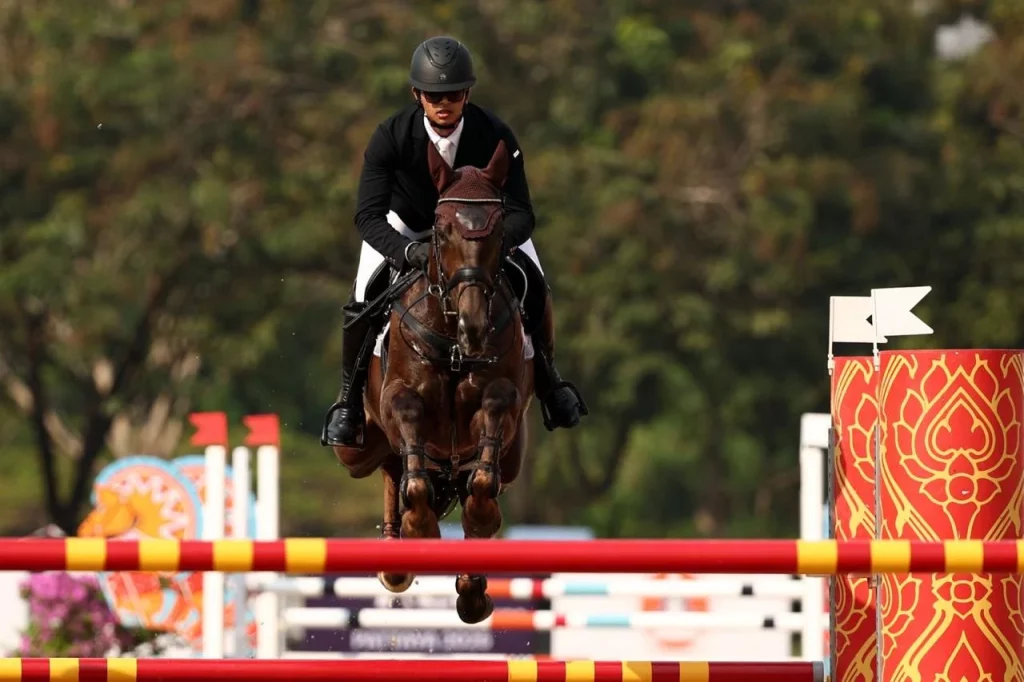
With only around 20 months remaining, his focus is on making every competition, every qualification and every decision count towards arriving at Los Angeles 2028 fully prepared. “I would like to build a long international career in Eventing, continue progressing to the highest levels of the sport and represent India consistently at major championships.”
A fascination with cities and design
Outside horses, Shashank is naturally drawn to things that involve design, movement, performance and how people create something exceptional.
“Architecture and cities interest me a great deal, which is one of the reasons I chose Urban Planning at university,” says Shashank, who enjoys observing how places are designed, how cities evolve and how good planning changes the way people experience a space. “Even when I travel for competitions, I often find myself noticing buildings, neighbourhoods and how different cities function,” he signs off.
- Follow Sashank Singh Kataria on Instagram
ALSO READ: Rising Equestrian Star: Aizah Mir’s global leap from India to Qatar