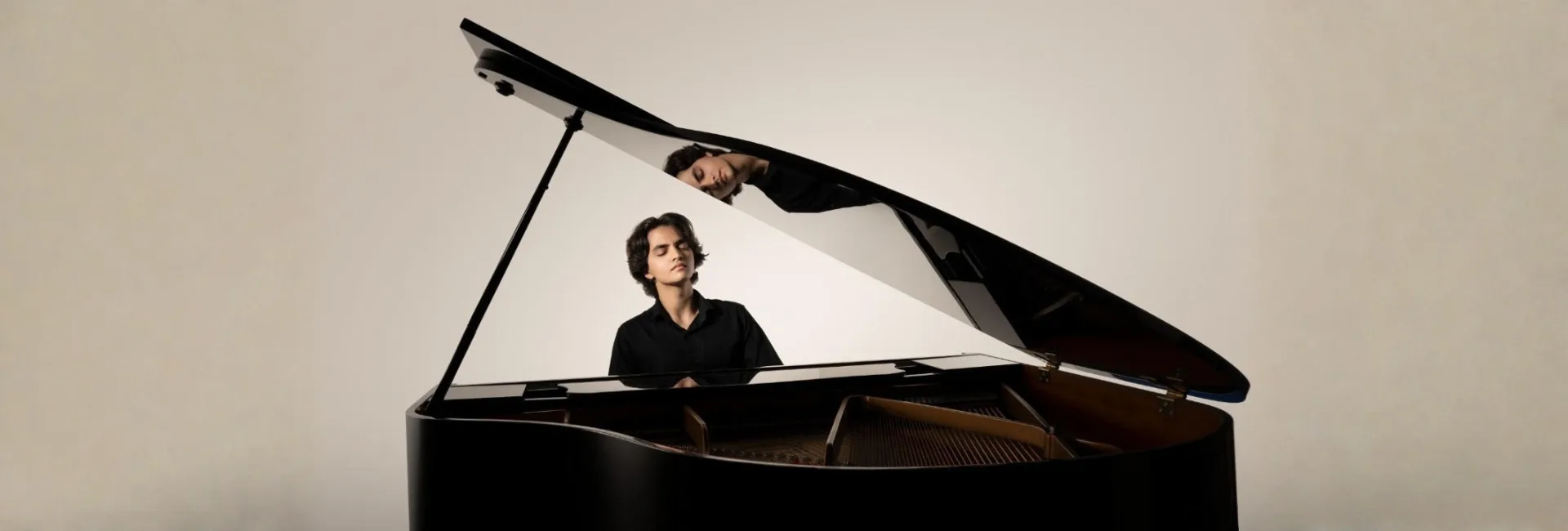


(Jul 31, 2026) In a home where music was not just practised but lived, Ishaan Leonard Rao did not discover music, he inherited it. The son of sitar maestro Pt. Shubhendra Rao and cello maestro Vidushi Saskia Rao-de Haas, Ishaan has spent much of his life on the global stage, travelling and performing across continents from a young age.
From an early debut in New York in 2019 to performances at venues like Teatro Municipal in Rio de Janeiro and a solo recital in Madrid, his journey reflects a musician already at ease with international audiences.
A graduate of Berklee College of Music, he is equally at home in classical and cross-cultural collaborations, and is set to perform at the prestigious Parampara Series, a prominent annual national festival of dance and music in India founded by Padma Bhushan awardees Raja Radha Reddy and Kaushalya Reddy. It features legendary classical maestros and young icons across Hindustani and Carnatic music, as well as classical dance forms
“I grew up surrounded by music. My parents would compose songs for everyday moments,” he tells The Global Indian, describing a childhood where music was as instinctive as language.
Reimagining the piano in a raga world
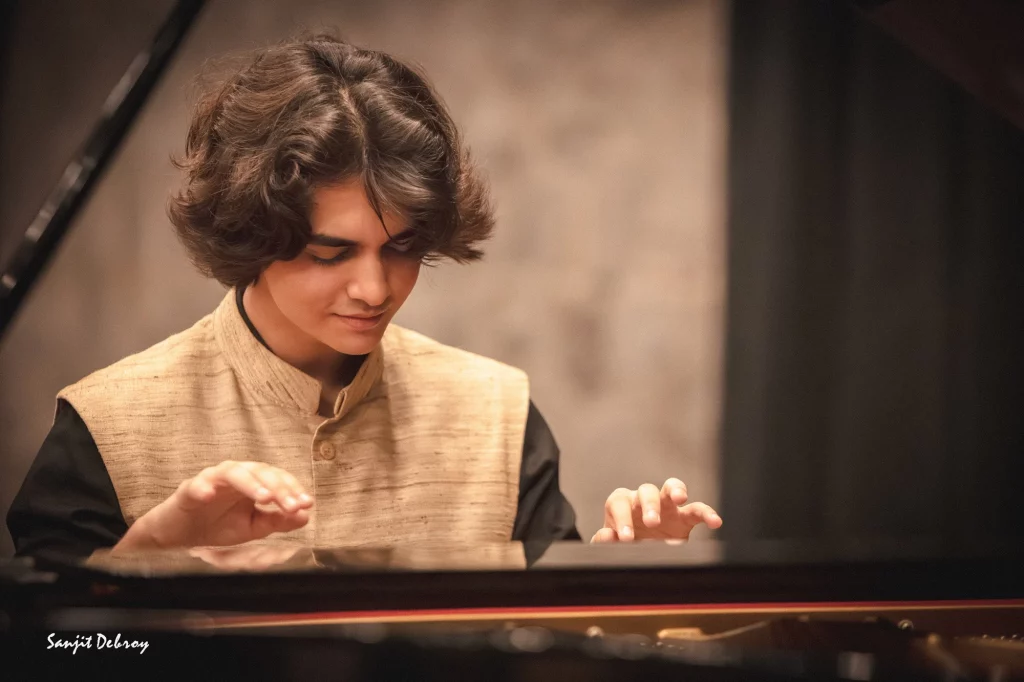
At first glance, the piano might seem an unlikely instrument for Indian classical music. But Ishaan sees it differently. “I think the piano is extremely conducive to raga-based music,” he explains. “You just need to understand what it can and cannot do.”
Where instruments like the sitar allow for meend and sustained tonal shifts, the piano offers something else: polyphony, structure, and harmonic possibility. Ishaan uses these qualities to reinterpret raga, not replicate it. “You can be your own tanpura, or create counterlines at the same time,” he says. “It opens up a different kind of musical conversation.”
His influences reflect this openness. From Johann Sebastian Bach and Frédéric Chopin to Hindustani stalwarts like Pandit Shivkumar Sharma, and even contemporary jazz and Middle Eastern traditions, Ishaan’s musical world is expansive. “I listen to music throughout the day,” he says with a smile. “It’s like taking a world tour every day.”
Growing up between traditions
For the 22-year-old musician, the idea of choosing between Indian and Western classical music never really existed. Both traditions developed alongside each other, quietly informing his musical vocabulary.
“My musical vocabulary at home was primarily Indian,” he says. “But even while learning piano, I continued learning sitar from my father. Over time, both traditions informed and enhanced each other.”
This duality is central to his work today. It allows him to move fluidly between raga-based improvisation and structured Western compositions, without diluting either. His understanding is rooted in discipline, but also in curiosity. As he puts it, echoing a lesson passed down through lineage, “to break the rules, you need to learn the rules.”
Yet, growing up in such a rich musical environment came with its own challenges. “It is a privilege,” he admits, “but it can also give you answers to questions you need to discover for yourself.” Finding his own voice within that legacy became an important part of his journey.
View this post on Instagram
A global stage, a shifting language
Performing across continents has not just expanded Ishaan’s audience, it has reshaped how he thinks about music itself. “Different stages teach you different things,” he reflects. “From
India, I learnt reverence for performance. From Western recitals, I learnt structure. And from Berklee, I learnt how to think about storytelling in music.”
His time at Berklee College of Music exposed him to an extraordinary range of musical settings, allowing him to collaborate across genres and cultures. This adaptability now defines his performances. “Music is a communicative art form,” he says. “Growing up multilingual and multicultural helps you shape that communication depending on the audience.”
Among his most memorable performances are his New York debut in 2019, concerts at Teatro Municipal in Rio de Janeiro, and a solo recital in Madrid. Each stage, he says, has contributed to his evolving understanding of music as both personal and universal.
Between tradition and experimentation
In a world where genres are increasingly fluid, Ishaan is careful about where he stands. For him, experimentation must come from a place of respect. “It’s about recognising the sanctity of your traditions,” he says. “And being aware when you are breaking the rules.”
This awareness becomes especially important in a time when classical music is being reshaped for wider audiences. While he acknowledges the need for accessibility, he is equally cautious about dilution. “There is a strong return to roots among young audiences,” he observes. “But sometimes that comes with a lack of discernment. Authenticity can get lost.” For Ishaan, the balance lies in intention. To adapt, but not simplify. To evolve, but not erase.
Building a sound that is his own
Today, Ishaan is working on multiple projects that reflect his evolving musical identity. These include a jazz piano trio album, collaborative works with fellow musicians, and projects with mentors like oud maestro Simon Shaheen. “I see myself continuing to create music informed by all these influences,” he says. “As a performer, composer, and collaborator.”
What drives him is not just output, but curiosity. A willingness to remain a student, even as he performs on global stages. “As musicians, we are eternal students,” he says. “That sense of surrender to music is something I want to hold on to.”
For a young musician already navigating such complex intersections of culture and sound, the future seems wide open. But Ishaan approaches it with quiet clarity. “I have been placed in a unique musical position,” he says thoughtfully. “It gives me the opportunity to create something that brings all of these worlds together.”
In that space between inheritance and innovation Ishaan Leonard Rao is not just performing music. He is shaping what it could become next.
- Follow Ishaan Leonard Rao on Instagram
ALSO READ: How Lydian Nadhaswaram taught himself to play piano and won CBS’ ‘The World’s Best’