

(Sep 20, 2026)While growing up in India, medicine and engineering were among the traditional career choices for Avantika Velho. With her mother a doctor at Goa Medical College and her father taking the entrepreneurial route, Avantika too once imagined a career in one of these fields. But her parents’ love for art and collecting meant that she also grew up surrounded by art, culture and creativity. It was this intersection of science and creativity that would eventually shape her own path.
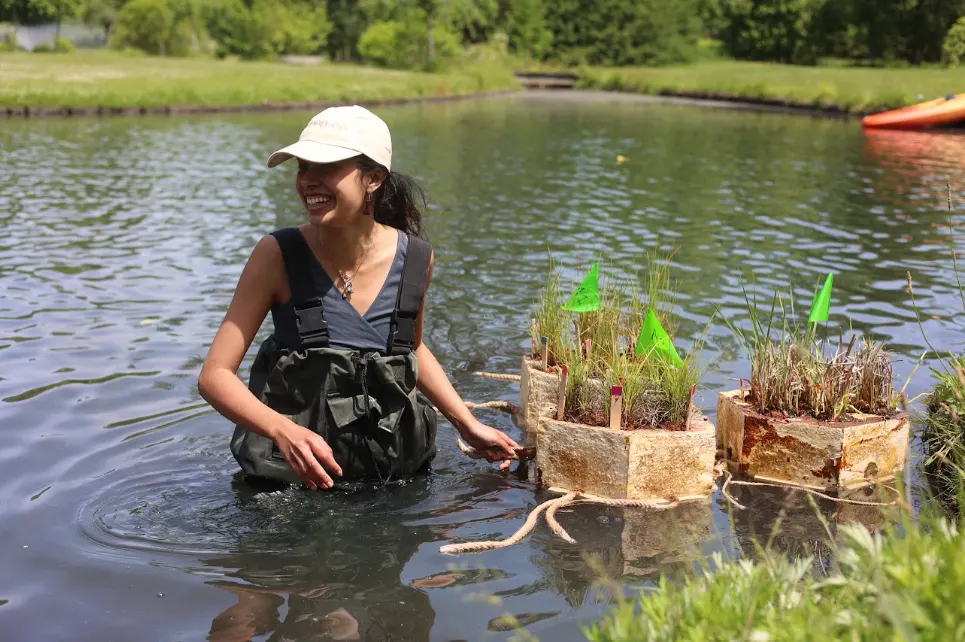
Today, while pursuing a Master’s in Design Engineering at Harvard University, Avantika is also building BIOPOD Co., a venture she co-founded with her faculty adviser Katia Zolotovsky and peer Manini Banerjee. BIOPOD develops modular wetland systems that bring together plants, fungi and microorganisms to help naturally clean polluted water, improve water quality and support biodiversity. Its community-led approach also enables schools, researchers and local communities to participate in restoring degraded wetlands and waterways.
The model was first tested in Providence, Rhode Island, in the US, and later won the Terra Carta Design Lab Global Competition, earning £100,000 in support. Terra Carta Design Lab was launched in 2021 by King Charles III, when he was then The Prince of Wales, Avantika’s work has also earned recognitions including the Rachel Carson Environmental Award, the Maharam STEAM Fellowship and the Hyundai Research and Innovation Fellowship, alongside support from the National Endowment for the Arts and the National Science Foundation.
Avantika Velho
Now, she is looking to bring these learnings to her roots in Goa, where BIOPOD is preparing for a pilot project that could put the system into an Indian waterway for the first time.
Building a community-led approach to ecosystem restoration
BIOPOD Co. aims to make ecosystem restoration more accessible by enabling communities, schools, researchers and local agencies to take part in restoring degraded wetlands and waterways. Its modular biopods bring together plants, fungi and microorganisms that work together to naturally break down pollutants and improve water quality, while accompanying learning kits help people understand and participate in the process.
“The idea is to make people aware of practical ways to help revive the ecosystems around them,” Avantika shares with The Global Indian. “Restoration often happens at a governmental level with a top-down approach. We want to explore a bottom-up approach, where people can come together and help the ecosystem flourish.”
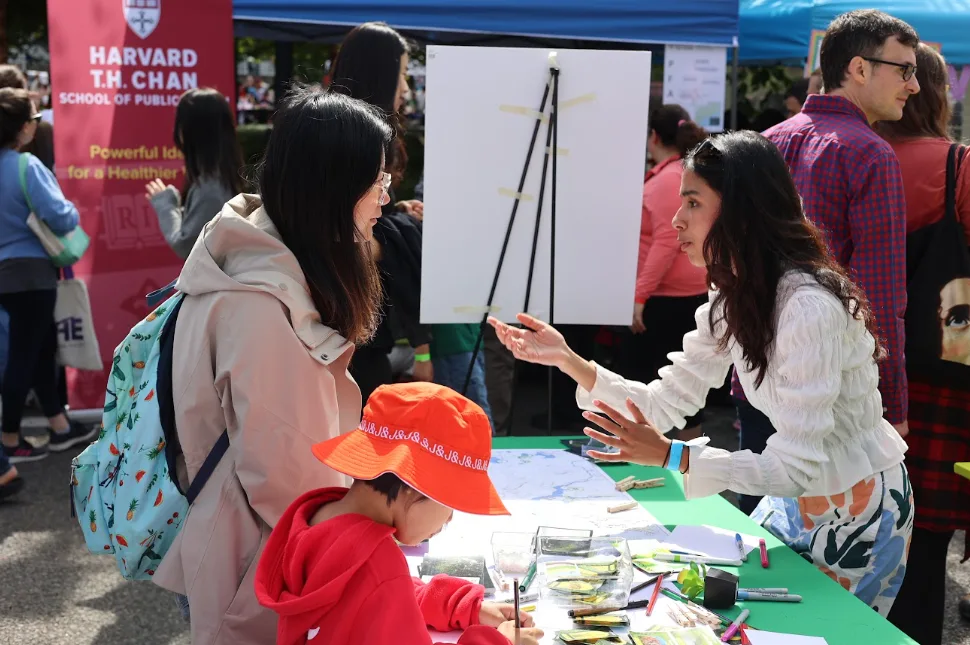
Avantika during a community engagement event
The decision that changed her path
Avantika’s initial school years at a playschool set amidst the Goan wilderness gave her an early connection to the natural world. “I loved art but at the same time, I was very STEM-oriented. So, I grew up with these two seemingly separate sides of me — the creative side and the analytical, scientific side,” she mentions.
For a while, medicine seemed like the obvious vocational trajectory. Avantika went through IIT and NEET coaching and even considered becoming a cardiothoracic surgeon, influenced partly by her mother’s profession.
The turning point came in 2015, when she travelled to the US with her family and visited her aunt, an interiors architect in Boston, who suggested a visit to the Rhode Island School of Design (RISD). There, Avantika had her first brush with industrial design.
“What struck me about it was that it was essentially about problem-solving,” she recalls. Her interactions with students working on a range of subjects, from solutions for drought conditions to supporting people with arthritis, made her wonder if she could be a creative problem-solver.
RISD’s Nature Lab, with its specimens, preserved animals, shells, coral, leaves and seed pods, made an even deeper impression. The concept of biodesign, bringing biology together with art and design, suddenly gave her a way to connect her two interests. She attended a six-week pre-college programme and built her portfolio before eventually joining RISD, choosing industrial design over medicine.
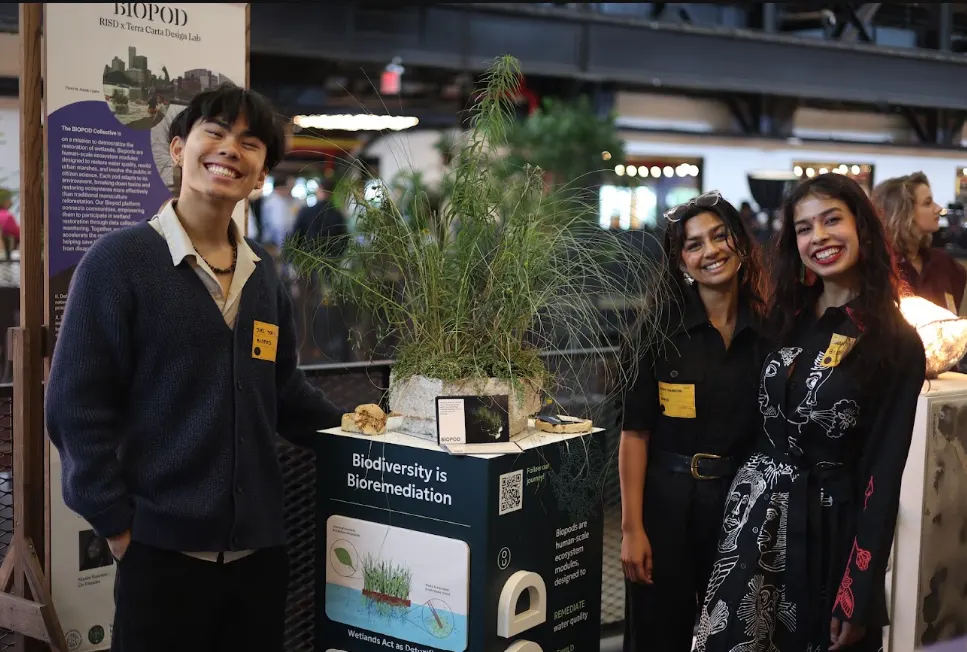
The BIOPOD Team
A fascination with living ecosystems
RISD was demanding, with long hours of research, making, testing and reworking. Alongside her design education, Avantika took biology courses at Brown University to keep her scientific interests alive and became increasingly interested in living systems from which humans could learn.
“I began to realise that natural systems are probably some of the most intelligent entities on the planet.”
After RISD, Avantika spent around two years in New York with Terreform ONE, a Brooklyn-based socio-ecological design think tank whose mission is to “design against extinction”. Here, she worked across biodesign, biodiversity, biotechnology and multispecies design.
Some of her early projects included studying the self-cleaning properties of butterfly wings and translating those principles into water-repellent biomaterial surfaces, as well as exploring ways of turning food waste into materials for art.
But her work gradually moved towards a larger question: could design work with nature rather than against it? Attending a lecture on “living machines” proved to be an important turning point. “I learnt about ecological systems that use biodiversity, including wetland plants, fungi and bacteria, to help treat polluted water. And that completely blew my mind!”
With support from RISD’s Somerson Sustainability Innovation Fund, Avantika worked with her co-founder Manini Banerjee and faculty adviser Katia Zolotovsky to explore the idea of miniaturising a wetland ecosystem into a module. This went on to become the blueprint for BIOPOD Co.
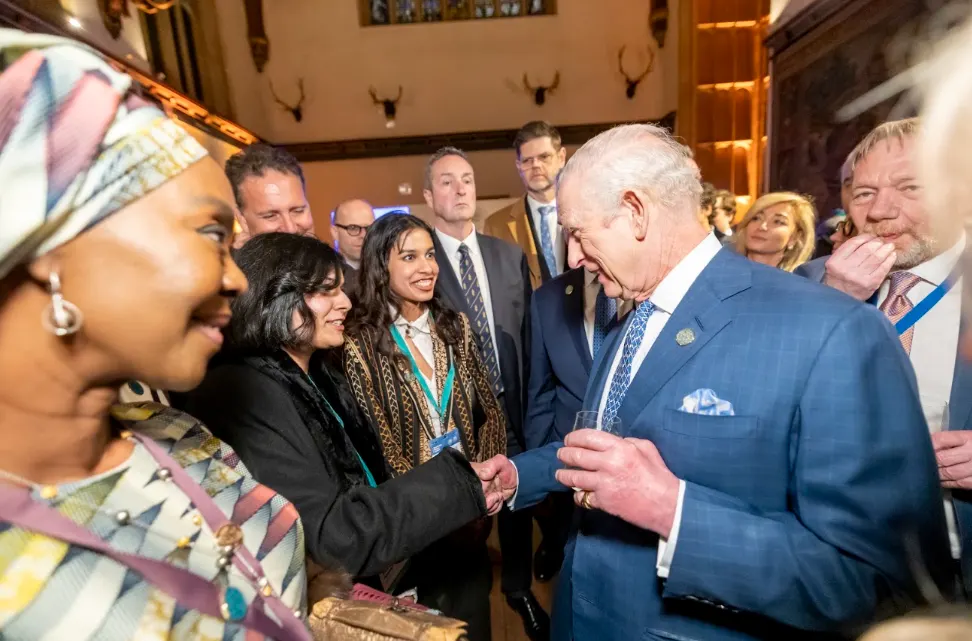
BIOPOD team with King Charles III at Terra Carta Design Lab’s award ceremony
Back to where it all began
With the BIOPOD concept was taking shape, Avantika and Manini Banerjee began looking at how the project could grow beyond its early work in the US. Support through the Terra Carta Design Lab helped them explore its potential as a community-led approach to ecological restoration.
India was an obvious destination, and Goa, where Avantika was born and raised, felt like a natural place to begin. The team collaborated with Sunaparanta Goa Centre for the Arts to present Designing with Nature – An Immersive Science, exploring how science and design can learn from Goa’s wetlands to restore ecosystems and improve water quality.
Though the state has changed considerably from the green, relatively quiet place of Avantika’s childhood into a bustling tourist spot, its connection with living ecosystems still inspires her. “People were initially surprised to touch the different materials and understand that their own ecosystems do so much for them. They would ask questions like, ‘What do you mean mushrooms are cleaning the water!’” she says.
“But Goans are so connected to their vibrant green environment that they were very aligned with our views and willing to listen, help and support us.”
The experience reinforced an idea that has been central to her work: restoration cannot simply be about designing solutions for nature. It also needs to involve the people who live alongside these ecosystems.
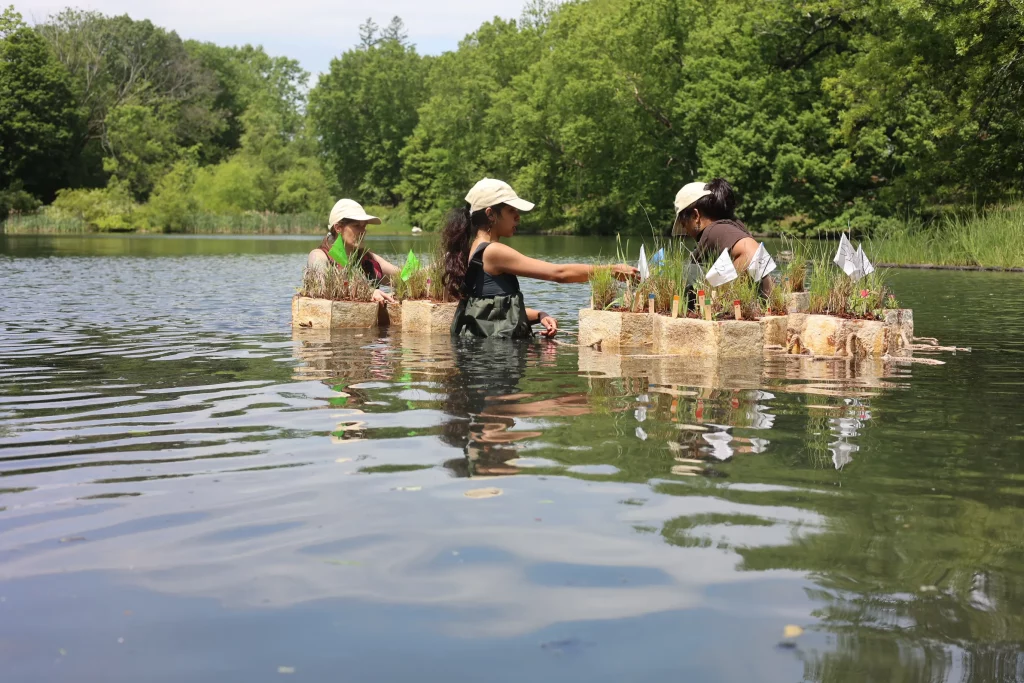
BIOPOD’s work in progress
Designing with, not against, nature
Working with living ecosystems comes with the responsibility of understanding the ecology of these spaces, as well as the culture and people who interact with them. “That is why designing with nature, rather than simply designing for nature, is so important to us,” she remarks.
For Avantika, this approach extends beyond BIOPOD. She is also interested in environmental sensing and decontamination, particularly in understanding what is happening within ecosystems, making those changes visible and then finding ways to address the problems.
Her work so far has brought together biology, design and technology across areas ranging from biodiversity and regenerative urban systems to bio-inspired materials and multispecies habitats. BIOPOD represents a more direct application of that thinking, placing living systems at the centre of an approach to water and ecosystem restoration.
For now, her immediate goal is to complete her graduate studies at Harvard before moving towards working full-time on BIOPOD. And the next step could bring the project even closer to home. “In December or January, we are hoping to pilot BIOPOD in India for the first time. We are planning to put it into the water and see how it performs in the wild,” she concludes.
- Follow Avantika Velho on LinkedIn
ALSO READ: Deepika Kurup: Indian American providing access to clean water through her innovation