



As a mental health social worker and trauma clinician, Rajvir Kohar does not merely view mental health difficulties as problems within an individual. Due to his social work training, he considers the broader social determinants that can shape mental health, including a person’s environment, culture, socioeconomic circumstances and access to resources and opportunities.
His professional perspective has also been shaped by working across different professional and cultural environments, living and working internationally and travelling to more than 80 countries. “Social work gave me the foundation, mental health gave me the setting, and trauma work became the area in which I found myself wanting to develop much more deeply,” smiles Rajvir, in a chat with The Global Indian.
With more than 10 years of experience in mental health practice across Australia and Canada, Rajvir currently works at one of Australia’s largest private mental health hospitals in Melbourne, where he leads the Complex Trauma Program, an inpatient program supporting people experiencing PTSD and Complex PTSD.
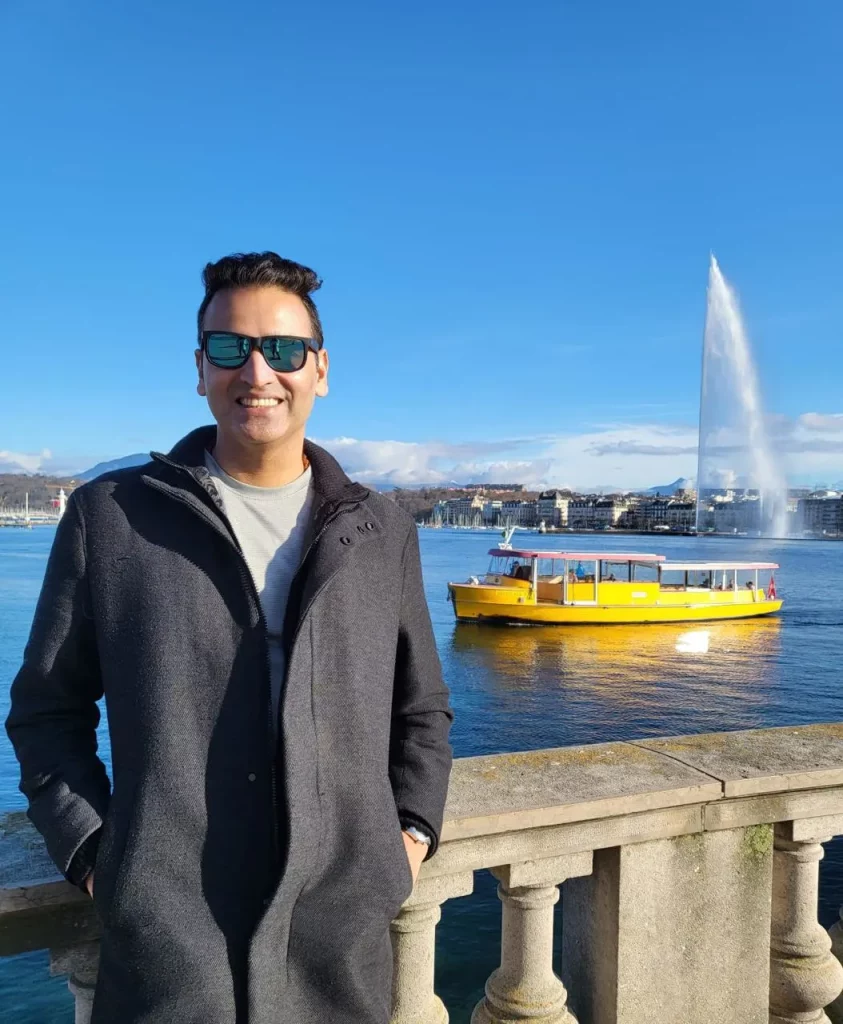
Working in Australia
Rajvir says anxiety, depression, relationship difficulties, emotional dysregulation, avoidance or problems with self-worth often make more sense when viewed in the context of what a person has experienced over time.
“I became increasingly interested in understanding not only what someone was experiencing, but how those patterns had developed and what function they may once have served,” says Rajvir, who moved to Australia in early 2023, marking an important transition in his professional journey.
Though he had already worked across a range of social-service and mental-health settings in Canada, Australia became the place where his work became more specialised in trauma and psychotherapy. Among other things, he was involved in co-developing the Complex Trauma Program, which brings together psychoeducation, therapeutic group work, individual sessions, clinical check-ins and opportunities for people to understand the longer-term effects of traumatic experiences.
His role has gradually expanded to include developing and coordinating trauma-focused programs. “That has given me the opportunity not only to work individually with people, but also to think more broadly about how trauma treatment can be structured and delivered within a hospital setting.”
Since coming to Australia, he has undertaken further training in areas such as EMDR, Schema Therapy and Narrative Therapy. “I have also learned enormously through multidisciplinary work and through the patients themselves.”
Moving to Australia also brought professional challenges. “I was entering a different health system, a different workplace culture and a new professional environment.” Even when clinical principles are familiar, he explains, every system has its own language, expectations, referral pathways and ways of working.
“I had to learn quickly while also establishing myself professionally in a new country,” says Rajvir, for whom moving further into specialised trauma work was another challenge. Rajvir says there is no simple formula that can be applied to every person. “Sometimes the work involves processing traumatic memories, while at other times the priority may be stabilisation, emotional regulation, strengthening relationships or addressing practical issues affecting recovery.”
Learning when to intervene, when to slow down and when to change direction has been an important part of his development as a clinician. He is also influenced by Eastern philosophy. “I am interested in ideas around awareness, attachment, suffering, identity, acceptance and the relationship people have with their own thoughts and experiences.”
Building experience in Canada prior to working in Australia
Prior to Australia, Rajvir spent close to a decade working across the human services and mental health sectors in Canada. His experience spanned government, non-profit organisations and private practice, and included work with young people, people experiencing homelessness and people with developmental disabilities, as well as casework, supervisory roles and mental health practice.
“Working with young people gave me an opportunity to understand the challenges that can emerge during adolescence and early adulthood, particularly when difficulties within families, education, relationships or the wider social environment are also present.”
Another significant part of his Canadian experience involved working with people with developmental disabilities. This required a different way of thinking about support, independence and quality of life.
“It reinforced for me the importance of tailoring services around the individual rather than expecting the individual to fit into a predetermined model of care,” says Rajvir, who also undertook casework within government services, gaining experience of working within larger systems and navigating policies, resources and service structures.
Rajvir also gained experience in mental health work through private practice, which brought another dimension to his professional development. “Private therapeutic work allowed for more focused one-to-one conversations and a different kind of therapeutic relationship from the casework and community environments in which I had previously worked.”
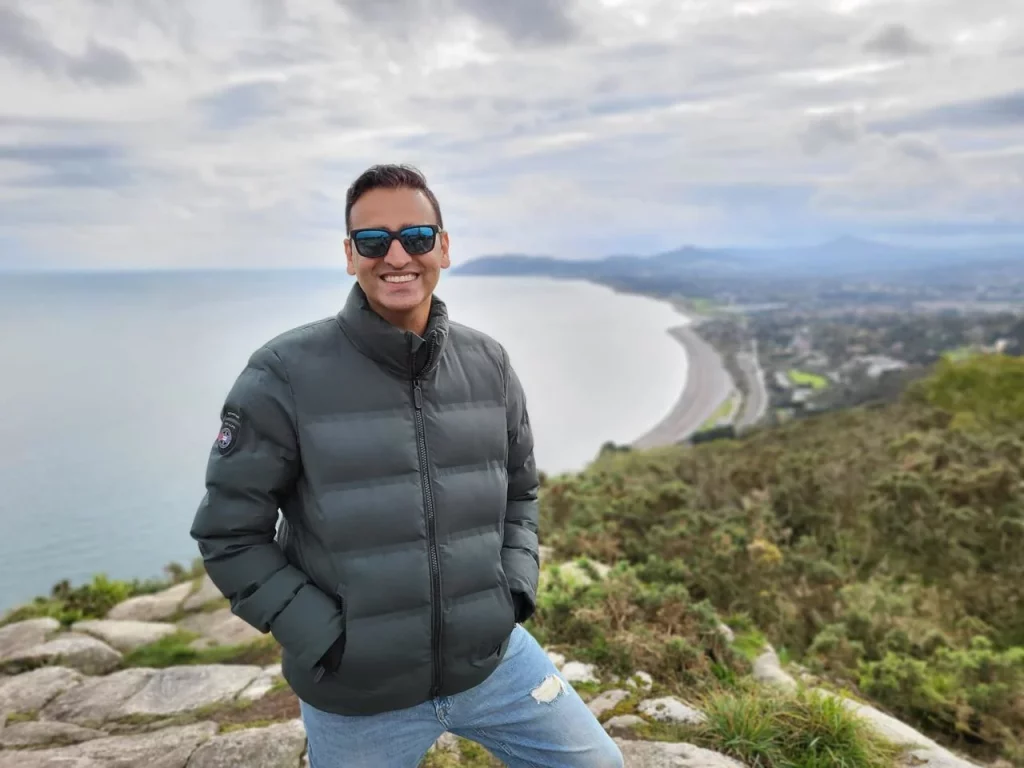
A foundation shaped in India and abroad
Rajvir studied in seven different schools across India from Grade 1 through Grade 12. “Because of the nature of my father’s occupation, my family relocated frequently, often every one or two years,” says Rajvir, who completed his high school education from Army Public School, Dhaula Kuan, New Delhi.
He completed his Bachelor of Social Work at the University of Manitoba and later a Master of Social Work at the University of Toronto, with a focus on health and mental health. These qualifications provided the central professional foundation for his career in social work and mental health.
“My education has developed across several disciplines. That interdisciplinary background has significantly shaped the way I practise today,” says Rajvir, who also did his Bachelor of Arts, a two-year Postgraduate Diploma in Human Rights and a Graduate Certificate in Human Resources.
“At first glance, human rights, human resources, the humanities and clinical mental health may appear to be quite different areas, but I have found that each contributes something distinctive to the way I understand people and organisations.”
Learning from challenging cases
Rajvir’s work has also exposed him to complex situations that have shaped his understanding of therapeutic relationships. He once worked with a young adult who had experienced significant disruptions and losses in important relationships. As therapy progressed and the therapeutic relationship became more meaningful, he noticed an interesting pattern.
At times, the person would withdraw, question his intentions, react strongly to boundaries or appear to test whether he would remain consistent. “This is where transference becomes very important. If someone has repeatedly learned that people eventually leave, disappoint or reject them, they may begin to expect the clinician to do the same.”
A few cases have also led him towards what he calls “phantom relationships”. In one case, an adult described a relationship that carried enormous emotional importance, despite having almost no realistic chance of ever materialising into a present, mutual relationship. There was longing, attachment, hope and a strong psychological investment in the other person, but the circumstances of the relationship effectively kept genuine intimacy out of reach. “A phantom relationship seems capable of keeping both sides satisfied — the person could experience the feeling of being attached while remaining protected from the risks that a real, available relationship would bring.”
Rajvir finds working with people with significant narcissistic traits fascinating because it forces the clinician to think carefully about empathy. He came across a person in his 50s who appeared highly self-assured and had a strong need to feel recognised, understood and valued.
“At times, perceived criticism or rejection could produce quite intense emotional reactions.” It would have been easy to focus only on the visible behaviour. Instead, Rajvir became interested in what was underneath it. “Often, beneath defensiveness, anger or apparent superiority, there is something much more vulnerable — shame, humiliation, rejection or the fear of not mattering,” says Rajvir, highlighting that this is where empathy becomes particularly important. For the clinician, this requires considerable composure.
“Becoming defensive, frustrated, excessively reassuring or changing boundaries simply to demonstrate that you care can reinforce the pattern,” says Rajvir, who believes that the therapeutic relationship itself can gradually become part of the healing.
In the case of phantom relationships, he says the therapeutic work is not simply about helping someone end the relationship. It involves helping them understand what the relationship is protecting them from, recognise the discrepancy between longing and lived reality, and eventually grieve not only the person but the unlived relationship and imagined future.
“The clinician must also avoid becoming a matchmaker or problem-solver who keeps trying to remove the external barriers, because this can unintentionally maintain the very pattern therapy is trying to understand.”
Rajvir is associated with the Australian Association of Social Workers (AASW), the key professional body representing social workers nationally. He also maintains professional social-work registration in Ontario and Alberta in Canada. “Having professional connections across Australia and Canada has allowed me to see how social work operates within different regulatory and service environments.”
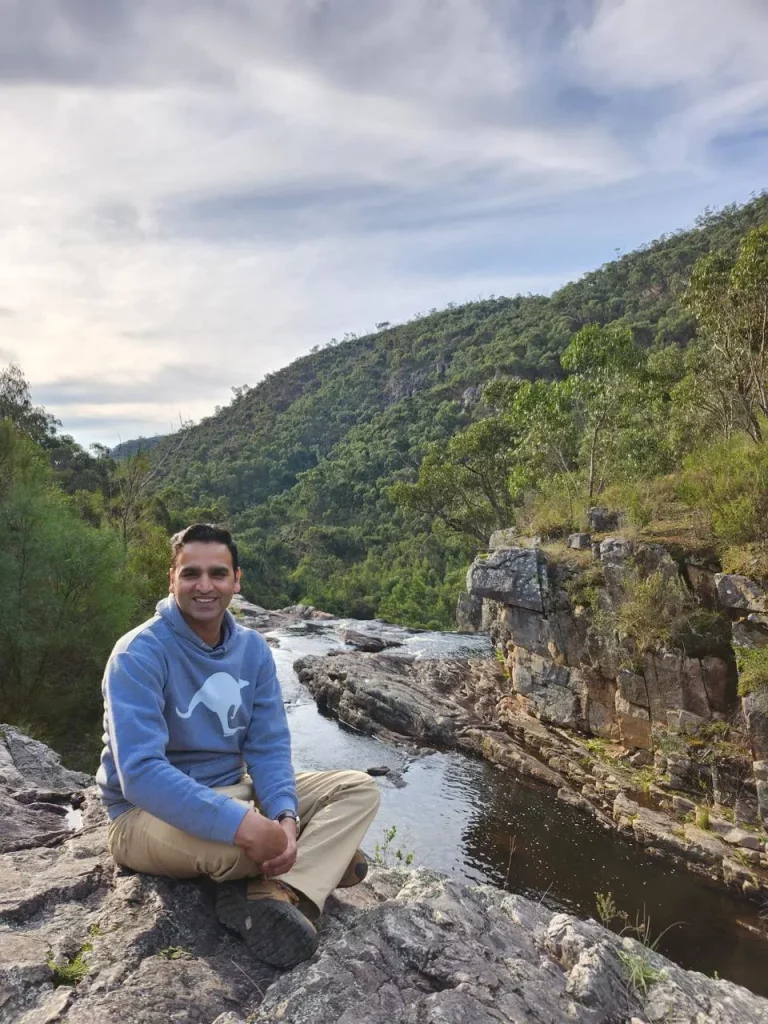
Life beyond work
The Indian-origin professional has travelled to more than 80 countries and still enjoys discovering new places. “It could be a road trip, visiting a small town or simply exploring somewhere nearby that I have not seen before,” says Rajvir, who enjoys travel especially when there is enough flexibility for plans to change rather than having every hour organised in advance.
A lot of his interests involve being outdoors. He enjoys hiking, camping and scuba diving. “Hiking and camping give me an opportunity to disconnect from routine, spend time in nature and explore places at a slower pace,” says Rajvir, describing scuba diving as a completely different experience.
More recently, movies and television have become another strong interest for Rajvir, but not only as entertainment. “I often find myself analysing characters, relationships, motivations, family dynamics and the choices people make.”
He has also been writing articles and exploring ideas connected with movies, television, everyday life and human behaviour. “I enjoy taking something familiar and looking at it from an angle that might make another person pause or see it differently.”
He also likes the idea that hobbies do not have to remain fixed throughout life. “There should always be something new to learn or experience,” says Rajvir, who wants to take up flying in the coming years.
- Explore Rajvir Kohar’s website to get more idea about his counselling services