



From teaching large classrooms and mentoring young innovators to publishing scientific research and helping develop a patent-winning agricultural technology, Dr. Rajasekar Govindhasamy’s career has been a blend of academics and practical innovation.
Over nearly seven years, the plant pathology researcher has worn many hats, serving as an assistant professor, mentor, researcher and, more recently, an agronomist with OCP Group, a leading fertilizer company.
Armed with a doctorate from Tamil Nadu Agricultural University and a growing body of research contributions, he has authored multiple peer-reviewed papers and actively participated in scientific conferences and workshops.
His innovation-driven approach earned recognition at the Agri and Food Hackathon 2025, where he mentored the winning team and went on to file a patent for a synthetic microbial biosensor spray designed for the early detection of crop viral infections.
Focussed in sustainable agriculture and scientific inquiry, his work today is driven by an aspiration to contribute to agricultural research and development in an international setting.
Growing through science and research
Hailing from Krishnagiri in Tamil Nadu, Rajasekar pursued his Bachelor’s degree in Agriculture from Annamalai University before earning his Master’s degree and later a Ph.D. in Plant Pathology from Tamil Nadu Agricultural University (TNAU).
During his student days, he was awarded the prestigious Dr. Rajah Sir Muthiah Chettiar Silver Jubilee Memorial Prize and received a Gold Medal in Applied Plant Pathology from Annamalai University.
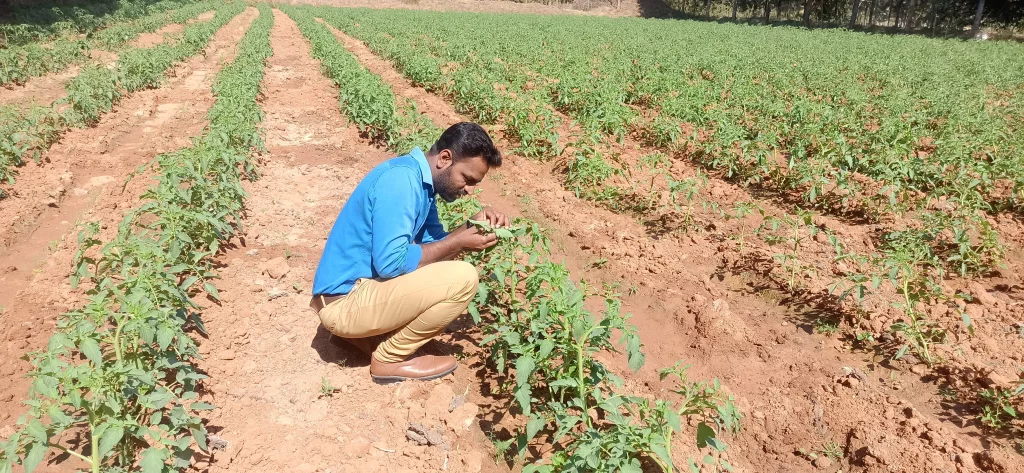
Beyond grades and awards, it was research that truly captivated him. From studying the production of ethanol from fruit waste during his undergraduate years to investigating Fusarium head blight disease in wheat during his master’s programme and later exploring biological alternatives for managing brown spot disease in rice during his doctoral research, Rajasekar steadily developed expertise in plant-pathogen interactions and sustainable crop protection.
His work focused on identifying beneficial microorganisms and plant-derived compounds capable of combating fungal diseases while reducing dependence on chemical inputs.
Over time, he gained hands-on experience in pathogen isolation, molecular diagnostics, biocontrol screening, metabolite profiling, proteomics and GC-MS-based analysis, building a strong foundation in agricultural biotechnology and disease management.
Discovering a passion for teaching
After completing his doctorate, Rajasekar entered academia. He began his teaching career at S. Thangapazham Agricultural College in Tenkasi and later joined Adhiyamaan College of Agriculture and Research in Krishnagiri, where he spent nearly five years shaping future agricultural professionals.
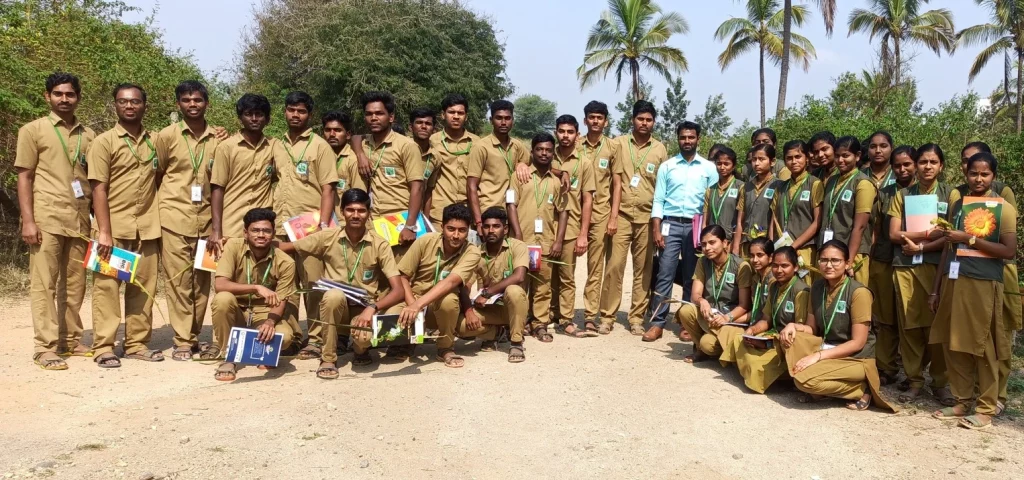
Managing classrooms of more than 120 students at a time, he taught subjects related to plant pathology and agricultural sciences while guiding undergraduate projects, conducting workshops and encouraging innovation among students.
What he remembers most from those years is not merely delivering lectures, but witnessing students overcome academic struggles and perform better.
“Initially, many students found my subject difficult. Improving their performance and helping them achieve better results became one of my biggest challenges and also one of my proudest achievements,” he recalls.
Beyond the classroom, Rajasekar organized workshops on scientific writing and research methodology, helping young researchers understand how to design studies and communicate their findings effectively.
Research remained the driving force
Although he enjoyed teaching, research always held a special place in his heart.
“Teaching is good, but I feel most proud when I focus on research. That excites me more,” he says. His scientific work expanded steadily through journal publications, conference presentations, book chapters and collaborative studies.
Over the years, he contributed to research on fungal pathogens, biological control agents, plant extracts, precision nitrogen management, climate-related weed challenges and sustainable crop protection strategies.
He also strengthened his expertise through specialized training programmes on genomics, bioinformatics, biological control, quantitative PCR, proteomics and gas chromatography-mass spectrometry.
These experiences broadened his understanding of modern agricultural science and reinforced his belief that future farming would increasingly depend on integrated technologies and evidence-based approaches.
“I always try to learn new software and technologies. Nowadays AI is entering agriculture in many ways, and I like understanding how these technologies can contribute to research,” he says.
Turning innovation into impact
Among the many milestones in his career, one achievement stands above the rest.
While mentoring students, Rajasekar participated in a series of hackathons focused on agricultural innovation. The journey was anything but easy.
From the early rounds to eventually reaching the thirtieth competition, perseverance and continuous improvement became key themes.The effort culminated in a breakthrough when he mentored an idea titled “Synthetic Microbial Biosensor Spray: A Revolution in Early Crop Virus Detection.” The project won first prize at the Agri and Food Hackathon 2025 and subsequently led to a patent application.
For Rajasekar, the achievement represented much more than recognition. “It remains one of the biggest moments in my career,” he says.
Transitioning from academia to industry
Despite enjoying academic life, Rajasekar eventually realized that waiting indefinitely for university recruitment opportunities would limit his growth. After nearly five years as an assistant professor, he decided to move into the corporate sector.
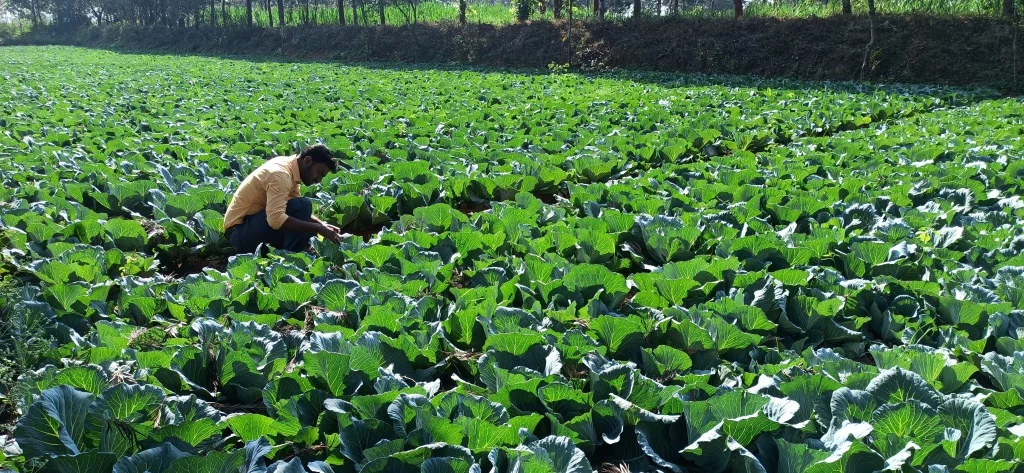
He joined OCP Group, the leading fertilizer companies headquartered in Morocco, where he currently works as an agronomist, supporting operations across seven districts in and around Coimbatore.
Working in a multinational environment has provided him with a broader understanding of crop nutrition, farmer engagement and the practical dimensions of sustainable agriculture.
Building a profile beyond publications
Rajasekar has authored numerous peer-reviewed publications and contributed book chapters and scientific literature in areas related to crop diseases and biological management.
He has presented research at international conferences and participated in advanced workshops covering genomics, bioinformatics, proteomics and molecular diagnostics.
Equally important, he has mentored several undergraduate projects every year, encouraging students to think innovatively and pursue scientific inquiry. His interdisciplinary strengths have helped him evolve into a researcher capable of bridging the gap between laboratory science and practical agricultural applications.
Looking towards a global research career
Today, Rajasekar’s aspirations extend beyond geographical boundaries. His long-term dream is to establish himself as a researcher and scientist working on cutting-edge agricultural challenges. Australia, in particular, holds special significance for him because of its strong research ecosystem and opportunities in agricultural innovation.
“My dream is to become a scientist. I believe I can contribute more through research and development,” he says.
He remains confident that international exposure would allow him to apply his experience more effectively while contributing to global efforts aimed at sustainable food production and crop resilience. “Once I go abroad, I will shine with my effort,” he says with conviction.
- Follow Rajasekar Govindhasamy on LinkedIn