



(Jun 12, 2026) With nearly a decade of professional experience, Kausar Shaikh has built a career that blends operational expertise, financial coordination, and technical problem-solving despite coming from a commerce background. Over the years, the Mumbai-based professional currently working as Project Manager and IT PMO Analyst at Capgemini India, has worked on migration projects, pricing alignments, operational reporting, and cross-border collaboration with teams based across Europe and South America. Her journey reflects how persistence, adaptability, and continuous learning can help professionals grow beyond conventional career boundaries.
What makes her career graph especially significant is the way she navigated both technical challenges and workplace perceptions while steadily building confidence in her abilities. “Love your work but always be open for new opportunities,” she ponders in a chat with The Global Indian.
Today, after years of handling high-pressure operational responsibilities and global coordination, Kausar is looking toward international opportunities while building on the experience she has gained across diverse work environments.
Growing beyond a commerce background
Kausar Shaikh entered the professional world with an MCom degree from the Mumbai University, but her career gradually evolved into roles involving operations, coordination, migration testing, and system-related processes that often required working closely with engineering and service teams.
Early in her career, stepping into such environments came with challenges. She recalls that around a decade ago, women working in operational or technical roles often had to constantly prove themselves.
“If you made a mistake as a girl, people would point it out differently,” she says. “You had to deal with that kind of mindset every day.”
Despite those experiences, she continued taking on larger responsibilities and learning through practical exposure. Over time, changing workplace culture and growing experience helped strengthen her confidence.
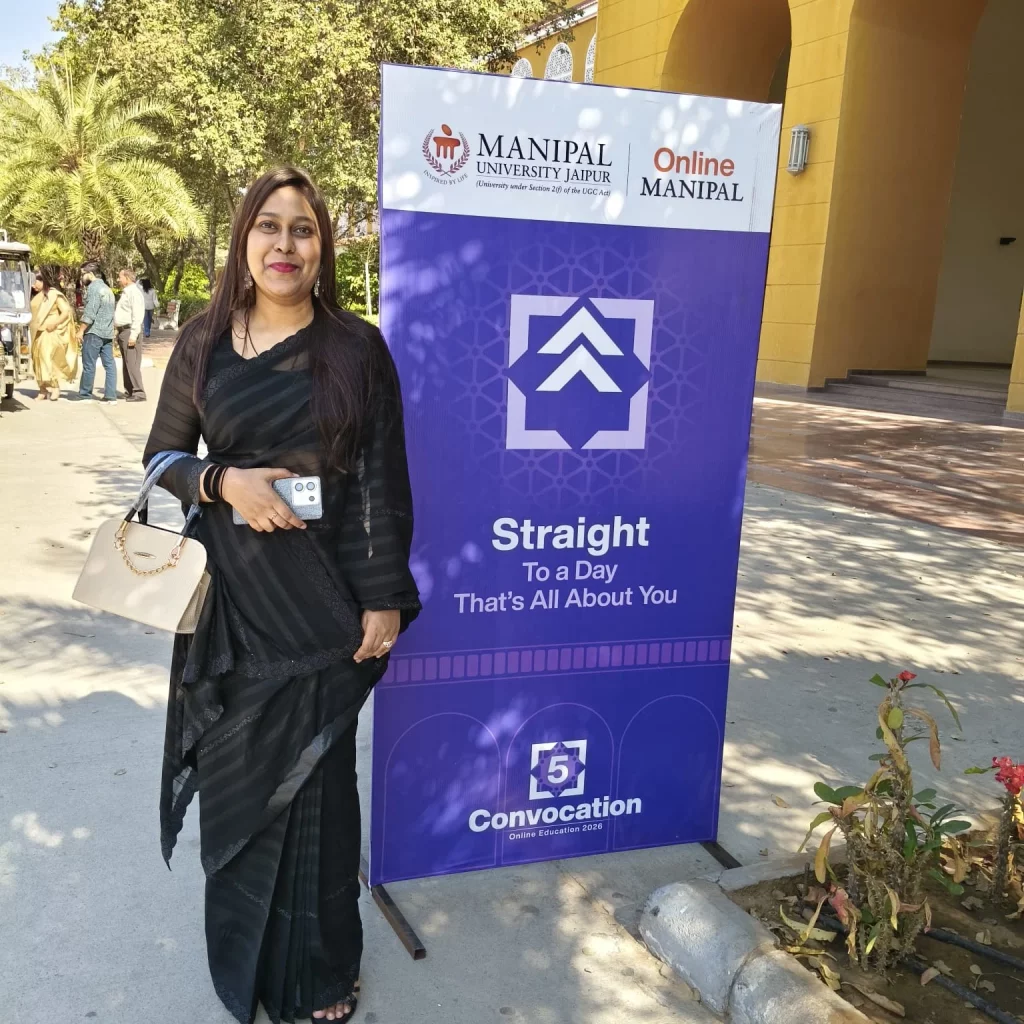
“Nowadays people are more ready to accept women in these fields if you know your work,” tells Kausar who recently earned an MBA in Project and Financial Management from Manipal University, pursuing her studies in an online mode while balancing her full-time job.
Managing complex projects under pressure
One of the milestones Kausar remembers most clearly involved handling a major migration and testing project almost independently while simultaneously managing her regular operational responsibilities.
During that period, she coordinated migration-related activities, user acceptance testing, communication with developers, and operational processes while ensuring that daily financial activities continued without errors.
“Within one month, I completed around 90 percent of the testing alone along with my regular operational work with zero error,” she recalls.
Another major challenge came after the pandemic, when she worked on aligning the pricing structures of nearly 300 software services within a short timeline. The process involved consolidating categories, updating agreements, testing systems, coordinating with users, and ensuring invoicing mechanisms aligned correctly with the revised structures.
“Sometimes we had to work till midnight to solve issues and complete testing,” she says. Handling such projects strengthened her ability to work under pressure while balancing technical coordination and operational accuracy simultaneously.
Learning through global collaboration
Over the last several years, Kausar has worked extensively with international teams based in countries such as France, Brazil, Poland, Spain, and the Netherlands.
Initially, communication itself became a challenge despite everyone speaking English. “In the beginning, it was difficult to understand their accents and even they could not always understand us,” she says. “There was a communication barrier.”
However, regular collaboration gradually made those interactions easier. More importantly, working with multinational teams changed her understanding of workplace culture and professional boundaries. “In India, people sometimes keep asking continuously for updates,” she explains. “But when you work with international teams, you learn about privacy, work balance, and respecting professional space.”
According to her, global work culture taught her that accountability matters more than constant supervision. Professionals are expected to take ownership of their responsibilities and deliver results independently. “You need to prove yourself with your work and evidence,” she says.
These experiences improved not only her communication skills but also her perspective on modern workplace dynamics and multicultural collaboration.
Finding balance outside work
Much of Kausar’s career involves demanding schedules and operational responsibilities, but she also values moments of peace outside work.
One of the things she enjoys most is spending time in the garden inside her campus with a cup of coffee. “We have a very peaceful campus,” she says. “Sometimes just sitting there with coffee feels peaceful.”
Her workdays often begin with prioritizing important operational tasks and management updates. For several years, her schedule was also aligned partly with European time zones to coordinate with global teams.
Despite the demands of her profession, she believes maintaining emotional balance and staying open to change is essential for long-term growth.
Looking toward global opportunities
At this stage of her career, Kausar hopes to eventually build opportunities abroad, where she feels professional contribution and performance are often recognized more directly.
From handling operational migrations and large-scale pricing alignments to collaborating with multicultural teams across countries, Kausar Shaikh’s professional journey reflects resilience, adaptability, and the ability to grow continuously through changing responsibilities and workplace environments.
- Follow Kausar Shaikh on LinkedIn