
June 21 2026
Vinod Gadher: From London’s punk movement to empowering women artists in India

(Jun 21, 2026) From fighting racism through London’s punk movement to creating opportunities for women artists in India, British-Indian music entrepreneur Vinod Gadher has spent nearly five decades championing independent voices and building ecosystems where talent can thrive.
Growing up in London in the 1970s, UK music industry professional Vinod Gadher’s world revolved around football. “Those days, it was all about which football team you supported,” he reminisces. However, music gradually became a larger part of his life, especially black music. “I had no idea how the industry worked or how to even play music. But I had an older brother who would go for concerts so I started accompanying him from the age of 14.”
What began as a teenage fascination eventually grew into a decades-long career spanning artist management, music development, live events and industry advocacy. Along the way, Gadher navigated racism in Britain’s music scene, helped build Switzerland’s modern music ecosystem and, more recently, co-founded Femme Music to support women artists in India.
Today, based in London, he continues to champion independent musicians while working to create sustainable opportunities for the next generation of talent. In a conversation with The Global Indian, Gadher reflects on his journey, the evolution of Indian music and his vision for building stronger ecosystems for artists.
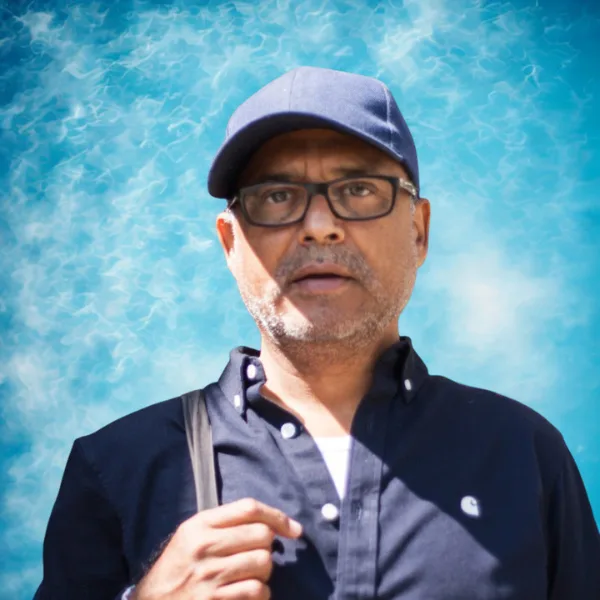
Finding identity through community and activism
His family’s move to Leicester marked a major turning point in his life. For the first time, Gadher found himself immersed in a large Indian community. That was the time when the Great Britain was grappling with racial tensions, and music was becoming a powerful vehicle for social change. The punk movement, in particular, left a lasting impression on him. “It told me that I could be a musician,” he highlights.
Music and activism soon became intertwined as Gadher became involved with Rock Against Racism, the Anti-Apartheid Movement and the Anti-Nazi League.
Racism was at its height in the 70s, and music was one way we could unite to fight.
Vinod Gadher
That spirit of resistance and community eventually led to the formation of ‘Defectors III’, recognised as the UK’s first Indian band.
Looking beyond borders
Despite their ambition and talent, ‘Defectors III’ found it hard to book shows in the UK as opportunities for Indian musicians in Britain were limited. “It felt like we had no place to develop because of racism in the music industry,” he laments.
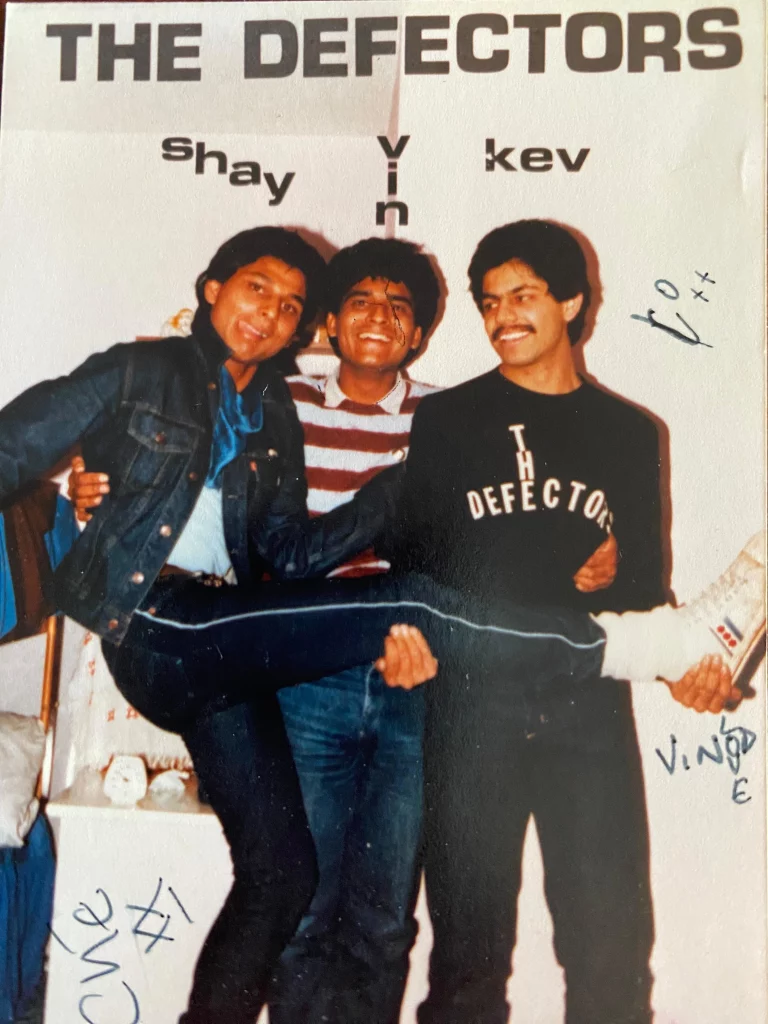
Vinod “Vin” Gadher (centre) with fellow members of The Defectors III, the UK’s first Indian band
Determined to create opportunities, Gadher took matters into his own hands. As the band’s manager, he organised a tour of West Germany in the early 1980s. “I knew then that there was a whole world out there for me to explore.”
The experience broadened his perspective and marked the beginning of an international career that would take him across Europe and beyond.
A different view of Indian music
Although he is widely associated with supporting Indian artists today, Gadher spent much of his career working within mainstream contemporary music. “My first proper connection came through working with Talvin Singh,” he reveals. “That opened the door to artists of real depth and significance, including Zakir Hussain and Niladri Kumar.”
The experience transformed his understanding of Indian music and its global potential. “It made me realise two things: how extraordinary the music is, and how lazily the wider industry has often boxed it in.”
While Indian artists are increasingly visible internationally, Gadher believes true mainstream recognition remains a work in progress. According to him, visibility is not the same as equality.
Many Indian artists performing internationally are still being placed in specialist spaces, cultural programmes or diaspora-led events rather than being treated as part of the main contemporary music conversation.
Vinod Gadher
The recent success of several Indian independent artists is encouraging, but Gadher believes the industry still lacks the infrastructure needed to support long-term growth. “A few great bands have created a market for themselves, but it’s not a movement,” he states.
Having spent decades working across multiple markets, he sees collaboration—not competition—as the key to progress. “There are no organisations where we share and develop the scene. It’s all about gatekeeping. Until this changes, we will not move forward as one,” he articulates.
Helping women artists in India overcome barriers
Five years ago, while managing artist Sanoli Chowdhury, Gadher witnessed firsthand many of the barriers faced by women musicians in India. From the cost of instruments and equipment to the lack of management support and live venues, the challenges were significant. “There is no ecosystem to develop your skills.”
These observations led to the creation of Femme Music, an initiative focused on helping women artists overcome those barriers and build sustainable careers.
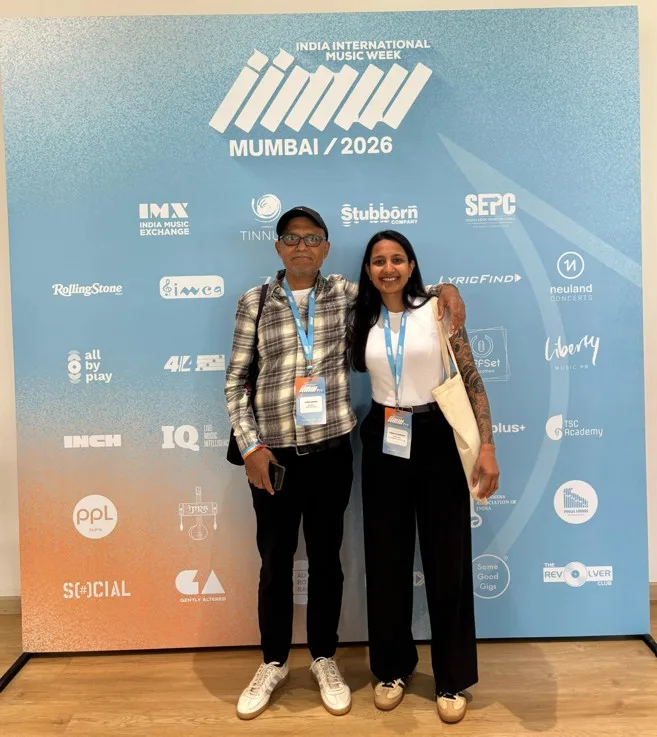
Vinod Gadher and Sanoli Chowdhury, co- founders of Femme Music
However, Gadher’s commitment to artist development stretches back decades to the 90s, when he had relocated to Zurich. Around this time, he helped establish a live music conference and festival designed to unite Switzerland’s fragmented music scenes. Together with his business partner, he launched m4music in 1998, creating a platform for artists and industry professionals to collaborate, learn and grow.
More than two decades later, the festival continues to thrive. “Switzerland now has a Music Managers Forum, a Promoter Association, a Music Export Office and more,” he says with pride. “And that’s what I would like to develop in India with Femme Music—an ecosystem for artists, managers, bookers and independent labels.”
Looking ahead
The coming months are busy for Gadher. Femme Music has two EPs, an album and a new compilation release scheduled, alongside plans to take artists to Europe under the banner Brown Girls Make Noise.
However, the bigger mission remains unchanged: helping artists build meaningful and sustainable careers, for which, he believes talent is only the starting point!
The artists who build lasting international careers are the ones who understand that talent is only the beginning. Playing live is a must because that’s how you build your audience.
Vinod Gadher
As someone who has spent nearly five decades navigating the music industry, Gadher remains optimistic about what lies ahead. His advice to young Indians hoping to build careers in music is simple: “Dream big, because dreams really can come true.”
ALSO READ: Anokha Sound: How the Asian Underground became a voice for immigrant identity

Share with



Written By: Amrita Priya
Alpesh Chauhan: Meet the British-Indian musician shortlisted for Royal Philharmonic Society Awards

Written By: Amrita Priya
Charu Suri: The Indian pianist and composer making jazz raga popular globally

Written By: Amrita Priya