
November 18 2026
Mahindra Last Mile Mobility wins 2026 Earthshot Prize, led by TIME100 climate leader Suman Mishra

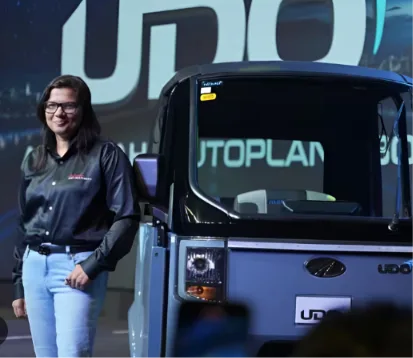
(Nov 18, 2026) Mahindra Last Mile Mobility has won the Earthshot Prize 2026 in the Clean Our Air category, adding a major global accolade to a landmark year for its managing director and CEO, Suman Mishra, who was named to TIME’s 100 most influential people in climate for 2026. Educated in Singapore and the United States, Suman is steering the company’s push to make electric three-wheelers a commercially viable choice for India’s drivers and small businesses, demonstrating how cleaner transport can also improve livelihoods.
Cities can electrify public transport, but the last mile, with three-wheelers and small commercial vehicles on almost every street, is harder to transform. The people who depend on these vehicles for their livelihoods often have the fewest resources to absorb the cost of change. At Mahindra Last Mile Mobility, managing director and CEO Suman Mishra has taken on this challenge, working to make the shift to electric mobility viable for both the business and the people who depend on its vehicles.
For Suman, the task goes beyond introducing electric vehicles. It involves rethinking how they are manufactured, financed, sold and supported so that drivers and small businesses can make the transition without compromising their livelihoods.
In India’s busiest cities, three-wheelers and small vans carry people to work, connect commuters to public transport and move goods to homes and businesses. Around 90 percent of these vehicles are used commercially. Running on fossil fuels, they contribute to urban air pollution, with communities living and working near busy roads bearing a disproportionate share of its effects.
Yet drivers cannot simply be asked to take these vehicles off the road. For millions, they are workplaces on wheels. Any meaningful transition must offer vehicles that are practical to operate, affordable to finance and supported by reliable charging and servicing networks. The economics matter as much as the technology.
Our ambition is to make electric the preferred choice for the people who move India every day – drivers, small entrepreneurs, fleet operators and businesses for whom the vehicle is not just transport, but their livelihood. Switching to electric not only improves the air quality of our densest cities but can also improve livelihoods.
Suman Mishra
A career spanning technology, strategy and transformation
Suman hails from Rourkela, Odisha. She attended Ispat English Medium School, where she was best all round student at O levels and recipient of National Talent scholarship by the Government of India. Growing up in the steel city deeply influenced her interest in manufacturing and economic empowerment.
Her route to leading an electric mobility business began with computer engineering at Nanyang Technological University in Singapore. She subsequently pursued an MBA at the University of Michigan’s Stephen M. Ross School of Business, graduating with High Distinction. She received the Ross Leadership Award, was a Tauber Institute Fellow and became the founding chair of the school’s Culture and Diversity Initiatives Committee.
She began her career with Accenture in Singapore, working as a consultant. After her MBA, she joined McKinsey & Company in Chicago as an associate, progressing to engagement manager and later associate partner. Her work took her between Chicago and Gurugram and gave her experience in business growth, operational performance and transformation.
In 2013, she moved into the pharmaceutical sector as head of corporate project management at Cipla in Mumbai. She joined the Mahindra Group in December 2015 as senior vice president of strategy. Her responsibilities later expanded to capital allocation and business transformation, including customer insights and analytics for the automotive division.
In 2021, Suman moved into the electric mobility business, first as CEO designate and then as CEO of Mahindra Electric Mobility and the last-mile mobility business. She became managing director and CEO of Mahindra Last Mile Mobility in September 2023.
The progression brought together several strands of her experience. Consulting had exposed her to business strategy and operational change, while her roles at Cipla and Mahindra involved working within large organisations navigating transformation. At MLMML, these capabilities have relevance beyond product development. The challenge is to build a business in which manufacturing, distribution, financing and customer support work together to make electric mobility accessible.
Making electric work for drivers
Under Suman’s leadership, MLMML has transformed its supply chain to manufacture electric three-wheelers and small commercial vehicles at scale, while building an ecosystem to make adoption practical for drivers.
The company has sold more than 400,000 electric last-mile vehicles, which have travelled over nine billion kilometres and helped avoid more than 180,000 metric tonnes of carbon dioxide emissions, according to the company. Its network includes over 900 sales and service outlets, financing partnerships and access to more than 10,000 public charging points.
The financial benefits are equally significant. Lower running costs can increase drivers’ take-home income by 25 to 30 percent, according to the Earthshot Prize. The company has also trained 500 women to drive and repair electric three-wheelers, opening up livelihood opportunities in a traditionally male-dominated sector.
With more than half of India’s new three-wheeler sales now electric, MLMML aims to put one million electric vehicles on the country’s roads by 2031 and explore markets across Asia and Africa. Its plans include expanding access to affordable finance and charging infrastructure. In an interview with TIME Suman mentioned:
India shows what this looks like. Electric three-wheelers have become the country’s first vehicle segment where more than half of new sales are electric, because they can lift a driver’s take-home income by 25% or more. More than 400,000 of our electric vehicles are now on the road, avoiding about 185,000 [metric tons] of carbon dioxide. When a climate solution pays for itself, adoption follows.
Suman Mishra
Suman sees the Earthshot recognition as an opportunity to bring governments, banks, cities and industry partners together to accelerate adoption. As she has said, the aim is to make electric mobility accessible to more drivers and cities, in India and beyond.
A Mahindra Group commitment built over time
The company’s progress is part of a wider Mahindra Group commitment to electric mobility, one that predates the current surge in interest in the sector. Anand Mahindra, chairman of the Mahindra Group, has backed the electric vehicle opportunity over the years, including through the group’s early investment in Reva and its subsequent work in the space.
At the group level, Dr Anish Shah, group CEO and managing director, provides leadership, while Rajesh Jejurikar, chairman of MLMML and executive director and CEO of Mahindra’s Auto and Farm Sector, has played a role in the business’s strategic direction and oversight.
Suman leads the last-mile mobility business, but its progress reflects the work of a wider organisation. Engineering, manufacturing, supply chain, sales and service teams have all contributed to taking the vehicles to market. The drivers and entrepreneurs who have adopted them are equally important to the story: their willingness to make the switch is what turns a company’s investment into a real-world transition.
Mumbai takes the global climate stage
The Earthshot Prize was founded by Prince William in 2020 to identify and support solutions that can help repair the planet by 2030. Inspired by the ambition of the Apollo Moonshot, it focuses on five goals: Protect and Restore Nature, Clean Our Air, Revive Our Oceans, Build a Waste-free World and Fix Our Climate. Each of the five winners receives £1 million to help scale its work, while all 15 finalists receive support through a year-long fellowship.
The 2026 ceremony was the first time the awards were held in India since the prize was established. Mumbai became the sixth host city, following London, Boston, Singapore, Cape Town and Rio de Janeiro. The event brought global attention to Indian innovators and the environmental challenges and opportunities facing the country.
Prince William and Catherine, the Princess of Wales, were in Mumbai for the ceremony and a series of engagements. Their programme included a game of gully cricket with Sachin Tendulkar, a metro ride and meetings connected to the city’s cultural and environmental initiatives. William also drove Mahindra’s UDO electric three-wheeler, with Catherine riding behind him, bringing additional attention to the company’s electric mobility work. Catherine made a surprise appearance at the ceremony, presenting the prize in the Protect and Restore Nature category.
India had a strong presence among the 2026 finalists, with Mahindra Last Mile Mobility and Mahila Housing Trust representing the country. Founded in 1994 with support from the Self-Employed Women’s Association, Mahila Housing Trust works on climate-resilient housing and has supported more than 17,000 cool roofs in affordable homes in Ahmedabad.
The other four winners were Bhutan for Protect and Restore Nature, Ørsted of Denmark for Fix Our Climate, PFAS-Free France for Build a Waste-free World and Niue Ocean Wide Trust for Revive Our Oceans. The 15 finalists were selected from around 7,000 nominations across 169 countries, underlining the international reach of the prize.
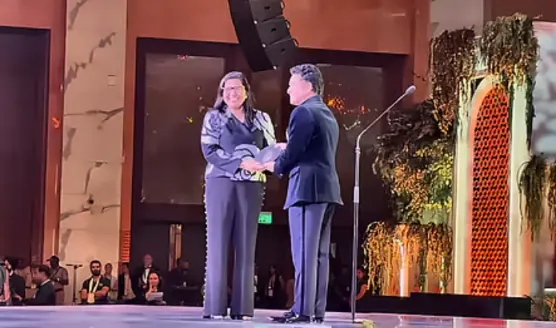
Suman Mishra, receives The Earthshot Prize 2026 in the ‘Clean Our Air’ category from Sachin Tendulkar
Taking the next step
For MLMML, the £1 million award offers an opportunity to address some of the barriers that still prevent drivers from switching to electric. Its plans include widening access to affordable finance, improving charging availability in underserved areas and training more women drivers. It also intends to work with other Earthshot finalists and partners to take electric three-wheelers to more communities.
The Earthshot Prize can help bring governments, banks, cities, fleet platforms and skills partners around the same table, so we can help make electric mobility accessible to more drivers and cities, in India and beyond.
Suman Mishra
Suman’s interest in sustainability also extends to everyday choices. She has spoken about reducing single-use plastics and using reusable alternatives at home and work. MLMML, meanwhile, is working to reduce packaging material and shift towards reusable logistics packaging.
But the larger test, as she sees it, is whether climate action can become part of ordinary economic activity. The drivers, mechanics and small entrepreneurs who are adopting electric mobility are central to that change. So are women gaining access to training and independent livelihoods through the sector.
The Earthshot Prize gives MLMML a global platform and a financial boost. Its longer-term success, however, will be measured on India’s roads: in the number of drivers who can afford to make the switch, the income they retain, the reliability of the charging and service network, and the cleaner air that follows.
- Follow Suman Mishra on LinkedIn
ALSO READ: Aadith Moorthy and Boomitra: From TIME 100 to Earthshot Prize and Forbes 30 Under 30




Written By: Charu Thakur
Kheyti: Earthshot Prize-winning startup revolutionising agriculture for small farmers

Written By: Charu Thakur