June 20 2026
Sravana Borkataky-Varma: How the University of Houston professor is rethinking religion
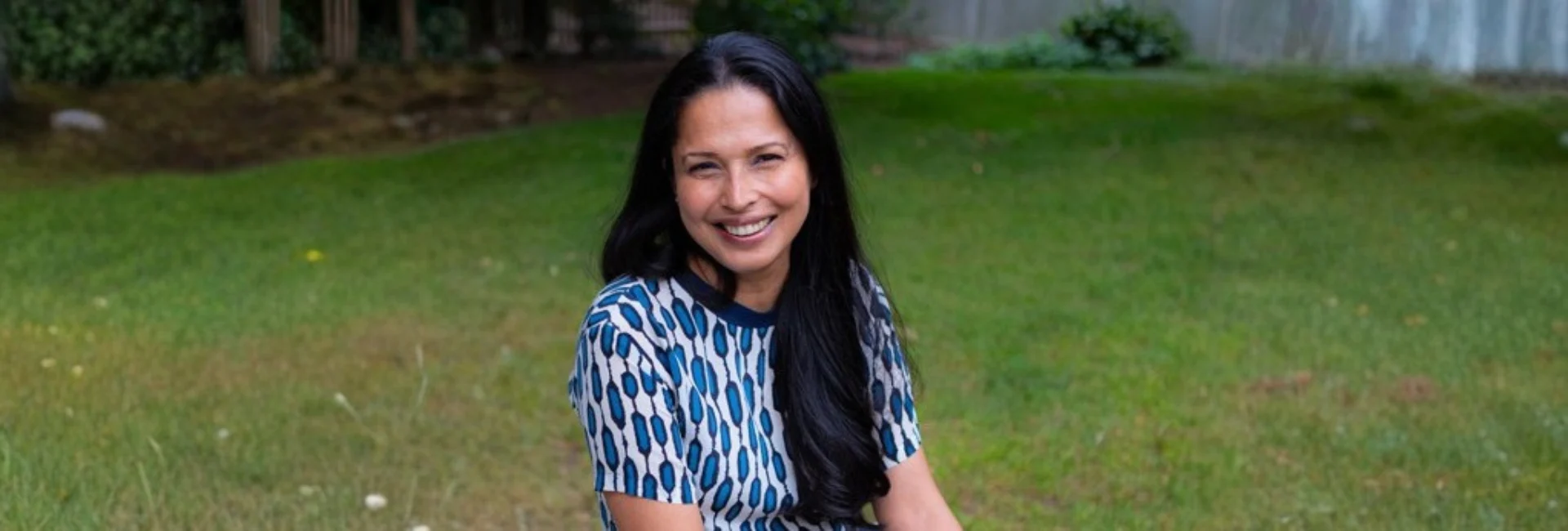
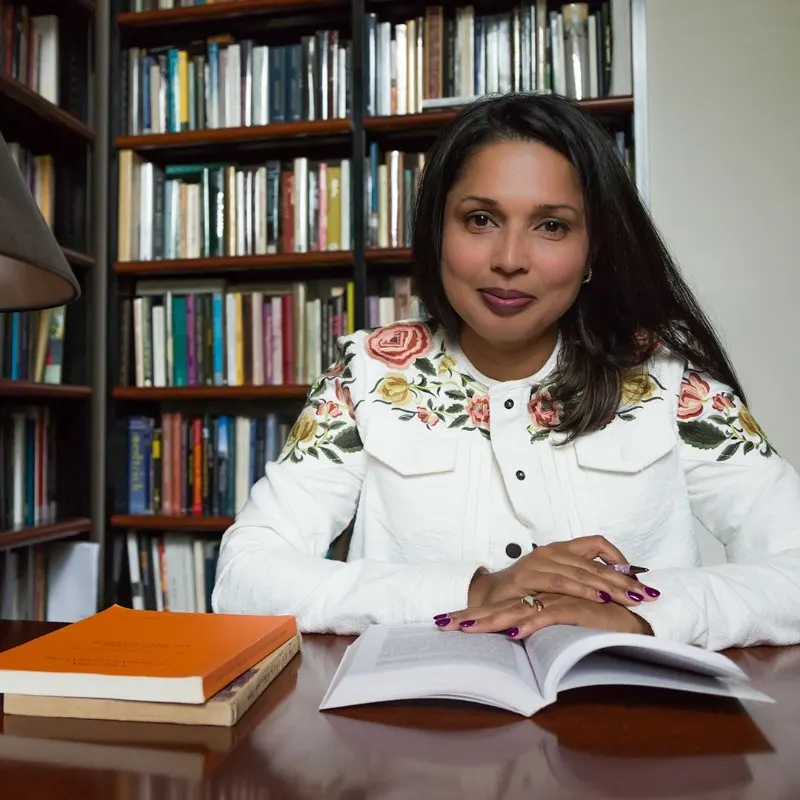
(Jun 20, 2026) In a field often dominated by texts, translations, and distance, Sravana Borkataky-Varma has chosen to step into the lived, breathing world of religion. A historian of South Asian religions, she has built a career that spans some of the most prestigious academic institutions in the world, from Harvard University and Rice University to the University of Houston, where she now serves as Instructional Professor in Comparative Cultural Studies. She has also been a Fellow at the Center for the Study of World Religions at Harvard Divinity School, a space that she describes as transformative, both intellectually and personally.
Her work focuses on Śākta Tantra, goddess traditions, gender, and ritual, but to reduce it to those categories would miss the point. What Sravana really studies is experience. The kind that cannot be contained in a text or neatly defined in theory. The kind that is lived, embodied, and constantly evolving.
Over the years, she has emerged as a distinctive voice in global academia, co-editing major volumes such as Religious Responses to Pandemics and Crises and Living Folk Religions, while also pushing conversations around ritual, embodiment, and gender into new territory.
Her work does not just ask what religion is. It asks how it feels, how it is practiced, and who gets to define it. “I had to learn to write in my own voice,” she remarks in a chat with The Global Indian. “Once I stopped trying to sound like someone else, everything changed.”
A tale of two worlds
Sravana’s journey begins far from the lecture halls of Harvard or Houston. Born in Assam, she spent her childhood moving across different parts of India, from Odisha to Uttar Pradesh to Delhi, shaped by her father’s job and a life that was, in her own words, “uncomplicated.”
It was not a childhood marked by early intellectual ambition or access to elite spaces. Instead, it was defined by distance, quiet, and imagination.
“We were far removed from towns and cities,” she recalls. “The only gateway to the outside world was the library.” Books became her first window into the world. Before the internet, before global exposure, there were stories, ideas, and the slow building of curiosity through reading. Then came television. “I still remember the sound of Doordarshan,” she says, smiling. “Those moments expanded my world in ways I didn’t fully understand at the time.”
These early experiences did not immediately translate into a clear academic path. But they created something deeper, a habit of observation, a sensitivity to context, and an openness to multiple ways of seeing the world.
The pull of Tantra
Her academic focus on Śākta Tantra and goddess traditions is not accidental. It is rooted in memory, in fragments of experience that stayed with her long before she began studying them formally.
She speaks of riding with her father to a temple in Odisha, sitting on the handlebars of his bicycle while he collected water from a well inside the temple. She remembers conversations with an elderly priest, though not the words themselves. “I can still see his face,” she says. “That memory has stayed with me in a way I cannot fully explain.”
Another moment, at Howrah Station, left an equally deep impression. As a child, she reached out to give alms to an ascetic, only to be told, “You are one of us. I cannot take money from you. I didn’t understand what he meant,” she says. “But I never forgot it.”
These moments, seemingly small and fleeting, became the emotional undercurrent of her later work. By the time she began studying Tantra at Rice University, she found herself questioning the dominant narratives around it.
“There was a tendency to reduce everything to empowerment or exploitation,” she explains. “But lived reality is far more complex than that.” What continues to fascinate her is precisely this complexity. Rituals are not static. They evolve, adapt, and respond to the world around them. “The landscape of lived religion is constantly changing,” she says. “That’s what makes it so compelling.”
Religion beyond texts
One of Sravana’s most significant contributions lies in how she approaches the study of religion itself. In a field historically dominated by textual analysis, she pushes for a broader, more inclusive lens. “What is a ritual?” she asks. “We often dismiss it as outdated or superstitious, but rituals are everywhere in our lives.”
For her, ritual is not confined to temples or ceremonies. It is present in everyday actions, in habits, in the sensory experiences that shape how we engage with the world. “When you participate in a ritual, you engage with it through your body,” she explains. “The heat of the fire, the smell of incense, the sound of bells, these are not secondary elements. They are central.”
This focus on embodiment naturally leads to questions of gender. Much of the historical discourse on religion, she points out, has been shaped by male voices and perspectives.
“Most texts were written by men, for men, and taught by men,” she says. “That shapes how we understand religion.”
Her work challenges these frameworks, not by rejecting them entirely, but by expanding them. She introduces the idea of fluidity, particularly in ritual contexts, where rigid categories begin to dissolve. “In ritual spaces, the binary of male and female can blur,” she says. “It creates a different kind of experience, one that language often struggles to capture.”
Teaching across continents
Having taught at institutions like Harvard, Rice University, and now the University of Houston, Sravana brings a global perspective to her teaching. But she is also acutely aware of the limitations of traditional academic approaches.
“A lot of teaching still comes from an ivory tower perspective,” she says. “It relies heavily on texts and translations.” Her classrooms, in contrast, are designed to reflect the diversity and dynamism of Hindu traditions. She introduces students to multiple Ramayanas, to folklore, to popular culture, and even to everyday media.
“Hinduism is not one thing,” she says. “It is many Hindu(ism)(s).” Her goal is not just to inform, but to unsettle assumptions. Students often arrive with fixed ideas, shaped by textbooks or cultural narratives. Her role is to complicate those ideas, to open up new ways of thinking. “I want them to see the richness and diversity of these traditions,” she says.
Finding her voice at Harvard
If there is one turning point that stands out in her journey, it is her time at the Center for the Study of World Religions at Harvard Divinity School. “That space changed everything for me,” she says.
For years, she struggled with writing, battling self-doubt and the pressure to conform to established academic styles. It was only in this environment that she began to find her own voice. “I realized I couldn’t write like the scholars I admired,” she says. “I had to write as myself.”
The transformation was profound. In a relatively short span, she went from having no books to publishing multiple edited volumes and a co-authored work. “It gave me confidence,” she says. “It allowed me to own my voice.”
Her recent work, including books on religion and crisis, reflects a growing interest in how communities respond to uncertainty. “The pandemic revealed something fundamental,” she says. “As human beings, we have a deep need to belong.”
Isolation during COVID-19 disrupted not just daily life, but also the rituals and communities that provide meaning and connection. Her work explores how people adapted, how rituals evolved, and how faith continued to play a role in navigating uncertainty. “Religion is not just about belief,” she says. “It is about connection, community, and experience.”
Few fields are as misunderstood as Tantra, and Sravana is acutely aware of the misconceptions that surround it. “People often reduce it to sex and pleasure,” she says. “That is a very narrow and misleading understanding.”
She points to the role of popular culture, the internet, and even algorithms in reinforcing these ideas. In one instance, advertisements for her course on Śākta Tantra were rejected by social media platforms for being inappropriate. “That tells you how deeply ingrained these misconceptions are,” she says.
Her work seeks to correct these narratives, not by dismissing them entirely, but by placing them within a broader and more accurate context.
Looking ahead
Outside of her work, Sravana finds joy in simple, grounding activities. She travels, decorates her home, watches shows, and takes long walks without devices.
“I enjoy silence,” she says. “It gives me space to think.” She also values time with family and close friends, conversations that are unhurried and deeply personal.
As she continues her research, the academician is exploring new areas, including altered states of being. “Practices like meditation, music, and even sports can take us beyond ordinary experience,” she says. “Rituals provide the structure for these journeys.”
At the same time, she is candid about the challenges facing her field. Religious studies, she notes, is increasingly underfunded and undervalued. “It’s ironic,” she signs off. “As AI grows, we need more critical thinking and empathy, not less.”
Follow Sravana Borkataky-Varma on LinkedIn
ALSO READ: Dr. Bala Subramaniam: Harvard professor bridging science and spirituality
Share with