


(March 31, 2026) A student who once flunked his 12th grade, and a professional who lost his job at one of the most vulnerable moments of his life — Siddharth Rajsekar’s early years were less a launchpad and more a lesson in starting over. With little choice but to reinvent himself, he did what few do in moments of crisis. He doubled down on learning. He taught himself digital marketing, sharpened his expertise running a digital agency, and slowly built a reputation that opened doors few had imagined for him.
Along the way, a corporate stint in Dubai opened his eyes to global work culture and, on returning to India, he channelled that restless energy into building himself as a digital coach. He also worked on campaigns for some of the world’s most recognised thought leaders — Robert Kiyosaki, Tony Robbins, T. Harv Eker, Brian Tracy, and Jack Canfield — and after over five years operating from behind the scenes, stepped into his own.
In 2018, he founded the Internet Lifestyle Hub (ILH). The digital coaching community that started from scratch, today stands tall with over 50,000 members and counting. Deeply inspired by ancient learning ecosystems like Nalanda and the Gurukul tradition, Rajsekar sees himself less as a coach and more as a movement architect, building modern-day learning networks where people don’t just consume knowledge, but grow through it, contribute to it, and carry others forward with them.
A bestselling author whose book You Can Coach, and the subsequent I Can Coach series have become go-to guides for aspiring digital coaches, Rajsekar has also been recognised as the Digital Coach of the Year by Entrepreneur India and named among the BusinessWorld 40 Under 40, a list that celebrates India’s influential young entrepreneurs and innovators.
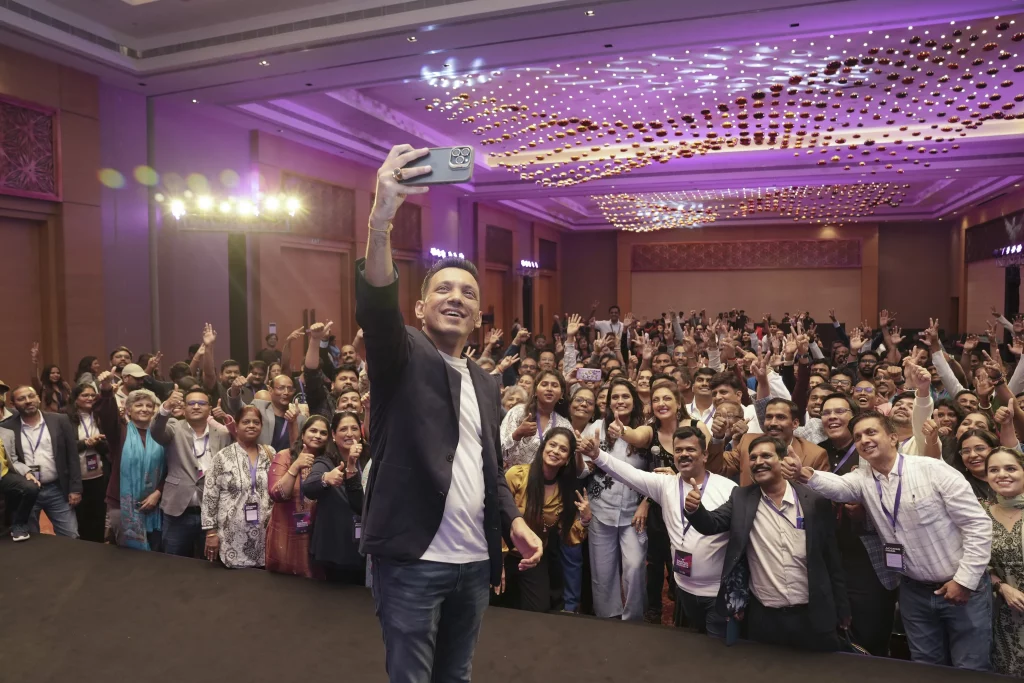
Roots and rebellion
Rajsekar grew up in a middle-class Tamil Brahmin household in Bangalore where academics were taken very seriously. The traditional education system, however, never quite fit him. What stayed with him instead was something his grandfather used to say: “Never let your schooling interfere with your education.” That became a guiding principle. He found his love for learning through music, and interestingly, became a teacher in the very space where he was still a student — an early glimpse of the educator he would eventually become. His corporate stint in Dubai added another dimension entirely, exposing him to global standards, discipline, and speed of execution, but more importantly, teaching him independence and self-reliance.
Three moments that changed everything
He traces his transformation back to three defining moments. The first was academic failure — it pushed him to question the system and explore alternative ways of learning, which later became the foundation of everything he built. The second was losing his job in Bangalore, which shattered any illusion of security and forced him to take full ownership of his life. The third, and perhaps the most quietly powerful, has been his spiritual journey. Deeply inspired by his mentor Jayapataka Swami who has spent decades travelling the world and impacting thousands of lives, Rajsekar underwent a fundamental shift in how he understood success, leadership, and community. “Entrepreneurship gave me a vehicle,” he tells Global Indian, “but spirituality gave me direction.” Together, these three experiences shaped not just a business, but a sense of purpose.
Building a modern gurukul
When he started the Internet Lifestyle Hub, the initial vision was to help people monetise their knowledge and build a lifestyle of freedom. Over time, it evolved into something far deeper. “I’ve always been inspired by how ancient Indian learning systems like Nalanda and the Gurukul model operated — they were not transactional. They were immersive, community-driven, and built around shared growth,” he says. ILH, in his view, is an attempt to recreate that spirit in a modern, digital format — a place where people don’t just take courses but become part of a larger ecosystem, growing together and building impact-driven businesses. “It’s less about courses and more about creating a culture of learning,” he adds.
Authenticity in a crowded market
In a digital coaching landscape cluttered with noise and inflated claims, Rajsekar is deliberate about what sets credibility apart. For him, authenticity comes from alignment — whether your life, your work, and your message are consistent with each other. Within ILH, the emphasis is on building from lived experience. “We encourage people to scratch their own itch — to teach what they have actually gone through and solved,” he explains. Real transformation, real case studies, and real results are what build trust over time. And underpinning all of it is a non-negotiable: integrity. “As a coach, your responsibility is not just to inform but to genuinely impact lives, and that requires a strong value system,” he says.
When the ground shifted
Losing his job in Bangalore was one of the toughest phases of his life. His wife was pregnant, finances were extremely tight, and he even had to pawn her jewellery to invest in learning new skills. “That phase could have broken me, but instead, it became a turning point. I chose to invest in myself, learning digital marketing, enrolling in courses, and building skills that the market actually valued,” he recalls. That period of forced reinvention eventually led him to run a digital agency, gain deep industry exposure, and transition into information marketing. It was a shift that, as he puts it, changed everything. “Looking back, that setback gave me clarity that the only real security lies in your ability to learn, adapt, and create value,” he remarks.
Success, redefined
Rajsekar measures success not by revenue or reach, but by ripple effect — how many people from his community go on to build their own tribes, mentor others, and create impact beyond themselves. “When I see someone build their own movement and take others along with them, that’s real success,” he says. On artificial intelligence, he is neither dismissive nor dazzled.
AI will make information abundant and easily accessible, he agrees, but that was never the real power of systems like Nalanda or the Gurukul. Their strength lay in the environment, the discourse, and the community. “The future coach will not just be a content creator but a community builder — someone who can create immersive learning environments where people apply knowledge, get feedback, and grow together. In that sense, we are not moving into something entirely new. We are, in many ways, returning to something timeless, but with far more powerful tools.”
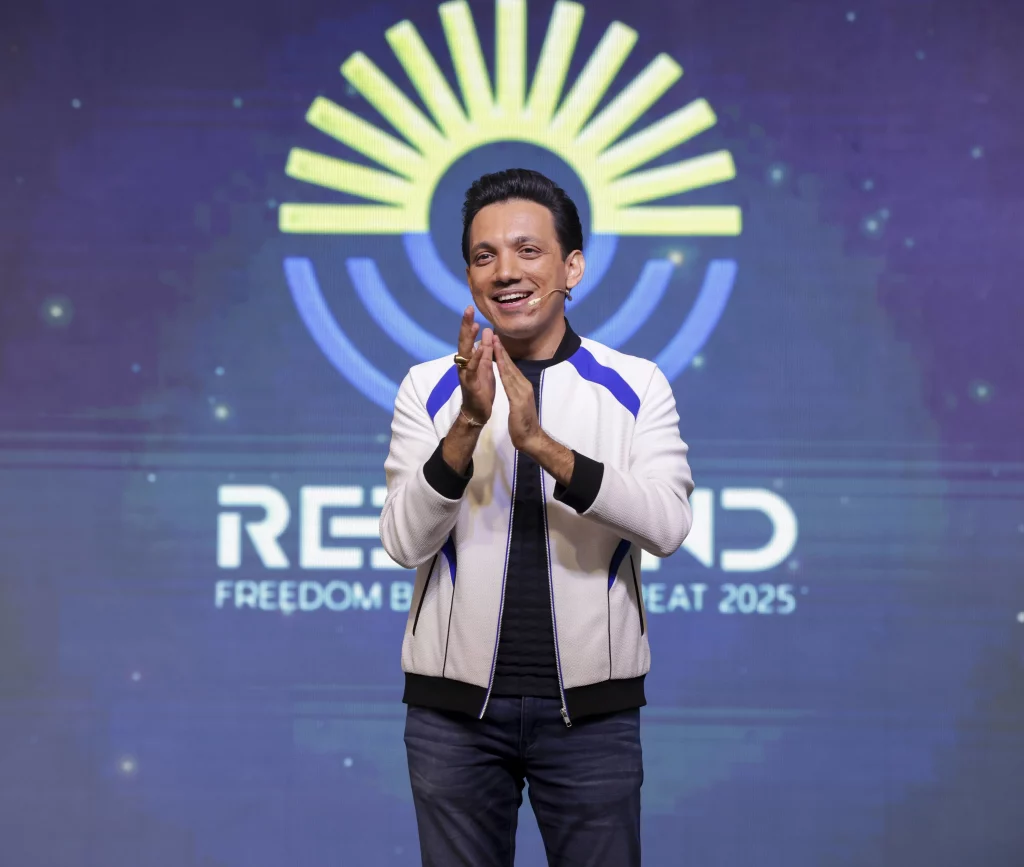
The biggest lesson
You don’t build a movement by positioning yourself as the hero. You build it by creating more heroes. That, distilled, is Rajsekar’s philosophy. “A brand can attract attention, but a movement sustains only when people feel they are part of something bigger than themselves — when they are not just consumers, but contributors. That’s when real scale and real impact happen.”
ALSO READ: How Ram Charan went from a shoe shop to mentoring Fortune 500 leaders