
October 22 2026
Sir Shankar Balasubramanian: Indian-born Cambridge scientist behind DNA sequencing breakthrough

(Oct 22, 2026) Born in Chennai and raised in rural England, Sir Shankar Balasubramanian is a 2026 Wolf Prize in Chemistry laureate, honoured alongside David Klenerman and Pascal Mayer for their contributions to DNA sequencing. The Cambridge professor, who also won the 2022 Breakthrough Prize in Life Sciences, helped develop technology that allows scientists to read DNA much faster and at lower cost, advancing research into cancer, rare diseases and personalised healthcare.
When Sir Shankar Balasubramanian began investigating DNA, he was not trying to revolutionise medicine. He was a chemist fascinated by one of life’s most remarkable molecules and wanted to understand it better. The technology that emerged from this curiosity would change how scientists read the human genome, making large-scale DNA sequencing faster and less expensive.
For Balasubramanian, the breakthrough was an unexpected outcome of fundamental research. “It was, in many ways, an accident of blue skies research,” he told the BBC programme The Life Scientific. “Research by its nature is hard to predict.”
Born in Madras, now Chennai, in 1966, Balasubramanian moved to Britain with his parents in 1967, when he was still a baby. He grew up in rural Cheshire in northern England, far removed from the Indian city of his birth. His childhood, spent climbing trees, playing football and exploring the countryside, was not shaped by a predetermined ambition to become a scientist.
Instead, an early appreciation for learning and the freedom to follow his interests helped set him on his path.
Today, Balasubramanian is the Herchel Smith Professor of Medicinal Chemistry at the University of Cambridge, a senior group leader at the Cancer Research UK Cambridge Institute and a Fellow of Trinity College, Cambridge. His research focuses on nucleic acids, including DNA and RNA. He is best known for co-inventing Solexa sequencing, a next-generation DNA sequencing method that has helped transform genetic research.
DNA has never failed to keep me excited and curious. It’s on the face of it relatively simple molecule. It’s just four building blocks arranged in a particular order. But actually, rather like an onion as you learn one thing you see other things, and I think there are more surprises for those of us who are looking closely at DNA.
Sir Shankar Balasubramanian
His achievements have earned him some of the world’s most prominent scientific honours. He received the Breakthrough Prize in Life Sciences in 2022 and was knighted in 2017 for services to science and medicine. In 2026, he has been among the recipients of the Princess of Asturias Award and the Wolf Prize in Chemistry.
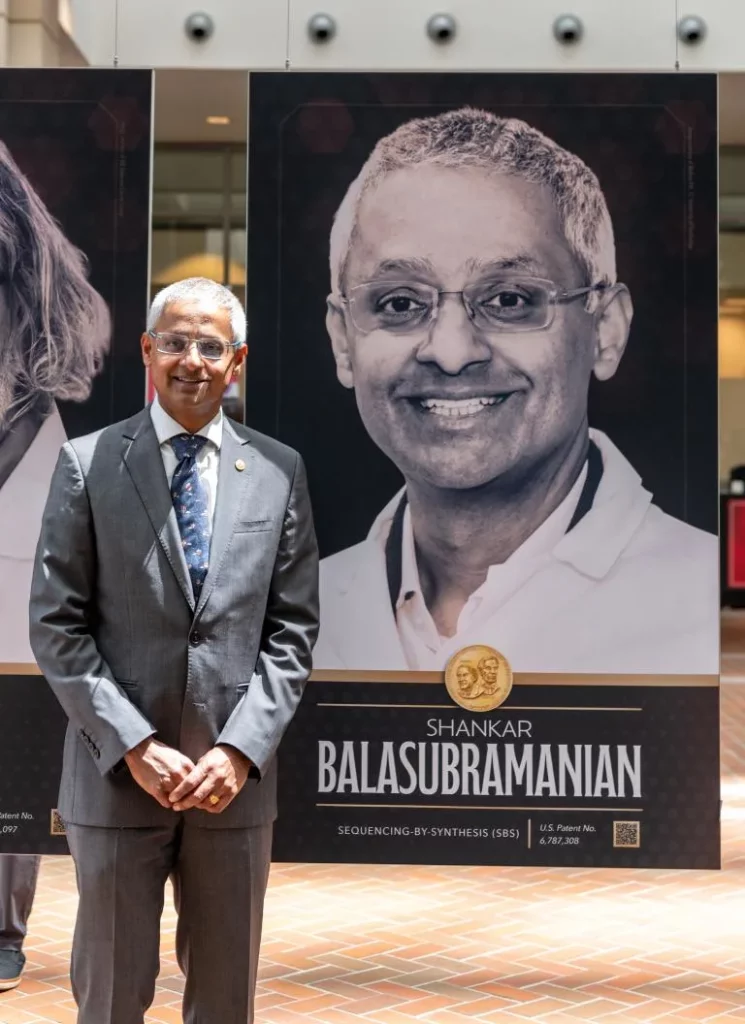
From Chennai to rural England
Balasubramanian attended Daresbury Primary School in Cheshire before moving on to Appleton Hall High School. He remembers his primary school headmaster, Brian Leach, as a particularly important influence. “He made the whole experience of learning enjoyable,” Balasubramanian recalled, describing how his teacher encouraged curiosity and made asking questions part of the pleasure of learning.
His parents also gave him room to find his own direction. Rather than prescribing particular grades or a professional destination, they allowed him to explore his interests. “They really just allowed me to relax and find my own pathway,” he said.
That freedom would remain relevant throughout his career. His eventual breakthrough emerged from a line of inquiry that had not originally been designed to produce a commercial technology, let alone one that would change the pace and cost of genomic research.
In 1985, he entered Fitzwilliam College at the University of Cambridge to study natural sciences. He completed his undergraduate degree in 1988 and continued at Cambridge for a PhD in chemistry, researching the reaction mechanism of an enzyme under the supervision of Chris Abell. After completing his doctorate, he spent two years as a research fellow at Pennsylvania State University, working in the group of chemist Stephen J. Benkovic.
He returned to Cambridge in 1994 to begin his independent academic career and became Herchel Smith Professor of Medicinal Chemistry in 2008.
It was at Cambridge that his interest in DNA developed into work that would have a far-reaching impact. “It’s also such an amazing molecule. I’m a chemist, I study molecules, why would I want to work on any other type of molecule?” he said during the BBC interview.
Reading DNA, one building block at a time
DNA is often described as the instruction manual for life. Its information is encoded in sequences of four chemical building blocks, represented by the letters A, T, C and G. Reading their order can help scientists understand inherited conditions, investigate cancer and study how diseases develop.
But sequencing an entire human genome, which contains roughly three billion DNA letters in each copy, was once a lengthy and expensive process. The Human Genome Project, which produced the first reference sequence, took about a decade.
Balasubramanian and his Cambridge collaborator Sir David Klenerman were initially trying to understand how DNA is copied, rather than set out to sequence an entire genome. They studied an enzyme that builds a new DNA strand by joining its chemical building blocks.
Their idea was to make each building block glow in a way that allowed it to be identified as it was added. By detecting these signals, the researchers could work out the order of the building blocks and, in turn, read the DNA sequence. This approach laid the foundation for a technology that could read millions of DNA fragments simultaneously.
I think in science, eureka moments are actually usually spread out over an extended period of time and a series of steps.
Sir Shankar Balasubramanian
The idea was promising, but turning it into a working sequencing technology required more than a clever experiment. The team needed expertise in chemistry, engineering, molecular biology and computing, as well as the resources to develop a method that could work at scale.
From a Cambridge laboratory to a global technology
A scientific breakthrough can begin with a conversation in an unexpected place. In the summer of 1997, discussions in a Cambridge laboratory and a meeting at the Panton Arms pub helped Balasubramanian and Klenerman develop the idea for a new approach to DNA sequencing.
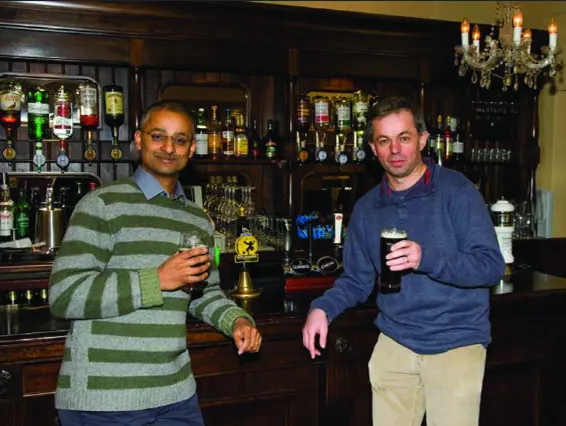
Sir Shankar Balasubramanian and Sir David Klenerman at PantonArms | Photo Credit: University of Cambridge
In 1998, the two scientists co-founded the organisation Solexa, securing seed funding from venture capital firm Abingworth Management to develop their technology. Illumina acquired Solexa in 2007 for £600 million, and the sequencing method became central to its sequencing platforms.
The approach allowed scientists to read millions of DNA fragments at the same time, making genome sequencing much faster and more affordable. It has since supported major research initiatives, including the UK’s 100,000 Genomes Project, the International Cancer Genome Consortium and GenomeAsia 100K. The University of Cambridge estimates that the technology first discussed by the scientists is now used to sequence around one million genomes a year.
In his BBC interview, Balasubramanian described how sequencing technology had advanced to the point where some instruments could process the equivalent of a human genome in about an hour. The time and cost vary depending on the technology and the type of analysis, but the change has been significant. What once required lengthy, expensive projects can now be undertaken on a much larger scale.
“The technology has really had a bigger impact than I think I certainly imagined,” he said. “It’s taken a bit longer, but the impact is bigger.”
What faster DNA sequencing means for patients
Faster sequencing has expanded the possibilities for medical research. In cancer, it can help identify DNA changes in tumours, giving researchers and clinicians information that may help explain how a cancer behaves and inform treatment decisions. It can also help investigate rare diseases, which can be difficult to diagnose, and track viruses and their variants, as seen during the COVID-19 pandemic.
The technology has contributed to research into personalised medicine, in which healthcare decisions can be informed by a person’s genetic information. Sequencing alone does not guarantee a diagnosis or a successful treatment, but it gives scientists and clinicians more information to work with.
DNA is a remarkable information molecule. And it has many layers as to how it stores and transmits information in biological systems. What we and others in the field are doing is discovering some of these other layers and mechanisms of information that DNA has and figuring out ways to fully decode everything that DNA is telling us.
Sir Shankar Balasubramanian
Beyond DNA sequencing
Balasubramanian’s interest in DNA extends beyond reading its sequence. He has also investigated epigenetics, the study of chemical changes that influence how genes work without altering the underlying DNA sequence. These changes help explain how cells perform different functions and are being studied for their links to ageing and disease.
His interest began after his colleague Tony Green showed him a scientific paper about a chemically modified DNA building block. Seeing a problem that could be investigated experimentally, Balasubramanian spent around two years working with a PhD student to develop a patented method.
The work led to Cambridge Epigenetix, the company he co-founded, which later became biomodal. The research explores how information beyond the DNA sequence might improve scientists’ understanding of disease and contribute to new diagnostic approaches, including blood-based tests. These applications continue to be investigated.
Well, the ambition, not just in cancer, but I would say in all diseases is early detection. And earlier detection could potentially lead to prevention or more successful cures. So this is the aspiration. And that there is some suggestion from the biology that detecting epigenetic changes might be a way to catch the onset of disease earlier.
Sir Shankar Balasubramanian
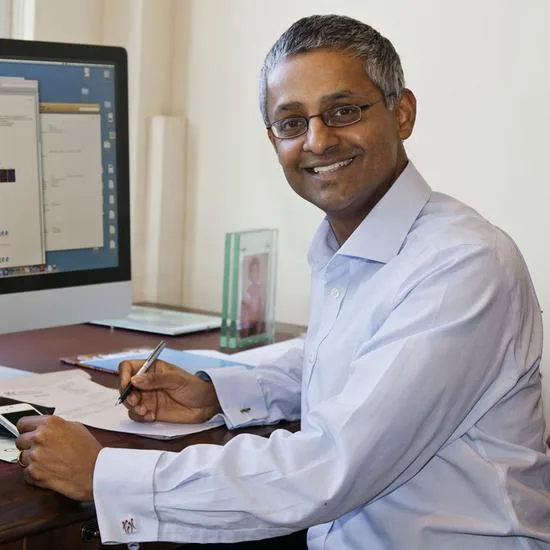
A molecule that keeps revealing more
For Balasubramanian, the fascination with DNA lies in how much remains to be understood, even after major advances in sequencing. He explained how researchers are continuing to uncover the molecule’s less-understood layers of information and find ways to interpret them. He compares DNA to an onion, with more layers emerging the deeper scientists look.
Well, DNA and of course, it’s closely related RNA dictate everything in every living system. So how could you not learn more about life by studying it?
Sir Shankar Balasubramanian
What began as an attempt to understand a fundamental process in chemistry has helped reshape genomic research, while opening new questions for scientists to explore.
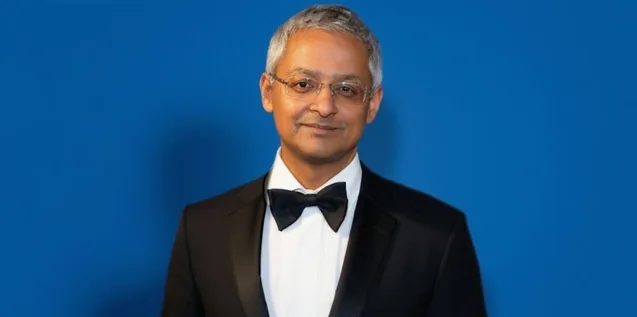
Sir Shankar Balasubramanian
| Born | Sep 30, 1966, Madras, India |
| Based | Cambridge, United Kingdom |
| Studied | University of Cambridge, UK |
| Languages | English, Tamil |
Signature work
Sir Shankar Balasubramanian co-invented Solexa sequencing with Sir David Klenerman, a technology that made DNA sequencing faster, more affordable and scalable, transforming genomic research worldwide. His subsequent work in epigenetics has explored how chemical changes influence gene activity, opening further avenues for research into disease and diagnostics.
Idea
Pioneered a faster, more affordable way to sequence DNA, helping scientists study the human genome and investigate disease.
Network
Co-invented Solexa sequencing with Sir David Klenerman and collaborated with researchers across chemistry, biology and medicine.
Impact
His work has transformed genomic research, supporting advances in cancer research, rare disease diagnosis and personalised healthcare.
Inspired by Sir Shankar Balasubramanian 's journey?
Yours follows the same Hero's pattern — Separation, Initiation, Transformation, Return.

Share with


Written By: Amrita Priya
How Venkatesan Sundaresan’s 2024 Wolf Prize-winning agricultural discovery will feed billions
Written By: Amrita Priya