
August 20 2026
Saskia Rao-de Haas: Bringing the cello into Hindustani music
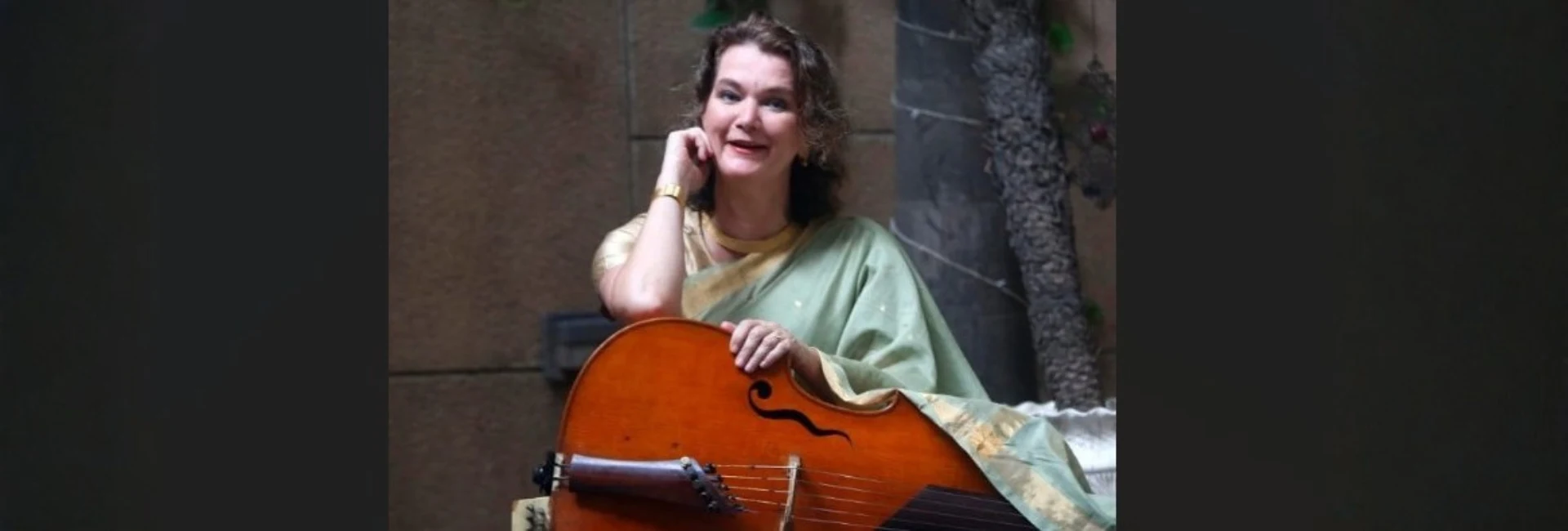
(Aug 20, 2026) Dutch-born cellist and composer Vidushi Saskia Rao-de Haas has made India the heart of her three-decade musical journey, immersing herself in Hindustani classical music, creating the Indian cello, performing with acclaimed musicians, and nurturing music education for children across the country while taking its traditions to global stages.
From the concert halls of Europe to the historic walls of the Alhambra in Spain, and from the United Nations in Geneva to the heart of Hindustani classical music in India, Vidushi Saskia Rao-de Haas has spent three decades immersing herself in Indian music and building a bridge between cultures. Her Indian musical journey has taken her to prestigious platforms including the celebrated Parampara Series, curated by Padma Bhushan Dr Raja Radha Reddy and Dr Kaushalya Reddy of Natya Tarangini.
The Dutch-born cellist, composer, educator and creator of the Indian cello, she has transformed an instrument traditionally associated with Western classical music into a powerful voice for Indian classical expression.
A disciple of the legendary flautist Pandit Hariprasad Chaurasia, and artistic partner of sitar maestro Pt. Shubhendra Rao, the artist’s journey is one of deep immersion, reinvention and respect for tradition. Alongside her performances across the globe, she has created innovative music education programmes that have reached over 100,000 children and teachers across India. Through her work, she has shown that tradition and innovation are not opposites: they are companions.
I arrived as a Hindustani musician, and everything else: composing, collaborations, creating a new instrument, grew from that foundation.
Vidushi Saskia Rao-de Haas
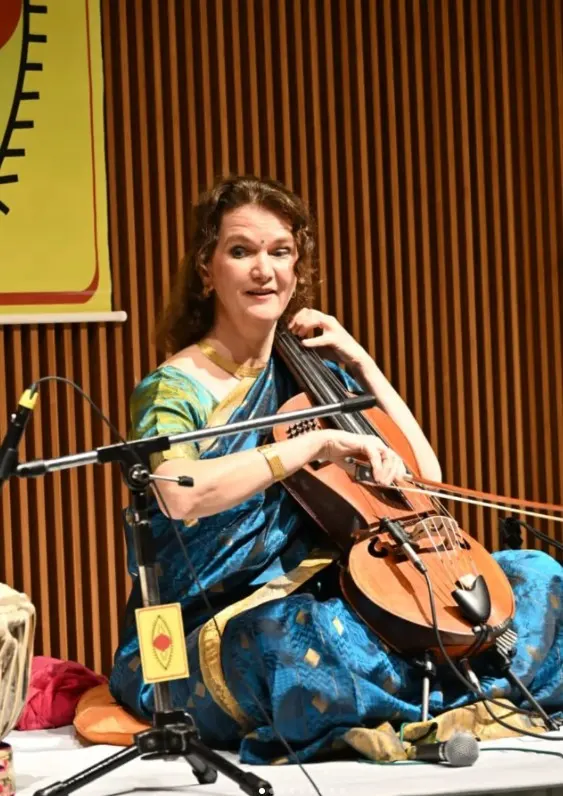
From Amsterdam to the world of Hindustani music
Saskia grew up in Abcoude, near Amsterdam, in a family where music was part of everyday life. Her parents played the piano, her grandfather was a cellist and her grandmother sang. “Music did not enter my life; it was already there,” she recalls.
At seven, when she was given the freedom to choose an instrument, she chose the cello instantly. “I loved it completely. There is an intimacy to the cello that I felt even as a child: you sit, and you almost embrace it,” she remarks in a chat with The Global Indian.
Her early training was rigorous. From the age of eight, she studied with Hungarian cellist Tibor de Machula, who instilled in her the discipline that continues to shape her practice. “The years of slow scales and the daily riyaz I still keep, is the foundation everything else stands on,” she says.
Finding India through Hindustani music
Although she was deeply rooted in Western classical music, her artistic path changed during her Master’s in ethnomusicology at the University of Amsterdam. A recording of dhrupad — an alap in raga Yaman by the senior Dagar brothers — opened an entirely new world.
“Everything in me went still,” she says. “I had spent my whole life believing I understood what music could do, and here was an entire universe I had never heard, one that lives in the infinite space between the notes.”
That moment did not make her want to merge two traditions immediately. Instead, it sparked a desire to become a Hindustani musician in its truest sense. “I thought, I have to learn this, properly, from the source, for the rest of my life.”
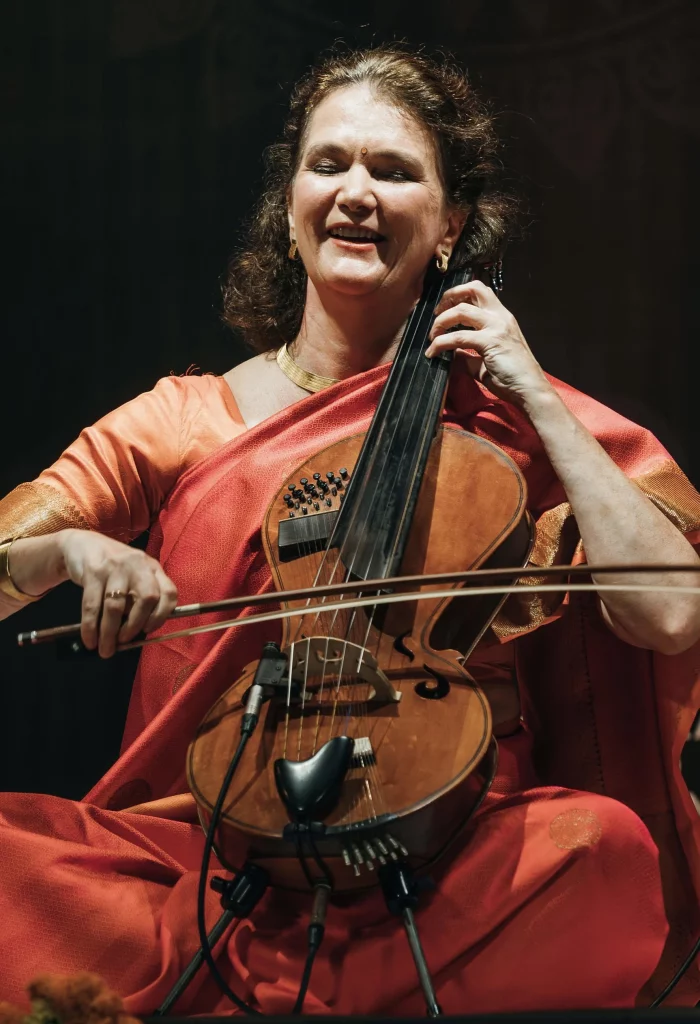
From student of Indian music to a life in India
Her first journey to India came in 1994 during her research on sargam notation for her Master’s thesis. In Delhi, she studied under Dr. Sumati Mutatkar, a respected scholar and exponent of dhrupad.
“She was a purist, a deep artist, one of the very few women in Dhrupad, with extraordinary knowledge of the music,” Saskia says. “She represented the true beauty of this tradition:profound, and genuinely welcoming to anyone willing to pay the entrance price, which is years of riyaz.”
Eventually, India became home. Saskia and Shubhendra Rao chose Delhi as the place where they could live their art fully. “This music can be learned, but to us it cannot be lived fully at a distance,” she says.
Reimagining the cello for Indian classical music
The cello, with its warm and human-like voice, already had a natural connection with Indian classical music. But Saskia wanted to explore its possibilities further.
The Indian cello was born not out of any lack, but out of want. The cello, in its timbre, is the instrument closest to the human voice, and Hindustani music is vocal music at its heart.
Vidushi Saskia Rao-de Haas
She began experimenting, eventually creating an instrument uniquely suited to her musical vision. The Indian cello features a higher playing string that expands its vocal range, along with ten sympathetic strings that create the resonance and shimmer associated with Indian instruments.
“I wanted that singing quality to come out even more fully,” she says. “I made it smaller, so I could sit and play in the traditional way.”
Learning tradition before creating her own voice
Her guru, Pandit Hariprasad Chaurasia, encouraged her not to imitate existing traditions but to develop her own artistic identity. “He told me early on to create a voice that was fully my own rather than to imitate,” she says.
That philosophy has shaped her entire career. For fifteen years, Saskia immersed herself exclusively in Hindustani classical music before expanding into composition and cross-cultural collaborations.
“The order matters to me,” she explains. “A raga is a discipline you earn the right to build from, never simply a starting point to decorate.”
Musical partnership with Pt. Shubhendra Rao
Her musical partnership with Pt. Shubhendra Rao has been central to that journey. Their acclaimed project ‘East Marries West’ brings together sitar and cello, two instruments with very different personalities.
“The sitar is percussive, sparkling, articulate. The cello is sustained, vocal, close to the breath,” she says. “The magic happens because neither of us dissolves into the other.”
Together, they have performed at prestigious venues around the world, including the Alhambra and Granada Festival in Spain in a tribute programme to Bharat Ratna Pandit Ravi Shankar. They also recreated the historic 1967 Ravi Shankar-Yehudi Menuhin concert at the United Nations in Geneva on Human Rights Day.
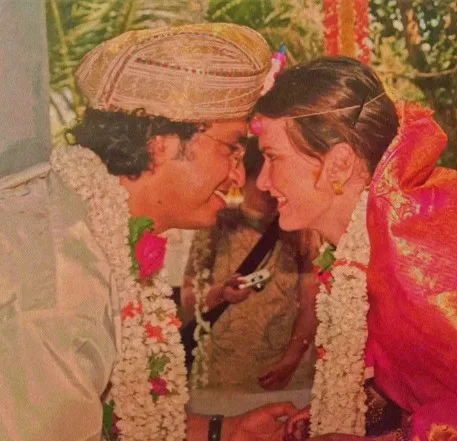
Vidushi Saskia Rao-de Haas and Pandit Shubhendra Rao tied the knot in 2001
When India became home
Among all these international stages, one moment remains particularly special.After a concert in Maihar, the home of the musical lineage that shaped their tradition, an elderly listener approached Saskia. “He said to me, ‘Who says Saraswati is only Indian?’”
She pauses while recalling the memory. “I am not sure I have ever received a greater blessing. To be embraced like that, at the source of the tradition I have given my life to, and told that I was truly home in this music.”
For Saskia, music is not only about performance. It is also about access and education. Through her foundation and education initiatives, she has worked to make Indian music available to children across the country.
“Music is the birthright of every child,” she says. She noticed a gap in the way Indian classical music was being introduced in schools. While India possesses one of the world’s richest musical traditions, there was no comprehensive methodology to bring it into classrooms.
A great performer is not automatically a great teacher; those are two different arts. I committed myself seriously to both.
Vidushi Saskia Rao-de Haas
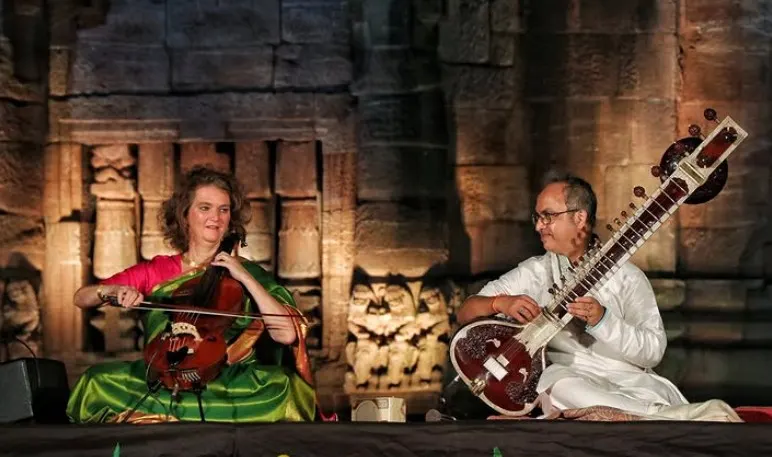
Vidushi Saskia Rao de-Hass with her musical partner and husband, Pandit Shubhendra Rao
Bringing Indian music into classrooms
Her initiative, Sangeet4All, developed India’s first complete music curriculum, including eight storybooks, teacher training modules, hundreds of lesson plans and the patented Swartarang instrument she designed. The programme has reached more than 100,000 children and teachers.
For Saskia, nurturing young musicians is as meaningful as performing on international stages. She believes that exposure at an early age can transform lives and create a future where music belongs to everyone.
She also sees encouraging signs for women in classical music today. “When I look around now, women are performing at the highest level across both traditions, commanding the great stages, and audiences come simply to hear the music,” she says.
Her advice to young musicians navigating multiple traditions is simple: “Go deep before you go wide.” She believes true innovation comes only after a foundation of knowledge and discipline. “You earn the right to bring worlds together only by understanding each of them profoundly, on its own terms.”
At the same time, tradition should never prevent creativity. “Depth of tradition does not mean that you stop being a creator. The opposite. You need to create your space within.”
Carrying India’s musical tradition forward
Saskia continues to compose, perform and expand the possibilities of the Indian cello. Upcoming projects include performances with the Rao Trio — alongside Shubhendra and their son Ishaan — as well as new compositions for the Cello Biennale in the Netherlands featuring eight cellos and a gamelan orchestra.
Despite a schedule that spans continents, she remains grounded by simple joys. “Nature grounds me, and our dog, and the smile of a child,” she says. “What keeps me grounded is not taking any of these blessings for granted, and staying deeply grateful for them every single day.”
ALSO READ: Pandit Shubhendra Rao: The world on a string
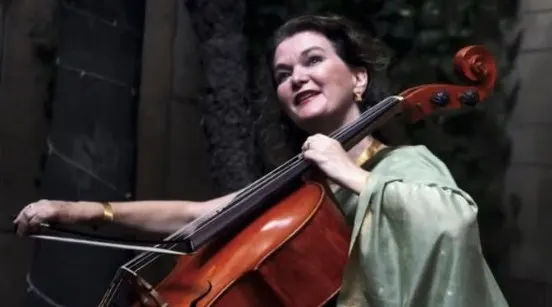
Saskia Rao-de Haas
| Born | March 10, 1971, Netherlands |
| Based | Delhi, India |
| Studied | University of Amsterdam |
| Languages | Dutch, English, French, German, Hindi |
Signature work
Vidushi Saskia Rao-de Haas is best known for developing the Indian cello, adapting the Western instrument to suit the nuances and playing style of Hindustani classical music. Through her performances, compositions and teaching, she has also helped take Indian classical music to new audiences while nurturing its appreciation among children in India.
Idea
To make the cello a natural voice for Hindustani classical music, while creating new pathways for Indian music to reach audiences, musicians and children in India and around the world.
Network
From her gurus and collaborators in India, including Pandit Hariprasad Chaurasia and Pt. Shubhendra Rao, to cultural institutions, educators and schools, Saskia has built a network that connects India’s classical music tradition with global audiences and contemporary music education.
Impact
Created the Indian cello, performed and composed across global stages, and co-founded Sangeet4All, a music education framework that has reached more than 100,000 children and 200 teachers, bringing Indian classical music and cultural heritage into classrooms.
Inspired by Saskia Rao-de Haas 's journey?
Yours follows the same Hero's pattern — Separation, Initiation, Transformation, Return.
Share with


Written By: Amrita Priya
Ken Zuckerman: Through the strings of the sarod, a foreigner became India’s own
Written By: Amrita Priya