
August 21 2026
From Delhi to the UK, US and back: Roshini Sanah Jaiswal’s entrepreneurial journey

(Aug 21, 2026) From growing up in a Delhi business family to navigating boarding school in the UK, studying and working in the US, and returning to build businesses in India, Roshini Sanah Jaiswal’s journey spans three countries and multiple entrepreneurial chapters. Today, she leads businesses across beauty and industry while using her platform to open more candid conversations around women’s health.
Growing up in a business family in Delhi, Roshini Sanah Jaiswal was introduced to entrepreneurship early on in life. Conversations around business problems, ideas and decisions were part of dinner table discussions, where she learnt some of her earliest lessons in practicality and resilience. “There was very little room to be too dreamy. Things were practical and matter-of-fact. Decisions were based somewhat on data, but also on gut,” she tells The Global Indian.
Her mother, who was part of the garment trade industry, left a strong impression on her. Watching her work long hours, Roshini grew up with a message that stayed with her.
It is very important for women to be financially independent. It was something that my mother would often tell me.
Roshini Sanah Jaiswal
Today, the Delhi-based businesswoman dons several hats with aplomb: as the founder and CEO of SwanRose Inc., Promoter and Chief Restructuring Officer of Jagatjit Industries, and founder of Justhuman, a clean beauty brand. She also hosts Menopause: It Was This All Along, a podcast opening up conversations around women’s health and menopause.
View this post on Instagram
Finding her feet abroad
At the age of 16, Roshini left Delhi for boarding school in England. “It was not easy at all initially. I was dealing with a very different culture and racism was quite prominent.”
But she realised that the greatest learnings arise from tremendous discomfort. “When you are trying to survive in a new environment, you learn to adapt quickly and pick up whatever you can to survive. The first few months were very hard, but eventually, I had two fantastic years and made lifelong friends,” she reflects.
She later moved to New York, where she studied economics and political science at New York University (NYU). But even with a conventional degree, she wasn’t certain she wanted a conventional career. “As an Indian, you often feel you’re supposed to do science, engineering or economics. I had ticked that box, but I wanted to do something creative.”
After graduating, she pursued photography at the School of Visual Arts in New York City and worked as an assistant to a photographer. “I had also worked as a waitress and on a film set as a costume designer. I remember waitressing during the US Open and having the pleasure of meeting Hugh Hefner and Brooke Shields, who had come to watch the matches,” she reminisces.
Those early jobs, she recollects, were humbling experiences before she settled into what she calls a “job job.”
The idea that brought her back to India
Roshini had grown comfortable in New York and initially had little desire to return to India. But her then-partner, who would become her husband, wanted to come back. Neither wanted to return to their respective home cities, Delhi or Mumbai, so Bengaluru became the neutral territory.
She gave India two years. “I had my green card and was ready to go back at any moment if I felt it wasn’t working out.”
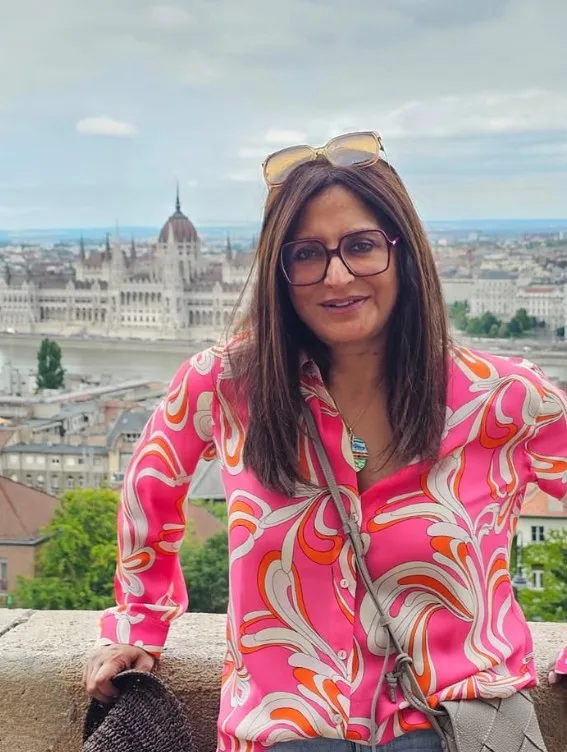
However, Bengaluru gave Roshini a reason to stay. Coming from New York, she found the city’s nightlife surprisingly limited. The pubs existed, but she felt they lacked the atmosphere and sense of safety she had experienced abroad. So, she decided to create the kind of place she wanted to visit herself. In 2000, Roshini launched 180 Proof, which she describes as India’s first lounge bar, in the heart of the city.
“I wanted to create a place where women could come freely, dress as they wished and feel safe from harassment,” she observes. The venture became an unexpected success and changed the course of her career opening the door to a 13-year entrepreneurial run that included brands such as Hard Rock Cafe, California Pizza Kitchen and other home-grown ventures. Her husband later joined the business, followed by Sanjay Mehtani, and the three built the business together before she exited in 2013.
From start-up culture to a legacy business
After leaving the business, Roshini returned to Delhi with her son and spent time figuring out what she wanted to do next. Her father eventually suggested that she join the family business: Jagatjit Industries, a prominent manufacturer of alcoholic beverages.
The move meant stepping into a world very different from the entrepreneurial culture she knew. “I was part of the start-up culture while Jagatjit was a legacy business. Both are extremely different from each other and there was a huge generational gap,” she says.
The first few years were highly difficult. Building the right team proved to be the biggest challenge, and the company remained in decline for several years. By 2019-20, however, she says the team had finally begun to come together.
The company subsequently recorded a significant turnaround, growing 63 percent during COVID-19 even as the wider liquor industry declined. “From that experience, I learnt that no matter how much hard work you put in, if you don’t have the right team around you, all your efforts will be in vain,” she states.
Inspired by a personal health struggle
Her next venture, Justhuman, launched in 2023, grew out of Roshini’s own experience with two autoimmune conditions that affected her skin and hair. At the same time, she was navigating menopause and began to question why there were so few products and conversations that spoke to women at her stage of life. “No one was telling me what I needed to hear, and there weren’t products designed for women like me,” she points out.
For Roshini, the idea was to never create another skincare brand for the sake of it. “It was about solving a problem that I was experiencing myself,” she says.
View this post on Instagram
Personal experience also shaped what she wanted Justhuman to stand for: products that were clean but did not compromise on efficacy. For women in their 40s and beyond, she felt, skincare needed to acknowledge the changes that come with age rather than simply sell the promise of looking younger.
We are a very youth-obsessed society. You see an 18-year-old selling anti-ageing cream, but if you’re 45 or 48, how can you look like that? Women in their 40s are dealing with collagen loss and estrogen loss. Surely, we deserve products that are clean but also give us results quickly.
Roshini Sanah Jaiswal
For Justhuman, that became a simple philosophy: “clean and fast.”
A podcast on menopause
When Roshini began to experience several symptoms of menopause in her early 40s, including night sweats, irritability, sleeplessness, brain fog and recurring urinary infections; she was surprised to realise how little she knew despite having access to information. When she spoke to friends, she found many were equally clueless, or had incorrect information about menopause.
This led her to start a podcast titled Menopause: It Was This All Along, where she brings together doctors, researchers and women willing to speak openly about their experiences. “Women are incredibly powerful at this stage of life because it’s the first time, we realise when to say no, what we want and don’t want,” she says. “But when we are burdened with these experiences, we can’t truly shine.”
With women living several decades beyond menopause, she believes the conversation cannot stop at reproductive health. “Today with longevity, we are going to live 30, 40, maybe even 50 years more after we cross menopause. How do we choose to live those years?” she asks.
Previous episodes of the podcast have featured politician Mahua Moitra while the current season includes conversations with Shoma Chaudhury, Bandana Tewari, Dr Michelle Henry, Harshna Bijlani, Leeza Mangaldas, Kim Vopni, known as The Vagina Coach, Ruchika Mehta and Manjri Varde, among others from medicine, politics, journalism and culture.
For women navigating their 40s and 50s, Roshini’s message is less about fighting ageing and more about recognising the strength that comes with this stage of life.
You are your most powerful self today. And you are not alone. So, if you are struggling, go find help because you are going to unleash that power the moment you do.
Roshini Sanah Jaiswal
Life beyond business
Her interests outside work also reflect causes that matter to her. Roshini says she supports several initiatives involving women and animals, including organisations that feed and care for dogs. She has also supported Karma Trust, which works towards educating girls in villages and helping them find jobs and placements.
With little free time, she says her hobbies are fairly simple. “Poker,” she laughs. The gym, she adds, is less a hobby than a necessity.
For now, her work remains centred around the businesses and conversations she has built. The podcast continues to bring in more experts and voices, while Justhuman remains focused on its science-led approach to wellness and beauty.

Roshini Sanah Jaiswal
| Born | Jan 11, Delhi, India |
| Based | Delhi, India |
| Studied | Bachelors in Economics and Political Science, NYU |
| Languages | Hindi, English |
Idea
Turn personal experiences into businesses and platforms that address real gaps, from hospitality and beauty to women’s health and menopause.
Network
Build across India and US, drawing on diverse experiences, teams, experts and collaborators to shape ventures and conversations.
Impact
Champion women’s financial independence, create safer spaces, support women through midlife and bring greater openness to conversations around menopause and ageing.
Giving Back
Supports causes focused on women’s health as well as animal welfare, including initiatives around girls' education and employment and the care of dogs.
Inspired by Roshini Sanah Jaiswal 's journey?
Yours follows the same Hero's pattern — Separation, Initiation, Transformation, Return.
Share with



Written By: Vikram Sharma
Arushi Agrawal: Building a luxury fragrance brand that funds cataract surgeries

Written By: Deepa Natarajan Lobo
Lavanya Jayashankar: From global consumer insights to connecting India’s promising food businesses with growth capital

Written By: Bindu Gopal Rao