
August 31 2026
Rohith Sobti: The entertainment strategist building a global platform for artists

(Aug 31, 2026) From nearly 11 years at Yash Raj Films, including two years as Vice President, Rohith Sobti has built a career at the intersection of music, film, artists and intellectual property. In 2025, he co-founded The Shakti Collective to develop artists, create and build intellectual properties across film and music, and turn creative ideas into sustainable businesses. One of his most prominent collaborations was on the blockbuster 3D-animated film Mahavatar Narsimha, helping shape its journey to global audiences, including Netflix, and the 2026 Oscars longlist.
Whether it is a music artist, a storyteller or a director with a creative streak, Rohith Sobti goes out of his way to help unfold their potential and give them the ecosystem they need to become the best version of themselves. His mission is to modernise deep cultural narratives, create conscious and entertaining music, and build a global ecosystem that connects artists, audiences and intellectual property in meaningful and sustainable ways. That is the foundation on which he built The Shakti Collective (TSC), a single integrated platform that enables artists to evolve and take their art to the world.
“Creation is not simply about making something. There is a process behind taking an idea and turning it into something that connects with people, be it music, film, a story or any other form of content. An artist is at the centre of that entire process,” says Rohith, in a chat with The Global Indian.
With nearly three decades of experience across music, films, brands and intellectual property, Rohith has shaped and scaled some of India’s influential entertainment businesses. He previously served as Vice President at Yash Raj Films (YRF) and has also had career stints at Sony Music India and Universal Music India.
Learning the music business
“Sony Music was a great learning experience for me,” says Rohith, who joined the company in 2001 and worked there for about two years.
This was where he learned how the music business works and understood how a large music company operates. “I understood how different parts of the business connect with each other, from music and marketing to licensing and new initiatives. It taught me to look at the business as a system rather than as individual functions.”
His stint at Universal Music was shorter, around a year, but it gave him another perspective on the global music business and how international music organisations operate. “It was another important part of understanding how the industry works at scale.”
At Yash Raj Films
His longest and perhaps most comprehensive experience was at Yash Raj Films, where he worked for almost 11 years. “I worked across almost every revenue stream, from music to films, theatrical, licensing and launching new businesses.”
He was involved in building new initiatives and setting up businesses from scratch. “I look at YRF almost like a university in itself because of the depth of its intellectual property control. We had an opportunity to understand a project right from its creation.”
Around 2014–15, Rohith also got access to scripts and began working closely with directors at the script stage itself. This allowed him to think about how a project could generate value through different revenue streams much earlier in the creative process. This experience gave him a broader understanding of how creativity and business come together.
Seeing a gap in artist development
During his time at YRF and throughout his career, Rohith saw immense talent but very little structured support for long-term artist development.“Artists were being built project by project, not as complete creative identities.”
The breaking point was realising that the system was designed around output rather than the artist. He realised there was no consistent pathway for learning, building an identity and evolving a career.
View this post on Instagram
Artist First
Earlier in his entrepreneurial journey, Rohith founded and built Artist First, a music label that launched emerging voices including Faheem Abdullah. The experience reinforced his long-standing belief that creators must remain at the centre of the value chain.
“I realised that I genuinely enjoy creating and, more importantly, co-creating,” says Rohith, who experienced the creation process much more deeply while working at Artist First. Eventually, the experience led him to launch The Shakti Collective.
Building an artist-first platform
Most music education focuses on developing skills in isolation. TSC Academy was built as a more structured pathway for artists.
“The artist has to remain at the centre of whatever we build,” says Rohith. Alongside technical training at TSC, artists get mentorship from various practitioners, exposure to real-world projects and an understanding of how the entertainment ecosystem actually works.
“We want to produce their music, their films and develop their stories, but to do that we needed a platform for learning,” explains Rohith, who is focused on designing transparent, scalable systems that place artists in control of their creative and commercial journeys.
Opening doors for emerging talent
At TSC, Rohith also ensures that money does not become a deterrent for an artist who has the potential but does not have the means. “We provide scholarships to artists who need support, and currently around 30 percent of our Academy learners are on full or partial scholarships,” says Rohith, for whom supporting talented people is an important part of building the ecosystem.
“My ambition is to build TSC into a global, culture-forward company that connects music, stories and culture and helps unfold an artist’s force to their optimum potential,” says Rohith, who sees TSC as an ecosystem where artists can learn, create, find opportunities, build audiences and eventually create sustainable careers and intellectual property.
Ultimately, he wants TSC to be culture-forward. He sees a large opportunity in conscious entertainment that is mainstream and non-preachy. “It should begin with entertainment, but it should not be mindless entertainment. It should serve a larger purpose at some level.”
Taking Indian creativity global
In his nearly three-decade career, Rohith has had the opportunity to speak and participate at various international and industry forums, including in the US and at licensing-related platforms. “For me, the most important part of global exposure has been understanding that while markets may be different, the fundamental principles of creativity, collaboration and building audiences remain universal.”
Working with iconic artists
Over the course of his career, Rohith has worked with iconic artists including Arijit Singh, Amit Trivedi and Vishal Bhardwaj, and has led large-scale cultural properties such as Mahavatar Narsimha. “Working with Arijit Singh was phenomenal because I got an opportunity to understand his process, rather than simply looking at the final output.”
Understanding how Singh meditates, approaches recording a song and looks at music from the perspective of a composer and artist was a great learning experience for Rohith. “When you spend time understanding how a great artist thinks, you realise that the process behind the work is as important as the final work itself.”
View this post on Instagram
Understanding the larger ecosystem
With Amit Trivedi, he worked around his label and business side, as well as his forthcoming album. “That gave me an opportunity to understand another dimension of an artist’s journey, where the artist is not only creating music but also thinking about building a larger ecosystem around it.”
He describes Vishal Bhardwaj as another very interesting artist because he operates across films, direction and music. “At the core, I have always felt that he is a music composer. I had the opportunity to interact with him while he was working on his music label, and we helped in setting that up.”
A new way of looking at a film
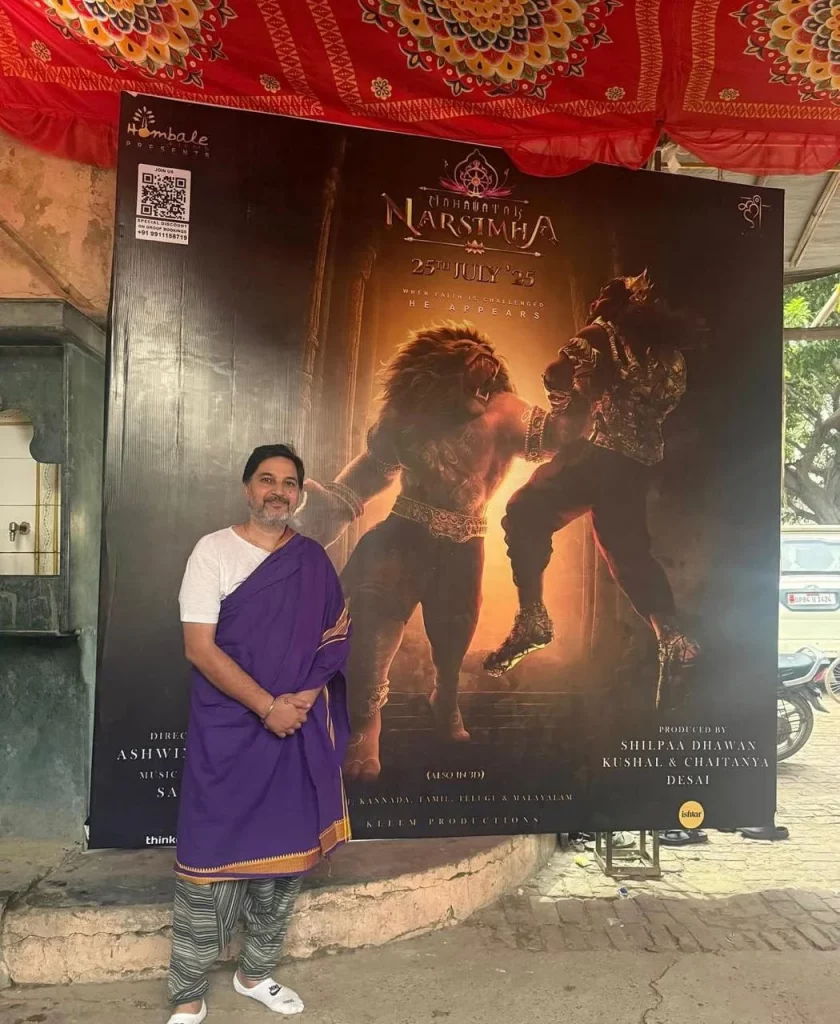
Rohith describes the 2024 Indian animated mythological action film Mahavatar Narsimha as a big revolution for him, personally. For the first time, he felt that the kind of work he had been doing with music artists could be applied to a director and a film.
“The director became the artist, the film became the creative expression, and our role became that of a co-creator and curator, helping take that creative expression to the audience,” recalls Rohith, highlighting how that experience became an important launchpad for how he thinks about TSC today. His collaboration on the film helped shape its journey to global audiences, including Netflix and the 2026 Oscars longlist.
From Punjab to the music business
Born in Mundi Goguniga, Patiala, Punjab, Rohith grew up in Delhi. He comes from a family that was into business, while his father was a teacher. He studied at Delhi Model School and later went to Indraprastha College, University of Delhi.
“During my school and college years, cricket was a big passion. I played a lot of sport and was quite active outside academics as well,” says Rohith, who was never obsessed with marks but was always curious and interested in exploring different things.
A summer job that changed his path
Initially, he wanted to get into advertising. “During college, I took up a summer job at Achi’s Music for two months. That experience completely changed the direction of my life.” The experience introduced him to the music business and eventually set him on the path towards a career in entertainment.
A different perspective at Harvard’s executive programme
Rohith also attended executive education at Harvard Business School on The Business of Media, Entertainment and Sports in 2014.
For him, the short term certificate programme offered a new way of looking at business problems and exposed him to perspectives from people from different countries and professional backgrounds. Rohith says the experience did two important things for him. First, it removed some of his mental barriers around thinking and possibility. Second, it made him realise that one of the most important things to succeed in business, or in anything, is collaboration.
“You go into a class with a practical case study and your own solution to that problem, and then you are sitting in a room with people from 50 countries, with around 80 different perspectives on the same situation,” says Rohith. The experience made him more open to different ways of thinking and to what could be possible through collaboration.
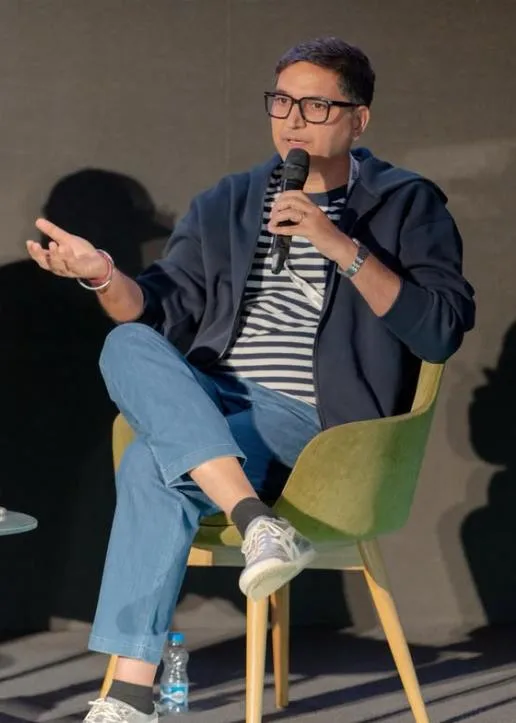
One of the things he noticed about the US ecosystem is that large companies are not hesitant to look at someone who is just starting out, even if they are working from a small setup or garage.
“They understand that this person could potentially build the next Facebook, Instagram or YouTube. I think India is gradually moving in that direction, and that is also the philosophy we are trying to bring to TSC,” says Rohith, who does not look at an artist only through their current followers or numbers, but at their potential and how they can build on it.
Cricket, travel and self-discovery
Cricket has always been a big passion for Rohith. He also loves music and enjoys attending live events.
“I also enjoy travelling, particularly travelling to the mountains and discovering new places. But I think my biggest interest at this stage of my life is self-discovery,” he says. Rohith believes in the idea that the future is ancient. He feels there is much ancient knowledge, wisdom and understanding in India that can be reinterpreted for the world today.
“I am increasingly interested in researching that, understanding it and finding ways of connecting ancient wisdom with contemporary culture,” he signs off.
ALSO READ: Uma Ranganathan: Creating cross-cultural collaborations from Norway through Art to Heart Institute

Rohith Sobti
| Born | Oct 7, 1976, Patiala, India |
| Based | Nashik, India |
| Studied | Delhi University |
| Languages | Punjabi, Hindi, English |
Signature work
Rohith is building artist-first businesses that bring together music, films, storytelling and intellectual property. Through The Shakti Collective, he is creating an integrated platform to develop artists, build creative properties and take Indian stories and talent to wider audiences.
Idea
Rohith Sobti is working on the idea of building an artist-first ecosystem where creators can learn, develop their craft, create intellectual property and build sustainable careers
Network
His network spans India’s music, film and entertainment industries, with experience working with leading companies, artists, brands and entrepreneurs across creative and business domains.
Impact
Through The Shakti Collective, Rohith is creating opportunities for emerging artists through mentorship, real-world exposure, creative development and scholarships, with around 30 percent of Academy learners receiving full or partial scholarships.
Giving Back
His commitment to giving back is reflected in TSC’s scholarship programme, which supports talented artists who may not otherwise have the financial means to access training and opportunities.
Inspired by Rohith Sobti 's journey?
Yours follows the same Hero's pattern — Separation, Initiation, Transformation, Return.
Share with





Written By: Deepa Natarajan Lobo