
September 16 2026
Rohan Naidu: The Indian-origin astrophysicist unravelling the mysteries of the early universe

(Sep 16, 2026) Astrophysicist Rohan Naidu’s research explores the early days of the universe. The Assistant Professor of astronomy recently led an international team that announced the discovery of MoM-BH-1, the most distant and clearest example yet found of a “black hole star”, using NASA’s James Webb Space Telescope. His wider research on the first galaxies, stellar halos and high-redshift observations is reshaping the understanding of how the cosmos evolved.
There is a moment, early in my Zoom conversation, when Rohan Naidu pauses to explain what he does in the simplest possible way. He studies galaxies that formed when the universe was still young. It sounds almost modest when he says it like that, but the scale of the work is anything but. His research sits at the frontier of modern astrophysics, shaped by some of the most powerful observational tools humanity has built, including the James Webb Space Telescope.
In the last few years, Rohan’s work has steadily drawn global attention. He is a three-time recipient of the IOP Publishing Top Cited Paper Award, an honour reserved for the most cited papers across leading astronomy journals, and his research on early galaxies, stellar halos, and high-redshift observations has collectively amassed hundreds of citations. His doctoral work at Harvard earned him the Fireman Prize for superlative research, while his teaching during the pandemic was recognised with a Certificate of Distinction. These markers place him firmly within a new generation of astrophysicists reshaping how we understand the early universe.
Yet, speaking to him from the University of Hawaii, where the 32-year-old is an Assistant Professor of astronomy, what comes through most clearly is not ambition or even achievement, but a certain steadiness: a willingness to follow questions wherever they lead, even when the path is uncertain.
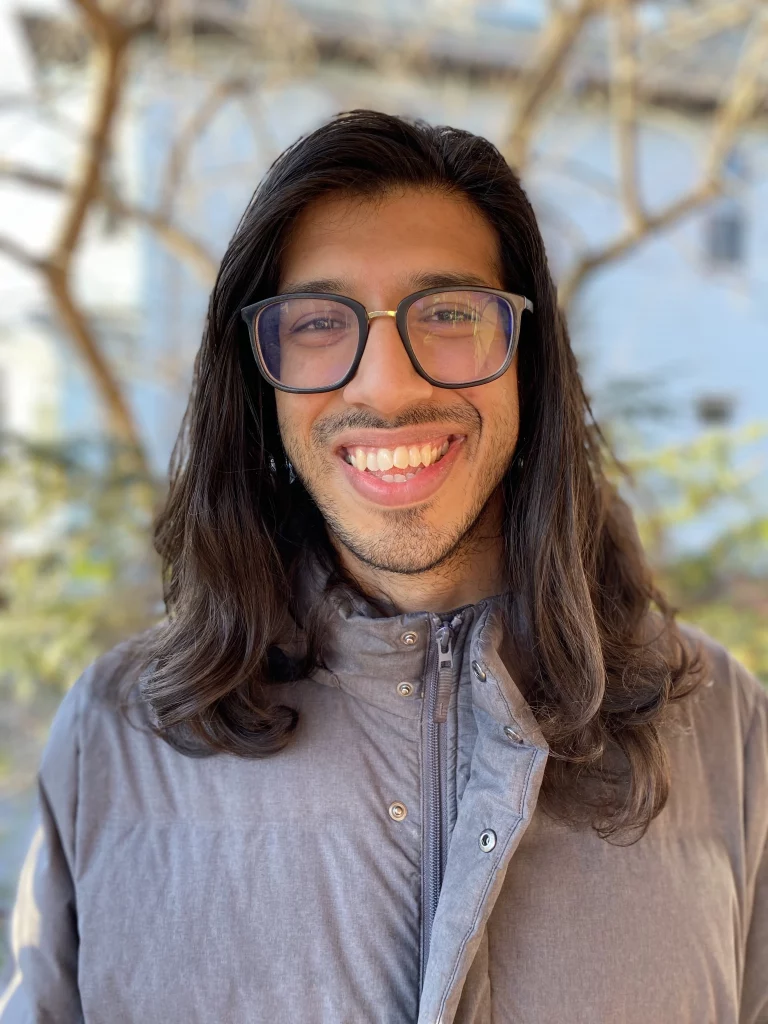
A Hyderabad childhood shaped by discipline and curiosity
Rohan grew up in Hyderabad in a family that valued education deeply, but without turning it into pressure. His parents (both teachers) encouraged consistency and hard work, but also gave him space to explore. That balance would prove critical later on, when he began to question the path that seemed laid out for him.
Like many students in the city, he found himself in a structured academic system early on, one that prioritised performance and precision. Coaching classes, competitive exams, and a clear pipeline into engineering or medicine formed the backdrop of his teenage years. He did well within that system, but he also remembers being drawn to things that sat just outside it.
“The internet opened things up for me,” he recalls in the conversation with The Global Indian. “Suddenly, you could read about anything. Science didn’t feel like a textbook subject anymore, it felt like an active field.”
At home, conversations were not limited to marks or outcomes. His parents, he says, were quietly supportive of his curiosity, even when it did not immediately align with conventional goals. That early encouragement allowed him to ask questions without worrying too much about where they might lead.
There were ordinary rhythms too. Watching films, spending time with friends, participating in quiz competitions. He still keeps up a version of that life today, joining school friends online for quiz leagues on weekends. “It’s something we’ve continued over the years, it keeps us connected,” he remarks.
Cinema, in particular, remains a small but telling reference point. “I used to watch a lot of Telugu films growing up,” he says, smiling. “Mahesh Babu was a favourite.” He does not watch as many films now, but remembers watching RRR and enjoying the scale of it. These are small details, but they root a life that now operates across continents in something recognisably familiar.
Walking away from certainty
The decision to step away from engineering did not happen overnight. It emerged gradually, shaped by moments of reflection and exposure to different ways of thinking.
A key turning point came during his time at Yale-NUS College in Singapore, where he encountered Professor Charles Bailyn. A seminar on black holes, taught by Bailyn, introduced him to a way of engaging with science that was markedly different from what he had experienced before. The emphasis was not on arriving at answers quickly, but on asking better questions and being comfortable with uncertainty.
“That was quite eye-opening,” Rohan recalls. “It was the first time I saw what it meant to really think about a problem, rather than just solve it.”
The shift altered his relationship with learning. It moved him away from structured problem-solving towards a more exploratory approach, where ambiguity was not something to be avoided but something to be understood. In many ways, it clarified what drew him to science in the first place. “You start to realise that what you enjoy is the process,” he says. “Not just getting to the answer.”
Choosing to pursue astronomy more seriously meant stepping away from a path that offered clarity and stability. It was not an easy decision, particularly within the context of expectations that often shape academic choices in India. But for Rohan, the question became less about risk and more about alignment.
“I tried to think about what kind of life I wanted, and whether I would regret not choosing something that genuinely interested me.” That thought process eventually led him to Harvard, where he was awarded the Ashford Fellowship and the Peirce Fellowship, early recognitions of his promise as a researcher. The years that followed were marked by intensive work, culminating in a doctoral thesis that would earn him the Fireman Prize.
Even now, he describes that period not in terms of achievement, but in terms of learning how to think more clearly and ask more meaningful questions.
Reading the earliest galaxies
Rohan’s research today focuses on some of the earliest epochs of the universe, a time when the first galaxies were forming and the cosmic landscape looked very different from what we see now. It is a field that relies on both deep observation and careful interpretation, where new data can quickly reshape existing theories.
One of his most cited papers examines rapid reionization, proposing that massive, UV-bright galaxies played a significant role in transforming the early universe. Another explores the Milky Way’s stellar halo, suggesting that it is entirely composed of substructures formed through mergers over time. His more recent work, using data from the James Webb Space Telescope, has identified remarkably luminous galaxy candidates at extremely high redshifts, offering glimpses into a period that was previously difficult to study.
“These are galaxies from very early times,” he explains. “You’re essentially looking back billions of years.”
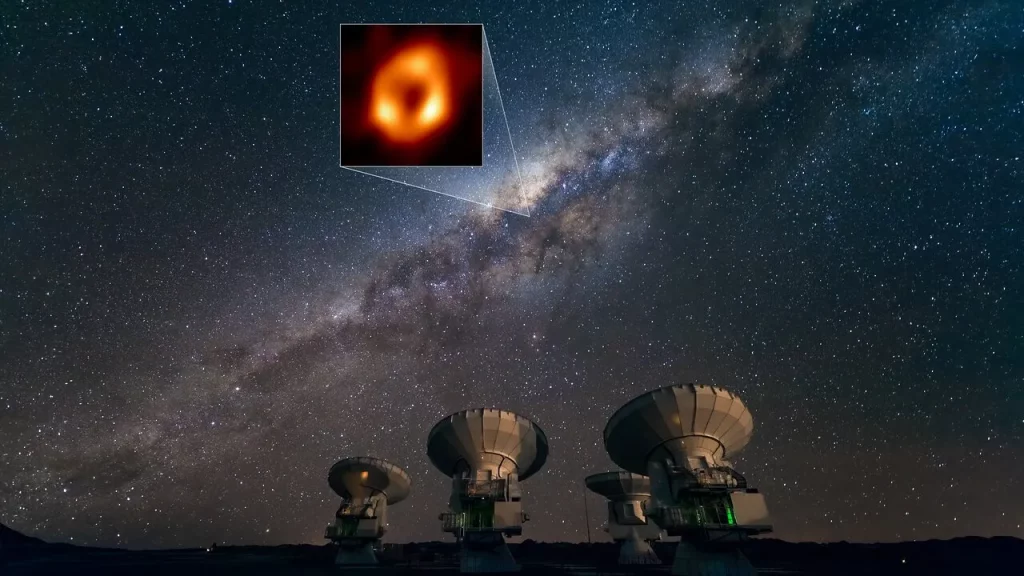
Image of the galaxy’s ‘black hole star’ | Photo Credit: livescience.com
What makes this work particularly compelling is the way it challenges assumptions. With each new dataset, long-held ideas are tested and, at times, revised.
That’s one of the exciting parts of science. You don’t always get confirmation. Sometimes you realise that things are more complex than you though
Rohan Naidu
Despite the technical nature of his research, Rohan is careful to frame it in broader terms. At its core, he says, the work is about understanding how the universe evolved from its earliest states to its present form.
Recognition, in this context, follows impact. The IOP Publishing awards, given for highly cited papers, reflect the extent to which his work is being engaged with by the scientific community. But he is quick to emphasise that science is inherently collaborative.
“You’re always building on what others have done, and your work becomes part of that larger conversation.”
Finding stillness beyond the cosmos
For someone whose work operates on cosmic scales, Rohan’s sense of balance comes from much smaller, quieter moments.
He speaks about time spent outdoors, particularly in Hawaii, where noticing the details movement and behaviour of the Kauai ʻōʻō bird, that is native to the region.
“It was a very grounding experience,” he says. “Just observing something closely, without trying to analyse it.” That instinct to observe, to pay attention, seems to extend across his life. Whether it is in science, where it translates into careful analysis, or in everyday moments, where it becomes a way of slowing down.
He also returns, often, to simple routines. Staying connected with friends. Reading. Occasional films. These are not dramatic counterpoints to his work, but they provide continuity.
“I think it’s important to have things that keep you anchored,” he mentions. When asked what drives him, he does not point to ambition or recognition. Instead, he returns to curiosity.
“It’s really about trying to understand,” he says. “To make sense of something that’s much bigger than you.”
It is a quiet statement, but one that captures the essence of his work. For Rohan, that balance does not feel forced. It feels natural. A continuation of the same curiosity that first led him, as a student in Hyderabad, to look beyond the obvious and ask what else might be out there.
- Follow Rohan Naidu on LinkedIn
Share with





Written By: Amrita Priya