
June 22 2026
How personal loss led Ria Rustagi to build a neurotech company with global ambitions
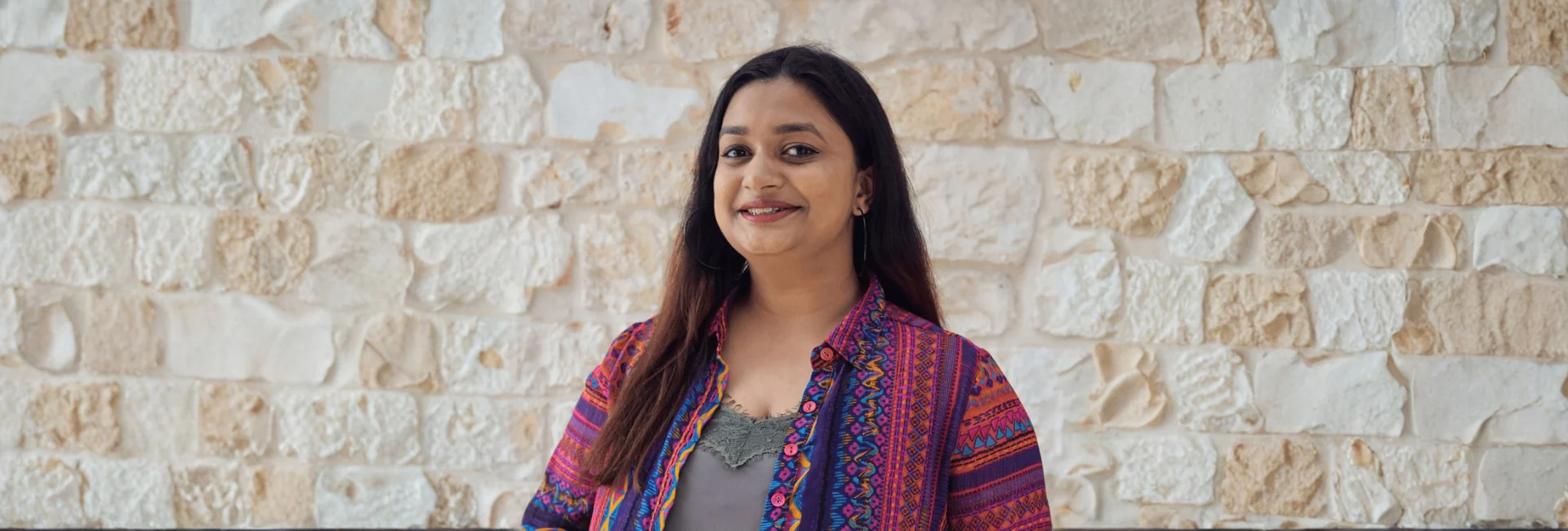
(Jun 22, 2026) Ria Rustagi is the co-founder and CEO of Neuphony, the neurotech startup she launched with her husband and CTO, Bhavya Madan. Inspired by her sister’s battle with a brain infection, the Forbes India 30 Under 30 (2023) honouree is working to make brain health monitoring more accessible through EEG-based devices and personalised brain training solutions. Neuphony gained national recognition after securing a deal on Shark Tank India Season 2, while her latest venture, Sychedelic, aims to combine AI, music and neurostimulation to help users manage stress and improve focus.
For seven years, Ria Rustagi was living the dream in Germany. As a development engineer on automotive microcontrollers at Infineon Technologies — a global German semiconductor manufacturer — she was the youngest and only Indian engineer on a team of 40, a remarkable achievement in her professional journey.
She thought she had it all figured out — a stable career, life abroad, and a promising future. Then tragedy struck. In 2016, her elder sister Pankhuri, then 25, was diagnosed with a rare brain infection that led to a stroke. After a five-month battle, the family lost her.
The loss made Ria realise how little people understand the brain compared to how routinely they monitor the rest of their bodies. Eventually, it led to the birth of Neuphony, a trailblazing neurotech company dedicated to making brain health monitoring as simple and commonplace as checking one’s heart rate.
“My journey to Neuphony began with grief, not ambition. Pankhuri was my closest friend and first role model,” says Ria, co-founder and CEO of Neuphony, in conversation with The Global Indian.
Having pursued education in Singapore and Germany, Ria’s entrepreneurial spirit and desire to create meaningful change have made her a driving force behind the company.
Growing up curious
Born in New Delhi, Ria is the younger daughter of businessman Dinesh Rustagi and Nandita Rustagi. She has a brother, Vaibhav.
Ria studied at Amity International School. “My parents emphasised academics, but also encouraged curiosity beyond the classroom,” recalls Ria, who gravitated towards mathematics and science, fascinated by how things worked rather than simply memorising them.
She pursued a Bachelor of Technology in Electronics and Communication Engineering from the Jaypee Institute of Information Technology (JIIT), Noida, graduating in 2015. During her college years, she met Bhavya Madan, who would later become her co-founder, husband, and Neuphony’s CTO.
“My aim through school and college was to build a strong engineering career with an international dimension. I had no idea then that life had a far more personal path waiting for me.”
Singapore, Germany and an engineering career
After JIIT, Ria pursued two Master’s degrees in Integrated Circuit Design — at Nanyang Technological University, Singapore, and the Technical University of Munich, Germany.
She later joined Infineon Technologies in Germany as a development engineer on automotive microcontrollers.
Singapore gave her the first real taste of independence and academic rigour, while Germany, where she spent close to seven years, shaped her profoundly. Its engineering culture of precision and discipline became part of how she works today.
Being one of the very few Indians there, often the youngest in the room, taught me to advocate for myself.
Ria Rustagi
Turning grief into purpose
After Pankhuri’s passing, Bhavya, then Ria’s boyfriend, was exploring brain-technology research of his own.
“I told him that if he is going to work on the brain, he has to make it count — build something that could have helped my sister. That conversation became Neuphony.”
Together, they founded the company in Germany in 2019, originally as PankhTech — named after Pankhuri — with Neuphony as their product brand, blending “neuro” and “symphony.”
Returning home to build in India
The decision to return was not a single moment, but a gradual pull.
“After Pankhuri’s passing, I went back to my engineering career, partly for stability. But as the idea for Neuphony grew, it became clear that building it properly meant being in India — closer to the manufacturing ecosystem, the talent, the market we wanted to serve, and my family,” says Ria, whose headquarters and R&D operations are based in Gurugram. “It was as much an emotional homecoming as a business decision.”
A smartwatch for the brain
Ria describes Neuphony as a “smartwatch for the brain” — much like a fitness band tracks heart rate and steps. The device measures brain activity and provides real-time cognitive insights, personalised techniques and tailored brain-training regimens to enhance cognitive wellbeing and improve performance.
“It reads the brain’s electrical activity and turns it into insights the user can act on,” says Ria, highlighting that Neuphony remains rooted in one promise — “making sure no one else faces the information gap that cost us my sister.”
Decoding brain activity
“Our products use electroencephalography (EEG), which records the brain’s electrical activity through dry, wireless sensors.”
Machine-learning algorithms process these signals in real time into plain-language states — stress versus calm, mood, focus versus distraction, and Posterior Dominant Rhythm (PDR), a marker of baseline brain health. “This is neurofeedback — giving your brain feedback about itself so you can learn to consciously shift your own state, the way you’d train a muscle.”
The flagship Neuphony Headband is a wireless EEG device that connects to mobile and desktop applications. “For researchers and advanced users, the Neuphony EEG Flex Cap offers customisable electrode placement.”
The company also offers Neuphony EXG Synapse, a DIY BCI development kit for students and innovators building brain-controlled applications. “All of this is supported by our mobile app, desktop app and software development kit so developers can build on our hardware,” she explains.
Winning trust in a complex field
The biggest early challenge was technical — building dry EEG sensors that were both comfortable and clinically accurate without access to a laboratory environment. Achieving this required months of testing against gold-standard equipment.
Another challenge was credibility. “We were two engineers, not doctors, in our 20s, claiming expertise in brain health.”
Trust, she says, was earned through live demonstrations, partnerships with neuroscientists and therapists, and allowing people to see their own brainwaves in real time.
Shark Tank India breakthrough
Their appearance on Shark Tank India Season 2 in 2022 proved to be a turning point. The founders entered the show seeking ₹1 crore for twp percent equity and eventually secured ₹1 crore for 5.4 percent equity from Aman Gupta of boAt and Peyush Bansal of Lenskart. “It gave us visibility no marketing budget could buy.”
Building beyond brain tracking
After four years of building Neuphony, Ria and Bhavya realised that tracking alone was not enough.
People don’t just want data about their stress, they want their lives back.
Ria Rustagi
That insight led to Sychedelic, a new venture under the same parent company. “Neuphony reads and reports on your brain, Sychedelic is designed to actively intervene.”
The product is a pair of headphones that uses a PPG sensor to estimate stress and cognitive states in real time. “It responds in two ways — music matched to your state to bring you from stress to calm within minutes, and tDCS, a gentle neurostimulation technique, to sharpen focus for sustained concentration,” explains Ria.
The CDSCO-approved device was recently launched on Kickstarter.
Who it helps
According to Ria, the technology helps everyday users manage stress, improve focus and build a measurable meditation practice.
Therapists and brain gyms use our devices to objectively track client progress. Research institutions use them to study cognition and meditation, and corporations use them for workplace stress-management programmes.
Ria Rustagi
She recalls a powerful experience during a demonstration in Germany.
A volunteer’s EEG showed patterns associated with depressive thinking. The woman later revealed that she had recently attempted suicide.
“Seeing her own brain activity as external, objective evidence became a turning point — she sought help and today works as a wellness practitioner.” Ria emphasises that the technology is designed for self-empowerment and should never be used for monitoring others, particularly children.
A CEO’s daily rhythm
“There’s no typical day, but there is a rhythm,” she says. Mornings begin with yoga and meditation — practices she calls non-negotiable and essential to managing the emotional weight of leading the company.
Ria often uses her own headband to monitor how these practices affect her brain states.The rest of the morning is dedicated to research and development reviews with Bhavya and the technical team, along with operations, hiring, quality control and supply-chain management. Afternoons are largely spent on partner and investor calls and recording her podcast, Feel It In Your Brain.
Giving voice to mental health
Mental health advocacy, she says, is inseparable from Neuphony’s mission. “I host our podcast with candid conversations with people who’ve battled depression and anxiety, and with grassroots mental-health advocates running awareness campaigns and subsidised clinics.”
A large part of my role is simply being the voice of Neuphony’s mission. My job isn’t just building the device, it’s changing the conversation around brain health.
Ria Rustagi
Commercially, the company offers its technology at reduced rates to therapists working in underserved areas and regularly conducts awareness sessions in schools and workplaces aimed at reducing stigma among young people.
Ria has also spoken at the United Nations’ AI for Good platform, advocating for consent-first neurotechnology and cautioning against turning such tools into instruments of surveillance.
“If I could start one movement, it would be ‘Mindful Moments’ — five minutes a day for everyone to check in with their own mental state. I think that small habit, at scale, would make for a kinder, more balanced society.”
Beyond business
Yoga and meditation remain central to Ria’s life, but she also nurtures a deep interest in neuroscience and psychology — particularly how habits form and mental states can be trained. “Otherwise, I am energised by the conversation itself — hosting my podcast and hearing people’s mental health journeys, which I like to do regardless of my business.”
She also enjoys travelling, dancing and, as she laughingly admits, has a knack for organising things.
Aiming for the global stage
“Our future is about scale — taking what’s already working and reaching far more people.”
On the Neuphony side, Ria and her team are expanding sensor coverage, refining machine-learning models and strengthening the developer ecosystem around their hardware. The bigger leap forward is Sychedelic.
We raised a $3.5 million seed round ahead of this launch of Sychedelic to scale manufacturing and research. Our ambition is global — we’re targeting a place among the top five neurotech companies in the world by 2031.
Ria Rustagi
Ria hopes the company will emerge as a globally recognised Made-in-India deep-tech success story, while expanding partnerships with hospitals, research institutions, therapist networks and corporate wellness programmes.
“Underneath all of it, the mission stays the same — making brain health as ordinary to monitor and manage as your heart rate, in my sister’s memory.”
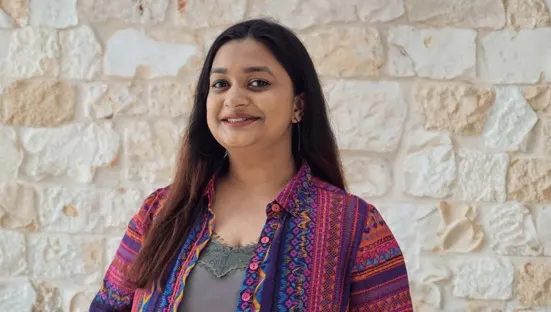
Ria Rustagi
| Born | December 7, 1993, New Delhi |
| Based | Gurugram, India |
| Studied | B Tech at JIIT, Noida | MSc at Technical University of Munich | MSc at Nanyang Technological University, Singapore |
| Languages | Hindi, English, German |
Signature work
Transformed personal grief into Neuphony, a Made-in-India neurotech company making brain health monitoring as accessible as a smartwatch for the mind.
Idea
Building neurotech products that convert EEG brain signals into simple, real-time insights, making brain health measurable and trainable like physical fitness.
Network
Operates across deep-tech engineering (Germany), Indian startup ecosystem, neuroscientists, therapists, and global platforms like Shark Tank India and UN AI for Good
Impact
Helped bring EEG-based brain monitoring into mainstream use for stress, focus, and cognitive wellbeing across individuals, therapists, and organizations.
Giving back
Focuses on mental health access through discounted tools for therapists, awareness programs, and public dialogue via her podcast to reduce stigma around brain health.
Inspired by Ria Rustagi 's journey?
Yours follows the same Hero's pattern — Separation, Initiation, Transformation, Return.
Share with



Written By: Bindu Gopal Rao