
June 27 2026
Prof. Jainendra Jain: From a boy in rural Rajasthan to the first Indian-origin recipient of the Wolf Prize in Physics
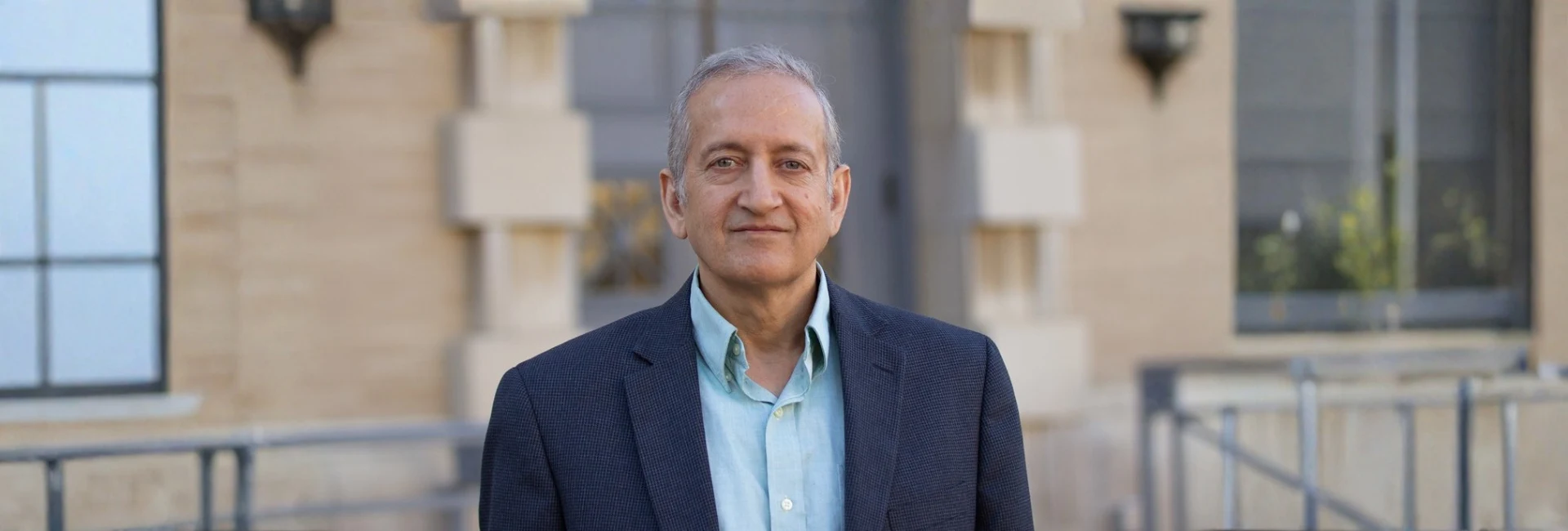
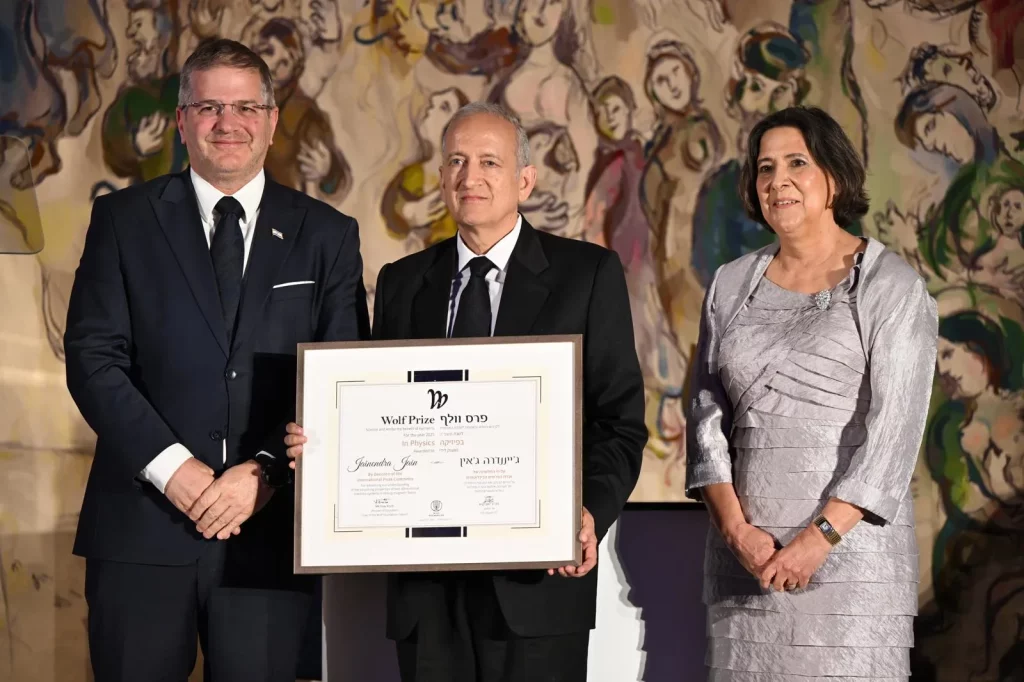
(Jun 27, 2026) Prof. Jainendra K. Jain of Pennsylvania State University, has become the first person of Indian origin to receive the Wolf Prize in Physics, one of the world’s most prestigious honours in the field. The award was presented by Israeli President Isaac Herzog at a state ceremony in the Knesset in Jerusalem on June 18 for his discovery of composite fermions, a breakthrough that reshaped scientists’ understanding of quantum matter and continues to influence research more than three decades later.
Awarded annually by the Wolf Foundation, the Wolf Prize is among the world’s most prestigious international honours across several fields. In physics alone, 27 previous recipients have gone on to receive the Nobel Prize, highlighting the distinction of the award.
Yet, when Professor Jainendra Jain reflects on the journey that brought him to that stage in Jerusalem, it is not the award that surprises him most. It is life itself.
“As a young boy growing up in rural Rajasthan, my dream was to become a physicist, although I had no clue what that meant in practice,” he tells The Global Indian in an exclusive interview. “If you had asked me then what my future would be like, I could not have imagined in a million years that I would go to the shining land of America for higher studies and become a professor of physics at a major university; that I would achieve some degree of international recognition; that I would receive a prestigious prize from the President of Israel in the Knesset in Jerusalem; and that I would return to India as the Founding Director of the Lodha Theoretical Physics Institute. To be honest, I find it hard to believe even now.”
Today, the Indian-American professor is the Founding Director of the Lodha Theoretical Physics Institute (LTPI) in Mumbai and serves as Evan Pugh University Professor and Eberly Family Chair in Physics at Pennsylvania State University in the United States. His career has reshaped an important area of modern physics, but its foundations were laid far from the world’s leading research laboratories, in the small Rajasthan town of Sambhar.
A childhood dream found its direction
Growing up on the edge of the Thar Desert, Jain did not know a physicist personally. In fact, he did not even meet someone with a PhD until he entered college. Yet his fascination with physics began remarkably early.
I have wanted to be a physicist for as long as I can remember, and I have never seriously considered any other career.
Professor Jainendra Jain
He remembers being captivated by the elegance of physics itself. “I recall being fascinated by the problems in our physics textbooks and by the fact that a few equations could explain so many different observations.”
The story of Indian physicist Satyendra Nath Bose and his scientific exchange with Albert Einstein stayed with him in particular. Reading about Bose in a children’s magazine left a lasting impression and convinced the young Jain that profound discoveries could emerge through pure thought.
That fascination would survive a tragedy that could easily have changed the course of his life.
A turning point that could have ended the journey
At the age of 12, while visiting relatives in Kolkata, a tram collided with his family’s car. The accident claimed his mother’s life. Jain suffered severe injuries that eventually resulted in a lifelong disability. When he returned home to Sambhar months later on crutches, his future appeared uncertain, and so did his childhood ambition of becoming a physicist.
Hope came in the form of the Jaipur Foot, the low-cost prosthetic developed by renowned orthopaedic surgeon Dr. P. K. Sethi and master craftsman Ram Chandra Sharma. It enabled Jain to walk again and resume his education.
Rather than defining his life, the accident became one chapter in a much larger story of perseverance and scholarship. He completed his bachelor’s degree at Maharaja College in Jaipur before earning a master’s degree from IIT Kanpur. The next step lay across the world.
When I boarded a plane for the United States in 1981, it was the first flight of my life.
Professor Jainendra Jain
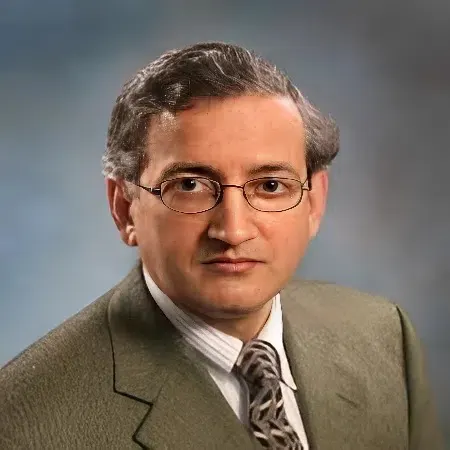
At 21, he landed in America to pursue doctoral studies at Stony Brook University in New York. It was a move that would eventually place him at the centre of one of physics’ biggest unsolved puzzles.
India gave the foundation, America opened new frontiers. Looking back, Professor Jain sees both India and the United States as indispensable chapters of the same journey. “I feel deeply indebted to both India and America, two truly great nations, for all the opportunities they gave me.” India, he says, gave him much more than an education.
India offered a culture that values education, teachers who care, a National Science Talent Search Scholarship that took care of my expenses, and a world-class education at IIT Kanpur practically for free. Coming to America, where some of the most perplexing discoveries were being made, brought me to the forefront of physics research.
Professor Jainendra Jain
For the Indian-origin academic, “science is an international enterprise that transcends national boundaries.”
An unexpected insight changed modern physics
In 1989, Jain was a young postdoctoral researcher at Yale University. Physicists around the world were trying to understand an unusual experimental observation involving electrons moving in extremely thin materials under strong magnetic fields. The results appeared orderly, yet existing theories could not explain why they behaved that way.
Then came an entirely unexpected moment. During a commercial break while watching television, Jain found himself doodling on a piece of paper.
Suddenly, a simple but radical idea emerged. What if electrons were not behaving alone? What if, under these conditions, they effectively combined with tiny whirlpools created by the magnetic field to form entirely new particles?
He called them composite fermions. The idea, published in Physical Review Letters in 1989, offered a remarkably elegant explanation for observations that had puzzled physicists for years. More importantly, it correctly predicted patterns that experiments later confirmed repeatedly.
Even Jain could not have anticipated how influential the concept would become and would eventually lead to biggest honours internationally..
While I had a strong gut feeling from the very beginning that the notion of composite fermions was an important one, it has proved to be much more powerful than I or anyone else could have anticipated at the time.
Professor Jainendra Jain
The theory not only explained an existing mystery but also opened entirely new directions for research.
Over the following decades, scientists continued testing the idea through increasingly sophisticated experiments. “It has been a pleasure to see the physics of composite fermions unfold in this fashion over the years,” he mentions. The discovery continues to influence research today, including efforts to better understand quantum materials and develop future quantum technologies.
When conviction met skepticism
Today, composite fermions are regarded as one of the defining concepts in condensed matter physics. But when Jain first proposed the idea, acceptance did not come easily. His work challenged established ways of thinking, and for several years the scientific community remained unconvinced.
“The hardest time for me was the period of two or three years during which the idea of composite fermions was disregarded, disbelieved, and even attacked. It was frustrating that others did not see in composite fermions what I did.” Instead of discouraging him, the criticism reinforced one of science’s fundamental principles that every extraordinary idea must withstand extraordinary scrutiny.
Any new idea must undergo extremely critical scrutiny and testing before it can be accepted by the community. That is exactly how the scientific method works. In fact, the more extraordinary the claim, the more extraordinary the evidence must be.
Professor Jainendra Jain
Over time, what began as a bold theoretical proposal evolved into one of the central frameworks for understanding quantum matter.
Bringing world-class theoretical physics back to India
After spending decades contributing to American academia, Professor Jainendra Jain’s journey has come full circle with the establishment of the Lodha Theoretical Physics Institute (LTPI) in Mumbai, India’s first fully privately funded institute dedicated exclusively to theoretical physics.
For him, the opportunity was not simply about leading another institution. It was about helping create an environment where scientific discovery could flourish.
“What attracted me to this project was the bold vision of Abhishek Lodha, Ashish Singh, and the Lodha Foundation to build a world-class theoretical physics institute that is optimized for discovery, that creates an environment where the best minds have the freedom and resources to think about the deepest mysteries of nature, and that becomes a destination of choice for physicists from across the globe.”
He has high hopes for LTPI. “I hope LTPI will help create an environment where young scientists can pursue ambitious ideas, collaborate with outstanding researchers from around the world, and engage with the deepest questions in physics,” he remarks.
Science has no borders
Having built his career across India and the United States, Professor Jinendra Jain often encounters questions from young Indians wondering whether they should build their future abroad or remain at home.
His answer avoids choosing one over the other. “I would encourage young people not to think of this as an either-or choice. In today’s world, knowledge and talent move across borders far more easily than before.”
Rather than focusing on geography, he believes young researchers should focus on learning. “The most important thing, especially early in one’s career, is to seek the environment where one can learn the most, grow the fastest, and realize one’s potential.” Wherever they choose to live, he says, meaningful contributions to India remain possible.
There are many ways to contribute to one’s home country, no matter where one lives. Science connects the world.
Professor Jainendra Jain
It is a philosophy that mirrors his own career which is deeply rooted in India, shaped by opportunities in America, and ultimately contributing to a global scientific community.
A legacy measured by people, not prizes
The Wolf Prize places Professor Jainendra Jain among a distinguished group of physicists whose work has transformed scientific understanding. Yet when asked what legacy he hopes to leave behind, he does not speak first about discoveries or awards.
Instead, he reflects on the people who shaped his own journey.
“With age, I have become increasingly aware of how much of what I value in my life has been possible only because of the help of family, friends, mentors, colleagues, and society at large,” he says. “If there are people who feel that I played a positive role in their lives, no matter how small, that would be a legacy I would be proud of,” he signs off.
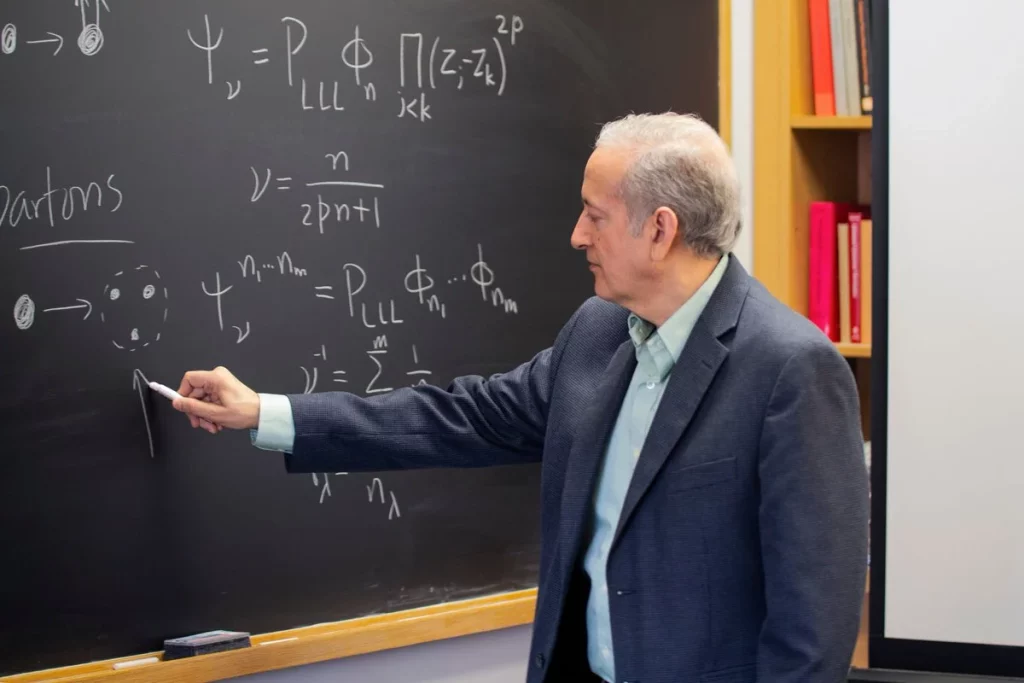
Selected honours and career highlights of Professor Jainendra Jain’s journey
– Wolf Prize in Physics: First person of Indian origin to receive the honour
– Oliver E. Buckley Prize: American Physical Society
– Distinguished Alumnus Award: IIT Kanpur
– Elected to the United States National Academy of Sciences
– Elected to the American Academy of Arts and Sciences
– Elected to the Indian National Science Academy
– Founding Director, Lodha Theoretical Physics Institute, Mumbai
– Evan Pugh University Professor and Eberly Family Chair in Physics, Pennsylvania State University
– Author of more than 250 scientific papers
– Co-author of Composite Fermions (Cambridge University Press, 2007)
Follow Professor Jainendra Jain on LinkedIn
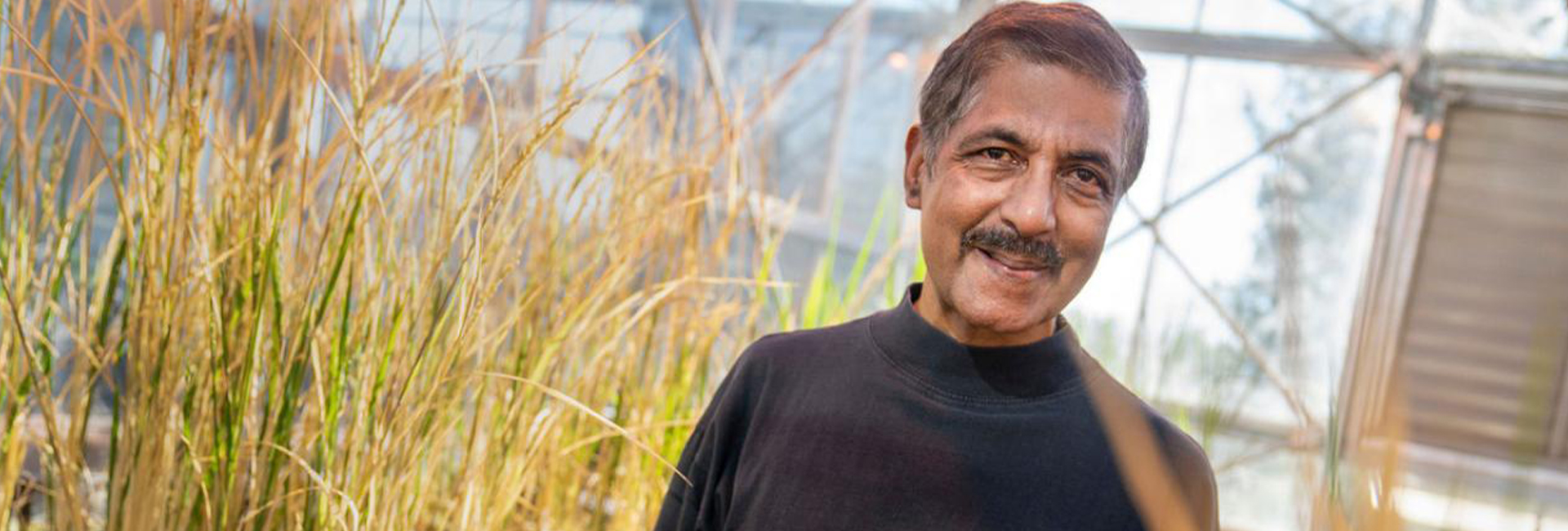
ALSO READ: How Venkatesan Sundaresan’s 2024 Wolf Prize-winning agricultural discovery will feed billions

Share with



Written By: Namrata Srivastava
Path to glory: Meet Dr. Deepak Dhar, the first Indian physicist to win a Boltzmann Medal
Written By: Amrita Priya
How Venkatesan Sundaresan’s 2024 Wolf Prize-winning agricultural discovery will feed billions
Written By: Amrita Priya