
November 07 2026
Princess Padmaja Kumari Parmar: A royal legacy of purpose and service
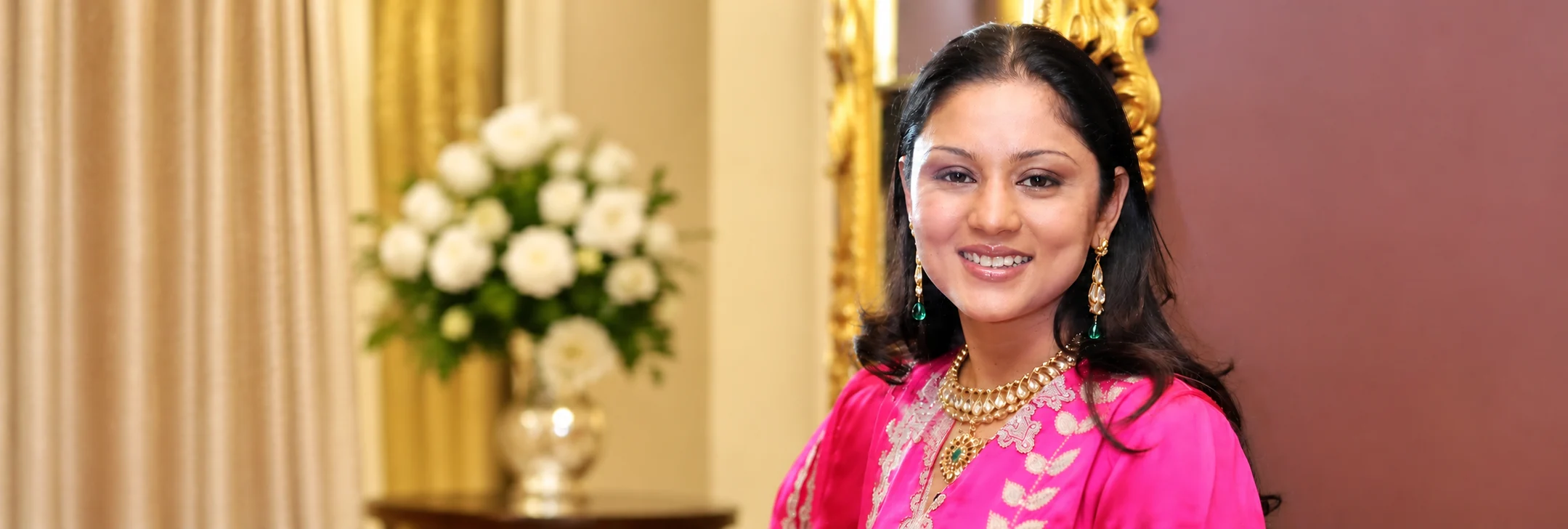
(Nov 7, 2026) Based in Boston, Princess Padmaja Kumari Parmar of Udaipur’s House of Mewar draws on her international education and hospitality experience, royal heritage and global philanthropic partnerships to advance community engagement, health advocacy and cultural preservation in India and beyond.
Fighting spirit is an integral part of Princess Padmaja Kumari Parmar’s life. Born into the House of Mewar, a dynasty founded in 734 AD and often described as one of the world’s oldest serving dynasty, she grew up surrounded by stories of legendary warrior Maharana Pratap, whose tales continue to inspire generations.
Padmaja’s own test of resilience came early. She was diagnosed with Type 1 diabetes when she was barely five years old. The princess did not let the medical condition define her life. Instead, she learnt to manage it with discipline and focus, continuing to pursue her ambitions and live life to the fullest.
From pursuing education in the US and building her professional foundation in the international hospitality and luxury sector to joining her family business in Udaipur, Rajasthan, Padmaja has embraced many roles with purpose and grace. Alongside her professional responsibilities, she has also been actively involved in community engagement and philanthropic work.
“Being part of the House of Mewar was a natural part of my life. What mattered then, and still matters now, is how we treat people and the real impact we can make in their lives,” smiles Princess Padmaja, in conversation with The Global Indian.
As a key leader at the Historic Resort Hotels (HRH) Group in Udaipur, Padmaja works at the intersection of heritage and modern management, helping give historic properties a meaningful role in culture, tourism and community engagement.
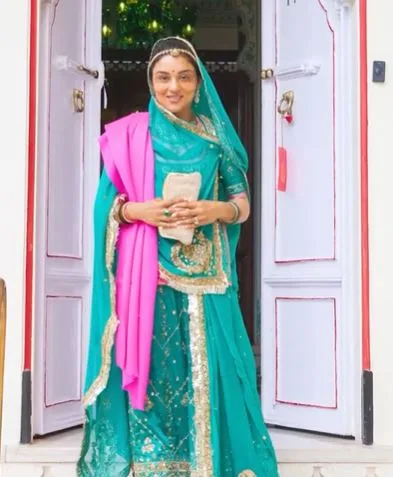
A royal legacy in hospitality
For Padmaja, HRH is about welcoming people into her home while giving historic properties a meaningful role in the present. “Working with our teams taught me how much care goes into every guest’s experience—a beautiful property is only one part of it.”
HRH is India’s only chain of heritage palace-hotels and resorts under private ownership. Its portfolio includes island palaces, museums, galleries, car collections and other heritage experiences.
Her father, Arvind Singhji Mewar, played an integral role in shaping her understanding of hospitality, particularly the importance of taking good care of the staff who worked for the family.
“Preserving heritage serves a purpose beyond the buildings themselves,” says Padmaja, who believes in ensuring that guests feel genuinely welcome.
Among the group’s properties is Shiv Niwas Palace, classified as a Grand Heritage hotel. It has received several awards, including the prestigious National Tourism Award for Best Heritage Hotel in the Heritage Grand category.
Jagmandir Island Palace, situated on an island in Lake Pichola, is another prominent property. Developed as a Grand Heritage Palace, it is an early 17th-century island palace.
Other royal retreats include Shikarbadi Hotel and Garden Hotel in Udaipur, Fateh Bagh in Ranakpur and Karni Bhawan Palace in Bikaner. The Ramgarh Resort & Polo Complex near Jaipur has been developed as India’s first polo destination.
From Udaipur to New York
After completing her education at Maharana Mewar Public School in Udaipur, Padmaja attended Northfield Mount Hermon in the United States. She later pursued a Bachelor of Arts in International Relations and Business Studies at Tulane University in New Orleans, graduating in 2003.
Living away from home taught me independence, introduced me to different perspectives and helped me find my own voice.
Princess Padmaja Kumari Parmar
Her parents supported her decision to pursue university education abroad rather than send her to boarding school. The experience encouraged her to take responsibility for her decisions and navigate unfamiliar situations. “I learnt to take my own decisions, took responsibility for them and found my way in unfamiliar situations.”
At Four Seasons, New York
Padmaja began her career at the Four Seasons Hotel in New York. “That experience helped me put what I had studied into practice and appreciate the teamwork and care behind good hospitality.”
Meeting people from different backgrounds taught her to listen and remain open to perspectives beyond her own.
The international exposure sharpened her business perspective, but her connection to Udaipur remained strong. “My time abroad gave me greater confidence in my own voice and a deeper appreciation of home. Both continue to shape how I live and work,” says Padmaja, who returned to Udaipur in 2006 and later joined the family business.
Legacy and responsibility
“When I think of my childhood, I think of Udaipur—home, family, school and the simple joys of growing up,” says Padmaja. She fondly recalls how her father taught her a great deal about responsibility through the way he lived and worked. Her grandfather, Maharana Bhagwat Singhji Mewar, also left a legacy of service, including through the Maharana of Mewar Charitable Foundation.
“They helped me understand that what we inherit matters most in what we do with it. More than anything, I’ve learnt that responsibility is personal—it is about showing up, caring for people and making a meaningful contribution.” For Padmaja, these values extend beyond the family’s heritage and hospitality businesses into her philanthropic work.
Health advocacy
Living with Type 1 diabetes from a young age taught Padmaja discipline, focus and empathy, qualities that have continued to shape her life.
“Having lived with it since the age of five, I understand the significance of timely diagnosis, care and support for a family.” In 2024, she collaborated with Breakthrough T1D and UNICEF on a dialogue in Udaipur focused on the early diagnosis and care of children and young people with non-communicable diseases. She serves as a Global Ambassador for Breakthrough T1D. Her personal experience with the condition has given her a deeper understanding of the importance of awareness, timely diagnosis and access to care.
Our roots are in Mewar, but our work extends beyond the region and Rajasthan, bringing together supporters and institutional partners internationally.
Princess Padmaja Kumari Parmar
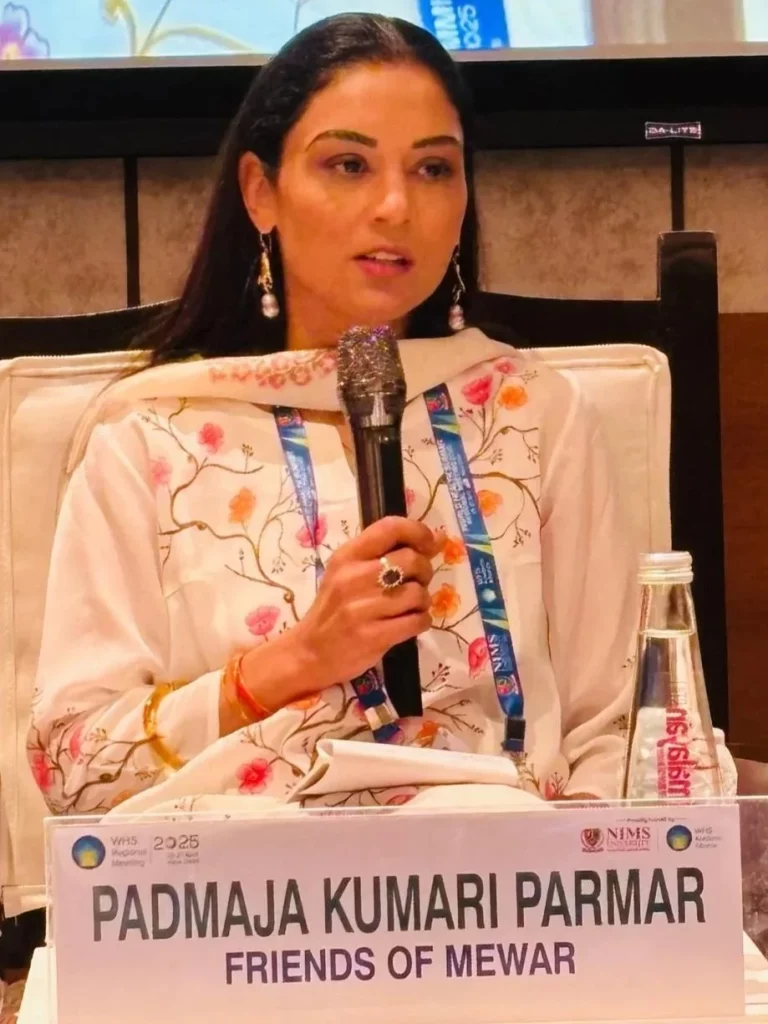
The Friends of Mewar
In 2013, Padmaja founded The Friends of Mewar, a non-profit organisation that reflects her multi-layered journey. It grew out of long conversations with her father, Arvind Singhji Mewar, after she moved to the United States.
“We spoke about how I could continue to support the values I had grown up with through meaningful, impactful work.”
Working across Udaipur and surrounding regions, the organisation focuses on preventive healthcare, education, women’s empowerment, livelihood development and cultural preservation. Its initiatives have reached families across villages, supported medical interventions and helped women build independent livelihoods. Padmaja’s engagement is often personal, whether she is sitting with women in rural communities, speaking with medical professionals or mentoring young girls.
Beyond India, Friends of Mewar connects institutions and supporters from the US and other countries, quietly bridging tradition and progress.
Princess Padmaja Kumari Parmar
The organisation’s work reflects Padmaja’s belief that heritage and social responsibility can go hand in hand, creating opportunities for communities while preserving cultural values.
Princeton and Harvard
Padmaja serves on the Advisory Board of Princeton University’s MS Chadha Center for Global India and on the Global Health and Service Advisory Council at Harvard Medical School.
“Princeton and Harvard are both institutions my husband (Dr Kush Parmar) attended, and it was through him that I had the opportunity to become involved and contribute in a meaningful way,” informs Padmaja.
Along with Dr Kush Parmar, she has also supported Harvard’s Global Mental Health programme through The Friends of Mewar Fund in Global Mental Health.
A splendid collaboration
A particularly meaningful collaboration with Harvard Medical School was *A Splendid Land: Paintings from Royal Udaipur*, an exhibition shown at the Smithsonian’s National Museum of Asian Art and later at the Cleveland Museum of Art.
“My father was keen on connecting the work of the Smithsonian and the Maharana of Mewar Charitable Foundation. It was truly an intersectional collaboration bringing together scholarship, cultural stewardship and public engagement.”
For Padmaja, the significance of such collaborations lies in the impact they create, whether through greater awareness, access to opportunities or relationships that allow meaningful work to continue.
Road ahead
Padmaja aims to continue building on the work of The Friends of Mewar, strengthening partnerships and bringing together people who can help make a meaningful difference. “My interests in health, education and cultural preservation are closely connected, and I hope to create more opportunities for them to support one another.”
Her approach reflects an understanding that meaningful change often comes from bringing different areas of work together, connecting people and institutions, and building relationships that endure.
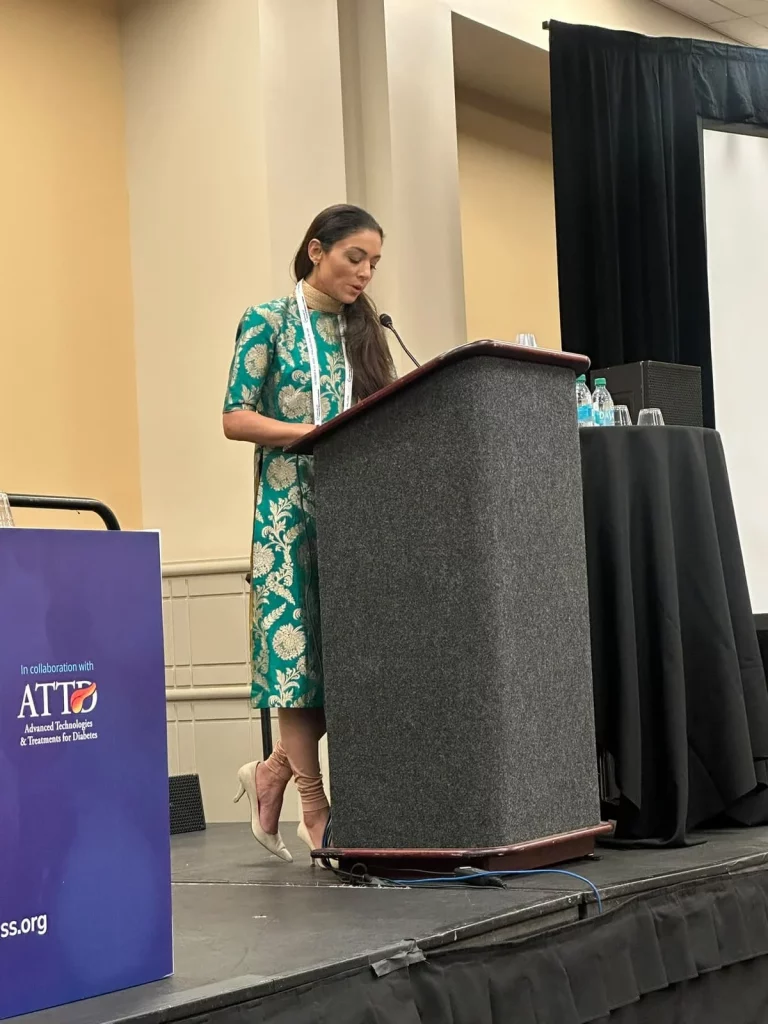
Pilates and personal wellbeing
Padmaja’s days vary depending on work, travel and family commitments. “There are meetings, planning and conversations with collaborators, but I try to leave room for family and for myself.” She enjoys walking and Pilates, which offer her time to focus on her wellbeing.
“Living with Type 1 diabetes has very organically taught me to make time to care for myself. Movement gives me time to clear my head as well as look after my physical wellbeing,” she signs off.


Written By: Mallik Thatipalli
Guiness record holder and royal scion: Dr Lakshyaraj Singh Ji Mewar is preserving the legacy of Udaipur

Written By: Mallik Thatipalli
Sawai Hospitality: How royal heir Divyraj Singh Karansar is redefining heritage stays

Written By: Vikram Sharma