
October 10 2026
Navi Pillay: Granddaughter of Indian indentured labourers wins the 2026 Nobel Peace Prize
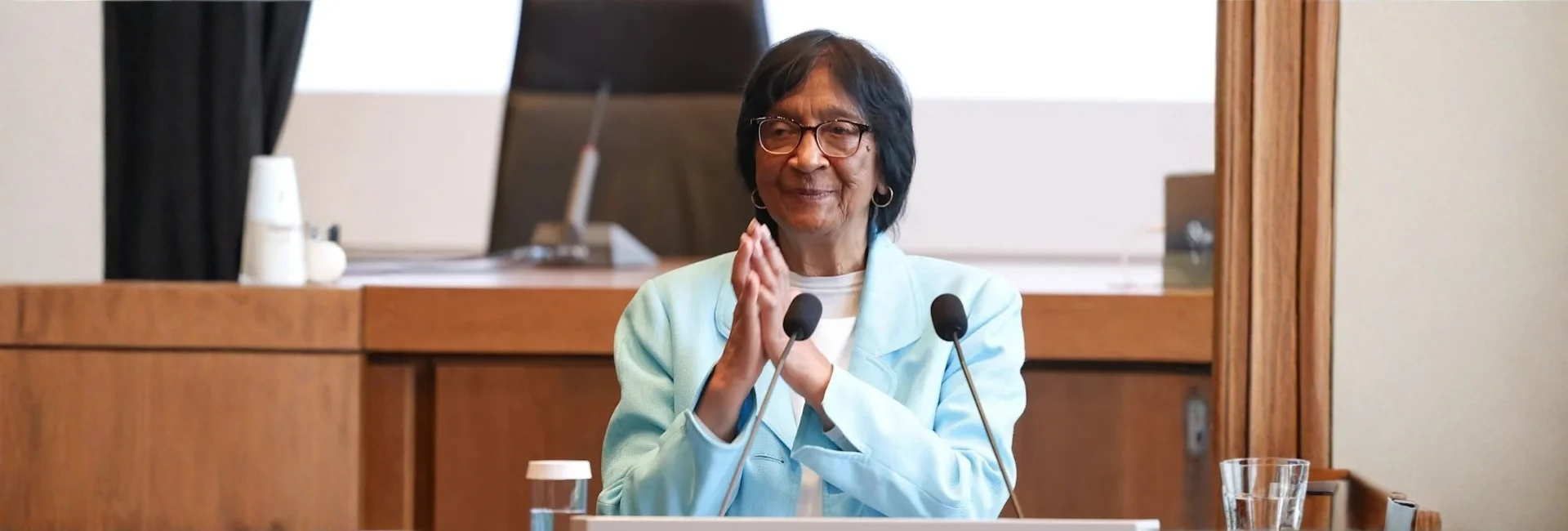
(Oct 10, 2026) From a family that migrated from India to work on South Africa’s sugar plantations to international courtrooms where perpetrators of grave crimes are held accountable, Navi Pillay, winner of the 2026 Nobel Peace Prize, has a journey spanning apartheid, landmark legal precedents and decades of work to strengthen international justice.
The granddaughter of Indian indentured labourers who arrived in South Africa in the 1890s and the daughter of a bus driver who also fished to supplement the family income, Navanethem “Navi” Pillay has been awarded the 2026 Nobel Peace Prize for her efforts to promote peace and international law. The 85-year-old South African jurist is the 21st woman to receive the honour.
Announcing the award on October 9, The Norwegian Nobel Committee recognised Pillay for leading the way towards “a more comprehensive global legal order” and helping ensure that war crimes, crimes against humanity and genocide are prosecuted. The committee described her as a defender of international legal principles whose career demonstrates the importance of strengthening the global rule of law.
For Pillay, the recognition came while she was in Nuremberg, Germany, attending a conference on justice and reparation. She was in Courtroom 600, where Nazi leaders were tried after the Second World War, when a colleague from the Nuremberg Principles Academy asked her to step outside and told her the news.
I’ve had many honors in my lifetime, but you don’t expect any more honors once you’ve turned 85, which is my age now, but this is about the highest and best honor I’ve received.
Navi Pillay at a press conference shortly after learning of her Nobel Peace Prize
Speaking to a representative of the Norwegian Nobel Institute just after the announcement, Pillay recalled staring at the news in disbelief. She said she was deeply honoured, adding that although the award was personal, she saw it as recognition of “all the institutions I served on as well, all the people I worked for as well.”
The setting was particularly significant for a jurist whose career has centred on establishing accountability for grave human rights violations. As she told the Nobel representative, she had been listening to speakers discuss justice and reparation when she received the news.
A family’s determination to educate its daughters
Born on September 23, 1941, in Clairwood, Durban, Pillay grew up as the fifth of eight children in a family of Indian Tamil origin. Her grandparents had migrated from India to Natal in the 1890s as indentured labourers, part of the movement of Indian workers brought to South Africa to work on sugar plantations under a system of contracted labour.
Her father, Narrainsamy Naidoo, worked as a bus driver and took on other jobs, including fishing, to support the family. Her mother, Santhama, managed the household and was determined that her daughters should receive an education alongside their brothers.
At a time when school places were limited and many girls faced pressure to marry rather than continue their studies, Santhama waited in long admission queues to secure places for her children. With money tight, she stitched notebooks for the younger children using blank pages from their older siblings’ used books.
Pillay’s education was also shaped by the racial segregation of apartheid South Africa. The Separate Universities Act of 1959 forced universities to segregate, disrupting her studies at the University of Natal. She sought an exemption to return there because the alternative institution she was directed to attend did not offer the law degree she needed.
She completed a Bachelor of Arts in 1963 and a Bachelor of Laws in 1965. Her university education was made possible with support that included donations from Durban’s Indian community, contributions from Clairwood residents, assistance from the Durban City Council and a university scholarship.
The obstacles she faced were not simply financial. Under apartheid, non-white students had to contend with segregated facilities and limited resources. Pillay’s path into the legal profession would bring her into direct confrontation with the same system that had constrained her education.
There’s no end to educating oneself to do a better job in respect of protecting human rights.
Navi Pillay at a press conference shortly after learning of her Nobel Peace Prize
Breaking barriers in apartheid-era South Africa
In 1967, Pillay opened her own law practice in Natal, becoming the first Black woman to do so in the province. She had struggled to find employment at established law firms because of racial discrimination.
During nearly three decades of legal work in South Africa, she defended anti-apartheid activists and political detainees, challenged unlawful interrogation methods and helped expose torture and poor prison conditions. In 1973, she helped secure the right of political prisoners on Robben Island, including Nelson Mandela, to access lawyers.
Her work was driven by the belief that the law should protect people against abuses of power, rather than reinforce them. That commitment extended beyond individual cases to the wider legal and constitutional framework of the country.
Pillay later studied at Harvard Law School, earning a Master of Laws in 1982 and a Doctor of Juridical Science degree in 1988. She returned to a legal career that increasingly connected domestic struggles for equality with the development of international human rights law.
In 1995, she became a judge of South Africa’s High Court, a significant milestone in a country emerging from apartheid. The same year, she was appointed to the International Criminal Tribunal for Rwanda (ICTR), beginning a new chapter in her work on accountability for atrocities.
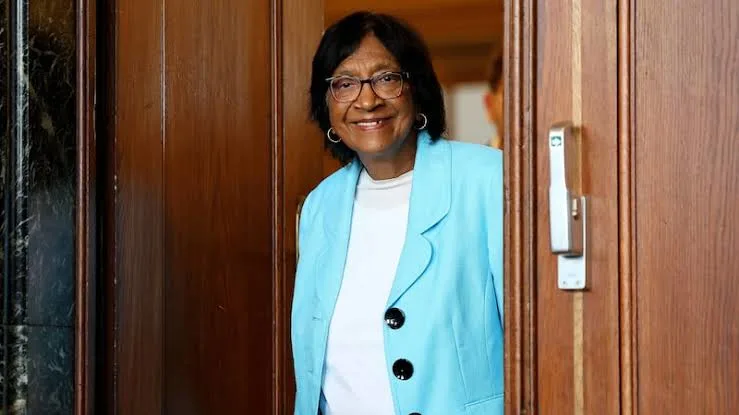
A landmark in the prosecution of sexual violence
Pillay served on the ICTR for eight years and was its president from 1999 to 2003. One of the tribunal’s landmark cases was the trial of Jean-Paul Akayesu, a former mayor convicted of genocide and crimes against humanity.
The judgment established that rape and sexual violence could constitute acts of genocide when committed with the requisite intent to destroy a protected group. It also helped advance the recognition of sexual violence as a crime under international law.
Reflecting on the significance of the ruling, Pillay said: “From time immemorial, rape has been regarded as spoils of war. Now it will be considered a war crime. We want to send out a strong signal that rape is no longer a trophy of war.”
It was outrageous that what happens to women and children in conflict times, especially with rape and sexual violence being seen as collateral damage or as reward for the hard fighting soldiers, that we finally recognize that as an international crime in the Rwanda Tribunal. I’m proud of that.
Navi Pillay at a press conference shortly after learning of her Nobel Peace Prize
In 2003, she joined the International Criminal Court (ICC), where she served as a judge until 2008. She then became the United Nations High Commissioner for Human Rights, a position she held until 2014.
In that role, Pillay advocated for human rights across a wide range of areas, including gender equality, caste discrimination, the rights of LGBTQ+ people and freedom of expression. Her work extended the concerns that had shaped her early legal career into international debates about discrimination, dignity and equal protection under the law.
She also co-founded the Advice Desk for the Abused in South Africa and the international women’s rights organisation Equality Now, extending her efforts beyond courtrooms to support people facing discrimination and abuse.
Continuing to pursue accountability
Pillay’s work in international justice has continued well beyond her judicial appointments. She chaired the UN Independent International Commission of Inquiry on the Occupied Palestinian Territory until 2025 and has served as an ad hoc judge at the International Court of Justice in the case brought by The Gambia against Myanmar over allegations of genocide against the Rohingya.
The Norwegian Nobel Committee’s announcement placed her career in the context of growing pressure on international legal institutions. It argued that international law remains essential to resolving conflicts without violence and that peace depends on justice.
For Pillay, the Nobel recognition was also an acknowledgement of the people and institutions behind decades of work. During her conversation with the Nobel Institute representative, she recalled that delegates at the Nuremberg conference stood to applaud her. Many, she noted, were people who had experienced or survived injustice. She described the moment as deeply moving and said she would not forget it.
Let me dedicate this award to all of the survivors of international crimes as well as to practitioners and defenders of international justice whose compassion and courage continue to ensure that impunity will not be allowed to reign.
Navi Pillay at a press conference shortly after learning of her Nobel Peace Prize
Despite the recognition, Pillay indicated that her commitment to the work remained unchanged. At 85, she joked about being a “workaholic” and spoke of continuing to honour the people whose experiences of injustice had shaped her work.
From the Indian diaspora to international justice
Pillay’s story spans generations of migration and change. Her grandparents travelled from India to work on South Africa’s sugar plantations; her parents worked to educate their children despite financial constraints and racial barriers; and she went on to challenge discrimination through law, first in South Africa and later in international institutions.
Her Nobel Peace Prize recognises a career spent strengthening the legal principles and institutions intended to hold perpetrators of serious crimes accountable. It also brings international attention to a life shaped by the experiences of an Indian-origin family in apartheid-era South Africa, and by the conviction that equal protection under the law must extend to everyone.
The Nobel Peace Prize ceremony is scheduled to take place in Oslo in December 2026.
Major awards and recognitions
- -2003: Gruber Prize for Women’s Rights by The Peter and Patricia Gruber Foundation, USA
- -2009: Ranked 64th on Forbes’ list of the world’s most powerful women
- -2009: Golden Plate Award from the American Academy of Achievement
- -2021: Ruth Bader Ginsburg Medal of Honor from the World Jurist Association
- -2025: Sydney Peace Prize from the Sydney Peace Foundation at the University of Sydney
- -2026: Olof Palme Prize from Sweden’s Olof Palme Memorial Fund
- -2026: Nobel Peace Prize from Norwegian Nobel Committee
ALSO READ: Nobel Laureate Venkatraman Ramakrishnan receives UK’s Royal Order of Merit by King Charles III
Navanethem “Navi” Pillay
| Born | Sep 23, 1941, Clairwood, Durban, South Africa |
| Based | Durban, South Africa |
| Studied | University of Natal, South Africa | Harvard University, USA |
| Languages | English, isiZulu, Tamil |
Signature work
Navi Pillay’s legal career has advanced accountability for grave human rights violations, most notably through her work at the International Criminal Tribunal for Rwanda, where landmark jurisprudence recognised rape as an act that can constitute genocide. Across South African courts, the International Criminal Court and the United Nations, she has worked to strengthen international law and advance protections against discrimination and abuse.
Idea
Advancing the principle that human rights and equality must be protected by law, Pillay has worked to make international justice more responsive to victims of discrimination, sexual violence and grave crimes.
Network
Her work spans South African courts, the International Criminal Tribunal for Rwanda, the International Criminal Court and the United Nations. She also co-founded Equality Now and the Advice Desk for the Abused.
Impact
Her contribution to the Rwanda tribunal’s landmark Akayesu judgment helped establish that rape and sexual violence can constitute genocide when committed with the intent to destroy a protected group. As UN High Commissioner for Human Rights, she also advocated for equality and the protection of vulnerable communities.
Giving Back
Pillay co-founded the Advice Desk for the Abused in South Africa to help people experiencing abuse, and Equality Now to advance the rights of women and girls through legal and policy reform. These initiatives reflect her commitment to extending access to justice beyond the courtroom.
Inspired by Navanethem “Navi” Pillay 's journey?
Yours follows the same Hero's pattern — Separation, Initiation, Transformation, Return.

Share with



Written By: Amrita Priya
Nobel Laureate Venkatraman Ramakrishnan receives UK’s Royal Order of Merit by King Charles III

Written By: Amrita Priya