
August 19 2026
Narayan Manepally: From Intel’s labs in the US to building a craft beer brand in India

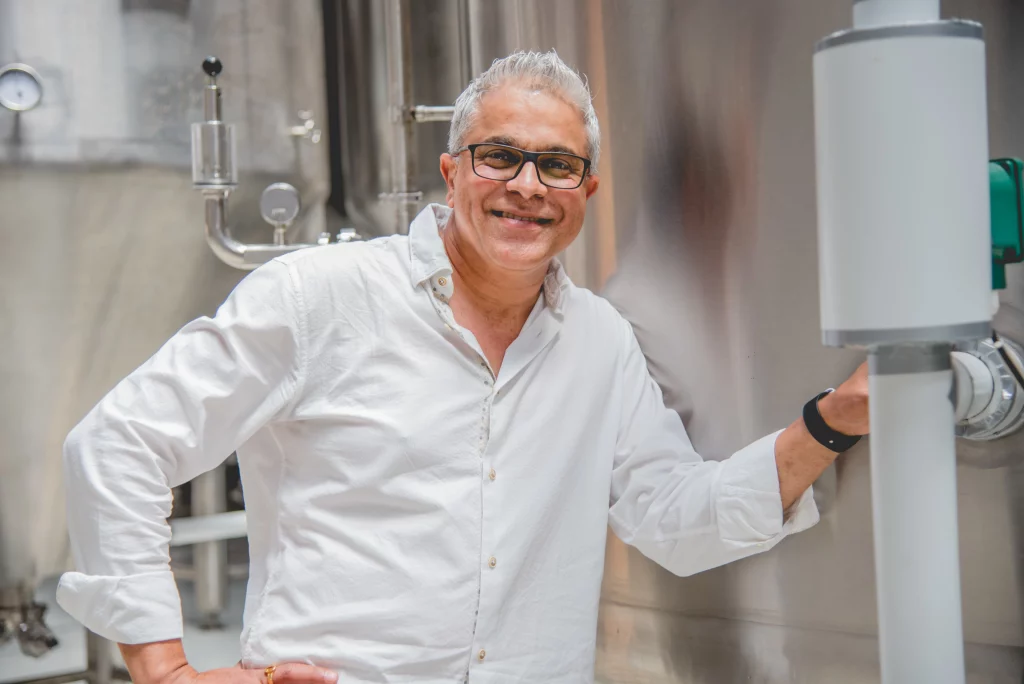
(Aug 19, 2026) From working on early video-conferencing technology at Intel in the US to brewing beer in his Oregon garage, Narayan Manepally has followed curiosity wherever it led him. His journey from engineer to craft beer pioneer, entrepreneur and sustainability advocate culminated in Geist Brewing Co., helping shape India’s craft beer movement.
Long before Narayan Manepally built Geist Brewing Co., one of India’s pioneering craft beer brands, he was an engineer at Intel in the United States, spending his weekdays developing breakthrough technologies and his weekends brewing beer in a garage. “Beer is liquid bread,” he tells The Global Indian with a smile.
What began as a pastime soon grew into an passion, one that would eventually bring him back to India in 2003 and lay the foundation for Geist, South India’s first distribution craft brewery.
Growing up in the Tata township
Spending many of his childhood years at Jamshedpur, where his father worked at Tata Engineering and Locomotive Company (TELCO, now known as Tata Motors), Narayan had an early exposure to world culture thanks to the several Europeans families staying in the vicinity.
“My parents were incredibly social, always hosting friends or taking us to clubs and community gatherings. Many of our guests were German women married to Bengali gentlemen and I vividly remember one lady, Mrs Baxter, who baked an enormous apple cake, with every slice topped by a whole apple!,” he reminisces.
That idyllic childhood, however, came to an abrupt end when his father refused to facilitate a bribe on behalf of his superior. The decision cost him his job after 17 years and plunged the family into financial hardship. “After 17 years at TELCO, he received a meagre settlement that he invested in a chit fund, and our family survived on just ₹500 a month,” he conveys poignantly.
From the age of seven, Narayan grew up in what he says, “a lower middle-class household”. “Money was always tight. We were constantly trying to make ends meet. But those experiences made me respect every rupee, remain humble and always invest back into the business. Also, watching my father choose integrity over comfort taught me that ethics are non-negotiable,” he shares.
Engineering the future at Intel After studying at St. Joseph’s Boys’ High School and completing electrical engineering at BMS College of Engineering in Bengaluru, Narayan travelled to the United States, where he pursued a master’s degree at Virginia Tech.
His fascination for technology took on a new dimension as he walked through the computer science department at the university one day and noticed a PC running a technology called Digital Video Interactive (DVI). Curious, he began exploring and stumbled upon what was effectively an early virtual tour of Mayan and Aztec caves. “It was unlike anything I had ever seen. That was, in many ways, love at first sight. I knew I had to find a way to work on technology like that,” he recalls.
In 1991, he joined Intel‘s Princeton Research Operation (PRO) in New Jersey, a time when multimedia computing was still in its infancy. “My job was to explore ways of bringing audio and video to the PC, something revolutionary back in the early 90s,” he recalls.
Pioneering the video call technology
At Intel, Narayan found himself working under one of Silicon Valley’s most respected leaders—Andy Grove. The Hungarian-American engineer, widely credited with transforming Intel into one of the world’s most influential technology companies, constantly challenged his teams to think beyond what already existed.
At the time, Intel’s multimedia research focused largely on non-real-time video. Engineers would compress video, store it, process it and then play it back later. One day, Grove walked into the lab and asked a deceptively simple question that would change the direction of the project. “Why are we only working on non-real-time video? Show me something that works in real time.”
Together with colleague Peter Ahimovic, Narayan was tasked with solving the problem. Months of experimentation followed before they successfully developed Intel’s first real-time video conferencing system in 1993.
The research project eventually evolved into Intel ProShare, one of the company’s earliest commercial video conferencing platforms. Looking back, he smiles at how commonplace the technology has now become.
It is remarkable to think that what we built was an early precursor to the kind of video calls the world uses every day.
Narayan Manepally
Second love at first sight
The programme was moved from Princeton to Intel’s Oregon campus, where Narayan helped transform an ambitious research concept into a market-ready product. Away from the laboratory, many of his fellow engineers had an unusual weekend hobby: they brewed beer at home. “That was my second love at first sight,” he exclaims.
With little to do after work, Narayan began to join them and soon, built a small brewery in his own garage. His very first brew, a California golden ale, turned out remarkably well, encouraging him to keep experimenting. Countless batches, recipe tweaks, brewing disasters and late-night trials followed as he explored different beer styles, ingredients and fermentation techniques.
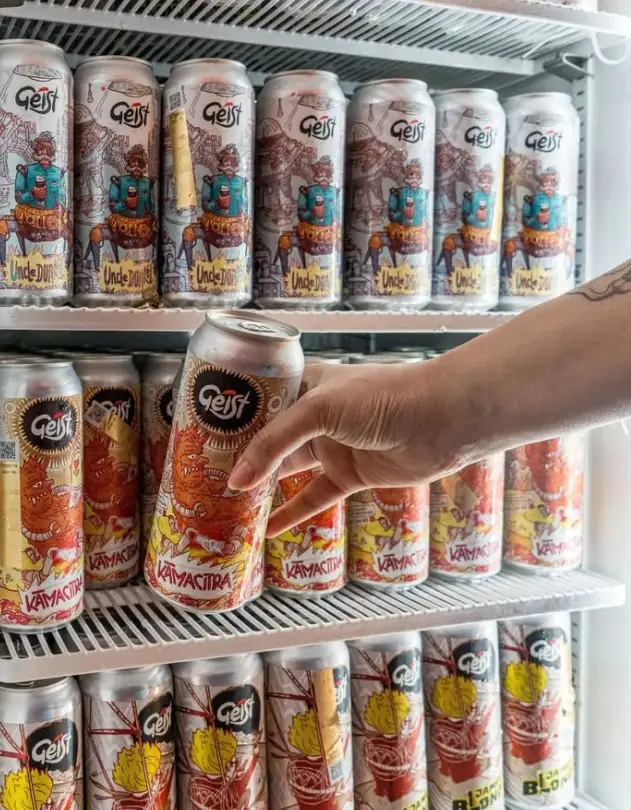
Every time he returned to India to visit family, he was left with one lingering question. “In Oregon, I was tasting these incredible beers from the smallest breweries but back home, there was barely just one option,” he reflects.
The thought made him realise that he would return home one day for good: not to build another technology company, but to pioneer India’s craft beer movement.
Building India’s craft beer movement
The return proved far more challenging that he had imagined.
The common perception was that great beer came only from Germany, Belgium, the Czech Republic or the United States, and that Indians simply didn’t know how to brew. That’s one of the reasons we chose the name ‘Geist’, a German word meaning “spirit”.
Narayan Manepally
When he registered Geist in 2006, the state of Karnataka didn’t issue microbrewery licences. Rather than abandon the dream, he took the recipes he had perfected in Oregon to Belgium, where the beers were brewed, bottled and shipped back to India.
Among those early brews was Geist Whistling Wheat (now known as Witty Wit), India’s first Belgian-style wheat beer. Today, wheat beers account for nearly 60 to 70 percent of sales at many craft breweries across the country, a trend Narayan takes quiet pride in having helped pioneer.
Years of lobbying by early craft brewers eventually led Karnataka to introduce microbrewery licences, paving the way for an entirely new industry. Narayan went on to partner in launching two of Bengaluru’s pioneering brewpubs—Byg Brewski and Brewski—which quickly became destinations for beer-lovers and were buzzing from morning to night.
As demand grew, Geist evolved beyond the brewpub model into a full-fledged craft brewery with national ambitions. “I still remember the first time someone ordered Geist at a local pub. The team was so excited and we all rushed to watch. Even today, many a time, I count how many tables are drinking our beer,” he elaborates.
View this post on Instagram
Purpose beyond the pint
From pioneering multimedia technology at Intel to brewing beer and refining every detail at Geist’s standalone Bengaluru outlets, Narayan has always approached life the same way—with relentless curiosity and an unwavering habit of asking, “Why?”
During the pandemic, he immersed himself in baking sourdough, fascinated by fermentation, hydration and gluten development. Coffee soon became another passion, not simply for drinking it, but for understanding roasting, extraction and terroir.
The values his father instilled in him continue to shape not only the way he runs his business but also how he chooses to give back. “Education of the girl child is one of the most important things this country needs,” he says.
Together with his wife, he funds the education of every child belonging to their household staff—from school fees and books to uniforms, hostel expenses and even summer camps. His hope is to one day institutionalise the initiative through Geist as the company grows.
Geist also champions sustainability efforts by harvesting rainwater, recharging groundwater, recycling nearly 90 percent of the water used in brewing and treating wastewater using natural filtration before reusing it across its operations. Kitchen waste is composted, while a three-and-a-half-acre farm supplies vegetables to its restaurants, creating a circular ecosystem that minimises waste.
View this post on Instagram
A pan-India vision
Nearly two decades after it first began, Geist has evolved into a combined brewery and hospitality brand, where its range of beers is distributed through five Indian states, along with various brewpubs and restaurants in Bengaluru focused on fresh food and craft beer.
Yet, Narayan’s ambition remains unchanged: to build a truly pan-India craft beer brand without losing the qualities that earned the customers’ trust in the first place. “We must deliver the same experience in every glass, no matter where it’s poured. That commitment to quality is what has brought us this far, and I believe it will continue to define us as we grow,” he concludes.
ALSO READ: Teja Chekuri: The Indian restaurateur bringing bold Andhra flavours to the world
Narayan Manepally
| Born | Dec 18, 1963 |
| Based | Bengaluru, India |
| Studied | BMS College of Engineering, Bengaluru | Virginia Tech, USA |
| Languages | English, Hindi, Kannada, Tamil |
Signature work
Engineer-turned-entrepreneur Narayan Manepally helped pioneer India’s craft beer movement through Geist Brewing Co., introducing one of the country’s early Belgian-style wheat beers, contributing to Bengaluru’s emerging brewpub culture, and building one of South India’s first distribution craft breweries, while focusing on quality, sustainability and innovation.
Idea
Transforming a garage-brewing hobby into Geist Brewing Co., one of India's pioneering craft beer brands, and bringing the brewing techniques and beer styles he discovered in the US to a growing Indian market.
Network
From Intel's research labs in the United States to Belgium's brewing ecosystem and Bengaluru's hospitality industry, building relationships and partnerships that helped Geist grow from an early craft beer venture into a brand distributed across multiple Indian states.
Impact
Introduced Geist Whistling Wheat, described as India's first Belgian-style wheat beer, contributing to Bengaluru's early brewpub culture, and building a distribution-led craft brewery while embedding water conservation, waste reduction and responsible resource use into Geist's operations.
Giving Back
Extending his commitment to education beyond the business, Narayan and his wife support the education of children of their household staff, covering expenses ranging from school fees and books to uniforms, hostel costs and summer camps. He hopes to eventually institutionalise this initiative through Geist.
Inspired by Narayan Manepally 's journey?
Yours follows the same Hero's pattern — Separation, Initiation, Transformation, Return.
Share with


Written By: Minal Nirmala Khona
Meet Teja Chekuri, the global F&B maverick who shaped India’s craft beer market

Written By: Minal Nirmala Khona
Palakkad to Poland: Two entrepreneurs from Kerala have successfully launched a beer called Malayali, in Poland!

Written By: Amrita Priya